Blog

  • Strategy’s Next Bitcoin Buy Comes With a $14.5B Warning

    Strategy’s Next Bitcoin Buy Comes With a $14.5B Warning

    Michael Saylor just posted “think bigger” on social media.

    If you’ve followed the strategy at all, you know what that usually means.

    Another Bitcoin buy is coming.

    Strategy currently holds 766,970 BTC, purchased at an average price of $75,644 per coin. CoinDesk

    The company bought nearly three times more Bitcoin in March than miners produced that same month.

    That’s not a small position.

    That’s a company consuming supply faster than the network can create it.

    EXECUTIVE SUMMARY
    • The Problem: Strategy holds 766,970 BTC at an average price of $75,644, sitting on roughly $14.5 billion in unrealized losses with no pause in sight.
    • The Solution: Its STRC preferred equity structure only needs a 2.05% annual Bitcoin return to cover dividends, keeping the model technically alive even at low growth.
    • The Incentive: Buying well above new miner supply means Strategy is betting hard on scarcity-driven price appreciation to validate the position over time.
    • The Risk: A prolonged Bitcoin stall or price drop stress tests the entire preferred equity structure, and that risk doesn’t disappear just because the threshold looks small.

    What the “Think Bigger” Signal Actually Means for Bitcoin

    Saylor has used this kind of language before major purchases.

    It’s a pattern.

    Retail traders who aren’t watching it are missing a real market signal.

    Look, the supply math here matters more than most people realize.

    When a single company absorbs close to three times the monthly miner output, that directly tightens available Bitcoin on the open market.

    Strategy bought nearly 3x more Bitcoin than miners produced in March. CoinDesk

    Honestly, that pace of accumulation is extraordinary.

    Most institutional buyers work quietly.

    Strategy does the opposite, and the market watches every move.

    Strategy’s buying pace is removing significant liquid supply from the market, which structurally supports price over the medium term.

    Wait — it’s worth being clear here.

    This doesn’t mean the price goes up automatically.

    Supply tightening creates conditions. It doesn’t guarantee outcomes.

    Why Does Strategy Keep Buying Bitcoin Even When It’s Losing Money?

    Strategy’s STRC structure only needs a 2.05% annual BTC return to cover dividends, so it’s built to bet on long-term scarcity rather than short-term prices.

    The $14.5 Billion Hole, Risk Traders Can’t Ignore

    HISTORICAL DATA AUDIT

    Battle-Test Your Strategy
    Before the Market Does.

    Eliminate guesswork with institutional-grade backtesting for DCA, Grid, and Rebalance bots. Real historical data. Real-world results.

    EST. OPTIMIZATION +42% ROI Efficiency
    Start Backtest Now

    Sourced from 5+ Years of Exchange Data

    Here’s the thing.

    Unrealized losses at this scale aren’t just a number on a screen.

    They represent real structural pressure if Bitcoin doesn’t cooperate.

    The company funds its accumulation through STRC, a preferred equity product.

    The math sounds almost too clean: just a 2.05% annual Bitcoin return covers the dividend obligation.

    That’s roughly one decent price move in a normal market cycle.
    But that’s exactly what makes it fragile.

    A market that stops moving, or worse, moves the wrong way for an extended stretch, puts that 2.05% threshold under real pressure.

    Expert Tip:

    Preferred equity structures tied to volatile assets like Bitcoin carry compounding risk when prices flatline. The low threshold is a feature in bull markets and a liability in extended sideways or bear conditions.

    What to Watch Before Trading Around Strategy’s Moves

    • Is Bitcoin currently trading above or below $75,644, Strategy’s average buy price?
    • Has Saylor posted a “think bigger” or similar signal on social media recently?
    • Is Bitcoin miner supply expanding or tightening this month?
    • Is the broader market in risk-on or risk-off mode right now?

    Before reacting to Strategy’s next move, it’s worth stress-testing your own BTC exposure first.

    CryptoGates lets you model different price scenarios, so you know exactly what your position looks like before you risk real money… not after.

    Strategy’s Position at a Glance

    Swipe to view full data →
    MetricCurrent NumberWhat It Means
    Total BTC Held9766,970Largest corporate BTC holder globally
    Average Buy Price$75,644Unrealized loss if BTC trades below this
    Unrealized Loss~$14.5 billionPaper loss, not realized unless sold
    STRC Dividend Threshold2.05% annual BTC returnMinimum growth needed to cover dividends
    March Buy vs. Mined~3x miner outputShows the accumulation pace vs. the new supply
    Does Strategy’s buying directly push Bitcoin’s price up?

    It reduces available supply significantly, which can create upward pressure, but it doesn’t guarantee price moves.

    What Traders Should Watch Next

    Strategy is signaling another buy while sitting on billions in unrealized losses, but its structure only needs minimal BTC growth to stay functional.

    Watch Bitcoin’s price relative to the $75,644 average, watch Saylor’s social signals, and watch miner output trends.

    Don’t trade the headline. Use CryptoGates to map your risk before the next move hits.

    SYSTEM ACCESS: CG4.2

    Stop Guessing.
    Stress Test Your Edge.

    The market doesn’t care about your backtest. Our engine simulates 1,000+ “what-if” scenarios to ensure your strategy is built for survival.

    Run Crypto Strategy Engine →
    ROBUSTNESS SCORE
    75+ STRUCTURAL EDGE
    RISK OF RUIN < 1%
    TARGET HIT 92%

    FAQs

    What is Strategy’s average Bitcoin buy price?

    Strategy holds 766,970 BTC at an average purchase price of $75,644 per coin. Depending on where Bitcoin trades today, the company is carrying significant unrealized losses on its books.

    STRC is Strategy’s preferred equity instrument used to fund ongoing Bitcoin purchases, requiring only about a 2.05% annual BTC return to cover its dividend obligations. If Bitcoin stagnates or drops for an extended period, this structure faces serious financial stress.

  • Crypto Analysis for Beginners: Stop Guessing, Start Knowing

    Crypto Analysis for Beginners: Stop Guessing, Start Knowing

    You bought a coin because someone in a Telegram group said it was “the next 100x.”

    Sound familiar?

    Most people’s first crypto trade goes exactly like that. No research. No plan. Just vibes and hope.

    That’s not investing. That’s gambling with extra steps.

    Mark Douglas,
    “Most traders lose not because the market is rigged, but because they act before they think.”

    Mark Douglas, Trading in the Zone

    The traders who actually build wealth in crypto, the ones who don’t get wiped out every bear market, aren’t smarter than you.

    They just analyze before they act.

    And crypto analysis for beginners isn’t nearly as complicated as most people make it sound.

    EXECUTIVE SUMMARY
    • The Problem: Most crypto beginners buy based on hype and tips, not research, and lose money because of it.
    • The Solution: Crypto analysis combines fundamental, technical, and sentiment approaches to help you verify before you buy.
    • The Incentive: Test any strategy against real historical data before risking actual money, not after.
    • The Risk: Analysis isn’t about being perfect. It’s about making fewer emotional decisions and more data-backed ones.

    Why Most Beginners Skip Analysis (And Regret It)

    Here’s the truth: analysis feels boring. Charts, whitepapers, tokenomics—none of it gives you the same rush as seeing a coin go up 40% in a day.

    So people skip it.

    Do I need to understand charts before buying any crypto?

    Not fully, but knowing basic trend direction (up, down, sideways) alone protects you from most beginner mistakes.

    They chase the pump.

    They buy at the top.

    Then they watch it crash and tell themselves crypto is a scam.

    It’s not a scam.

    It’s just that most people enter without doing the homework.

    There are basically two types of people in crypto: those who verify before they buy and those who find out the hard way why they should have.

    LIVE DATA FEED // UNFILTERED

    The Truth in Numbers.

    Designed for the 10% who require absolute clarity. We strip away the hype to reveal the structural reality of the crypto markets.

    11.6M TOKENS DEFUNCT (2025)
    “The Illusion of the Infinite Pump.” Most assets are designed to fail. We track the ones that don’t.
    Shocking Crypto Statistics

    The Two Pillars: Fundamental and Technical Analysis

    Crypto analysis for beginners starts with understanding two main approaches. Both matter. Neither one alone is enough.

    “Projects with active GitHub development are 3x more likely to survive a bear market than those with little to no code commits.” Messari Crypto Research

    1. Fundamental Analysis

    Fundamental analysis is about asking: Is this project actually worth anything?

    You’re looking at what problem the coin solves, who’s building it, whether the technology is real, and whether people are actually using it.

    You’d check things like the team’s track record, the token supply structure, development activity on GitHub, and whether the project has real partnerships or just a flashy website.

    Ethereum is a classic example of strong fundamentals, a real use case, a massive developer community, and a roadmap that kept delivering.

    That’s why it survived multiple crashes that wiped out hundreds of other coins.

    2. Technical Analysis

    Technical analysis is different. It doesn’t care about what a project does; it only looks at price and volume on a chart.

    The idea is that market behavior follows patterns, and those patterns repeat.

    Things like moving averages, support and resistance levels, and momentum indicators help you figure out when to enter a trade or when to stay out.

    Swipe to view full data →
    FactorFundamental AnalysisTechnical Analysis
    Focuses onProject value & teamPrice & volume patterns
    Best used forWhat to buyWhen to buy
    Key toolsWhitepapers, GitHub, tokenomicsCharts, moving averages, RSI
    Time horizonLong termShort to medium term
    Works alone?PartiallyPartially

    In April 2019, Bitcoin crossed above its 200-day moving average, a signal that technical analysts watch closely.

    Combined with rising volume, it pointed to the rally that followed months later.

    You don’t need to master all of it at once.

    Even understanding basic support and resistance levels puts you ahead of most beginners.

    Sentiment Analysis: The Wild Card

    There’s a third layer worth knowing about, especially in crypto. “Sentiment analysis” means reading the room; what’s the mood on Twitter, Reddit, and Telegram?

    Is everyone excited or panicking?

    Sentiment doesn’t tell you if a project is good. Dogecoin proved that.

    “In early 2021, Dogecoin surged over 15,000% driven almost entirely by social media sentiment before losing over 80% of its value.”                         CoinMarketCap historical data

    Sentiment can create short-term price explosions that have nothing to do with reality.

    Knowing how to read it helps you avoid buying into the frenzy at exactly the wrong time.

    The lesson isn’t to ignore sentiment; it’s to never let it be your only signal.

    Why Combining Methods Beats Picking Just One

    Here’s where beginners go wrong, even after they learn the basics.

    They pick one method and stick to it religiously. Pure technical traders sometimes miss massive moves that were obvious from the fundamentals.

    Before You Buy Any Crypto

    • Does this project solve a real problem?
    • Is the team active and experienced?
    • What is the chart trend right now (up, down, sideways)?
    • Is the crowd calm or in full hype mode?
    • Have I tested this strategy on historical data?

    Pure fundamental investors sometimes buy too early or too late because they ignore what the chart is saying.

    The traders who consistently do well use all three.

    They find a project with solid fundamentals.

    They check whether the sentiment is reasonable or in pure mania mode.

    Then they use the technical chart to find a smarter entry point instead of just buying whenever they feel ready.

    We built CryptoGates because we kept watching people buy on hope and lose on reality. Analysis isn’t about being right every time. It’s about not being reckless any time. Verify first. Risk later.

    ZAHEER, CEO CryptoGates

    Think of it this way:

    Fundamentals tell you what to buy, technicals tell you when to buy, and sentiment tells you how crazy the crowd is right now.

    You need all three pieces.

    The Mistake That Costs People the Most

    Confirmation bias. It’s when you’ve already decided you love a coin and you only look for information that backs that up.

    You ignore the red flags. You dismiss the critics. You convince yourself the crash is temporary.

    How do I avoid confirmation bias in crypto?

    Before buying, spend five minutes actively looking for reasons NOT to buy. If it still holds up, your conviction is real.

    This happens to everyone, including experienced traders.

    The fix is simple but uncomfortable: actively look for reasons not to buy something.

    If a coin still makes sense after you’ve tried to poke holes in it, that’s a much stronger signal than one you only viewed through rose-colored glasses.

    How to Start Without Getting Overwhelmed

    You don’t need to become a data scientist.

    Start with three questions before any trade: What does this project actually do, and does anyone need it? What does the chart look like? Is the trend up, down, or sideways? And what’s the general mood around it? Calm and steady, or everyone screaming about Lambos?

    That simple checklist beats 90% of decisions made purely on gut feeling.

    The other thing beginners skip is testing. Most people jump straight to real money without ever checking whether their approach actually works. That’s backwards. You’d never open a restaurant without tasting the food first.

    That’s exactly what the Backtesting Lab at CryptoGates.io is built for.

    HISTORICAL DATA AUDIT

    Battle-Test Your Strategy
    Before the Market Does.

    Eliminate guesswork with institutional-grade backtesting for DCA, Grid, and Rebalance bots. Real historical data. Real-world results.

    EST. OPTIMIZATION +42% ROI Efficiency
    Start Backtest Now

    Sourced from 5+ Years of Exchange Data

    Before you risk a single dollar, you can run your strategy against five-plus years of real historical data and see how it would have actually performed.

    The Monte Carlo simulator takes it further, running over a thousand what-if scenarios, so you understand your risk before it becomes your reality.

    SYSTEM ACCESS: CG4.2

    Stop Guessing.
    Stress Test Your Edge.

    The market doesn’t care about your backtest. Our engine simulates 1,000+ “what-if” scenarios to ensure your strategy is built for survival.

    Run Crypto Strategy Engine →
    ROBUSTNESS SCORE
    75+ STRUCTURAL EDGE
    RISK OF RUIN < 1%
    TARGET HIT 92%

    When you combine your own analysis with that kind of data-backed testing, you stop guessing.

    You start trading with evidence.

    Start With Data, Not Hype

    Crypto doesn’t have to be a minefield. The people who lose money aren’t unlucky; they’re usually just skipping the steps that protect them.

    Fundamental research, chart awareness, sentiment reading, and backtesting before real money—that’s the process.

    It’s not flashy. It won’t make you feel like a genius at a party. But it works.

    FAQs

    What’s the difference between fundamental and technical analysis in crypto?

    Fundamental analysis checks if a project is worth something. Technical analysis reads price charts to figure out when to buy. Serious traders use both.

    Yes, no degree needed. Start with three questions: does it solve a problem, what’s the chart doing, and is the crowd hyped or calm?

    Run it on historical data first. CryptoGates.io’s Backtesting Lab tests your strategy across real market conditions before you risk a dollar.

  • Crypto Is Shifting: Are You Positioned for What’s Coming?

    Crypto Is Shifting: Are You Positioned for What’s Coming?

    Most people either think crypto has already won or that it quietly died after the last crash. Neither is true.

    The real story is messier, more interesting, and honestly more useful to understand if you’re trying to build wealth here.

    Let’s talk about where crypto adoption actually stands right now.

    EXECUTIVE SUMMARY
    • The Problem: Trading without a real plan is why most people lose money in crypto, even when the market is going up.
    • The Solution: Understanding what is actually driving crypto adoption in 2026 helps you position yourself before the next wave hits.
    • The Incentive: Systematic strategies like DCA, grid bots, and rebalancing, tested on real data, give you an edge most retail traders never build.
    • The Risk: Skipping the backtesting step and jumping straight into live trades is where most accounts get damaged beyond recovery.

    The Hype Cycle Is Finally Over (And That’s Good)

    Remember 2021? Everyone from your barber to your aunt’s accountant was talking about Dogecoin.

    Then 2022 happened. Exchanges collapsed. Portfolios got wrecked. A lot of people left and never came back.

    Nic Carter
    “The projects that survived 2022 weren’t the loudest ones. They were the ones with real infrastructure.”

    Nic Carter, Crypto Analyst & Castle Island Ventures Partner

    That shakeout, as painful as it was, actually did something useful.

    It filtered out the pure gamblers.

    What’s growing now is quieter, slower, and built on something more real: actual use cases, institutional frameworks, and better tools.

    Crypto adoption isn’t driven by Twitter hype anymore.

    It’s driven by infrastructure.

    SELECTION MATRIX V2.0

    Not sure which
    exchange fits you?

    Bypass the marketing hype. Our matrix cross-references your profile against 50+ institutional metrics—including Proof-of-Reserves and Slippage Models.

    PoR Verified Low Slippage API Ready
    B
    K
    C
    O
    Find My Gateway Analysis Time: < 60s

    What’s Actually Driving Adoption Right Now

    The biggest shift is institutional. Large asset managers, pension funds, and payment processors are no longer just experimenting with crypto; they’re building around it.

    Spot Bitcoin ETFs opened a door that can’t really be closed again. Retail investors now have regulated, familiar ways to get exposure without even touching a wallet.

    Stablecoins deserve a separate mention. They’ve quietly become one of the most used financial tools in emerging markets.

    Spot Bitcoin ETFs accumulated over $50 billion in assets within their first year of approval, according to Bloomberg ETF Research.

    In countries where local currencies are unstable, people aren’t buying Bitcoin to get rich.

    They’re using stablecoins to preserve value and send money across borders without losing 10-15% to traditional wire fees.

    That’s real adoption. Not hype adoption.

    Blockchain technology itself is also being used in supply chains, healthcare records, and digital identity systems, which builds familiarity even among people who’d never buy a single coin.

    Swipe to view full data →
    BarrierCurrent StatusWhat Would Fix It
    RegulationInconsistent globallyUnified international framework
    User ExperienceImproving, not there yetSimpler wallets and onboarding
    Price VolatilityStill highBroader stablecoin adoption
    Public TrustRebuilding slowlyConsistent scandal-free years

    What’s Still Slowing Everything Down

    Adoption isn’t uniform. There are real friction points that haven’t gone away.

    Regulation is still inconsistent. The U.S. has made progress, but global policy is fragmented.

    A business accepting crypto in Singapore faces completely different rules than one operating in Europe or South America. Until there’s more consistency, mainstream merchant adoption stays patchy.

    Are stablecoins considered real crypto adoption?

    Yes. When people use stablecoins daily to save money and send payments, that’s adoption driven by genuine need, not speculation.

    User experience is improving, but still not there.

    For someone who grew up with a bank app, figuring out wallets, seed phrases, gas fees, and bridge transactions is genuinely confusing. The technology has to meet people where they are, not the other way around.

    Price volatility hasn’t disappeared either. Bitcoin dropped 60%+ in the last bear cycle.

    That kind of movement makes it hard for businesses to price goods in crypto or for ordinary people to use it for daily spending.

    Stablecoins solve part of this, but the broader market still swings hard.

    And honestly?

    Trust is still being rebuilt. FTX left a mark.

    People who lost money aren’t rushing back, and those watching from the sidelines have noticed. Every new scandal sets back public confidence.

    Every year without one helps it recover.

    CG STRATEGY ANALYZER

    Confused about
    market outlook?

    Trading without a plan is just gambling. Our strategy architect analyzes your risk tolerance and capital to match you with a proven algorithmic framework.

    PASSIVE DCA Bot
    AGGRESSIVE Grid Pro
    BALANCED Rebalance

    The Mistake Most Traders Are Still Making

    Here’s the thing: knowing crypto is growing doesn’t automatically mean you’ll profit from it.

    In fact, most people who “believe in crypto” are still losing money. Not because they’re wrong about the technology, but because they trade without a system.

    They buy during euphoria. They sell during panic. They hold coins they don’t understand because someone in a Discord server was excited. That’s not a strategy.

    That’s gambling with extra steps.

    Most traders don’t lose because the market beats them. They lose because they beat themselves. You can’t fix emotion with more information. You fix it with a system you’ve already tested. That’s why we built CryptoGates the way we did.

    ZAHEER, CEO CryptoGates

    The traders who actually do well over a full market cycle are doing something different.

    They’re using systems, dollar-cost averaging, portfolio rebalancing, and grid bot strategies that remove emotion and create consistency.

    More importantly, they test those strategies before putting real money on them.

    That second part is where most people skip ahead and pay for it.

    How CryptoGates Fits Into This

    This is exactly the problem CryptoGates.io was built to solve.

    You don’t have to guess whether a DCA strategy would have worked through the last two years of market swings.

    The Backtesting Lab lets you run it against five-plus years of real historical data before you risk a single dollar.

    Before You Place Any Trade, Check These 5 Things:

    • Do I have a written strategy, not just a feeling?
    • Have I backtested this approach on real historical data?
    • Do I know my exit point before I enter?
    • Am I acting on data or on something I read in a group chat?
    • Have I sized this position to my actual risk tolerance?
    SYSTEM ACCESS: CG4.2

    Stop Guessing.
    Stress Test Your Edge.

    The market doesn’t care about your backtest. Our engine simulates 1,000+ “what-if” scenarios to ensure your strategy is built for survival.

    Run Crypto Strategy Engine →
    ROBUSTNESS SCORE
    75+ STRUCTURAL EDGE
    RISK OF RUIN < 1%
    TARGET HIT 92%

    The Strategy Engine matches you to the right approach based on your actual risk tolerance and capital, not on what sounds exciting.

    And the Monte Carlo Simulator runs over a thousand different market scenarios so you can see how your plan holds up when things go sideways, not just when they go up.

    The Exchange Picker also filters for exchanges with verified proof of reserves because the FTX era taught everyone that “trusted” isn’t enough.

    \You need to verify.

    None of these tools predicts the future.

    That’s not the point. The point is that you stop guessing and start making decisions based on data.

    Do I need to understand blockchain to trade crypto successfully?

    No. You need to understand your strategy. The technical side matters less than having a clear, tested plan that matches your risk level and capital size.

    Where This Goes Next

    The next wave of crypto adoption is going to come from people who aren’t “crypto people.”

    Traders who backtest strategies before going live reduce their early-stage losses by up to 40%, according to a study published by the Journal of Financial Economics.

    It’ll be people who want inflation protection, portfolio diversification, or access to systems that traditional finance doesn’t offer them.

    They’re not going to learn candlestick patterns.

    They’re going to use automated tools that do the heavy lifting.

    HISTORICAL DATA AUDIT

    Battle-Test Your Strategy
    Before the Market Does.

    Eliminate guesswork with institutional-grade backtesting for DCA, Grid, and Rebalance bots. Real historical data. Real-world results.

    EST. OPTIMIZATION +42% ROI Efficiency
    Start Backtest Now

    Sourced from 5+ Years of Exchange Data

    Andreas Clenow, Author of Following the Trend

    “Backtesting won’t guarantee profits. But trading without it almost guarantees unnecessary losses.”

    The platforms that win won’t be the ones with the flashiest tokens.

    They’ll be the ones that are simple enough for a non-technical person to use and disciplined enough to keep them from making the classic mistakes.

    If you’re already here, you’re ahead of that wave.

    The question is whether you’re building something that’ll actually survive the next cycle or just riding momentum until it stops.

    FAQs

    How do I know if an exchange is actually safe to use?

    Look for independently verified proof of reserves, a regulated operating history, and a track record of handling security issues properly. The CryptoGates Exchange Picker filters specifically for exchanges that meet these standards, so you’re not just taking a platform’s word for it.

    Because timing and emotion destroy returns faster than bad picks do. Most traders buy when excitement peaks and sell when fear sets in. Without a tested strategy, even a rising market can leave you with losses if your entry and exit points are off.

    Start with a tested strategy. Dollar-cost averaging with backtested parameters removes emotional timing and gives you a repeatable, low-pressure entry method.

  • Crypto Mining Sounds Like Easy Money: Read This First

    Crypto Mining Sounds Like Easy Money: Read This First

    You’ve heard people say they “mine crypto from home.”

    Some show off screenshots of earnings. Others quietly sold their rigs six months later.

    So what’s actually going on, and is there still a real opportunity here?

    EXECUTIVE SUMMARY
    • The Problem: 70-90% of beginners buy mining hardware before running a single number and burn money on electricity bills with zero returns.
    • The Solution: Understanding how mining works, hardware types, pool vs solo, and coin selection before spending anything.
    • The Incentive: Miners who calculate first and invest later can still earn consistent, real income from crypto mining in 2026.
    • The Risk: Electricity costs, hardware depreciation, and market volatility can flip a profitable setup into a loss, fast.

    Bitcoin’s global mining network consumes an estimated 120 to 150 terawatt-hours of electricity per year, more than many mid-sized countries use in the same period. Cambridge Centre for Alternative Finance (CCAF)

    What Crypto Mining Actually Is

    Forget the technical jargon for a second. Think of the blockchain as a public notebook.

    Every Bitcoin transaction ever made is written in that notebook, permanently, in order. But someone has to write each new page. That’s what miners do.

    CEO Note:

    Most people ask us whether they should mine. We always say the same thing: don’t ask us, ask your electricity bill. The numbers either work or they don’t. No amount of excitement changes that math.

    When you send Bitcoin to someone, that transaction doesn’t confirm itself.

    It joins a queue of thousands of other pending transactions.

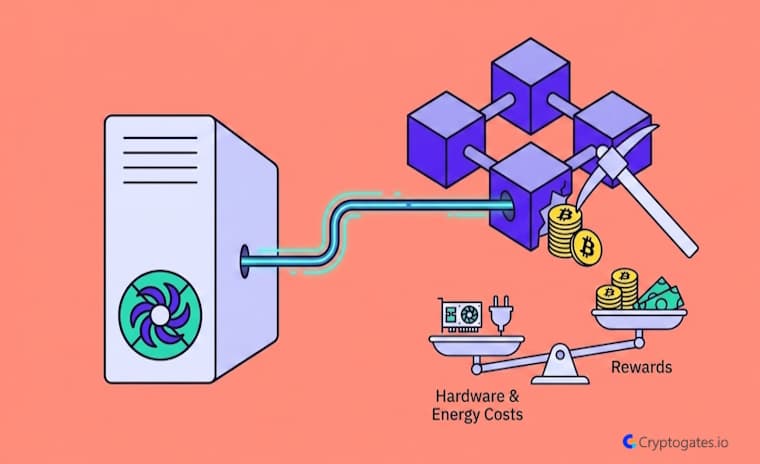
    Miners pick up that queue, bundle everything into a block, and then compete to solve a complex math puzzle.

    First one to solve it gets to write that block into the blockchain permanently. As payment for doing that work, they receive newly created coins.

    No miners, no confirmed transactions.

    It’s that simple.

    Mining isn’t a side hustle bolted onto crypto; it’s the engine that makes the whole thing run.

    How the Mining Process Works Step by Step

    Your mining hardware runs software that generates billions of guesses per second, trying to find a specific number called a hash.

    The puzzle isn’t solvable by thinking; it’s only solvable by trying combinations at incredible speed until someone gets lucky.

    Nic Carter
    “Mining is one of the few industries where your cost structure is almost entirely determined before you earn a single dollar. Electricity rates and hardware efficiency decide everything.”

    Nic Carter, Crypto Researcher and Partner at Castle Island Ventures

    The more computing power you have, the more guesses you make per second, the better your odds.

    When someone wins and adds a new block, the network automatically recalibrates the puzzle difficulty. Too many miners joining?

    Difficulty goes up. Miners dropping off?

    Difficulty eases. This keeps the pace of new blocks consistent, roughly one every ten minutes for Bitcoin.

    The reward for winning a block is new Bitcoin, freshly created. That’s how new coins enter circulation. There’s no central bank printing money. Just math, competition, and electricity.

    SYSTEM ACCESS: CG4.2

    Stop Guessing.
    Stress Test Your Edge.

    The market doesn’t care about your backtest. Our engine simulates 1,000+ “what-if” scenarios to ensure your strategy is built for survival.

    Run Crypto Strategy Engine →
    ROBUSTNESS SCORE
    75+ STRUCTURAL EDGE
    RISK OF RUIN < 1%
    TARGET HIT 92%

    The Different Types of Mining Hardware

    Your hardware choice shapes everything: your costs, your earning potential, and which coins you can realistically mine.

    1. CPU Mining

    CPU Mining uses your regular computer processor.

    In Bitcoin’s earliest days, this actually worked. Today, it’s basically useless for anything competitive.

    The only real exception is Monero, a privacy coin whose algorithm was deliberately designed to resist specialized chips and stay accessible to regular computers.

    Andreas M. Antonopoulos

    “Mining is the mechanism by which bitcoin’s security is decentralized.”
    Andreas M. Antonopoulos, Mastering Bitcoin

    2. GPU Mining

    GPU Mining uses graphics cards, the same ones gamers use.

    They’re far more powerful than CPUs for mining math. A decent GPU rig can still mine several altcoins profitably, especially coins with lower network difficulty.

    The downside is electricity consumption. These rigs run hot, loud, and expensive around the clock.

    3. ASIC Mining

    ASIC Mining is an entirely different category. These are chips built for one single purpose: mining a specific algorithm as fast as physically possible.

    They’re not computers you can use for anything else. They’re mining machines, full stop.

    Can I mine Bitcoin on a regular laptop?

    Not practically. A laptop’s CPU and GPU are too weak, and the heat damage alone makes it a losing trade from day one.

    Bitcoin ASIC miners today operate at speeds that would’ve seemed science fiction just five years ago.

    They’re also expensive, noisy, and generate serious heat.

    Large operations build entire facilities around cooling them.

    4. Cloud Mining

    Cloud Mining means you pay a company to mine on your behalf.

    You rent their hashing power and receive a share of the rewards. No hardware to buy, no electricity bills in your name. Sounds ideal.

    The problem is that cloud mining has been home to more scams than almost any other corner of crypto.

    If you explore this route, the vetting process needs to be extremely serious before any money changes hands.

    Swipe to view full data →
    Hardware TypeBest ForDifficulty in Starting
    CPUMonero onlyLow
    GPUAltcoins, mid-rangeMedium
    ASICBitcoinHigh
    Cloud MiningHands-off (risky)Low (but verify hard)

    Solo Mining vs. Pool Mining

    Solo Mining

    Every block has a unique “fingerprint” called a hash. If you change one digit inside, the fingerprint changes entirely.

    Pool Mining

    Everyone combines their computing power and shares the reward. Your cut is smaller, but payouts are consistent instead of once-in-a-decade lucky.

    For anyone starting, pools are the sensible path. The largest pools control significant portions of Bitcoin’s total hash rate.

    Andreas M. Antonopoulos
    “Solo mining today is like buying a lottery ticket every ten minutes. Pools turn that lottery into a paycheck.”

    Andreas Antonopoulos, Bitcoin Educator and Author of Mastering Bitcoin

    What Coins Can You Mine?

    Bitcoin is the benchmark everyone thinks of, but it’s not the only option, and for many home miners, it’s not the right starting point.

    Which coin is most profitable to mine right now?

    There’s no single answer. Profitability shifts with coin price, network difficulty, and your electricity cost. Use a mining calculator with your real numbers every time before deciding.

    Ethereum is no longer mineable.

    It switched to Proof of Stake in 2022, removing mining from the equation entirely.

    That freed up an enormous amount of GPU hardware and reshaped the altcoin mining landscape.

    Monero remains one of the most accessible coins for CPU and entry-level GPU miners.

    Its algorithm actively resists ASIC dominance, which keeps individual miners genuinely competitive.

    Is Bitcoin mining profitable for small miners?

    Rarely, without very cheap electricity and efficient ASIC hardware. Most small miners find better results with lower-difficulty altcoins or joining a strong pool.

    Litecoin, Ravencoin, Kaspa, and Ethereum Classic all have active mining communities with lower barriers to entry than Bitcoin.

    The right coin for you depends on your hardware, your electricity cost, and the current difficulty of each network.

    There’s no universal answer, only the answer your specific numbers produce.

    HISTORICAL DATA AUDIT

    Battle-Test Your Strategy
    Before the Market Does.

    Eliminate guesswork with institutional-grade backtesting for DCA, Grid, and Rebalance bots. Real historical data. Real-world results.

    EST. OPTIMIZATION +42% ROI Efficiency
    Start Backtest Now

    Sourced from 5+ Years of Exchange Data

    Is Crypto Mining Actually Profitable ?

    Here’s the honest version nobody selling mining courses will tell you: it depends entirely on four things. Your hardware’s efficiency. Your electricity cost per kilowatt-hour.

    The current network difficulty of whatever you’re mining. And the price of that coin.

    Electricity is the one that kills most home operations. Large mining farms specifically locate themselves near cheap power sources, hydroelectric dams, solar farms, and regions with subsidized industrial rates.

    Miners paying above $0.10 per kilowatt-hour frequently operate at break-even or at a loss during periods of low coin prices, while industrial miners at $0.03 to $0.05 per kWh maintain consistent margins. Braiins Mining Insights

    Hardware cost is the second reality check.

    A quality ASIC miner for Bitcoin costs thousands of dollars upfront.

    GPU rigs aren’t cheap either.

    The break-even timeline under favorable conditions is typically many months.

    Under unfavorable conditions, a price drop, a difficulty spike, or a new generation of more efficient hardware, that timeline extends or disappears entirely.

    None of this means mining isn’t worth exploring. It means exploring it requires real math, not YouTube thumbnails.

    CONFIDENTIAL // RESEARCH
    STRATEGY INTELLIGENCE

    Proven Setups &
    Expert Breakdowns.

    We don’t just show you the data; we engineer and validate high-performance strategies, providing the “Alpha” behind the numbers.

    Calculate Before You Commit Every Single Time

    The biggest mistake beginner miners make is buying hardware before running the numbers.

    Don’t do it. Ever.

    Before you spend a single rupee or dollar, you need to know your hardware’s hash rate, your exact electricity cost, the current network difficulty, the block reward, and pool fees. Put those numbers into a profitability calculator and let the result tell you what to do, not your excitement about the technology.

    Before you buy any mining hardware, check these five things:

    • I know my exact electricity cost per kilowatt-hour
    • I’ve looked up my hardware’s hash rate and power draw
    • I’ve run my numbers in a profitability calculator
    • I’ve compared at least two to three coins, not just Bitcoin
    • I’ve calculated my break-even timeline under the current difficulty

    This is where CryptoGates.io’s Backtesting Lab and Monte Carlo Simulator matter.

    You can stress-test scenarios across five years of real historical data and run over a thousand what-if simulations before risking actual capital.

    The whole point of tools like these is to answer the question “Will this work?” before you find out the hard way that it didn’t.

    Verify first. Risk later.

    LIVE EXCHANGE RATES

    Calculate Your Swaps

    Seamlessly bridge your assets with our lightning-fast conversion engine. Get the best rates across 500+ pairs with zero hidden fees.

    From 1.00 BTC
    To 64,281.50 USDT
    Launch Converter

    The Risks That Don’t Get Enough Attention

    Hardware failure is real. Mining rigs run at full load, non-stop.

    That’s stress on components, cooling systems, and your electrical setup. Poor cooling shortens hardware life significantly. Factor in the cost of maintenance and occasional replacement; it’s not zero.

    Tax treatment catches people off guard. In most jurisdictions, mined coins are treated as income at the moment they’re received, valued at market price on that day.

    What the price does afterward doesn’t change what you owed when you mined. Keep detailed records from day one.

    Market timing risk is the one nobody can predict. Mining profitability can flip fast. A sharp price drop combined with a difficulty increase can turn a profitable operation into one that’s hemorrhaging money monthly.

    The miners who survive long-term treat it like a business with proper cost analysis, contingency planning, and no emotional attachment to sunk hardware costs.

    REF: VOL-NEUTRAL-2026

    Neutralize Volatility.
    Own the Growth.

    Access systematic playbooks designed to eliminate emotional bias. From Spot HODL frameworks to advanced Grid simulators.

    Spot & HODL
    DCA Engine
    Grid Tactics
    Rebalance

    Where to Go From Here

    Crypto mining is still real. It still works. It still pays for the people who approach it like operators, not speculators.

    If you’ve got access to cheap electricity, a hardware budget you can genuinely afford to lose, and the patience to learn the mechanics properly, it’s worth exploring seriously.

    If you’re chasing a shortcut to passive income without doing the math first, the industry will teach you an expensive lesson.

    Start with the numbers. Run them on CryptoGates.io.

    Let the data tell you whether your specific situation makes sense before your money decides for you.

    FAQs
    What happens to Bitcoin mining when all coins are mined?

    Once all 21 million Bitcoins are mined, miners will earn only through transaction fees. The idea is that fee volume by then will keep mining economically viable.

    In most countries, mined coins count as income the day you receive them, valued at that day’s market price. Keep detailed records from day one and consult a local tax professional.

    It can be, but only if your electricity cost is low and your hardware is efficient. Run your real numbers first. Excitement doesn’t pay the electricity bill.

  •  Most Traders Skip This Step: Then They Lose Everything

     Most Traders Skip This Step: Then They Lose Everything

    You bought some crypto. Now what? Where does it actually go, and how do you make sure no one else can touch it?

    That’s the question most new traders skip entirely. Then something goes wrong, and suddenly the wallet question becomes very, very urgent.

    Let’s fix that before it becomes your story.

    EXECUTIVE SUMMARY
    • The Problem: Most traders buy crypto and leave it on an exchange, never realizing someone else controls their keys and their funds.
    • The Solution: A crypto wallet puts you in full control. Your keys, your coins. No third party can freeze or lose what’s yours.
    • The Incentive: The right wallet setup protects your holdings, supports staking for passive income, and keeps you ready for DeFi, all without giving up control.
    • The Risk: Lose your private key, and your crypto is gone forever. No recovery. No support. No exceptions.

    Most People Don’t Think About This Until It’s Too Late

    The average person buys crypto on an exchange, leaves it there, and assumes it’s safe.

    And maybe it is for a while. But the exchange holds your funds and controls your keys, and if anything happens to them (hack, freeze, or shutdown), your crypto goes with it.

    📊 Over $8 billion in customer funds were lost across major exchange collapses (FTX, Celsius, Mt. Gox) due to users not controlling their own private keys. Chainalysis Crypto Crime Report

    It’s happened before. FTX. Celsius.

    Mt. Gox. Billions lost because people never thought about where their digital money actually lived.

    A crypto wallet changes that. It puts the control back in your hands.

    Not the exchange’s. Yours.

    So What Exactly Is a Crypto Wallet?

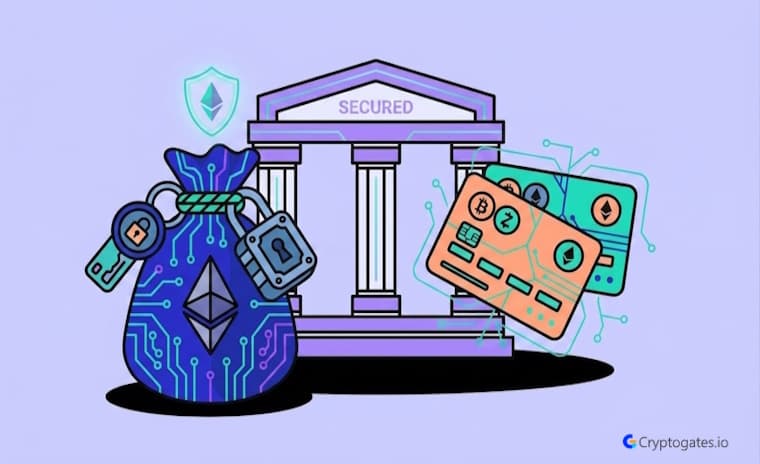
    A crypto wallet doesn’t store coins the way a physical wallet holds cash. Think of it more like a keychain.

    The coins live on the blockchain, a public ledger no one controls. Your wallet holds the keys that prove ownership of those coins.

    There are two keys involved. The public key is your address; share it freely so people can send you crypto.

    Can I lose my crypto if I lose my private key?

    Yes, permanently. There’s no recovery option, no support line, and no way back in.

    The private key is your secret code; it’s what lets you access and move your funds.

    Lose the private key, and the money is gone.

    Forever.

    No customer support. No password reset. Nothing.

    This is why choosing the right wallet type matters so much.

    SYSTEM ACCESS: CG4.2

    Stop Guessing.
    Stress Test Your Edge.

    The market doesn’t care about your backtest. Our engine simulates 1,000+ “what-if” scenarios to ensure your strategy is built for survival.

    Run Crypto Strategy Engine →
    ROBUSTNESS SCORE
    75+ STRUCTURAL EDGE
    RISK OF RUIN < 1%
    TARGET HIT 92%

    The Main Types of Crypto Wallets

    There are several ways to store crypto, and each one makes a different trade-off between convenience and security.

    Software wallets live on your phone, computer, or web browser. They’re easy to set up and great for regular use. Mobile wallets like Trust Wallet or Coinbase Wallet let you manage funds on the go.

    Desktop wallets like Exodus offer more features with a clean interface. Web wallets run in your browser, which is convenient, but the company often holds your keys on its servers, which is a risk worth knowing about.

    Hardware wallets are physical devices; think of a USB drive built specifically for crypto. Brands like Ledger and Trezor store your private keys offline, completely away from the internet. Even if your computer gets hacked, your funds stay safe.

    They cost money up front (usually $50–$150), but for anyone holding a serious amount of crypto long-term, that’s a small price to pay for real peace of mind.

    Paper wallets are exactly what they sound like: your keys printed on paper and stored offline. Zero hacking risk. But lose the paper, spill coffee on it, or have a house fire?

    Gone. Most experienced traders consider paper wallets outdated for regular use.

    Swipe to view full data →
    Wallet TypeBest ForSecurity Level
    Mobile/Desktop (Software)Daily trading, beginnersMedium
    Hardware (Ledger, Trezor)Long-term holdingHigh
    Paper WalletOffline backupHigh (if stored safely)
    Exchange WalletActive trading onlyLow to Medium
    What is the safest type of crypto wallet?

    Hardware wallets are the most secure option. They store your private keys offline, completely out of reach of internet-based attacks.

    Hot Wallets vs. Cold Wallets: The Simple Version

    Every wallet falls into one of two categories.

    A hot wallet is connected to the internet, easy to access, and faster for trading, but exposed to online risks.

    A cold wallet is offline and more secure, but slightly less convenient for everyday transactions.

    📊 Around 34% of crypto holders store all their assets on exchanges, leaving them exposed to platform-level risk. Statista / Crypto.com Annual Report

    The smart approach most experienced traders use is both.

    Keep a small amount in a hot wallet for active trading.

    Store the bulk of your holdings in cold storage where no hacker can reach them. It’s not complicated.

    It just requires thinking one step ahead.

    HISTORICAL DATA AUDIT

    Battle-Test Your Strategy
    Before the Market Does.

    Eliminate guesswork with institutional-grade backtesting for DCA, Grid, and Rebalance bots. Real historical data. Real-world results.

    EST. OPTIMIZATION +42% ROI Efficiency
    Start Backtest Now

    Sourced from 5+ Years of Exchange Data

    Custodial vs. Non-Custodial: Who Actually Controls Your Crypto?

    This is the one distinction most beginners miss, and it matters more than anything else.

    A custodial wallet means a company (usually an exchange) holds your private keys for you. It’s simple, beginner-friendly, and works fine until the company doesn’t.

    Non-custodial wallets give you full control. Only you hold the keys. No third party can freeze or lose your funds.

    ✅ INTERACTIVE CHECKLIST Before You Pick a Wallet

    • Do I control my own private keys?
    • Is this wallet from an official, verified source?
    • Have I backed up my seed phrase offline?
    • Do I know whether this is custodial or non-custodial?
    • EIs the exchange behind this wallet verified with proof of reserves?

    The phrase you’ll hear in crypto circles is “not your keys, not your coins.”

    It sounds cliché until you’ve watched someone lose their savings because an exchange went under.

    For small amounts and active trading?

    Custodial is fine.

    For anything you plan to hold long-term? Non-custodial is the safer call.

    How to Actually Choose the Right Wallet

    The right choice depends on what you’re doing with your crypto.

    If you’re just starting out and still learning, a reputable exchange wallet or mobile wallet gives you a simple, low-friction entry point.

    Apps like Trust Wallet or Coinbase Wallet are user-friendly and widely trusted. Just don’t keep large amounts there indefinitely.

    Andreas M. Antonopoulos
    “Not your keys, not your coins. Self-custody is the only way to truly own your crypto.”

    Andreas M. Antonopoulos, Bitcoin Educator and Author

    If you’re building a long-term position, say you’re dollar-cost averaging into Bitcoin or Ethereum over months, a hardware wallet makes sense.

    The one-time cost protects an investment you’re planning to grow slowly and hold seriously.

    What happens if a custodial exchange shuts down?

    If the exchange holding your funds shuts down or freezes withdrawals, your crypto can be locked or lost entirely. Non-custodial wallets prevent this.

    If you’re trading frequently with bots or automated strategies, you’ll want a wallet that connects cleanly to the exchanges you’re using.

    This is where things get slightly more technical, but it doesn’t have to be overwhelming.

    How CryptoGates Fits Into This

    At CryptoGates.io, we work with traders who are building real strategies, not gambling, not chasing hype.

    Our partner exchanges (Binance, OKX, Bybit, Coinbase, and others) all meet strong security standards, and our Exchange Picker tool helps you filter for exchanges with verified proof of reserves. That matters because a safer exchange means a safer custodial wallet too.

    When you’re running automated strategies through our platform’s DCA bots, grid bots, and rebalancing tools, knowing your funds are on a secure, verified exchange is part of the whole framework.

    Verify first. Risk later. That applies to wallets, too.

    Most traders don’t ask where their money lives until it’s gone. Verify the exchange. Control your keys. That’s not advanced strategy; that’s the foundation. Everything else we build at CryptoGates sits on top of that one principle

    ZAHEER, CEO CryptoGates

    Before You Risk Real Money, Understand Where It Lives

    Getting your wallet set up right isn’t glamorous.

    It won’t make you rich. But it’s one of those foundational decisions that separates traders who stick around long-term from the ones who get burned and walk away.

    Pick the wallet type that fits your situation. Understand the difference between holding your own keys and letting someone else do it. Start small if you’re new.

    And if you’re building a real trading strategy, make sure the exchange behind it has been verified and not just trusted because it looks professional.

    Head over to CryptoGates.io and use the Exchange Picker to see which platforms actually back their security claims with proof of reserves.

    Small step. Big difference.

    CONFIDENTIAL // RESEARCH
    STRATEGY INTELLIGENCE

    Proven Setups &
    Expert Breakdowns.

    We don’t just show you the data; we engineer and validate high-performance strategies, providing the “Alpha” behind the numbers.

    FAQs

    What is a crypto wallet, and why do I need one?

    A crypto wallet stores the private keys that prove ownership of your crypto. Without one, you rely on an exchange to hold those keys for you. If that exchange gets hacked or shuts down, your funds are at risk.

    A hot wallet is connected to the internet and is convenient for regular trading. A cold wallet is offline and far more secure for long-term storage. Most experienced traders keep small amounts in hot wallets and their main holdings in cold storage.

    Software and web wallets carry some risk since they’re online. Hardware wallets store your keys offline, making remote attacks nearly impossible. The most common way people lose crypto is through phishing scams or accidentally sharing their private key, not sophisticated hacking.

  • Your Exchange Looked Safe Too: Until It Wasn’t

    Your Exchange Looked Safe Too: Until It Wasn’t

    You trusted an exchange once. Maybe it had flashy marketing or someone on Reddit swore by it.

    Then fees ate your profits, or worse, the platform froze withdrawals when you needed out most. Sound familiar?

    Picking the wrong exchange isn’t just annoying. It can quietly destroy a portfolio. And the frustrating part?

    Most traders never actually check what makes an exchange safe before depositing money.
    Let’s fix that.

    EXECUTIVE SUMMARY
    • The Problem: Most traders choose exchanges based on hype or marketing, ignoring hidden fees and weak security that can lead to total portfolio loss.
    • The Solution: Focus on verified Proof of Reserves, cold storage policies, and regulatory compliance to ensure your chosen platform is a solid foundation.
    • The Incentive: Proper research lets you humanize your trading experience by using tools like the CryptoGates Exchange Picker to match your specific strategy.
    • The Risk: Trading on unregulated or low-liquidity platforms leads to slippage and “frozen funds,” where technical errors or hacks can wipe out assets instantly.

    Why the Exchange You Choose Matters More Than the Coin You Buy

    Here’s something most beginners don’t hear: your strategy can be perfect, your timing decent, and you can still lose money because of where you’re trading.

    📊 Over 1 million users lost funds when FTX collapsed, with total customer losses estimated at over $8 billion according to court filings reported by Reuters.

    Exchange failures aren’t rare. FTX collapsed in 2022 and wiped out billions in user funds overnight.

    Smaller platforms have vanished with even less warning.

    Some exchanges charge fees so layered and confusing that you’re paying 3-4% on every round trip without realizing it.

    Others have weak security practices that leave accounts exposed to hackers.

    The exchange isn’t just a place to trade. It’s the foundation everything else rests on. Get that wrong, and nothing else matters.

    So what actually separates a trustworthy exchange from a risky one?

    SELECTION MATRIX V2.0

    Not sure which
    exchange fits you?

    Bypass the marketing hype. Our matrix cross-references your profile against 50+ institutional metrics—including Proof-of-Reserves and Slippage Models.

    PoR Verified Low Slippage API Ready
    B
    K
    C
    O
    Find My Gateway Analysis Time: < 60s

    Security Has to Come First No Exceptions

    Before anything else, look at how the exchange protects its users’ funds.

    The gold standard right now is proof of reserves, a verified, on-chain audit showing the exchange actually holds the assets it claims to hold.

    This is not a nice-to-have. It’s how you know the platform isn’t running on borrowed time.

    Andreas M. Antonopoulos
    “An exchange that won’t show proof of reserves is asking you to trust a black box with your money.”

    Andreas M. Antonopoulos, Bitcoin Educator and Author

    Beyond that, check for cold storage policies.

    Reputable exchanges keep the majority of user funds in offline wallets that can’t be touched in a cyberattack.

    They also offer two-factor authentication, withdrawal whitelisting, and in some cases, insurance funds that cover losses in the event of a breach.

    If you can’t find clear answers on any of those things from an exchange’s website, that’s your answer right there.

    Before You Deposit — Security Checklist

    • The exchange publishes verified proof of reserves
    • The majority of funds are held in cold storage
    • Two-factor authentication available
    • A withdrawal whitelisting option exists
    • Insurance or protection fund is mentioned clearly

    Fees Are Hidden Until They Aren’t

    Every exchange has fees. The problem isn’t the fees themselves; it’s that they’re often buried deep in documentation nobody reads before signing up.

    By the time you feel them, you’ve already made a dozen trades.

    There are a few layers to watch. Maker and taker fees apply when you place or fill orders on the order book.

    What happens to my funds if an exchange gets hacked?

    It depends on the platform. Exchanges with insurance funds may cover losses partially. Without one, recovery is unlikely. This is why cold storage and security audits matter before you deposit.

    These typically range from 0.05% to 0.5%, depending on the platform and your trading volume.

    Then there are withdrawal fees, which vary by cryptocurrency and can change based on network conditions. Some exchanges also charge deposit fees depending on your payment method.

    Swipe to view full data →
    Fee TypeTypical RangeWhen It Hits
    Maker Fee0.05% to 0.20%When you place a limit order
    Taker Fee0.10% to 0.50%When you fill an existing order
    Withdrawal FeeVaries by coinEvery time you move funds out
    Deposit via Card2% to 4%Instant card deposits
    Bank TransferUsually freeSlower, 1 to 3 days to clear

    A debit card deposit, for example, often carries a fee of 2-4%.

    A bank transfer usually doesn’t, but it takes days to clear.

    Know what you’re paying before you commit to a platform, not after.

    Not Every Exchange Supports What You Actually Need

    If you want to run a grid bot, you need an exchange with API access and the right trading pairs.

    If you’re doing spot DCA into smaller altcoins, you need a platform with deep liquidity in those markets. If you’re holding mostly Bitcoin and Ethereum, almost any major exchange works, but the moment your strategy gets more specific, your exchange options narrow.

    This is why matching your exchange to your strategy matters.

    CryptoGates.io built an exchange picker exactly for this reason. It filters exchanges based on proof of reserves, supported pairs, fee structures, and whether they’re appropriate for the strategy you’re actually running.

    You’re not just picking the most popular name; you’re picking the right fit.

    HISTORICAL DATA AUDIT

    Battle-Test Your Strategy
    Before the Market Does.

    Eliminate guesswork with institutional-grade backtesting for DCA, Grid, and Rebalance bots. Real historical data. Real-world results.

    EST. OPTIMIZATION +42% ROI Efficiency
    Start Backtest Now

    Sourced from 5+ Years of Exchange Data

    Regulation and Jurisdiction Aren’t Boring, They’re Protection

    A licensed, regulated exchange has to follow rules. It has to maintain capital reserves. It has to undergo audits. It is legally accountable if something goes wrong.

    An unregulated exchange has none of that. You’re trusting the founders entirely, with no legal recourse if the platform shuts down tomorrow.

    Check whether the exchange is registered in a real financial jurisdiction, such as the US, the EU, the UK, or similar.

    According to Chainalysis, over $3.8 billion was stolen from crypto platforms in a single year, with unregulated exchanges accounting for a disproportionate share of incidents.

    Look for whether it complies with KYC and AML requirements.

    These aren’t just bureaucratic hoops. There are signs that the platform takes its responsibilities seriously.

    Coinbase, for instance, is publicly listed and regulated in the US. Binance, Bybit, OKX, and KuCoin have varying degrees of regulation across different markets.

    Gate.io and HTX have been around long enough to build track records.

    The point isn’t that “regulated” automatically means “perfect”; it means there’s a layer of accountability that completely unregulated platforms lack entirely.

    Liquidity Matters More Than Beginners Realize

    Liquidity is how quickly and easily you can buy or sell at the price you expect.

    On low-liquidity exchanges, the price you see and the price you actually get can be very different, especially on larger trades or less popular trading pairs. This is called slippage, and it quietly kills returns.

    Stick to exchanges with high daily trading volumes for the pairs you plan to trade.

    The major platforms Binance, OKX, Bybit, and similar have enough volume that slippage is rarely an issue on common pairs.

    Smaller platforms can work fine for very specific assets, but go in with eyes open.

    CG STRATEGY ANALYZER

    Confused about
    market outlook?

    Trading without a plan is just gambling. Our strategy architect analyzes your risk tolerance and capital to match you with a proven algorithmic framework.

    PASSIVE DCA Bot
    AGGRESSIVE Grid Pro
    BALANCED Rebalance

    The User Experience Question

    This one sounds trivial. It isn’t. If an exchange’s interface is confusing or unintuitive, you’ll make mistakes.

    Wrong order types, wrong quantities, wrong pairs. These errors cost money.

    Some platforms are designed for professional traders with advanced charts, multiple order types, and customizable dashboards. Others are clean and simple, better for someone still learning the basics. Neither is wrong.

    The question is which one matches where you are right now.

    If you’re new to trading, starting with a platform that doesn’t require a manual to navigate makes sense. You can always move to more advanced platforms once your strategy demands it.

    How CryptoGates Approaches This

    CryptoGates.io doesn’t just recommend exchanges by name.

    The Exchange Picker filters by proof of reserves, supported strategies, fee structures, and jurisdiction. The idea is to match you to an exchange that fits how you actually trade, not just the one with the most marketing spend.

    The same principle runs through everything on the platform. Backtesting tells you if a strategy actually works before real money is on the line.

    The Monte Carlo simulator runs thousands of what-if scenarios, so you understand downside risk, not just upside potential. Strategy tools only make sense when you’re on a platform that supports running them properly.

    Verify first. Risk later.

    SYSTEM ACCESS: CG4.2

    Stop Guessing.
    Stress Test Your Edge.

    The market doesn’t care about your backtest. Our engine simulates 1,000+ “what-if” scenarios to ensure your strategy is built for survival.

    Run Crypto Strategy Engine →
    ROBUSTNESS SCORE
    75+ STRUCTURAL EDGE
    RISK OF RUIN < 1%
    TARGET HIT 92%

    Before You Deposit a Single Dollar

    Run through this yourself before committing to any exchange. Does it publish proof of reserves?

    What do its security practices look like?

    Are the fees clear and reasonable?

    Is it regulated somewhere in reality?

    Does it support the trading pairs and strategy types you plan to use?

    These aren’t complex questions. But most traders never ask them, and that’s exactly why they end up on platforms they shouldn’t trust with real money.

    The exchange is your foundation. Build on one that can hold the weight.

    Start at CryptoGates.io and use the Exchange Picker to find the right fit for your strategy before you move any funds.

    Quick Exchange Vetting Guide

    Swipe to view full data →
    What to CheckWhy It MattersWhere to Find It
    Proof of ReservesConfirms funds actually existExchange website or auditor report
    Regulatory StatusLegal accountability if things go wrongExchange’s legal or compliance page
    Fee StructurePrevents silent profit drainFee schedule page
    Supported PairsMatches your strategy needMarkets section of the exchange
    Security HistoryShows track record under pressureCrypto news search

    FAQs

    Which crypto exchange is safest for beginners?

    No single exchange is universally safest. Platforms with verified proof of reserves and regulatory compliance, like Coinbase, Binance, or OKX are solid starting points. Always check security features before depositing.

     Proof of reserves is an on-chain audit confirming an exchange actually holds the assets it claims. Without it, there’s no way to know the platform isn’t operating with a shortfall, which is exactly what happened before several major collapses.

    For active trading, short-term storage is fine. For larger holdings, it’s not recommended since exchanges control your private keys. If the platform gets hacked or shuts down, your funds are at risk.

  • Still Guessing Where Crypto Is Headed? Here’s What the Data Says

    Still Guessing Where Crypto Is Headed? Here’s What the Data Says

    You bought in. You watched the charts. You waited. Then the market did something completely unexpected, and you were left wondering if anyone actually knows what’s coming next.

    The honest answer?

    Nobody does. But some predictions are built on data. And some are built on hope. Knowing the difference is everything.

    EXECUTIVE SUMMARY
    • The Problem: Most traders chase price predictions without a real strategy, which leads to emotional decisions and avoidable losses.
    • The Solution: Data-driven crypto strategies let you plan your trades before the market moves, not after.
    • The Incentive: Backtesting and scenario simulation show you what actually works, so you risk money with confidence, not guesswork.
    • The Risk: No prediction is guaranteed. Markets are volatile, and without a tested system, even the best forecast can cost you money.

    The Problem With Most Crypto Predictions

    Most price predictions you see online follow the same pattern. Someone picks a big number, adds a confident-sounding reason, and posts it with a chart that looks like it was drawn by someone who really, really wants clicks.

    That’s not analysis. That’s guessing with graphics.

    📊 70% to 90% of retail traders lose money in crypto markets, not because of bad luck, but because of emotional decisions and no tested system.
    Various market studies cited by Bloomberg and CoinDesk

    The traders who survive long-term don’t chase predictions.

    They build systems.

    They study patterns.

    They understand the forces that actually move markets instead of refreshing Twitter, waiting for Elon to post a dog meme.

    So before we look at what the next few years might hold, let’s talk about what actually drives crypto markets. Because the prediction is useless without the context.

    SYSTEM ACCESS: CG4.2

    Stop Guessing.
    Stress Test Your Edge.

    The market doesn’t care about your backtest. Our engine simulates 1,000+ “what-if” scenarios to ensure your strategy is built for survival.

    Run Crypto Strategy Engine →
    ROBUSTNESS SCORE
    75+ STRUCTURAL EDGE
    RISK OF RUIN < 1%
    TARGET HIT 92%

    What Drives Crypto Value Over Time

    Three things have consistently shaped crypto prices across every major cycle. Ignore any of them and your prediction falls apart.

    The first is supply mechanics. Bitcoin has a fixed supply of 21 million coins. Every four years, the reward miners receive for confirming transactions gets cut in half. This is called the halving.

    📊 Bitcoin’s supply is capped at 21 million coins. After the 2024 halving, new BTC entering circulation dropped by 50%, tightening supply at a time of growing institutional demand. Bitcoin Whitepaper / CoinGecko Halving Data

    Historically, the 12 to 18 months following a halving have produced Bitcoin’s biggest price surges. The most recent halving happened in April 2024.

    If the pattern holds, the window we’re in right now is historically significant.

    The second is institutional adoption. When companies, hedge funds, and governments start allocating capital to an asset class, prices tend to move in one direction.

    Bitcoin ETFs crossing $100 billion in assets under management, sovereign wealth funds exploring crypto exposure, and major payment networks integrating blockchain rails are not small signals.

    Swipe to view full data →
    DriverWhat It DoesRisk Level
    Supply Mechanics (Halving)Reduces new BTC supply every 4 yearsLow
    Institutional AdoptionBrings large capital into the marketMedium
    Regulatory ClarityOpens or closes market accessHigh

    They represent a structural shift in who owns these assets and why.

    The third is regulatory clarity. This one cuts both ways.

    Clear regulation can unlock institutional participation that was previously too risky.

    Hostile regulation can shut down entire market segments overnight.

    Right now, the regulatory picture is finally getting clearer in the US and parts of Europe, which is generally being read as a positive signal for longer-term adoption.

    Where Bitcoin Could Go From Here

    The analyst consensus for Bitcoin in 2026 sits roughly in the $120,000 to $200,000 range, depending on who you ask. Some models push higher. Some are more conservative. None of them are guarantees.

    What matters more than the target price is the reasoning behind it.

    📊 Bitcoin ETFs crossed $100 billion in assets under management within months of approval, making it one of the fastest-growing ETF categories in financial history. Bloomberg ETF Research

    The Bitcoin supply shock from the 2024 halving, combined with growing ETF demand and shrinking exchange reserves, creates conditions where even moderate demand increases can move the price significantly.

    That’s basic supply and demand, not speculation.

    A price target without a plan is just noise. At CryptoGates, we don’t ask ‘where is Bitcoin going?’ We ask, ‘What happens to your portfolio if it doesn’t?’ Test every scenario before you risk a single dollar.

    Sajid, Strategist Cryptogates

    What could disrupt this?

    A major regulatory crackdown in a key market.

    A large-scale exchange failure that kills retail confidence.

    A macroeconomic shock that forces institutional investors to liquidate risk assets. None of these is likely in isolation, but none are impossible either.

    This is exactly why building a strategy around a single price prediction is dangerous. The right move is to build a plan that works across multiple scenarios.

    CONFIDENTIAL // RESEARCH
    STRATEGY INTELLIGENCE

    Proven Setups &
    Expert Breakdowns.

    We don’t just show you the data; we engineer and validate high-performance strategies, providing the “Alpha” behind the numbers.

    Altcoins: Higher Risk, Higher Potential

    Ethereum remains the backbone of decentralized finance, NFTs, and most major Web3 applications. Its transition to proof-of-stake reduced its energy footprint dramatically and changed its supply dynamics.

    Many analysts consider Ethereum structurally undervalued relative to Bitcoin, given how much of the actual on-chain activity runs through its network.

    Ryan Sean Adams
    “Ethereum is the settlement layer for the decentralized economy. Its value isn’t speculative; it’s structural.”

    Ryan Sean Adams, Host of Bankless Podcast

    Beyond Ethereum, the altcoin landscape is genuinely difficult to navigate.

    Projects in DeFi, real-world asset tokenization, and Layer 2 scaling solutions have real use cases and real development activity behind them.

    But the majority of altcoins that exist today will not be relevant five years from now. The market is brutal to projects that can’t deliver.

    The smarter approach to altcoins isn’t picking winners based on hype.

    It’s allocating a defined portion of your portfolio to the sector, using a strategy like rebalancing to systematically take profits as certain assets outperform, and never putting in more than you can afford to lose completely.

    That sounds obvious. Most people don’t do it.

    Before You Buy Any Altcoin, Check These 5 Things:

    • Does it have real on-chain activity, not just hype?
    • Is there an active developer community behind it?
    • Do you understand what problem it actually solves?
    • Have you defined the maximum % of your portfolio you’ll allocate?
    • Have you set a clear exit plan before entering?

    The DeFi Factor

    Decentralized finance grew from almost nothing to processing billions in daily transactions within a few years. The core idea is simple: financial services like lending, borrowing, and trading without a bank or broker in the middle.

    The risks are real. Smart contract vulnerabilities have cost users hundreds of millions. Not all DeFi protocols are trustworthy. But the sector is maturing.

    📊 DeFi protocols processed over $1 trillion in cumulative transaction volume by late 2024, up from near zero just five years earlier. DefiLlama.com

    Auditing standards are improving. Institutional DeFi products are starting to emerge.

    By 2026 and beyond, DeFi’s integration with traditional finance looks more likely than its replacement of it.

    For most retail traders, direct DeFi participation is complex.

    But holding assets with DeFi exposure, or using rebalancing strategies that include DeFi-native tokens, can provide indirect upside without requiring you to become a full-time on-chain analyst.

    Is DeFi safe for beginners?

    Direct DeFi participation carries real risks, including smart contract bugs. Beginners are better off getting indirect exposure through rebalancing strategies that include DeFi tokens.

    How CryptoGates Fits Into This

    Here’s the truth about predictions: they’re starting points, not strategies.

    At CryptoGates.io, the tools are built around one idea. Test before you risk it.

    The Backtesting Lab lets you run your strategy against five years of real historical data so you can see how it would have actually performed, not how you imagine it would have.

    The Monte Carlo simulator runs over a thousand what-if scenarios, so you understand not just the best case but the realistic range of outcomes.

    What is the difference between DeFi and traditional finance?

    DeFi removes the middleman. Lending, borrowing, and trading happen through code on a blockchain, not through a bank or broker.

    If you believe Bitcoin is heading to $150,000, that’s a starting hypothesis.

    The Strategy Engine at CryptoGates.io can help you build a DCA or Grid Bot approach that captures upside if you’re right, without destroying your portfolio if you’re not.

    That’s the difference between trading on prediction and trading on process.

    HISTORICAL DATA AUDIT

    Battle-Test Your Strategy
    Before the Market Does.

    Eliminate guesswork with institutional-grade backtesting for DCA, Grid, and Rebalance bots. Real historical data. Real-world results.

    EST. OPTIMIZATION +42% ROI Efficiency
    Start Backtest Now

    Sourced from 5+ Years of Exchange Data

    The Bottom Line

    Crypto predictions are worth reading. They give you a sense of where smart people think things are heading and why. But they’re not a plan.

    They’re not a strategy. And they’re definitely not a reason to move money without doing your own work first.

    The next few years in crypto will have surprises. There will be rallies that feel obvious in hindsight. There will be crashes that nobody saw coming. The traders who come out ahead won’t be the ones who picked the right prediction.

    They’ll be the ones who had a system, stuck to it, and didn’t panic.

    Start building that system at CryptoGates.io. Your future self will thank you.

    FAQs

    Is it too late to invest in Bitcoin?

    That question has been asked at every price point in Bitcoin’s history. Timing matters less than strategy. A disciplined DCA approach removes the pressure of finding a perfect entry because you’re averaging in over time instead of betting on one moment.

    Look at the reasoning behind it, not just the number. A solid prediction explains exactly which factors are driving the forecast and honestly states the conditions under which it could be wrong. No logic behind it? Move on.

    Yes. The Backtesting Lab at CryptoGates.io lets you run any strategy against years of real historical data before you commit a single dollar. It’s the most underused tool in retail crypto trading, and it’s free to explore.

  • Trading Crypto Without Knowing the Rules? That’s the Real Risk

    Trading Crypto Without Knowing the Rules? That’s the Real Risk

    You bought crypto in one country, your exchange is based in another, and the rules just changed in both. Sound familiar?

    This is the reality for millions of traders right now, and most of them have no idea how close they are to getting caught off guard.

    Over 70% of retail crypto traders report they have never checked whether their exchange holds a valid operating license in their jurisdiction.

    Statista, Global Crypto User Survey

    Global crypto regulations are moving faster than most people realize.

    What was fine last year might not be fine today.

    And if you’re trading without understanding the basic legal landscape around you, you’re not just taking market risk.

    You’re taking regulatory risk on top of it.

    Let’s break down where things actually stand.

    EXECUTIVE SUMMARY
    • The Problem: Most traders don’t realize that crypto rules differ country to country, and a wrong platform choice can freeze your funds overnight.
    • The Solution: Understanding where key regions stand on crypto regulations helps you pick safer exchanges and avoid avoidable legal risk.
    • The Incentive: Regulated markets attract more institutional money, clearer tax rules, and platforms that can’t disappear with your capital.
    • The Risk: Regulations are still shifting fast; what’s compliant today may not be tomorrow, and traders without a plan get caught off guard.

    Why Governments Are Paying Attention Now

    For years, crypto existed in a kind of legal grey zone. Governments watched, scratched their heads, and mostly let it run. That era is over.

    Bitcoin’s market cap crossed numbers that made central banks nervous. DeFi started pulling money away from traditional financial systems.

    Scams, rug pulls, and exchange collapses, with FTX being the loudest, forced regulators to act. The message from governments worldwide is the same, even if the approach differs: we’re not ignoring this anymore.

    Sheila Warren
    “The collapse of major exchanges didn’t just hurt investors. It gave regulators the political will they were waiting for.”

    Sheila Warren, CEO, Crypto Council for Innovation

    The core goals behind most crypto regulation are pretty consistent.

    Prevent money laundering.

    Protect consumers from fraud. Collect taxes.

    Maintain stability in financial systems. Where countries diverge is how far they’re willing to go and how fast.

    SYSTEM ACCESS: CG4.2

    Stop Guessing.
    Stress Test Your Edge.

    The market doesn’t care about your backtest. Our engine simulates 1,000+ “what-if” scenarios to ensure your strategy is built for survival.

    Run Crypto Strategy Engine →
    ROBUSTNESS SCORE
    75+ STRUCTURAL EDGE
    RISK OF RUIN < 1%
    TARGET HIT 92%

    The United States: Still Figuring It Out

    The US situation is honestly a bit of a mess right now, but it’s a mess worth understanding. The SEC and CFTC have been fighting over who controls what. The SEC treats many crypto assets as securities.

    The CFTC sees Bitcoin and Ethereum more as commodities. This jurisdictional tug-of-war creates real confusion for exchanges and traders alike.

    What’s clear is that US-based exchanges face serious compliance requirements, including anti-money laundering checks, user identity verification, and licensing at both the federal and state levels.

    Is crypto trading legal in the US right now?

    Yes, but with conditions. US traders must use licensed exchanges, complete identity verification, and report gains. The rules are still evolving between agencies.

    Coinbase and Kraken, for example, have navigated years of back-and-forth with regulators.

    Smaller platforms haven’t always survived it.

    If you’re trading in the US, the practical takeaway is simple: stick to regulated exchanges.

    Platforms with proof of reserves and proper licensing aren’t just safer from a legal angle; they’re less likely to freeze your funds or disappear overnight.

    Europe: The Most Structured Approach

    The European Union did something no other major region has managed yet; it passed a unified crypto law that applies across all member states. MiCA, the Markets in Crypto-Assets regulation, is now in full effect, significantly changing things for anyone trading or building in Europe.

    Under MiCA, crypto companies must meet real transparency standards. They have to disclose how their assets work, maintain proper reserves, and get authorized before operating.

    Swipe to view full data →
    RegionRegulatory StatusKey Framework
    European UnionFully regulatedMiCA
    United StatesPartially regulatedSEC / CFTC
    JapanRegulatedFSA Framework
    UAE / SingaporeRegulated, crypto-friendlyVARA / MAS
    ChinaBannedDigital Yuan only

    Stablecoin issuers face particularly strict rules around backing and redemption.

    For traders, this is actually good news.

    More accountability from exchanges and issuers means fewer surprises.

    The UK, now operating outside EU law post-Brexit, is building its own framework, positioning itself as innovation-friendly while still tightening oversight through the Financial Conduct Authority.

    CONFIDENTIAL // RESEARCH
    STRATEGY INTELLIGENCE

    Proven Setups &
    Expert Breakdowns.

    We don’t just show you the data; we engineer and validate high-performance strategies, providing the “Alpha” behind the numbers.

    Asia: Two Very Different Directions

    China banned it all. Every crypto transaction and every mining operation was declared illegal in 2021, and the enforcement has been real. That wave of Chinese miners relocating? It reshaped the global hash rate almost overnight.

    China is building its own government-controlled digital currency instead, which tells you everything about its philosophy.

    Japan went the opposite direction. It was one of the first countries to build a formal regulatory framework for crypto exchanges requiring registration, audits, and consumer protections. The result?

    A functioning, relatively stable domestic crypto market. Traders there have legal recourse when things go wrong. That matters.

    Which countries are safest for crypto trading right now?

    Japan, the UAE, and Singapore have clear, functioning frameworks. Traders, there are legal protections that most other markets still don’t offer.

    India sits somewhere in the middle, with high interest from retail investors, regulatory uncertainty from the government, and a tax structure that’s been criticized for being aggressive without being clear.

    It’s a market with enormous potential that keeps getting in its own way.

    Singapore and the UAE have emerged as the places crypto businesses want to be.

    Dubai specifically created an entire regulatory authority, VARA, just for virtual assets.

    Major exchanges set up regional headquarters there for a reason.

    What This Means for Your Actual Trading

    Here’s the part most articles skip. Understanding regulations isn’t just legal homework.

    It directly affects where your money is safe, which platforms will still be operating in two years, and whether your profits get taxed in ways you didn’t plan for.

    When regulations tighten, exchanges that aren’t compliant get shut down or exit markets suddenly.

    If your funds are on one of those platforms, the exit might not be smooth. This is exactly why exchange selection matters as much as strategy selection.

    Before You Deposit on Any Exchange: Run This Check

    • Does the exchange hold a valid license in a regulated jurisdiction?
    • Does it publish proof of reserves publicly?
    • Is it accessible and legal in your country?
    • Does it have a clear withdrawal process with no hidden locks?
    • Have you checked its regulatory history for past violations?

    At CryptoGates.io, the Exchange Picker tool filters platforms by regulatory standing and proof of reserves, not just trading fees or coin selection.

    It’s the kind of check most traders skip until they’re dealing with a withdrawal freeze.

    Running that filter before you deposit is the kind of small discipline that protects you from entirely avoidable problems.

    The broader point connects to something we believe at CryptoGates.io: verify first, risk later.

    That applies to strategy. It applies to market conditions.

    And it absolutely applies to the legal environment around the exchanges you trust with your capital.

    SELECTION MATRIX V2.0

    Not sure which
    exchange fits you?

    Bypass the marketing hype. Our matrix cross-references your profile against 50+ institutional metrics—including Proof-of-Reserves and Slippage Models.

    PoR Verified Low Slippage API Ready
    B
    K
    C
    O
    Find My Gateway Analysis Time: < 60s
    “We built the Exchange Picker because we watched too many traders lose money not from bad trades, but from bad platforms. Regulations aren’t the enemy. They’re the filter. The exchanges that survive them are the ones worth trusting.”

    ZAHEER, CEO CryptoGates

    Where Things Are Heading

    Global crypto regulation isn’t moving toward a single unified rulebook anytime soon.

    The Financial Action Task Force is pushing member countries to adopt consistent anti-money laundering standards. The IMF keeps publishing guidance on coordinated approaches.

    But getting 190-plus countries with different financial priorities to agree on crypto policy is genuinely hard.

    📊 The EU’s MiCA framework is projected to bring an additional $50 billion in institutional crypto investment into compliant European markets within two to three years of full enforcement. PwC Global Crypto Report

    What is happening is a gradual split.

    Countries that want to attract crypto capital, such as the UAE, Singapore, Switzerland, and Japan, are building clear, functional frameworks.

    Countries that feel threatened by decentralized finance, China being the extreme example, are clamping down.

    Everyone else is somewhere in the middle, still debating.

    For traders, the opportunity is in staying informed and staying on the right platforms. Regulatory clarity in a country tends to precede growth in that market.

    The EU’s MiCA framework, for all its compliance overhead, is likely to bring more institutional money into European crypto markets over the next few years.

    That’s a signal, not noise.

    Don’t Trade Blind on Either Side

    Market analysis without regulatory awareness is half a picture.

    Knowing Bitcoin’s price action means nothing if your exchange gets shut down or your jurisdiction suddenly taxes unrealized gains.

    Do I need a lawyer to trade crypto safely?

    No. You need a compliant platform, basic knowledge of your local tax rules, and a habit of checking when major regulatory news drops.

    The good news is this doesn’t have to be complicated.

    You don’t need a law degree.

    You need to trade on compliant platforms, understand the basics of your local tax rules, and pay attention when major regulatory decisions happen because they move markets.

    What’s the single most important thing a trader can do right now?

    Verify your exchange is licensed and publishes proof of reserves. Everything else comes after that.

    CryptoGates.io keeps that framework simple.

    Run your strategies through the Backtesting Lab.

    Pick exchanges through the Exchange Picker.

    Build a plan that accounts for real-world risk, not just chart patterns.

    The last traders aren’t necessarily the smartest ones. They’re the ones who didn’t get wiped out by something they could have seen coming.

    FAQs

    Are cryptocurrencies legal to trade in most countries?

    Most countries allow crypto trading, but with conditions like licensed exchanges, identity verification, and tax reporting. Check your country’s current stance before depositing anywhere, because rules are shifting fast.

    Unlicensed exchanges can get shut down with little warning, and your funds can get frozen in the process. Always pick platforms with proper licensing and proof of reserves. CryptoGates.io’s Exchange Picker filters exactly for this.

    MiCA is the EU’s unified crypto law now in full effect across all member states. It holds exchanges to stricter transparency and reserve standards, which is actually a protection for traders, not just paperwork for businesses.

  • Getting Scammed in Crypto Hurts: Here’s How to See It Coming

    Getting Scammed in Crypto Hurts: Here’s How to See It Coming

    You didn’t get into crypto to get robbed.

    But somewhere between the promise of financial freedom and the chaos of the markets, scammers are waiting, and they’re getting better at what they do.

    “Since 2023, crypto scams have cost victims at least $53 billion.” Chainalysis Crypto Crime Report

    The painful part?

    Most victims weren’t careless people. They were regular traders, some experienced, who just didn’t know what to look for.

    That’s exactly what scammers count on.

    EXECUTIVE SUMMARY
    • The Problem: Crypto transactions are irreversible and pseudonymous, making digital assets an easy target for scammers who disappear without a trace.
    • The Solution: Learning to spot red flags early, fake platforms, anonymous teams, and guaranteed returns stops most scams before they cost you anything.
    • The Incentive:Traders who verify exchanges, backtest strategies, and follow a data-driven process consistently avoid the traps that catch emotional, hype-driven traders.
    • The Risk: Without a verification process, one wrong click, one fake platform, or one rushed decision can wipe out everything you’ve built.

    What Is a Crypto Scam, and Why Is Crypto Such an Easy Target?

    A crypto scam is any scheme designed to trick you into handing over your digital assets, your wallet access, or your personal information. The scammer walks away with your money. You walk away with nothing.

    What makes crypto so attractive to criminals isn’t the technology. It’s the mechanics.

    Andreas M. Antonopoulos
    “Crypto’s irreversibility is its biggest strength and its most dangerous weakness. Once a transaction confirms, no institution can reverse it.”

    Andreas M. Antonopoulos

    Transactions are irreversible. They’re borderless.

    And they’re pseudonymous, meaning the person on the other end doesn’t need to show ID to receive your funds.

    Once that transaction confirms, there’s no need to call the bank. There’s no chargeback.

    There’s no “undo.”

    That’s the double edge of crypto. The same features that give you financial freedom also make it a prime target for fraud.

    SYSTEM ACCESS: CG4.2

    Stop Guessing.
    Stress Test Your Edge.

    The market doesn’t care about your backtest. Our engine simulates 1,000+ “what-if” scenarios to ensure your strategy is built for survival.

    Run Crypto Strategy Engine →
    ROBUSTNESS SCORE
    75+ STRUCTURAL EDGE
    RISK OF RUIN < 1%
    TARGET HIT 92%

    The Most Common Crypto Scams

    Understanding how these scams actually work is your first line of defense. Let’s break down the ones showing up most often.

    1. Romance and Pig Butchering Scams

    Romance scams and pig butchering scams are bad news.

    Someone you do not know will send you a friend request on social media or a dating app. They seem nice; they have a job, and they really appear to care about you. Time goes by, maybe a week or a few months.

    “Pig butchering scams alone accounted for over $3.3 billion in losses in a single recent year, making them the fastest-growing crypto fraud category.”                    FBI Internet Crime Complaint Center (IC3)

    Then they tell you about a crypto investment platform that is making them a lot of money.

    You put in money, and it grows.

    So you put in money.

    But then one day, you cannot get your money out of your new friend.

    Your money is gone.

    This is what they call pig butchering, and it is one of the scams out there; it can hurt you financially and emotionally.

    2. Fake investment platforms and fraudulent ICOs

    Some fake investment platforms and fake ICOs do the thing, but they do not take the time to get to know you.

    They promise you will make a lot of money, they show you screens that say you are making money, and they even let you take out a little money at first, so you trust them.

    As soon as you put in real money, everything changes. You cannot get your money out, nobody answers your questions, and the platform just shuts down.

    3. Rug Pulls

    Rug pulls are very common in the DeFi and NFT worlds.

    A group of people make a token or protocol; they talk about how great it is, they get people to invest real money, and then they take all the money and disappear overnight.

    Can a crypto scam happen on a real exchange?

    Real exchanges don’t scam you, but scammers impersonate them. Fake login pages, fake support agents, and phishing emails that look exactly like your exchange are the most common entry points.

    You can tell it is a scam if the people behind it are anonymous and nobody checks to make sure everything is okay.

    4. Phishing Scams

    Phishing scams are bad because they can hurt you with one click.

    You get an email from what looks like your exchange, you go to a website that looks real, or you see a message that says you need to reconnect your wallet.

    If you make a mistake and approve a contract, someone can take all your money in just a few seconds.

    5. Impersonation Scams

    Impersonation scams are getting harder to spot because of AI.

    You might see a fake video of someone talking about a special crypto giveaway.

    You might get a message from someone who says they are a support agent or from someone who says they are a friend or a big shot asking you to send them crypto.

    HISTORICAL DATA AUDIT

    Battle-Test Your Strategy
    Before the Market Does.

    Eliminate guesswork with institutional-grade backtesting for DCA, Grid, and Rebalance bots. Real historical data. Real-world results.

    EST. OPTIMIZATION +42% ROI Efficiency
    Start Backtest Now

    Sourced from 5+ Years of Exchange Data

    6. Pump-and-dump schemes

    Pump-and-dump schemes usually happen on Telegram and Twitter.

    Someone starts talking about a token you have never heard of, saying it is going to be big and that you need to buy it. The price goes up, and a lot of people buy it. Then the people who started the scam sell all their tokens, and everyone else is left with tokens that are worthless.

    Romance scams, pig butchering scams, fake investment platforms, rug pulls, phishing scams, impersonation scams, and pump-and-dump schemes are all crypto scams that can hurt you.

    7. The “Cryptoqueen” & Ponzi Lessons

    Ruja Ignatova, known as the “Cryptoqueen,” promised investors a Bitcoin killer called OneCoin. Between 2014 and 2017, she and her network collected an estimated $4 billion from people around the world before she vanished in 2017 and was later added to the FBI’s Most Wanted list.

    OneCoin had no real blockchain. No verifiable ledger. Just a masterclass in manufactured hype and blind trust. It’s one of the largest crypto Ponzi schemes in history, and its lesson is simple.

    If a project relies more on recruitment and promises than on transparent, verifiable technology, you’re not looking at an investment. You’re looking at a trap.

    REF: VOL-NEUTRAL-2026

    Neutralize Volatility.
    Own the Growth.

    Access systematic playbooks designed to eliminate emotional bias. From Spot HODL frameworks to advanced Grid simulators.

    Spot & HODL
    DCA Engine
    Grid Tactics
    Rebalance

    8. Rug Pulls in DeFi

    A rug pull is when people who make a DeFi project get money from investors and then take all the money out of the project and disappear. This usually happens fast, like overnight.

    The value of the token goes down to zero; people cannot get their money out. Nobody ever hears from the people who made the project again. What makes pulls so bad is that they look real at first.

    They have websites; people are talking about them on Telegram, and they even have fake checks to make sure everything is okay. The Squid Game token from 2021 is an example of this.

    It went up in value by a lot, over 75,000 percent, before the people who made it took all the money out and disappeared with millions of dollars.

    Some things to watch out for are teams that do not say who they are, projects that have not been checked by people, and tokens that you can buy but not sell. These are warning signs.

    Before you put money into any DeFi project, you should check if the code has been checked by people and if the team is being honest and open. If the answer is no, you should not put your money in it.

    How to Spot a Crypto Scam Before It Costs You

    The red flags are almost always there. Scammers just count on you being too excited or too trusting to notice them.

    Watch out for guaranteed returns. No legitimate investment in crypto or anywhere else can guarantee profits.

    Anyone promising you 20%, 50%, or daily returns is either lying or running a Ponzi scheme. Usually both.ity.

    Nic Carter
    “Transparency is the bare minimum in crypto. If a team won’t show their faces or verify their identities, that tells you everything you need to know.”

    Nic Carter

    Urgency is a manipulation tool.

    “This offer closes in 2 hours.”

    “You need to act now before the price pumps.”

    Real opportunities don’t disappear in 120 minutes. Pressure is a tactic, not a feature.

    Anonymous teams should make you nervous. If the people behind a project won’t show their faces or verify their identities, ask yourself why.

    Transparency is basic accountability.

    If withdrawals are restricted or require additional fees to “unlock” your funds, you’re already in a scam. Legitimate platforms don’t charge you to access your own money.

    Unsolicited contact is almost always suspicious.

    If someone is messaging you out of nowhere with investment tips, exclusive deals, or romantic interest, followed by financial advice, treat it as a red flag by default, not an opportunity.


    CONFIDENTIAL // RESEARCH
    STRATEGY INTELLIGENCE

    Proven Setups &
    Expert Breakdowns.

    We don’t just show you the data; we engineer and validate high-performance strategies, providing the “Alpha” behind the numbers.

    What to Do Before You Invest in or Send Crypto

    This is where most traders skip steps and where the real protection happens. Before you send a single dollar, run it through a process, not just a gut feeling.

    Research the exchange first. Is it regulated? Does it publish proof of reserves?

    CryptoGates.io has an Exchange Picker built specifically to filter safe, verified platforms so you’re not guessing when it matters.

    Test the strategy before you risk real capital.

    The CryptoGates Backtesting Lab lets you run your approach against five-plus years of real market data.

    If a strategy doesn’t hold up in testing, it definitely won’t survive a live market, and it certainly won’t survive a scam-built platform designed to simulate fake returns.

    Is it safe to connect my wallet to a new DeFi platform?

    Not without checking first. Always use a separate wallet for new platforms, and review every contract approval before you sign. One wrong click can drain everything.

    Run scenarios.

    The Monte Carlo Simulator on CryptoGates shows you 1,000+ what-if outcomes before you commit money. It’s a way to stress-test your plan against reality, not against someone’s promises.

    Never connect your main wallet to unverified platforms.

    Use a separate wallet for exploring new projects, and always review what you’re approving before you sign anything on-chain.

    What to Do If You’ve Already Been Scammed

    First, stop all contact with the scammer immediately. Don’t respond, don’t negotiate, and don’t believe them when they say you can recover your money by depositing more. That’s the recovery scam, and it’s real.

    Document everything. Transaction hashes, wallet addresses, screenshots of conversations, and URLs of fake platforms. Even if recovery seems unlikely, investigators need this data.

    Use a revocation tool like Revoke. Cash to cut off any wallet permissions you may have unknowingly granted. Move any remaining assets to a clean wallet with a fresh seed phrase.
    Report it.

    File a report on Chainabuse.com, notify your exchange, and contact local law enforcement. Your report contributes to a growing database of scam addresses and helps protect the next person.

    And talk about it. The shame around being scammed is something fraudsters actively count on to keep victims silent. Sharing your experience, even anonymously, can stop someone else from going through the same thing.

    CG STRATEGY ANALYZER

    Confused about
    market outlook?

    Trading without a plan is just gambling. Our strategy architect analyzes your risk tolerance and capital to match you with a proven algorithmic framework.

    PASSIVE DCA Bot
    AGGRESSIVE Grid Pro
    BALANCED Rebalance

    Future and Regulation

    Governments around the world are now taking action. The European Union has the MiCA framework, the United States has laws for crypto, and the UK has the Financial Conduct Authority watching more closely.

    All of these things are making exchanges do more to check who people are and to be honest about what they have. Some companies are helping the police track down people who are scamming by looking at the blockchain. This means that people who are doing things cannot hide as easily.

    Artificial intelligence is being used by bad people. The bad people are using it to make videos and emails that look real…

    The good people are using it to find out when someone is doing something suspicious with their money. Having rules will not stop scams from happening anyway. It will make it harder for people to scam others.

    The people who will be successful are the ones who use exchanges that they trust, who have a plan, and who look at the facts. Not just what people are saying.

    The Best Defense Is a Process

    Crypto scams work because they exploit speed, emotion, and the absence of a plan. You see an opportunity. You feel excitement or fear of missing out. You act before thinking.

    The traders who don’t get scammed aren’t necessarily smarter. They just have a system they stick to. Verify the exchange. Backtest the strategy. Simulate the downside. Never move fast when someone else is creating urgency.

    That’s the philosophy behind CryptoGates.io, verify first, risk later, and scale slowly. It’s not exciting advice. But it’s the kind that keeps your money where it belongs: with you.

    Start with the tools. Run the backtests. Use the Exchange Picker. And before you send anything to anyone, take thirty seconds to ask yourself: would this still look like an opportunity if no one were rushing you?

    If You’ve Been Scammed: Do This Right Now

    • Stop all contact with the scammer. Do not respond; do not negotiate.
    • Screenshot everything: chats, wallet addresses, transaction hashes, and URLs.
    • Go to Revoke. Cash and remove any wallet permissions you may have approved.
    • Move remaining funds to a clean wallet with a brand new seed phrase.
    • Report on Chainabuse.com and notify your exchange immediately.
    Rules help. But they don’t replace your own process. The traders who stay safe aren’t waiting for governments to protect them. They verify the exchange, test the strategy, and never move fast when someone else is creating urgency. That’s the CryptoGates way.

    Sajid, Strategist Cryptogates

    The Bottom Line

    Crypto scams are still happening. They are just changing. The only real protection is a process that you trust more than a promise that you cannot check

    At CryptoGates.io, every tool that we have built is for this reason. To help you test before you take a risk, pick verified exchanges and trade with a plan that does not rely on luck.

    Don’t trade without knowing what you are doing. Start with CryptoGates.io. Put facts between you and the next scam.

    FAQs

    What are the most common crypto scams right now?

    The most common ones include pig butchering, fake investment platforms, rug pulls, phishing attacks, and pump-and-dump schemes. They all work by creating trust or urgency before asking you to move money. Knowing the pattern is usually enough to stop them.

    In most cases, no. Blockchain transactions can’t be reversed once confirmed. Your best move is to report it on Chainabuse.com, document everything, and notify your exchange right away. Your report helps investigators and protects others from the same scam.

     Look for proof of reserves, independent audits, and a verified, named team. Regulated platforms are always safer than anonymous ones. The CryptoGates Exchange Picker is built to help you filter verified platforms before you risk a single dollar.

  • Your Crypto Is One Mistake Away From Gone: Here’s How to Protect It

    Your Crypto Is One Mistake Away From Gone: Here’s How to Protect It

    You worked hard to buy your first crypto. Maybe you’re up 40%. Maybe you finally figured out a strategy that’s working. Then one morning, you open your wallet app, and it’s empty.

    That’s not a horror story. It happens every single day.

    “Over $3.8 billion in crypto was stolen through hacks and scams in a single recent year.” Chainalysis Crypto Crime Report

    Most beginner traders spend hours researching which coin to buy and zero hours thinking about how to keep it safe.

    That’s backwards.

    Because it doesn’t matter how good your strategy is if someone can just reach in and take everything you built.

    EXECUTIVE SUMMARY
    • The Problem: Most beginners focus on what to buy, not how to protect it. One security mistake can wipe out everything.
    • The Solution: Simple habits like cold wallets, 2FA, and verified exchanges block the majority of attacks before they happen.
    • The Incentive: Never share your private key or seed phrase. Ever. With anyone.
    • The Risk: Crypto has no fraud protection. Lost funds don’t come back.

    Why Crypto Is a Target (and Why You Specifically)

    Here’s something the hype crowd doesn’t tell you: crypto has no fraud protection. No chargebacks. No, we’ll investigate and refund you.

    “If your funds are gone, they’re gone. The blockchain is permanent. That’s what makes it powerful, and that’s exactly what makes security non-negotiable.

    Andreas M. Antonopoulos
    “Hackers don’t discriminate by wallet size. Automation means every exposed wallet is equally at risk.”

    Andreas Antonopoulos, Bitcoin Security Educator

    Here’s something the hype crowd doesn’t tell you: crypto has no fraud protection.

    No chargebacks. No, we’ll investigate and refund you.

    If your funds are gone, they’re gone. The blockchain is permanent. That’s what makes it powerful, and that’s exactly what makes security non-negotiable.

    Hackers aren’t just targeting big exchanges or wealthy whales.

    They’re running automated attacks on thousands of small wallets at once. Your $300 in Bitcoin is just as interesting to them as someone else’s $300,000; it’s all automated.

     “97% of crypto theft comes from hot wallets connected to the internet.”   CipherTrace Crypto Crime Report

    They’re playing a numbers game, and individual traders who skip basic security are the easiest wins.

    So what actually puts your crypto at risk?

    The biggest threats aren’t complicated. Phishing scams where a fake website steals your login.

    Can hackers target small wallets too?

    Yes. Most attacks are automated and don’t care how much you hold.

    Malware is sitting quietly on your laptop, recording every keystroke.

    Weak passwords are reused across platforms.

    And the most painful one is losing access to your own wallet because you never backed up your private keys properly.

    LIVE DATA FEED // UNFILTERED

    The Truth in Numbers.

    Designed for the 10% who require absolute clarity. We strip away the hype to reveal the structural reality of the crypto markets.

    11.6M TOKENS DEFUNCT (2025)
    “The Illusion of the Infinite Pump.” Most assets are designed to fail. We track the ones that don’t.
    Shocking Crypto Statistics

    Your Private Key Is Everything

    Think of your private key as the actual ownership of your crypto. Not your password. Not your account login. The private key.

    Whoever holds the private key controls the funds. Period. If someone gets yours, they don’t need to hack anything; they just walk in through the front door.

    “At CryptoGates, we say verify first, risk later. ” That applies to security, too. Before your first trade, your seed phrase backup should already be done. No exceptions.”

    ZAHEER, CEO CryptoGates

    Never share it.

    Never type it into any website. Never store it in your email, your notes app, or a screenshot.

    Write it down on paper and keep it somewhere safe and offline. Yes, actual paper. Old school works.

    The same applies to your seed phrase, that 12- or 24-word recovery phrase your wallet gives you when you first set it up.

    That phrase IS your wallet.

    Anyone with those words can restore your wallet on any device and drain it completely. Treat it like cash in hand.

    Your Basic Security Checklist Before You Trade

    • Seed phrase written on paper and stored offline
    • The private key is never typed into any website
    • 2FA enabled on exchange and email
    • Using a verified exchange with proof of reserves
    • Hardware wallet set up for larger holdings

    Hot Wallets vs. Cold Wallets

    A hot wallet is connected to the internet.

    Your exchange account is a hot wallet. Most mobile crypto apps are hot wallets.

    Convenient, yes. Being connected to the internet means being exposed to everything the internet brings.

    A cold wallet is offline. Hardware wallets like Ledger or Trezor are small physical devices that store your private keys completely disconnected from any network.

    Swipe to view full data →
    MetricHot WalletCold Wallet
    Connected to internetYesNo
    Best forActive tradingLong-term storage
    Hack riskHigherVery low
    ExampleExchange accountLedger, Trezor
    Recommended forSmall, active amountsLarger holdings

    The practical approach most experienced traders use:

    Keep only what you’re actively trading on an exchange and move larger holdings to cold storage.

    You don’t leave your life savings in a casino chip pile; the same thinking applies here.

    Two-Factor Authentication Is Not Optional

    Two-factor authentication, or 2FA, adds a second verification step beyond your password.

    Even if someone steals your login credentials, they still can’t get in without the second factor, usually a time-sensitive code from an app on your phone.

    SMS-based 2FA is better than nothing, but app-based authentication is significantly harder to intercept.” Jameson Lopp, Bitcoin security researcher and Casa CTO

    Turn it on everywhere. Your exchange.

    Your email.

    Your wallet app. Every account connected to your crypto in any way.

    Use an authenticator app like Google Authenticator or Authy rather than SMS codes.

    Text messages can be intercepted through SIM swapping attacks. An app-based code lives on your phone and nowhere else.

    This one step blocks the majority of unauthorized access attempts.

    HISTORICAL DATA AUDIT

    Battle-Test Your Strategy
    Before the Market Does.

    Eliminate guesswork with institutional-grade backtesting for DCA, Grid, and Rebalance bots. Real historical data. Real-world results.

    EST. OPTIMIZATION +42% ROI Efficiency
    Start Backtest Now

    Sourced from 5+ Years of Exchange Data

    Choosing a Safe Exchange Matters More Than You Think

    Not all exchanges are equal. Some have been hacked. Some have disappeared with user funds. Some don’t even hold proper reserves to cover withdrawals if things go wrong.

    When you’re choosing where to trade, look for exchanges that publish proof of reserves, independent verification that the exchange actually holds the crypto it claims to hold.

    Nic Carter, Crypto Researcher and Castle Island Ventures Partner

    “Proof of reserves is the minimum standard any exchange should meet. If they won’t publish it, that tells you something.”

    This transparency matters.

    It’s the difference between trading on solid ground and hoping the platform hasn’t quietly made risky bets with your money.

    CryptoGates.io built an Exchange Picker specifically to filter this out for you.

    It narrows down to exchanges with verified proof of reserves, solid security records, and transparent operations.

    You’re not doing random research, hoping you picked a safe one; you’re running it through a filter designed to keep you off platforms that could cost you everything before you even make a trade.

    SELECTION MATRIX V2.0

    Not sure which
    exchange fits you?

    Bypass the marketing hype. Our matrix cross-references your profile against 50+ institutional metrics—including Proof-of-Reserves and Slippage Models.

    PoR Verified Low Slippage API Ready
    B
    K
    C
    O
    Find My Gateway Analysis Time: < 60s

    What About the Exchanges Themselves?

    Reputable exchanges don’t keep all funds in hot wallets.

    Most stores store the majority in cold storage, with only a small percentage available for active withdrawals. They run regular security audits, require multi-signature approvals for large transfers, and encrypt data heavily.

    But here’s the truth: even with all those measures, exchanges have been hacked. Mt. Gox lost over 750,000 Bitcoin. That was catastrophic and irreversible. The lesson isn’t “never use exchanges.”

    It’s “don’t store more on an exchange than you need to right now.”

    Trade on it. Then withdraw to your own wallet.

    Basic Habits That Actually Matter

    You don’t need to be a cybersecurity expert. You need consistent habits.

    Keep your devices updated. Software patches fix the security holes hackers actively look for.

    Run antivirus software and keep it current. Use strong, unique passwords for every crypto-related account.

    “Only 21% of crypto exchanges publicly verify their proof of reserves.” CoinGecko Exchange Transparency Report

    A password manager makes this simple.

    And bookmark the exchanges and wallet sites you use rather than Googling them each time.

    Fake phishing sites often rank high in search results and look identical to the real thing.

    Be skeptical of anything that arrives in your DMs, inbox, or social feeds promising free crypto, special investment opportunities, or urgent account alerts.

    Legitimate platforms don’t operate that way.

    CONFIDENTIAL // RESEARCH
    STRATEGY INTELLIGENCE

    Proven Setups &
    Expert Breakdowns.

    We don’t just show you the data; we engineer and validate high-performance strategies, providing the “Alpha” behind the numbers.

    Security Is Part of the Strategy

    Here’s the mindset shift that changes everything. Security isn’t separate from your trading strategy; it’s the foundation of it. You can’t build long-term, sustainable returns if the ground beneath you is unstable.

    At CryptoGates.io, the entire philosophy is built around verifying before risking. That means testing strategies before deploying real money. It means choosing exchanges with verified reserves. It means not rushing into positions without a plan.

    What happens if I lose my 2FA device?

    You’ll need your backup codes, which most apps provide during setup. Store those offline the same way you store your seed phrase.

    Security fits perfectly into that same thinking: check your setup, tighten what’s loose, then trade with clarity.

    Before your next trade, spend twenty minutes on your security posture.

    Check that 2FA is active.

    Confirm your seed phrase backup is secure and offline. Make sure you’re on a verified exchange.

    It’s not exciting.

    But it’s what separates traders who build something lasting from traders who eventually have nothing left to protect.

    FAQs

    What’s the safest way to store crypto?

    A hardware wallet kept offline is the safest option for any amount you’re not actively trading. It stores your private keys completely disconnected from the internet. Even a basic Ledger or Trezor device makes remote theft nearly impossible.

    Your funds become permanently inaccessible with no recovery option. That’s why backing up your seed phrase on paper and storing it somewhere physically secure is non-negotiable before you hold any crypto.

     Yes, and it should be app-based, not SMS. Authenticator apps like Google Authenticator or Authy generate codes that only live on your device, which makes them far harder to intercept than a text message.