Author: Sajid Hussain

  • Crypto Wallets Explained 🔐: How to Choose the Right Wallet 🛡️ and Protect Your Crypto ₿

    Crypto Wallets Explained 🔐: How to Choose the Right Wallet 🛡️ and Protect Your Crypto ₿

    You bought some crypto. Now what? Where does it actually go, and how do you make sure no one else can touch it?

    That’s the question most new traders skip entirely. Then something goes wrong, and suddenly the wallet question becomes very, very urgent.

    Let’s fix that before it becomes your story.

    EXECUTIVE SUMMARY
    • The Problem: Most traders buy crypto and leave it on an exchange, never realizing someone else controls their keys and their funds.
    • The Solution: A crypto wallet puts you in full control. Your keys, your coins. No third party can freeze or lose what’s yours.
    • The Incentive: The right wallet setup protects your holdings, supports staking for passive income, and keeps you ready for DeFi, all without giving up control.
    • The Risk: Lose your private key, and your crypto is gone forever. No recovery. No support. No exceptions.

    Most People Don’t Think About This Until It’s Too Late

    The average person buys crypto on an exchange, leaves it there, and assumes it’s safe.

    And maybe it is for a while. But the exchange holds your funds and controls your keys, and if anything happens to them (hack, freeze, or shutdown), your crypto goes with it.

    📊 Over $8 billion in customer funds were lost across major exchange collapses (FTX, Celsius, Mt. Gox) due to users not controlling their own private keys. Chainalysis Crypto Crime Report

    It’s happened before. FTX. Celsius.

    Mt. Gox. Billions lost because people never thought about where their digital money actually lived.

    A crypto wallet changes that. It puts the control back in your hands.

    Not the exchange’s. Yours.

    So What Exactly Is a Crypto Wallet?

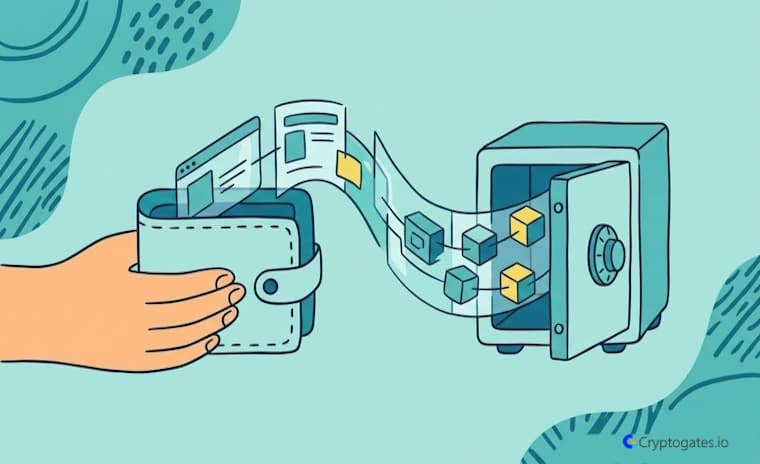
    A crypto wallet doesn’t store coins the way a physical wallet holds cash. Think of it more like a keychain.

    The coins live on the blockchain, a public ledger no one controls. Your wallet holds the keys that prove ownership of those coins.

    There are two keys involved. The public key is your address; share it freely so people can send you crypto.

    Can I lose my crypto if I lose my private key?

    Yes, permanently. There’s no recovery option, no support line, and no way back in.

    The private key is your secret code; it’s what lets you access and move your funds.

    Lose the private key, and the money is gone — a mistake that’s driven nearly half of all crypto theft in recent years.

    Forever.

    No customer support. No password reset. Nothing.

    This is why choosing the right wallet type matters so much.

    Research Insight

    The advice to keep a portion of funds in a hot wallet isn’t theoretical — it’s an operational necessity for anyone running automated strategies. CryptoGates’ internal grid bot testing on SUI/USDT recorded over 1,750 individual trades executed across a single 38-day window, as the bot captured a volatile, sideways-trending market.

    That kind of trade frequency only works when funds sit on a connected, accessible exchange wallet — not in cold storage. This is the practical trade-off traders are making when they choose custody type: cold storage protects long-term holdings, but any capital assigned to an active bot strategy needs to stay liquid and reachable in real time. Choosing the right wallet setup isn’t just about security; it’s about matching custody type to strategy type.

    View Complete Playbook: SUI Fell 7% in 38 Days 📉 Our Grid Bot Fired 1,759 Trades and Banked +7.46%

    SYSTEM ACCESS: CG4.2

    Stop Guessing.
    Stress Test Your Edge.

    The market doesn’t care about your backtest. Our engine simulates 1,000+ “what-if” scenarios to ensure your strategy is built for survival.

    Run Crypto Strategy Engine →
    ROBUSTNESS SCORE
    75+ STRUCTURAL EDGE
    RISK OF RUIN < 1%
    TARGET HIT 92%

    The Main Types of Crypto Wallets

    There are several ways to store crypto, and each one makes a different trade-off between convenience and security.

    Software wallets live on your phone, computer, or web browser. They’re easy to set up and great for regular use. Mobile wallets like Trust Wallet or Coinbase Wallet let you manage funds on the go.

    Desktop wallets like Exodus offer more features with a clean interface. Web wallets run in your browser, which is convenient, but the company often holds your keys on its servers, which is a risk worth knowing about.

    Hardware wallets are physical devices; think of a USB drive built specifically for crypto. Brands like Ledger and Trezor store your private keys offline, completely away from the internet. Even if your computer gets hacked, your funds stay safe.

    They cost money up front (usually $50–$150), but for anyone holding a serious amount of crypto long-term, that’s a small price to pay for real peace of mind.

    Paper wallets are exactly what they sound like: your keys printed on paper and stored offline. Zero hacking risk. But lose the paper, spill coffee on it, or have a house fire?

    Gone. Most experienced traders consider paper wallets outdated for regular use.

    Swipe to view full data →
    Wallet Type Best For Security Level
    Mobile/Desktop (Software) Daily trading, beginners Medium
    Hardware (Ledger, Trezor) Long-term holding High
    Paper Wallet Offline backup High (if stored safely)
    Exchange Wallet Active trading only Low to Medium
    What is the safest type of crypto wallet?

    Hardware wallets are the most secure option. They store your private keys offline, completely out of reach of internet-based attacks.

    Hot Wallets vs. Cold Wallets: The Simple Version

    Every wallet falls into one of two categories.

    A hot wallet is connected to the internet, easy to access, and faster for trading, but exposed to online risks.

    A cold wallet is offline and more secure, but slightly less convenient for everyday transactions.

    📊 Around 34% of crypto holders store all their assets on exchanges, leaving them exposed to platform-level risk. Statista / Crypto.com Annual Report

    The smart approach most experienced traders use is both.

    Keep a small amount in a hot wallet for active trading.

    Store the bulk of your holdings in cold storage where no hacker can reach them. It’s not complicated.

    It just requires thinking one step ahead.

    HISTORICAL DATA AUDIT

    Battle-Test Your Strategy
    Before the Market Does.

    Eliminate guesswork with institutional-grade backtesting for DCA, Grid, and Rebalance bots. Real historical data. Real-world results.

    EST. OPTIMIZATION +42% ROI Efficiency
    Start Backtest Now

    Sourced from 5+ Years of Exchange Data

    Custodial vs. Non-Custodial: Who Actually Controls Your Crypto?

    This is the one distinction most beginners miss, and it matters more than anything else.

    A custodial wallet means a company (usually an exchange) holds your private keys for you. It’s simple, beginner-friendly, and works fine until the company doesn’t.

    Non-custodial wallets give you full control. Only you hold the keys. No third party can freeze or lose your funds.

    ✅ INTERACTIVE CHECKLIST Before You Pick a Wallet

    • Do I control my own private keys?
    • Is this wallet from an official, verified source?
    • Have I backed up my seed phrase offline?
    • Do I know whether this is custodial or non-custodial?
    • EIs the exchange behind this wallet verified with proof of reserves?

    The phrase you’ll hear in crypto circles is “not your keys, not your coins.”

    It sounds cliché until you’ve watched someone lose their savings because an exchange went under.

    For small amounts and active trading?

    Custodial is fine.

    For anything you plan to hold long-term? Non-custodial is the safer call.

    Real Backtest Example

    Strategy: Rebalance Bot | Pair: SOL/ETH | Market Condition: Diverging assets (SOL −12.37%, ETH +5.64%) | Objective: Outperform passive holding through automated portfolio rebalancing

    Key Result: The bot closed with +1.70% ROI, edging out buy-and-hold by 0.11%, executing every swap through direct exchange connectivity over the full 46-day test window.

    Expert Interpretation: Results like this depend entirely on uninterrupted access to exchange order execution. If the underlying exchange had frozen withdrawals or restricted API access mid-cycle, the same strategy could have failed regardless of how sound its logic was.

    This is precisely why verifying an exchange’s proof of reserves matters before connecting any bot to it — the wallet and custody decision isn’t separate from strategy performance; it’s the foundation it runs on.

    View Complete Playbook: One Asset Fell Hard. One Climbed. Here’s Why the Bot Profited Anyway

    How to Actually Choose the Right Wallet

    The right choice depends on what you’re doing with your crypto.

    If you’re just starting out and still learning, a reputable exchange wallet or mobile wallet gives you a simple, low-friction entry point.

    Apps like Trust Wallet or Coinbase Wallet are user-friendly and widely trusted. Just don’t keep large amounts there indefinitely.

    Andreas M. Antonopoulos
    “Not your keys, not your coins. Self-custody is the only way to truly own your crypto.”

    Andreas M. Antonopoulos, Bitcoin Educator and Author

    If you’re building a long-term position, say you’re dollar-cost averaging into Bitcoin or Ethereum over months, a hardware wallet makes sense.

    The one-time cost protects an investment you’re planning to grow slowly and hold seriously.

    What happens if a custodial exchange shuts down?

    If the exchange holding your funds shuts down or freezes withdrawals, your crypto can be locked or lost entirely. Non-custodial wallets prevent this.

    If you’re trading frequently with bots or automated strategies, you’ll want a wallet that connects cleanly to the exchanges you’re using.

    This is where things get slightly more technical, but it doesn’t have to be overwhelming.

    How CryptoGates Fits Into This

    At CryptoGates.io, we work with traders who are building real strategies, not gambling, not chasing hype.

    Our partner exchanges (Binance, OKX, Bybit, Coinbase, and others) all meet strong security standards, and our Exchange Picker tool helps you filter for exchanges with verified proof of reserves. That matters because a safer exchange means a safer custodial wallet too.

    When you’re running automated strategies through our platform’s DCA bots, grid bots, and rebalancing tools, knowing your funds are on a secure, verified exchange is part of the whole framework.

    Verify first. Risk later. That applies to wallets, too.

    Most traders don’t ask where their money lives until it’s gone. Verify the exchange. Control your keys. That’s not advanced strategy; that’s the foundation. Everything else we build at CryptoGates sits on top of that one principle

    ZAHEER, CEO CryptoGates

    Before You Risk Real Money, Understand Where It Lives

    Getting your wallet set up right isn’t glamorous.

    It won’t make you rich. But it’s one of those foundational decisions that separates traders who stick around long-term from the ones who get burned and walk away.

    Pick the wallet type that fits your situation. Understand the difference between holding your own keys and letting someone else do it. Start small if you’re new.

    And if you’re building a real trading strategy, make sure the exchange behind it has been verified and not just trusted because it looks professional.

    Head over to CryptoGates.io and use the Exchange Picker to see which platforms actually back their security claims with proof of reserves.

    Small step. Big difference.

    CONFIDENTIAL // RESEARCH
    STRATEGY INTELLIGENCE

    Proven Setups &
    Expert Breakdowns.

    We don’t just show you the data; we engineer and validate high-performance strategies, providing the “Alpha” behind the numbers.

    FAQs

    What is a crypto wallet, and why do I need one?

    A crypto wallet stores the private keys that prove ownership of your crypto. Without one, you rely on an exchange to hold those keys for you. If that exchange gets hacked or shuts down, your funds are at risk.

    A hot wallet is connected to the internet and is convenient for regular trading. A cold wallet is offline and far more secure for long-term storage. Most experienced traders keep small amounts in hot wallets and their main holdings in cold storage.

    Software and web wallets carry some risk since they’re online. Hardware wallets store your keys offline, making remote attacks nearly impossible. The most common way people lose crypto is through phishing scams or accidentally sharing their private key, not sophisticated hacking.

  • Crypto Predictions 🔮: Why Data-Driven Strategies 📊 Matter More Than Price Targets 🎯

    Crypto Predictions 🔮: Why Data-Driven Strategies 📊 Matter More Than Price Targets 🎯

    You bought in. You watched the charts. You waited. Then the market did something completely unexpected, and you were left wondering if anyone actually knows what’s coming next.

    The honest answer?

    Nobody does. But some predictions are built on data. And some are built on hope. Knowing the difference is everything.

    EXECUTIVE SUMMARY
    • The Problem: Most traders chase price predictions without a real strategy, which leads to emotional decisions and avoidable losses.
    • The Solution: Data-driven crypto strategies let you plan your trades before the market moves, not after.
    • The Incentive: Backtesting and scenario simulation show you what actually works, so you risk money with confidence, not guesswork.
    • The Risk: No prediction is guaranteed. Markets are volatile, and without a tested system, even the best forecast can cost you money.

    The Problem With Most Crypto Predictions

    Most price predictions you see online follow the same pattern. Someone picks a big number, adds a confident-sounding reason, and posts it with a chart that looks like it was drawn by someone who really, really wants clicks.

    That’s not analysis. That’s guessing with graphics.

    📊 70% to 90% of retail traders lose money in crypto markets, not because of bad luck, but because of emotional decisions and no tested system.
    Various market studies cited by Bloomberg and CoinDesk

    The traders who survive long-term don’t chase predictions.

    They build systems.

    They study patterns.

    They understand the forces that actually move markets instead of refreshing Twitter, waiting for Elon to post a dog meme.

    So before we look at what the next few years might hold, let’s talk about what actually drives crypto markets. Because the prediction is useless without the context.

    SYSTEM ACCESS: CG4.2

    Stop Guessing.
    Stress Test Your Edge.

    The market doesn’t care about your backtest. Our engine simulates 1,000+ “what-if” scenarios to ensure your strategy is built for survival.

    Run Crypto Strategy Engine →
    ROBUSTNESS SCORE
    75+ STRUCTURAL EDGE
    RISK OF RUIN < 1%
    TARGET HIT 92%

    What Drives Crypto Value Over Time

    Three things have consistently shaped crypto prices across every major cycle. Ignore any of them and your prediction falls apart.

    The first is supply mechanics. Bitcoin has a fixed supply of 21 million coins. Every four years, the reward miners receive for confirming transactions gets cut in half. This is called the halving.

    📊 Bitcoin’s supply is capped at 21 million coins. After the 2024 halving, new BTC entering circulation dropped by 50%, tightening supply at a time of growing institutional demand. Bitcoin Whitepaper / CoinGecko Halving Data

    Historically, the 12 to 18 months following a halving have produced Bitcoin’s biggest price surges. The most recent halving happened in April 2024.

    If the pattern holds, the window we’re in right now is historically significant.

    The second is institutional adoption. When companies, hedge funds, and governments start allocating capital to an asset class, prices tend to move in one direction.

    Bitcoin ETFs crossing $100 billion in assets under management, sovereign wealth funds exploring crypto exposure, and major payment networks integrating blockchain rails are not small signals.

    Swipe to view full data →
    Driver What It Does Risk Level
    Supply Mechanics (Halving) Reduces new BTC supply every 4 years Low
    Institutional Adoption Brings large capital into the market Medium
    Regulatory Clarity Opens or closes market access High

    They represent a structural shift in who owns these assets and why.

    The third is regulatory clarity. This one cuts both ways.

    Clear regulation can unlock institutional participation that was previously too risky.

    Hostile regulation can shut down entire market segments overnight.

    Right now, the regulatory picture is finally getting clearer in the US and parts of Europe, which is generally being read as a positive signal for longer-term adoption.

    Real Backtest Example (Rebalancing)

    Many investors handle a rising altcoin the same way they handle Bitcoin: buy and wait. But when two assets in a portfolio move at different speeds, that approach quietly leaves value on the table.

    In one internal test, XRP climbed 44.6% over four months while BNB rose a comparatively modest 7.4%. A passive holder captured both moves and called it a win. A rebalancing bot, running just three scheduled swaps between the two assets over the same period, still finished 1.66 percentage points ahead of that passive approach.

    The gap didn’t come from predicting which coin would outperform — it came from systematically trimming the winner and reallocating into the laggard as the spread widened. It’s a small mechanical edge, but it’s the kind of edge that compounds when repeated across market cycles.

    View Complete Playbook: XRP Surged 45% in 4 Months. Did Our Rebalance Bot Beat Passive Holding?

    Where Bitcoin Could Go From Here

    The analyst consensus for Bitcoin in 2026 sits roughly in the $120,000 to $200,000 range, depending on who you ask. Some models push higher. Some are more conservative. None of them are guarantees.

    What matters more than the target price is the reasoning behind it.

    📊 Bitcoin ETFs crossed $100 billion in assets under management within months of approval, making it one of the fastest-growing ETF categories in financial history. Bloomberg ETF Research

    The Bitcoin supply shock from the 2024 halving, combined with growing ETF demand and shrinking exchange reserves, creates conditions where even moderate demand increases can move the price significantly.

    That’s basic supply and demand, not speculation.

    Sajid, Strategy & Research, CryptoGates
    A price target without a plan is just noise. At CryptoGates, we don’t ask ‘where is Bitcoin going?’ We ask, ‘What happens to your portfolio if it doesn’t?’ Test every scenario before you risk a single dollar.

    Sajid, Strategist Cryptogates

    What could disrupt this?

    A major regulatory crackdown in a key market.

    A large-scale exchange failure that kills retail confidence.

    A macroeconomic shock that forces institutional investors to liquidate risk assets. None of these is likely in isolation, but none are impossible either.

    This is exactly why building a strategy around a single price prediction is dangerous. The right move is to build a plan that works across multiple scenarios.

    CONFIDENTIAL // RESEARCH
    STRATEGY INTELLIGENCE

    Proven Setups &
    Expert Breakdowns.

    We don’t just show you the data; we engineer and validate high-performance strategies, providing the “Alpha” behind the numbers.

    Altcoins: Higher Risk, Higher Potential

    Ethereum remains the backbone of decentralized finance, NFTs, and most major Web3 applications. Its transition to proof-of-stake reduced its energy footprint dramatically and changed its supply dynamics.

    Many analysts consider Ethereum structurally undervalued relative to Bitcoin, given how much of the actual on-chain activity runs through its network.

    Real Backtest Example (DCA)

    A price target like $150,000 for Bitcoin says nothing about how a position should actually be built or protected.

    One way to test that gap between hypothesis and process: during a 14% BTC rally in April, a DCA bot deployed on a fixed schedule closed every session without a single realized loss, ending the month up $43.54. That’s a modest number next to a straight buy-and-hold return over the same stretch — but the value isn’t the dollar figure, it’s the drawdown profile. The bot never had to guess when the rally would start or whether it would hold. It just kept buying on schedule and let the structure do the work. That’s the practical difference between “I think BTC goes to $150K” and a plan for what happens whether it does or doesn’t.

    View Complete Playbook: BTC Rallied 14% in April. Our DCA Bot Still Pocketed $43 — With Zero Closed Losses

    Ryan Sean Adams
    “Ethereum is the settlement layer for the decentralized economy. Its value isn’t speculative; it’s structural.”

    Ryan Sean Adams, Host of Bankless Podcast

    Beyond Ethereum, the altcoin landscape is genuinely difficult to navigate.

    Projects in DeFi, real-world asset tokenization, and Layer 2 scaling solutions have real use cases and real development activity behind them.

    But the majority of altcoins that exist today will not be relevant five years from now. The market is brutal to projects that can’t deliver.

    The smarter approach to altcoins isn’t picking winners based on hype.

    It’s allocating a defined portion of your portfolio to the sector, using a strategy like rebalancing to systematically take profits as certain assets outperform, and never putting in more than you can afford to lose completely.

    That sounds obvious. Most people don’t do it.

    Before You Buy Any Altcoin, Check These 5 Things:

    • Does it have real on-chain activity, not just hype?
    • Is there an active developer community behind it?
    • Do you understand what problem it actually solves?
    • Have you defined the maximum % of your portfolio you’ll allocate?
    • Have you set a clear exit plan before entering?

    The DeFi Factor

    Decentralized finance grew from almost nothing to processing billions in daily transactions within a few years. The core idea is simple: financial services like lending, borrowing, and trading without a bank or broker in the middle.

    The risks are real. Smart contract vulnerabilities have cost users hundreds of millions. Not all DeFi protocols are trustworthy. But the sector is maturing.

    📊 DeFi protocols processed over $1 trillion in cumulative transaction volume by late 2024, up from near zero just five years earlier. DefiLlama.com

    Auditing standards are improving. Institutional DeFi products are starting to emerge.

    By 2026 and beyond, DeFi’s integration with traditional finance looks more likely than its replacement of it.

    For most retail traders, direct DeFi participation is complex.

    But holding assets with DeFi exposure, or using rebalancing strategies that include DeFi-native tokens, can provide indirect upside without requiring you to become a full-time on-chain analyst.

    Is DeFi safe for beginners?

    Direct DeFi participation carries real risks, including smart contract bugs. Beginners are better off getting indirect exposure through rebalancing strategies that include DeFi tokens.

    How CryptoGates Fits Into This

    Here’s the truth about predictions: they’re starting points, not strategies.

    At CryptoGates.io, the tools are built around one idea. Test before you risk it.

    The Backtesting Lab lets you run your strategy against five years of real historical data so you can see how it would have actually performed, not how you imagine it would have.

    The Monte Carlo simulator runs over a thousand what-if scenarios, so you understand not just the best case but the realistic range of outcomes.

    What is the difference between DeFi and traditional finance?

    DeFi removes the middleman. Lending, borrowing, and trading happen through code on a blockchain, not through a bank or broker.

    If you believe Bitcoin is heading to $150,000, that’s a starting hypothesis.

    The Crypto Strategy Engine at CryptoGates.io can help you build a DCA or Grid Bot approach that captures upside if you’re right, without destroying your portfolio if you’re not.

    That’s the difference between trading on prediction and trading on process.

    HISTORICAL DATA AUDIT

    Battle-Test Your Strategy
    Before the Market Does.

    Eliminate guesswork with institutional-grade backtesting for DCA, Grid, and Rebalance bots. Real historical data. Real-world results.

    EST. OPTIMIZATION +42% ROI Efficiency
    Start Backtest Now

    Sourced from 5+ Years of Exchange Data

    The Bottom Line

    Crypto predictions are worth reading. They give you a sense of where smart people think things are heading and why. But they’re not a plan.

    They’re not a strategy. And they’re definitely not a reason to move money without doing your own work first.

    The next few years in crypto will have surprises. There will be rallies that feel obvious in hindsight. There will be crashes that nobody saw coming. The traders who come out ahead won’t be the ones who picked the right prediction.

    They’ll be the ones who had a system, stuck to it, and didn’t panic.

    Start building that system at CryptoGates.io. Your future self will thank you.

    FAQs

    Is it too late to invest in Bitcoin?

    That question has been asked at every price point in Bitcoin’s history. Timing matters less than strategy. A disciplined DCA approach removes the pressure of finding a perfect entry because you’re averaging in over time instead of betting on one moment.

    Look at the reasoning behind it, not just the number. A solid prediction explains exactly which factors are driving the forecast and honestly states the conditions under which it could be wrong. No logic behind it? Move on.

    Yes. The Backtesting Lab at CryptoGates.io lets you run any strategy against years of real historical data before you commit a single dollar. It’s the most underused tool in retail crypto trading, and it’s free to explore.

  • Crypto Regulations Explained 📜: Protect Your Crypto 🛡️ Before Changing Laws Catch You Off Guard ⚠️

    Crypto Regulations Explained 📜: Protect Your Crypto 🛡️ Before Changing Laws Catch You Off Guard ⚠️

    You bought crypto in one country, your exchange is based in another, and the rules just changed in both. Sound familiar?

    This is the reality for millions of traders right now, and most of them have no idea how close they are to getting caught off guard.

    Over 70% of retail crypto traders report they have never checked whether their exchange holds a valid operating license in their jurisdiction.

    Statista, Global Crypto User Survey

    Global crypto regulations are moving faster than most people realize.

    What was fine last year might not be fine today.

    And if you’re trading without understanding the basic legal landscape around you, you’re not just taking market risk.

    You’re taking regulatory risk on top of it.

    Let’s break down where things actually stand.

    EXECUTIVE SUMMARY
    • The Problem: Most traders don’t realize that crypto rules differ country to country, and a wrong platform choice can freeze your funds overnight.
    • The Solution: Understanding where key regions stand on crypto regulations helps you pick safer exchanges and avoid avoidable legal risk.
    • The Incentive: Regulated markets attract more institutional money, clearer tax rules, and platforms that can’t disappear with your capital.
    • The Risk: Regulations are still shifting fast; what’s compliant today may not be tomorrow, and traders without a plan get caught off guard.

    Why Governments Are Paying Attention Now

    For years, crypto existed in a kind of legal grey zone. Governments watched, scratched their heads, and mostly let it run. That era is over.

    Bitcoin’s market cap crossed numbers that made central banks nervous. DeFi started pulling money away from traditional financial systems.

    Scams, rug pulls, and exchange collapses, with FTX being the loudest, forced regulators to act. The message from governments worldwide is the same, even if the approach differs: we’re not ignoring this anymore.

    Sheila Warren
    “The collapse of major exchanges didn’t just hurt investors. It gave regulators the political will they were waiting for.”

    Sheila Warren, CEO, Crypto Council for Innovation

    The core goals behind most crypto regulation are pretty consistent.

    Prevent money laundering.

    Protect consumers from fraud. Collect taxes.

    Maintain stability in financial systems. Where countries diverge is how far they’re willing to go and how fast.

    SYSTEM ACCESS: CG4.2

    Stop Guessing.
    Stress Test Your Edge.

    The market doesn’t care about your backtest. Our engine simulates 1,000+ “what-if” scenarios to ensure your strategy is built for survival.

    Run Crypto Strategy Engine →
    ROBUSTNESS SCORE
    75+ STRUCTURAL EDGE
    RISK OF RUIN < 1%
    TARGET HIT 92%

    The United States: Still Figuring It Out

    The US situation is honestly a bit of a mess right now, but it’s a mess worth understanding. The SEC and CFTC have been fighting over who controls what. The SEC treats many crypto assets as securities under its own federal securities laws framework for digital assets.

    The CFTC sees Bitcoin and Ethereum more as commodities. This jurisdictional tug-of-war creates real confusion for exchanges and traders alike.

    What’s clear is that US-based exchanges face serious compliance requirements, including anti-money laundering checks, user identity verification, and licensing at both the federal and state levels.

    Real Backtest Example

    Macro shocks don’t announce themselves. In April 2025, a sudden round of tariff news knocked BTC from roughly $87,000 down to $74,000 in a matter of weeks — one of the sharpest non-regulatory, headline-driven crashes of the year.

    It’s a useful parallel for traders thinking about regulatory shocks: the trigger was external and unpredictable, but the outcome for unprepared holders was the same kind of sudden drawdown a licensing crackdown or exchange shutdown can cause.

    Strategy: DCA | Coin: BTC | Market Condition: Sharp macro-driven crash | Objective: Test rules-based buying through an external shock

    Key Result: 16 of 17 sessions closed via take-profit, netting $349.61 while spot holders were still underwater.

    Expert Interpretation: The bot’s edge wasn’t predicting the tariff news — it was having a predefined system that kept executing regardless of the headline. That’s the same logic behind checking an exchange’s regulatory standing before depositing: you’re not trying to predict the next policy shift, you’re removing exposure to it in advance.

    View Complete Playbook: The Tariff Trap Playbook — How a DCA Bot Turned BTC’s Worst April in Years Into +$349 Profit

    Is crypto trading legal in the US right now?

    Yes, but with conditions. US traders must use licensed exchanges, complete identity verification, and report gains. The rules are still evolving between agencies.

    Coinbase and Kraken, for example, have navigated years of back-and-forth with regulators.

    Smaller platforms haven’t always survived it.

    If you’re trading in the US, the practical takeaway is simple: stick to regulated exchanges.

    Platforms with proof of reserves and proper licensing, the basics most traders skip before depositing, aren’t just safer from a legal angle; they’re less likely to freeze your funds or disappear overnight.

    Europe: The Most Structured Approach

    The European Union did something no other major region has managed yet; it passed a unified crypto law that applies across all member states. MiCA, the Markets in Crypto-Assets regulation, is now in full effect, significantly changing things for anyone trading or building in Europe.

    Under MiCA, crypto companies must meet real transparency standards. They have to disclose how their assets work, maintain proper reserves, and get authorized before operating.

    Swipe to view full data →
    Region Regulatory Status Key Framework
    European Union Fully regulated MiCA
    United States Partially regulated SEC / CFTC
    Japan Regulated FSA Framework
    UAE / Singapore Regulated, crypto-friendly VARA / MAS
    China Banned Digital Yuan only

    Stablecoin issuers face particularly strict rules around backing and redemption.

    For traders, this is actually good news.

    More accountability from exchanges and issuers means fewer surprises.

    The UK, now operating outside EU law post-Brexit, is building its own framework, positioning itself as innovation-friendly while still tightening oversight through the Financial Conduct Authority.

    CONFIDENTIAL // RESEARCH
    STRATEGY INTELLIGENCE

    Proven Setups &
    Expert Breakdowns.

    We don’t just show you the data; we engineer and validate high-performance strategies, providing the “Alpha” behind the numbers.

    Asia: Two Very Different Directions

    China banned it all. Every crypto transaction and every mining operation was declared illegal in 2021, and the enforcement has been real. That wave of Chinese miners relocating? It reshaped the global hash rate almost overnight.

    China is building its own government-controlled digital currency instead, which tells you everything about its philosophy.

    Japan went the opposite direction. It was one of the first countries to build a formal regulatory framework for crypto exchanges requiring registration, audits, and consumer protections. The result?

    A functioning, relatively stable domestic crypto market. Traders there have legal recourse when things go wrong. That matters.

    Which countries are safest for crypto trading right now?

    Japan, the UAE, and Singapore have clear, functioning frameworks. Traders, there are legal protections that most other markets still don’t offer.

    India sits somewhere in the middle, with high interest from retail investors, regulatory uncertainty from the government, and a tax structure that’s been criticized for being aggressive without being clear.

    It’s a market with enormous potential that keeps getting in its own way.

    Singapore and the UAE have emerged as the places crypto businesses want to be.

    Dubai specifically created an entire regulatory authority, VARA, just for virtual assets.

    Major exchanges set up regional headquarters there for a reason.

    Research Highlight

    The article notes that regulatory clarity tends to precede institutional capital moving into a market — but capital rarely arrives the moment clarity appears. There’s usually a consolidation phase first. Our internal testing on SOL captured exactly this pattern: after a sharp post-crash decline, the asset spent 60 days drifting sideways in what looked like dead air, the kind of quiet period markets often sit in while institutional participants wait for clearer footing (regulatory or otherwise) before committing.

    A grid strategy run through that same 60-day window fired 146 trades and generated $462.95 in net profit, outperforming buy-and-hold by 10.88 percentage points — turning what looked like a directionless, low-conviction market into a measurable opportunity rather than dead time.

    The takeaway for traders watching regulatory developments unfold: sideways periods driven by uncertainty aren’t necessarily periods with nothing happening. They’re periods that reward a system built to extract value regardless of direction.

    View Complete Playbook: SOL’s “Institutional Purgatory” — Extracting Grid Profits from the $80–$97 Post-Crash Dead Zone

    What This Means for Your Actual Trading

    Here’s the part most articles skip. Understanding regulations isn’t just legal homework.

    It directly affects where your money is safe, which platforms will still be operating in two years, and whether your profits get taxed in ways you didn’t plan for.

    When regulations tighten, exchanges that aren’t compliant get shut down or exit markets suddenly.

    If your funds are on one of those platforms, the exit might not be smooth. This is exactly why exchange selection matters as much as strategy selection.

    Before You Deposit on Any Exchange: Run This Check

    • Does the exchange hold a valid license in a regulated jurisdiction?
    • Does it publish proof of reserves publicly?
    • Is it accessible and legal in your country?
    • Does it have a clear withdrawal process with no hidden locks?
    • Have you checked its regulatory history for past violations?

    At CryptoGates.io, the Exchange Picker tool filters platforms by regulatory standing and proof of reserves, not just trading fees or coin selection.”

    It’s the kind of check most traders skip until they’re dealing with a withdrawal freeze.

    Running that filter before you deposit is the kind of small discipline that protects you from entirely avoidable problems.

    The broader point connects to something we believe at CryptoGates.io: verify first, risk later.

    That applies to strategy. It applies to market conditions.

    And it absolutely applies to the legal environment around the exchanges you trust with your capital.

    SELECTION MATRIX V2.0

    Not sure which
    exchange fits you?

    Bypass the marketing hype. Our matrix cross-references your profile against 50+ institutional metrics—including Proof-of-Reserves and Slippage Models.

    PoR Verified Low Slippage API Ready
    B
    K
    C
    O
    Find My Gateway Analysis Time: < 60s
    “We built the Exchange Picker because we watched too many traders lose money not from bad trades, but from bad platforms. Regulations aren’t the enemy. They’re the filter. The exchanges that survive them are the ones worth trusting.”

    ZAHEER, CEO CryptoGates

    Where Things Are Heading

    Global crypto regulation isn’t moving toward a single unified rulebook anytime soon.

    The Financial Action Task Force is pushing member countries to adopt consistent anti-money laundering standards. The IMF keeps publishing guidance on coordinated approaches.

    But getting 190-plus countries with different financial priorities to agree on crypto policy is genuinely hard.

    📊 The EU’s MiCA framework is projected to bring an additional $50 billion in institutional crypto investment into compliant European markets within two to three years of full enforcement. PwC Global Crypto Report

    What is happening is a gradual split.

    Countries that want to attract crypto capital, such as the UAE, Singapore, Switzerland, and Japan, are building clear, functional frameworks.

    Countries that feel threatened by decentralized finance, China being the extreme example, are clamping down.

    Everyone else is somewhere in the middle, still debating.

    For traders, the opportunity is in staying informed and staying on the right platforms. Regulatory clarity in a country tends to precede growth in that market.

    The EU’s MiCA framework, for all its compliance overhead, is likely to bring more institutional money into European crypto markets over the next few years.

    That’s a signal, not noise.

    Don’t Trade Blind on Either Side

    Market analysis without regulatory awareness is half a picture.

    Knowing Bitcoin’s price action means nothing if your exchange gets shut down or your jurisdiction suddenly taxes unrealized gains.

    Do I need a lawyer to trade crypto safely?

    No. You need a compliant platform, basic knowledge of your local tax rules, and a habit of checking when major regulatory news drops.

    The good news is this doesn’t have to be complicated.

    You don’t need a law degree.

    You need to trade on compliant platforms, understand the basics of your local tax rules, and pay attention when major regulatory decisions happen because they move markets.

    What’s the single most important thing a trader can do right now?

    Verify your exchange is licensed and publishes proof of reserves. Everything else comes after that.

    CryptoGates.io keeps that framework simple.

    Run your strategies through the Backtesting Lab.

    Pick exchanges through the Exchange Picker.

    Build a plan that accounts for real-world risk, not just chart patterns.

    The last traders aren’t necessarily the smartest ones. They’re the ones who didn’t get wiped out by something they could have seen coming.

    FAQs

    Are cryptocurrencies legal to trade in most countries?

    Most countries allow crypto trading, but with conditions like licensed exchanges, identity verification, and tax reporting. Check your country’s current stance before depositing anywhere, because rules are shifting fast.

    Unlicensed exchanges can get shut down with little warning, and your funds can get frozen in the process. Always pick platforms with proper licensing and proof of reserves. CryptoGates.io’s Exchange Picker filters exactly for this.

    MiCA is the EU’s unified crypto law now in full effect across all member states. It holds exchanges to stricter transparency and reserve standards, which is actually a protection for traders, not just paperwork for businesses.

  • Crypto Security for Beginners 🔒: Protect Your Crypto 🛡️ Before It’s Too Late 💸

    Crypto Security for Beginners 🔒: Protect Your Crypto 🛡️ Before It’s Too Late 💸

    You worked hard to buy your first crypto. Maybe you’re up 40%. Maybe you finally figured out a strategy that’s working. Then one morning, you open your wallet app, and it’s empty.

    That’s not a horror story. It happens every single day.

    “Over $3.8 billion in crypto was stolen through hacks and scams in a single recent year.” Chainalysis Crypto Crime Report

    Most beginner traders spend hours researching which coin to buy and zero hours thinking about how to keep it safe.

    That’s backwards.

    Because it doesn’t matter how good your strategy is if someone can just reach in and take everything you built.

    EXECUTIVE SUMMARY
    • The Problem: Most beginners focus on what to buy, not how to protect it. One security mistake can wipe out everything.
    • The Solution: Simple habits like cold wallets, 2FA, and verified exchanges block the majority of attacks before they happen.
    • The Incentive: Never share your private key or seed phrase. Ever. With anyone.
    • The Risk: Crypto has no fraud protection. Lost funds don’t come back.

    Why Crypto Is a Target (and Why You Specifically)

    Here’s something the hype crowd doesn’t tell you: crypto has no fraud protection. No chargebacks. No, we’ll investigate and refund you.

    “If your funds are gone, they’re gone. The blockchain is permanent. That’s what makes it powerful, and that’s exactly what makes security non-negotiable.

    Andreas M. Antonopoulos
    “Hackers don’t discriminate by wallet size. Automation means every exposed wallet is equally at risk.”

    Andreas Antonopoulos, Bitcoin Security Educator

    Here’s something the hype crowd doesn’t tell you: crypto has no fraud protection.

    No chargebacks. No, we’ll investigate and refund you.

    If your funds are gone, they’re gone. The blockchain is permanent. That’s what makes it powerful, and that’s exactly what makes security non-negotiable.

    Hackers aren’t just targeting big exchanges or wealthy whales.

    They’re running automated attacks on thousands of small wallets at once. Your $300 in Bitcoin is just as interesting to them as someone else’s $300,000; it’s all automated.

     “97% of crypto theft comes from hot wallets connected to the internet.”   CipherTrace Crypto Crime Report

    They’re playing a numbers game, and individual traders who skip basic security are the easiest wins.

    So what actually puts your crypto at risk?

    The biggest threats aren’t complicated. Phishing scams where a fake website steals your login.

    Can hackers target small wallets too?

    Yes. Most attacks are automated and don’t care how much you hold.

    Malware is sitting quietly on your laptop, recording every keystroke.

    Weak passwords are reused across platforms.

    And the most painful one is losing access to your own wallet because you never backed up your private keys properly.

    Research Insight

    Panic is not just a security risk. It’s a market risk, too.

    CryptoGates research into a 45% single-week collapse in ENA following a stablecoin redemption panic found the same pattern security researchers see in phishing and social-engineering attacks: the damage wasn’t caused by the crash itself, but by reactive decisions made in the middle of it.

    A systematic approach that had already defined its rules before the panic started came out with a net profit, while reactive, in-the-moment decisions during that window were consistently the losing move.

    The lesson generalizes well beyond trading: whether it’s a market crash or a “your account has been flagged” email, decisions made in a rush, under pressure, are where funds are lost. Discipline set up in advance beats judgment exercised in the moment, every time.

    View Complete Playbook: ENA Crashed 45% in the USDe Panic. This DCA Bot Still Banked +$898.19

    Your Private Key Is Everything

    Think of your private key as the actual ownership of your crypto. Not your password. Not your account login. The private key.

    Whoever holds the private key controls the funds. Period. If someone gets yours, they don’t need to hack anything; they just walk in through the front door.

    “At CryptoGates, we say verify first, risk later. ” That applies to security, too. Before your first trade, your seed phrase backup should already be done. No exceptions.”

    ZAHEER, CEO CryptoGates

    Never share it.

    Never type it into any website. Never store it in your email, your notes app, or a screenshot.

    Write it down on paper and keep it somewhere safe and offline. Yes, actual paper. Old school works.

    The same applies to your seed phrase, that 12- or 24-word recovery phrase your wallet gives you when you first set it up.

    That phrase IS your wallet.

    Anyone with those words can restore your wallet on any device and drain it completely. Treat it like cash in hand.

    Your Basic Security Checklist Before You Trade

    • Seed phrase written on paper and stored offline
    • The private key is never typed into any website
    • 2FA enabled on exchange and email
    • Using a verified exchange with proof of reserves
    • Hardware wallet set up for larger holdings

    Hot Wallets vs. Cold Wallets

    A hot wallet, as covered in our guide on hot wallet vs cold wallet storage, is connected to the internet.

    Your exchange account is a hot wallet. Most mobile crypto apps are hot wallets.

    Convenient, yes. Being connected to the internet means being exposed to everything the internet brings.

    A cold wallet is offline. Hardware wallets like Ledger or Trezor are small physical devices that store your private keys completely disconnected from any network.

    Swipe to view full data →
    Metric Hot Wallet Cold Wallet
    Connected to internet Yes No
    Best for Active trading Long-term storage
    Hack risk Higher Very low
    Example Exchange account Ledger, Trezor
    Recommended for Small, active amounts Larger holdings

    The practical approach most experienced traders use:

    Keep only what you’re actively trading on an exchange and move larger holdings to cold storage.

    You don’t leave your life savings in a casino chip pile; the same thinking applies here.

    Real Backtest Example

    Strategy: DCA
    Coin: BTC
    Market Condition: Sharp macro-driven crash ($87K to $74K)
    Objective: Test whether a pre-defined, rules-based plan holds up under a fast, fear-driven sell-off

    Key Result: 16 of 17 sessions closed via take-profit, delivering a net gain while spot holders were still underwater.

    Expert Interpretation: The bot had no information advantage over anyone else watching BTC fall. What it had was a plan set before the crash began, with no room for mid-panic improvisation. That’s the same principle behind a seed phrase backup done before you ever need it, or 2FA turned on before an attacker tries to log in. Verification and preparation done in advance are what hold up when things move fast, not decisions made in the moment.

    View Complete Playbook: The Tariff Trap Playbook — How a DCA Bot Turned BTC’s Worst April in Years Into +$349 Profit

    Two-Factor Authentication Is Not Optional

    Two-factor authentication, or 2FA, adds a second verification step beyond your password.

    Even if someone steals your login credentials, they still can’t get in without the second factor, usually a time-sensitive code from an app on your phone.

    SMS-based 2FA is better than nothing, but app-based authentication is significantly harder to intercept.” Jameson Lopp, Bitcoin security researcher and Casa CTO

    Turn it on everywhere. Your exchange.

    Your email.

    Your wallet app. Every account connected to your crypto in any way.

    Use an authenticator app like Google Authenticator or Authy rather than SMS codes.

    Text messages can be intercepted through SIM swapping attacks. An app-based code lives on your phone and nowhere else.

    This one step blocks the majority of unauthorized access attempts.

    HISTORICAL DATA AUDIT

    Battle-Test Your Strategy
    Before the Market Does.

    Eliminate guesswork with institutional-grade backtesting for DCA, Grid, and Rebalance bots. Real historical data. Real-world results.

    EST. OPTIMIZATION +42% ROI Efficiency
    Start Backtest Now

    Sourced from 5+ Years of Exchange Data

    Choosing a Safe Exchange Matters More Than You Think

    Not all exchanges are equal. Some have been hacked. Some have disappeared with user funds. Some don’t even hold proper reserves to cover withdrawals if things go wrong.

    When you’re choosing where to trade, look for exchanges that publish proof of reserves, independent verification that the exchange actually holds the crypto it claims to hold.

    Nic Carter, Crypto Researcher and Castle Island Ventures Partner

    “Proof of reserves is the minimum standard any exchange should meet. If they won’t publish it, that tells you something.”

    This transparency matters.

    It’s the difference between trading on solid ground and hoping the platform hasn’t quietly made risky bets with your money.

    CryptoGates.io built an Exchange Picker specifically to filter this out for you.

    It narrows down to exchanges with verified proof of reserves, solid security records, and transparent operations.

    You’re not doing random research, hoping you picked a safe one; you’re running it through a filter designed to keep you off platforms that could cost you everything before you even make a trade.

    SELECTION MATRIX V2.0

    Not sure which
    exchange fits you?

    Bypass the marketing hype. Our matrix cross-references your profile against 50+ institutional metrics—including Proof-of-Reserves and Slippage Models.

    PoR Verified Low Slippage API Ready
    B
    K
    C
    O
    Find My Gateway Analysis Time: < 60s

    What About the Exchanges Themselves?

    Reputable exchanges don’t keep all funds in hot wallets.

    Most stores store the majority in cold storage, with only a small percentage available for active withdrawals. They run regular security audits, require multi-signature approvals for large transfers, and encrypt data heavily.

    But here’s the truth: even with all those measures, exchanges have been hacked. Mt. Gox lost over 750,000 Bitcoin. That was catastrophic and irreversible. The lesson isn’t “never use exchanges.”

    It’s “don’t store more on an exchange than you need to right now.”

    Trade on it. Then withdraw to your own wallet.

    Basic Habits That Actually Matter

    You don’t need to be a cybersecurity expert. You need consistent habits.

    Keep your devices updated. Software patches fix the security holes hackers actively look for.

    Run antivirus software and keep it current. Use strong, unique passwords for every crypto-related account.

    “Only 21% of crypto exchanges publicly verify their proof of reserves.” CoinGecko Exchange Transparency Report

    A password manager makes this simple.

    And bookmark the exchanges and wallet sites you use rather than Googling them each time.

    Fake phishing sites often rank high in search results and look identical to the real thing.

    Be skeptical of anything that arrives in your DMs, inbox, or social feeds promising free crypto, special investment opportunities, or urgent account alerts.

    Legitimate platforms don’t operate that way.

    CONFIDENTIAL // RESEARCH
    STRATEGY INTELLIGENCE

    Proven Setups &
    Expert Breakdowns.

    We don’t just show you the data; we engineer and validate high-performance strategies, providing the “Alpha” behind the numbers.

    Security Is Part of the Strategy

    Here’s the mindset shift that changes everything. Security isn’t separate from your trading strategy; it’s the foundation of it. You can’t build long-term, sustainable returns if the ground beneath you is unstable.

    At CryptoGates.io, the entire philosophy is built around verifying before risking. That means testing strategies before deploying real money. It means choosing exchanges with verified reserves. It means not rushing into positions without a plan.

    What happens if I lose my 2FA device?

    You’ll need your backup codes, which most apps provide during setup. Store those offline the same way you store your seed phrase.

    Security fits perfectly into that same thinking: check your setup, tighten what’s loose, then trade with clarity.

    Before your next trade, spend twenty minutes on your security posture.

    Check that 2FA is active.

    Confirm your seed phrase backup is secure and offline. Make sure you’re on a verified exchange.

    It’s not exciting.

    But it’s what separates traders who build something lasting from traders who eventually have nothing left to protect.

    FAQs

    What’s the safest way to store crypto?

    A hardware wallet kept offline is the safest option for any amount you’re not actively trading. It stores your private keys completely disconnected from the internet. Even a basic Ledger or Trezor device makes remote theft nearly impossible.

    Your funds become permanently inaccessible with no recovery option. That’s why backing up your seed phrase on paper and storing it somewhere physically secure is non-negotiable before you hold any crypto.

     Yes, and it should be app-based, not SMS. Authenticator apps like Google Authenticator or Authy generate codes that only live on your device, which makes them far harder to intercept than a text message.

  • How Crypto Staking Works 🔒: Earn Passive Income 💰 Without Falling Into Hidden Risks ⚠️

    How Crypto Staking Works 🔒: Earn Passive Income 💰 Without Falling Into Hidden Risks ⚠️

    You bought crypto. You’re holding it. And every day it just sits there doing nothing.

    What if it could quietly earn you more while you sleep?

    As of early 2026

    Over 35.86 million ETH is staked, representing 28.9% of Ethereum’s total supply, according to data from Dune Analytics and Ethereum Foundation reporting.

    That’s exactly what crypto staking does.

    It’s one of the most talked-about ways to earn passive income in crypto. But most guides skip the part where things go wrong.

    This one won’t.

    EXECUTIVE SUMMARY
    • The Problem: Most crypto holders let their coins sit idle, missing out on rewards they could earn just by participating in the network.
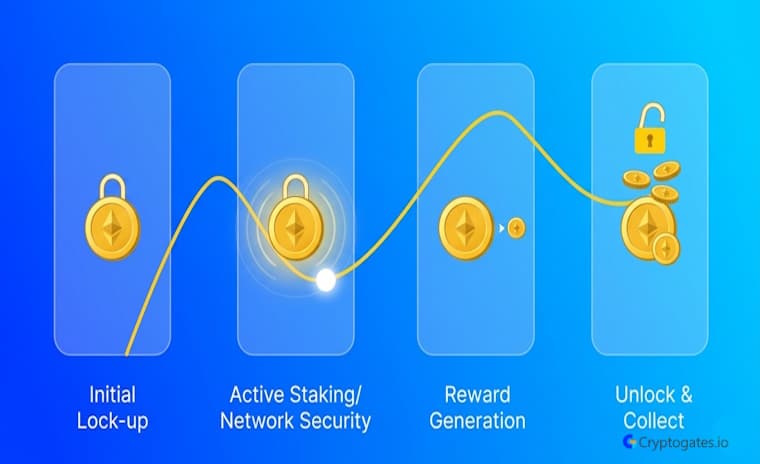
    • The Solution: Crypto staking lets you lock up your coins to help validate transactions, and the network pays you back in rewards automatically.
    • The Incentive: In 2026, top PoS coins like Ethereum, Cardano, and Solana offer real annual yields of 2% to 10% without active trading.
    • The Risk: Lock-up periods, slashing penalties, and misleading APY figures can catch you off guard if you don’t verify the strategy before committing real money.

    What Is Crypto Staking and Why Should You Care?

    Staking is simple at its core. You lock up some of your crypto to help a blockchain network run. In return, the network pays you rewards, usually in the same coin you staked.

    Think of it like earning interest on a savings account, except instead of a bank using your money, you’re helping verify real transactions on a decentralized network.

    PoS

    The key thing that makes staking possible is called Proof of Stake (PoS). It’s how certain blockchains agree on which transactions are real and valid.

    PoW

    Bitcoin uses an older system called “Proof of Work,” which is mining and requires powerful computers and burns massive amounts of electricity.

    PoS is different.

    It picks validators based on how much crypto they’ve staked.

    No mining rigs. No crazy electricity bills. Just your coins doing the work.

    Ethereum completed its transition to Proof of Stake in 2022. Cardano, Solana, and Polkadot all run on PoS. That’s why staking has exploded.

    Research Insight

    (Ties to the claim that staking doesn’t protect against price declines)

    Staking rewards are often framed as a cushion against volatility, but CryptoGates’ internal testing on actively managed strategies tells a more sobering story.

    Even sophisticated multi-asset approaches, ones built specifically to react to price swings, still post losses when both sides of a portfolio fall together. In one backtest covering a two-month window where SOL dropped nearly 32% and ETH collapsed 48%, an actively rebalanced portfolio still ended down $287. The rebalancing didn’t eliminate the loss; it only softened it relative to holding both assets untouched.

    That’s the more honest way to think about staking too: a 3-5% reward layered on top of a coin’s price action does not cancel out a 40% drawdown.

    Yield and price risk are separate variables, and no reward structure, staking or otherwise, changes that math when the underlying asset is falling.

    View Complete Playbook: SOL −32%. ETH −48%. Our Rebalance Bot Lost $287 — and Still Beat Doing Nothing

    How Does Crypto Staking Actually Work?

    You deposit your coins into a staking wallet or pool.

    Those coins get used to validate new transactions on the network. When a block is confirmed, validators get paid, and that reward gets passed to you based on how much you’ve staked.

    You don’t need to understand the tech deeply. What matters is this: the more you stake, and the longer you stake it, the more you earn. Simple.

    There are three main ways to stake:

    Swipe to view full data →
    Staking Method Who It’s For Typical Requirement
    Solo Staking Advanced users 32 ETH minimum (Ethereum)
    Staking Pools Beginners to intermediate Any amount
    Exchange Staking Complete beginners Any amount, fully managed
    • Solo Staking means running your own validator node. For Ethereum, that requires 32 ETH minimum. High control, high responsibility, high reward. Not for beginners.
    • Staking Pools are exactly what they sound like; many people combine their crypto so the group meets the minimum requirements. A pool operator handles the technical work. Rewards get split proportionally. Lido and Rocket Pool are well-known examples of Ethereum.
    • Exchange Staking is the easiest. You deposit your coins on an exchange like Binance, Coinbase, or OKX and click a button. They do everything. Lower rewards, but zero technical hassle.

    Cardano currently sits at approximately 2.44% APR with zero lock-up period, making it one of the most flexible staking options for liquidity-conscious holders. Cardano Foundation staking reports, 2026

    SELECTION MATRIX V2.0

    Not sure which
    exchange fits you?

    Bypass the marketing hype. Our matrix cross-references your profile against 50+ institutional metrics—including Proof-of-Reserves and Slippage Models.

    PoR Verified Low Slippage API Ready
    B
    K
    C
    O
    Find My Gateway Analysis Time: < 60s

    Real Staking Yields in 2026: What You Can Actually Expect

    Here’s where people get misled. A coin advertising 18% APY sounds amazing. But if that same network is inflating its supply by 12%, your real yield is closer to 6%. Always look at real yield, not headline APY.

    As of March 2026, nominal APYs across major staking coins range from 3% to 19%, but real yields after accounting for network inflation drop to somewhere between 0% and 10%.

    Here’s a quick, honest breakdown:

    1. Ethereum (ETH): As of early 2026, around 35.86 million ETH is staked, representing 28.9% of the total supply, earning an average 3.3% APY.
    2. Cardano (ADA): Currently sitting around 2.44% APR, with no lock-up period, meaning you can withdraw or reallocate your ADA at any time, even while it’s delegated.
    3. Solana (SOL): Higher performance chain, competitive yields through delegated PoS, and flexible staking options depending on where you stake.
    4. Polkadot (DOT): Requires a 28-day unbonding period for staked crypto, meaning once you unstake, you wait nearly a month before your coins are free. Factor that into your plans.
    5. Cosmos (ATOM): One of the higher nominal yields, but check the inflation rate before celebrating.
    Swipe to view full data →
    Coin Nominal APY Lock-Up Period
    Ethereum (ETH) ~3.3% None (liquid staking available)
    Cardano (ADA) ~2.44% None
    Solana (SOL) Varies by pool Flexible
    Polkadot (DOT) Higher nominal 28 days
    Cosmos (ATOM) Highest nominal 21 days
    Is crypto staking taxable income?

    In most countries, yes. Staking rewards are typically treated as taxable income at the moment they’re received. Keep detailed records from day one and consult a tax professional.

    TIP:

    “This letter is simply requesting fair tax treatment for digital assets and ending the double taxation of staking rewards is a big step in the right direction.” Rep. Mike Carey (R-OH), member of the U.S. House Ways and Means Committee

    Before committing to any of these, it’s worth running actual numbers.

    The CryptoGates.io Monte Carlo Simulator lets you model 1,000+ staking scenarios using real historical data, so you see expected returns across different market conditions, not just the best-case headline number.

    Data Highlight

    (Ties to the opening idea of idle crypto “doing nothing”)

    The idea that idle crypto is a wasted opportunity isn’t unique to staking; it shows up clearly in CryptoGates‘ broader research on dormant capital. In one 62-day backtest, a meme coin closed essentially flat, down less than 1% from where it started.

    A holder doing nothing would have ended the period with almost the same balance they began with.

    An actively managed bot running the same window turned that flat, seemingly uneventful price action into an +11.07% return, simply by staying engaged with the market instead of parking capital and waiting. The lesson generalizes well beyond trading bots: crypto that sits untouched captures zero benefit from a network’s underlying design, whether that design is trade volatility or a Proof-of-Stake reward mechanism. Idle coins, whatever the strategy, are the one variable every approach agrees on.

    View Complete Playbook: 256 Trades. A Coin Down -0.92%. A Bot Up +11.07%. This Is What Geometric Grids Do to Meme Coin Volatility

    How to Start Staking Crypto Step by Step

    Step 1: Pick your coin. Choose a PoS coin that fits your risk level and liquidity needs. Cardano is great if you hate lock-ups. Ethereum is the safest long-term bet. Cosmos pays more but carries more risk.

    Step 2: Get a wallet. Use a non-custodial wallet where you control your own private keys, and understand the hot wallet vs cold wallet tradeoff before you choose one. Ledger hardware wallets, Exodus, or coin-specific wallets like Phantom for Solana are solid options. Never stake directly from an exchange if you want full control.

    Step 3: Choose how you want to stake. Pool staking is the most beginner-friendly. You don’t need large amounts, and you don’t need technical knowledge.

    Step 4: Delegate or deposit. For pools, you simply assign your coins to a pool operator through the wallet interface. Your coins never actually leave your wallet with non-custodial setups.

    Step 5: Track rewards and reinvest. Staking rewards compound. If you earn 50 coins on a 1,000-coin stake and re-stake those 50, your next reward is calculated on 1,050 coins. That compounding effect adds up seriously over the years.

    Before You Stake Anything

    • I’ve checked the real yield, not just the advertised APY
    • I understand the lock-up period and can live without access for that time
    • I’ve chosen a non-custodial wallet for full control of my keys
    • I’ve researched the pool operator’s reliability and slashing history
    • I’ve tested my staking strategy with historical data before committing real money
    CONFIDENTIAL // RESEARCH
    STRATEGY INTELLIGENCE

    Proven Setups &
    Expert Breakdowns.

    We don’t just show you the data; we engineer and validate high-performance strategies, providing the “Alpha” behind the numbers.

    The Risks Nobody Talks About Enough

    Staking is not passive and risk-free. Here’s what can go wrong.

    1. Slashing: If your validator node goes offline or behaves incorrectly, the network can destroy a portion of your staked coins as a penalty. Most staking pool operators are reliable, but it’s worth researching before you delegate.
    2. Lock-up periods: Some coins lock your funds for weeks. Cosmos requires 21 days of unbonding, and Polkadot requires 28 days. Spotted. If the market drops hard while your coins are locked, you can’t sell. That stings.
    3. Market volatility: Your staking rewards might show 6% APY, but if the coin drops 40% in price, you’re still losing in real terms. Staking rewards don’t protect you from price crashes.
    4. Platform risk: Exchange staking means the exchange holds your coins, and centralized exchange breaches accounted for most crypto losses in early 2025, a reminder of what’s at stake if that exchange gets hacked or collapses. Use regulated, proof-of-reserves exchanges like Binance, Coinbase, or OKX.
    5. Tax complexity: In the US, the IRS treats staking rewards as reportable digital asset income the moment you receive them, and most other countries follow a similar approach. Keep clear records from day one.
    Andreas M. Antonopoulos
    “Not your keys, not your coins. When you stake on an exchange, you’re trusting that exchange with your assets.”

    Andreas Antonopoulos, Mastering Bitcoin and The Internet of Money

    This is exactly why verifying a strategy before committing real money matters so much.

    CryptoGates.io Backtesting Lab lets you test staking strategies against 5+ years of historical data so you understand actual performance before you’re locked in.

    Is Crypto Staking Worth It in 2026?

    Mechanics of the Chain

    01

    long-term

    For long-term holders, yes, absolutely. If you’re planning to hold Ethereum or Cardano for years anyway, earning 3-5% annually on top of potential price appreciation is a no-brainer.

    02

    short-term

    For short-term traders, probably not. Lock-up periods and volatility risk make staking a poor fit if you need quick access to your coins.

    The trap most people fall into is chasing high-APY coins without understanding the real yield, the lock-up terms, or the underlying inflation rate. A 19% APY that deflates your purchasing power isn’t a win.

    The smarter play is to verify first and commit later. Check real yields. Model your scenarios. Understand what you’re locking up and for how long.

    CONFIDENTIAL // RESEARCH
    STRATEGY INTELLIGENCE

    Proven Setups &
    Expert Breakdowns.

    We don’t just show you the data; we engineer and validate high-performance strategies, providing the “Alpha” behind the numbers.

    One Final Thing

    CryptoGates.io was built specifically for people who want to invest systematically, not guess and hope.

    The Strategy Engine, Backtesting Lab, and Monte Carlo Simulator exist to make sure you understand exactly what you’re getting into before a single coin is staked.

    Don’t take anyone’s word for what a staking coin will return. Test it yourself.

    Head to CryptoGates.io and run your staking strategy through real data before you commit.

    FAQs

    What is crypto staking and how does it work?

    Crypto staking means locking up your coins to help validate transactions on a Proof of Stake blockchain. The network pays you rewards in return, usually in the same coin you staked. Major networks, including Ethereum, Cardano, and Solana, all support staking with real annual yields typically between 2% and 10%.

    The main risks are lock-up periods that prevent selling during market drops, slashing penalties if a validator misbehaves, market volatility that can outweigh your staking rewards, and platform risk when using centralized exchanges to stake. Understanding all four before committing is not optional.

    There’s no single answer. Ethereum offers stability and trust at around 3.3% APY. Cardano gives you flexibility with no lock-up period. Polkadot and Cosmos offer higher nominal yields but require 28 and 21 days of unbonding, respectively. The right choice depends on your time horizon, risk tolerance, and how much liquidity you need.

  • What Is Web3? 🌐 The Crypto Trader’s Guide 📚 to Taking Control 💰 of Your Money

    What Is Web3? 🌐 The Crypto Trader’s Guide 📚 to Taking Control 💰 of Your Money

    You’ve probably heard “Web3” thrown around in every crypto conversation lately.

    But here’s the thing: most traders nod along without really knowing what it means for their money.

    That gap between buzzword and understanding? That’s where bad decisions live.
    Let’s fix that.

    Over 70% of retail crypto traders lose money, often because they rely on centralized platforms they don’t fully understand. 

    EXECUTIVE SUMMARY
    • The Problem: Most traders hear “Web3” everywhere but don’t understand what it actually means for their money and trading decisions.
    • The Solution: Web3 moves internet ownership from big companies to the people, using blockchain technology where no single entity controls the data or your assets.
    • The Incentive: On-chain data, decentralized exchanges, and DeFi tools give traders more transparency and control than traditional centralized platforms ever could.
    • The Risk: Web3 puts more responsibility on you. No customer support, no reversals, no safety net if you make a mistake with a decentralized tool.

    The Internet You Used Yesterday Is Already Outdated

    Think about how the web works right now. You log into Binance.

    You check your portfolio on a platform someone else built and controls.

    Your account data sits on a server you’ve never seen, managed by a company you have to trust completely.

    That’s Web2. A handful of massive companies own the infrastructure. They set the rules.

    They can freeze your account, change the terms, or go down at the worst possible moment, during a market spike, during a liquidation event, or during the exact second you need access.

    Andreas M. Antonopoulos
    “The blockchain does not care who you are. It only cares what the code says.”

    Andreas Antonopoulos, Bitcoin Educator and author of Mastering Bitcoin

    Web3 changes the ownership structure.

    Instead of a company’s private server holding everything together, the data lives on a blockchain, a shared digital record spread across thousands of computers worldwide.

    No single boss. No single point of failure. No one company has a kill switch over your assets.

    For traders, this isn’t just a tech philosophy.

    It has real, practical consequences.

    What Blockchain Actually Does for Traders

    Here’s a simple way to think about it. A blockchain is a record book that nobody owns, but everyone can read.

    Every transaction gets written in permanent ink. Nobody can go back and change it. Nobody can erase it.

    This matters for crypto traders because it creates something rare in financial markets: verifiable truth.

    Real Backtest Example

    Strategy: Grid Bot
    Coin: XRP/USDT
    Market Condition: 90-day flat, range-bound market with almost zero net price movement
    Objective: Test whether a rules-based grid strategy can generate returns when price direction gives traders no directional edge to work with
    Key Result: The bot executed 875 trades and closed the period with $1,387.14 in net profit — a 27.74% return, compared to just 0.24% for a simple buy-and-hold position over the same window

    Expert Interpretation: This is the practical version of “process over guesswork.” The bot had no view on where XRP was headed and didn’t need one — it captured value from price oscillation itself, something a directional bet on a flat chart simply cannot do.

    View Complete Playbook: XRP Grid Bot Returned 27.74% in 90 Days While Buy & Hold Made 0.24%

    What is on-chain data in simple terms?

    It’s real transaction activity recorded permanently on the blockchain, wallet movements, exchange flows, and large transfers, all verifiable, no rumors.

    When you see on-chain data showing where large amounts of Bitcoin are moving, that data isn’t a rumor.

    It’s a fact recorded on the blockchain.

    Smart traders use this. Instead of chasing social media predictions or reacting to influencer posts, they track wallet movements, exchange inflows, and on-chain metrics to understand what’s actually happening in the market.

    That’s the CryptoGates philosophy in action. Data over hype. What the blockchain actually shows is not what someone on X is screaming about.

    SYSTEM ACCESS: CG4.2

    Stop Guessing.
    Stress Test Your Edge.

    The market doesn’t care about your backtest. Our engine simulates 1,000+ “what-if” scenarios to ensure your strategy is built for survival.

    Run Crypto Strategy Engine →
    ROBUSTNESS SCORE
    75+ STRUCTURAL EDGE
    RISK OF RUIN < 1%
    TARGET HIT 92%

    How Web3 Changes Crypto Trading Infrastructure

    Web3 isn’t just about owning your data. It’s about decentralized finance DeFi and what it means practically for how you trade.

    In traditional finance, a bank sits in the middle of every transaction. In DeFi, smart contracts replace the middleman.

    A smart contract is a piece of code on the blockchain that executes automatically when conditions are met. Send this, receive that. No bank. No delay. No human who might make an error or run off with the funds.

    Decentralized exchanges processed over $60 billion in monthly trading volume at their peak, showing how far DeFi infrastructure has come. Dune Analytics

    Decentralized exchanges (DEXs) run on this model.

    You trade directly from your wallet. The exchange never holds your assets.

    Which means if the exchange gets hacked or goes bankrupt, your coins aren’t in their vault to begin with.

    Compare that to centralized exchange collapses that wiped out billions in trader funds.

    The difference between having your assets in a platform’s custody versus in your own wallet is a difference that has ended careers for real people.

    Does this mean DEXs are always better?

    Not necessarily. Liquidity, fees, and complexity all play a role.

    The point is that Web3 gives you options, and understanding those options is what separates informed traders from those still operating blind.

    Swipe to view full data →
    Feature Centralized Exchange (CEX) Decentralized Exchange (DEX)
    Asset Custody Platform holds your funds You hold your own wallet
    Downtime Risk Yes, server-dependent Minimal, blockchain-based
    KYC Required Limited On-chain, fully visible
    Beginner Friendly Yes Requires more knowledge

    NFTs, Tokens, and the Noise You Can Ignore

    Web3 conversations always drag in NFTs eventually.

    Here’s an honest take for most crypto traders focused on building steady, sustainable returns: NFTs are largely noise right now.

    The hype cycle around digital art JPEGs has already crashed hard.
    What’s worth paying attention to is tokenization.

    The idea is that real-world assets, such as real estate, commodities, and company equity, can be represented as tokens on a blockchain. That’s still early, but it’s where serious institutional money is starting to look.

    For now, stick to what you can test and verify.

    Trading strategies backed by data.

    Platforms with proof of reserves.

    Exchanges that have been stress-tested.

    Research Highlight

    A pattern shows up repeatedly across CryptoGates’ backtested Playbooks: rules-based bots don’t need to predict a crash to survive one — they only need to keep executing.

    Strategy: DCA Bot
    Coin: BTC/USDT
    Market Condition: Sharp macro-driven flash crash, BTC falling from $87K to $74K in a matter of weeks
    Objective: Measure how a pre-set DCA structure holds up against a fast, sentiment-driven sell-off with no warning
    Key Result: 16 of 17 sessions closed via take-profit, delivering $349.61 in net profit through one of the sharpest drawdowns of the year
    Expert Interpretation: The bot had no macro thesis and did not attempt to time the bottom. It just followed its rules, while spot holders were left reacting emotionally to the drop — which is exactly the gap backtesting is meant to expose before real capital is at risk.

    View Complete Playbook: The Tariff Trap Playbook: How a DCA Bot Turned BTC’s Worst April Into +$349 Profit

    “Most traders don’t lose because the market beats them. They lost because they trusted a platform blindly without checking what it actually does with their funds. Web3 gives you the tools to verify. Use them.”

    ZAHEER, CEO CryptoGates

    How CryptoGates Fits Into This World

    At cryptogates.io, we built our tools around one belief: you should test before you risk.

    The blockchain gives you access to years of real historical price data.

    Our Backtesting Lab lets you run your strategy against that data before putting a single dollar on the line.

    The Exchange Picker filters for platforms that publish proof of reserves, one of the most important Web3 transparency tools available. You can verify a centralized exchange actually holds what it claims, instead of trusting a marketing page.

    The Strategy Engine doesn’t react to hype. It matches your risk profile, your capital, and your market outlook to a trading approach that fits your actual situation.

    DCA bots, Grid bots, and Rebalancing strategies are all built for the trader who wants process over guesswork.

    Web3 opened up a world with more data, more transparency, and more options.

    CryptoGates helps you use that world without getting burned by it.

    HISTORICAL DATA AUDIT

    Battle-Test Your Strategy
    Before the Market Does.

    Eliminate guesswork with institutional-grade backtesting for DCA, Grid, and Rebalance bots. Real historical data. Real-world results.

    EST. OPTIMIZATION +42% ROI Efficiency
    Start Backtest Now

    Sourced from 5+ Years of Exchange Data

    Start With Understanding, Not Speculation

    Most traders lose money because they move first and think later. A new coin trends on Reddit, and they buy it.

    A Web3 project promises revolutionary returns, and they ape in. Then the correction hits, and they’re stuck holding losses they didn’t see coming.

    Web3 knowledge doesn’t have to mean Web3 gambling. Understanding how blockchain transparency works, how on-chain data can inform your decisions, and how decentralized tools give you more control—that’s the edge most retail traders are missing.

    You don’t need to become a blockchain developer. You need to understand enough to trade smarter.

    Head over to CryptoGates.io, run your strategy through the Backtesting Lab, and see what the data actually says before your money is on the line.

    That’s not a limitation. That’s the whole point.

    Traders who backtest their strategies before going live are significantly more likely to avoid catastrophic losses in volatile markets. (CryptoGate’s internal research + general trading literature)

    The Bottom Line

    Web3 isn’t a trend to chase. It’s a shift in how the internet and crypto markets actually work.

    Understanding it doesn’t mean you need to buy every new token or jump into every DeFi protocol that launches this week.

    It means you trade with better information. You know why on-chain data matters. You know the difference between an exchange that publishes proof of reserves and one that doesn’t. You know that the blockchain doesn’t lie even when people do.

    That knowledge, combined with a tested strategy and the right tools, is what separates traders who last from traders who burn out after one bad cycle.

    Verify first. Risk later. Scale slowly.

    That’s not just a tagline. It’s the only approach that actually works long-term.

    CONFIDENTIAL // RESEARCH
    STRATEGY INTELLIGENCE

    Proven Setups &
    Expert Breakdowns.

    We don’t just show you the data; we engineer and validate high-performance strategies, providing the “Alpha” behind the numbers.

    FAQs

    What is Web3 in simple terms for crypto traders?

    Web3 is the next version of the internet built on blockchain technology. For traders, it means more transparency, more control over your assets, and access to decentralized tools that don’t rely on one company staying honest or solvent. It’s not a trend — it’s a shift in how crypto markets actually work.

    On-chain data shows real wallet movements, exchange inflows and outflows, and large transaction activity. This is verifiable information, not social media speculation. Traders who track on-chain metrics often spot market shifts before they show up in price action.

    Focus on strategy before anything else. Use tools that let you backtest your approach on real historical data before risking real money. CryptoGates.io’s Backtesting Lab and Strategy Engine are built for exactly this: decisions based on data, not on whatever’s trending this week.

  • What Is Crypto Volatility 📊? The Hidden Forces ⚠️ Behind Every Major Crypto Crash 📉

    What Is Crypto Volatility 📊? The Hidden Forces ⚠️ Behind Every Major Crypto Crash 📉

    You bought it for $42,000. Two days later, it’s $34,000. You didn’t do anything wrong. You didn’t miss any news. The market just…moved.

    That’s crypto volatility. If you don’t understand it, it will keep costing you money every cycle.

    📊 Crypto markets can move 10x faster than traditional stock markets on any given day. — CoinMetrics Volatility Report

    EXECUTIVE SUMMARY
    • The Problem: Most beginners lose money because they don’t understand why crypto prices move so wildly.
    • The Solution: Understanding what drives volatility, like liquidity, emotions, and leverage, gives you a real edge over traders who are just guessing.
    • The Incentive: Tools like DCA, stop-loss orders, and proper position sizing turn volatility from a threat into a manageable market condition.
    • The Risk: Without a tested plan, every price spike and crash will keep costing you because hope is not a trading strategy.

    What Is Crypto Volatility?

    Simply put, volatility measures how much and how fast a price moves.

    High volatility means big swings in a short time. Low volatility means prices stay relatively flat.

    Stock markets move 1.2% on a normal day. Crypto can move 10-20% before lunch. That gap isn’t a bug. It’s the nature of a young, emotion-driven, 24/7 market that never pauses, never sleeps, and never waits for you to catch up.

    Is crypto volatility always bad for traders?

    Not always. Prepared traders use volatility to buy at dips and exit at peaks, but only with a tested plan in place.

    Here’s what most beginners get wrong, though.

    They treat volatility like it’s random. Like some invisible force just decided to punish them personally.

    It’s not random.

    Every big price swing has a reason behind it, and once you understand those reasons, the market starts making a lot more sense.

    Why Is Crypto More Volatile Than Traditional Markets?

    Several things combine to make crypto prices move the way they do.

    The market never closes. Traditional exchanges have set hours, circuit breakers, and built-in cooling periods. Crypto has none of that. Bad news at 3 AM hits the market instantly. A whale jumps at midnight, and nobody stops it. Prices adjust in real time, all the time, with zero pause.

    Liquidity is still relatively thin. When not enough buyers and sellers exist to absorb large trades, a single big order can push the price dramatically. Institutional money has grown over the years, but crypto still doesn’t have the deep liquidity that traditional markets do. One large cell can trigger a cascade.

    Big holders control a lot. These are called whale investors sitting on massive amounts of a single coin. When a whale decides to exit, the impact on price is immediate and sharp. Smaller traders then panic and follow, which makes the move even bigger.

    Real Backtest Example

    Strategy: DCA Bot
    Coin: ETH/USDT
    Market Condition: Sharp 46-day downtrend
    Objective: Test whether systematic averaging reduces drawdown damage versus a single lump-sum entry
    Key Result: ETH fell 32% over the test window. A lump-sum spot position would have lost −$354.61. The DCA bot, spreading entries across the same drop, closed the period at just −$101.49 — a $253 smaller loss on identical capital.
    Expert Interpretation: The bot didn’t turn a losing period into a winning one. What it did was compress the damage. That gap between “lost less” and “lost nothing” is the entire argument for averaging into volatility instead of betting the full position on a single entry point.

    View Complete Playbook: ETH Crashed 32% in 46 Days – Our DCA Bot Lost Only 1.81%

    “Leverage in crypto doesn’t just amplify gains — it compresses your decision window to seconds.”

    Mike Alfred, Digital Assets Investor

    Emotions drive more decisions than data.

    Fear and greed aren’t just feelings in crypto; they’re actual price drivers.

    When prices go up, people who missed out start buying purely because they don’t want to miss the next move.

    That pushes prices higher than fundamentals justify. Then, when sentiment flips, those same people sell in panic. The cycle repeats every single bull and bear run.

    Leverage adds fuel to every fire.

    Many traders borrow money to make bigger bets.

    When the market moves against them, their positions are automatically closed, triggering further selling that moves the market further against the next group of leveraged traders.

    One sharp move can trigger hundreds of leveraged liquidations in minutes.

    CG STRATEGY ANALYZER

    Confused about
    market outlook?

    Trading without a plan is just gambling. Our strategy architect analyzes your risk tolerance and capital to match you with a proven algorithmic framework.

    PASSIVE DCA Bot
    AGGRESSIVE Grid Pro
    BALANCED Rebalance

    Three Types of Crypto Volatility Every Trader Should Understand

    Most people only know one type, the kind that hits them by surprise. But there are actually three ways traders measure and think about volatility.

    Historical volatility looks backward. It studies how wildly prices moved over a specific period, usually 30 days or a full year. This tells you how bumpy the road has been recently.

    Implied volatility looks forward. It estimates how much movement traders are expecting in the near future, based on current market data and options pricing.

    When implied volatility is high, big moves are expected even if the direction isn’t clear.

    Swipe to view full data →
    Type What It Measures When to Use It
    Historical Past price movement Understand recent market behavior
    Implied Expected future movement Prepare before big events
    Realized Actual vs expected Refine your strategy over time

    Realized volatility is the reality check.

    It compares what actually happened versus what was expected. Was the move bigger or smaller than predicted?

    This helps traders refine their expectations over time.

    Why does this matter for you?

    Because when implied volatility is high, that’s not the time to be overexposed.

    It’s time to take smaller positions, tighten risk management, and have a clear plan for both directions.

    What Actually Triggers a Volatility Spike?

    Price swings don’t appear from nowhere. Something always causes them.

    Crypto regulations are one of the fastest triggers in crypto. When a major government signals a ban, new tax rules, or tighter restrictions, fear spreads fast.

    Traders don’t wait to see what happens. They sell first and ask questions later. That reaction itself becomes the price move.

    Technology events matter too. A major protocol upgrade can send prices up sharply. A hack, a smart contract exploit, or a network failure can send them crashing just as fast. The market prices in trust can evaporate overnight.

    📊 “Regulatory announcements have historically caused single-day crypto price drops of 15% to 30% across major coins.” Kaiko Market Data

    Macroeconomic shifts affect crypto more than most beginners expect.

    Interest rate decisions, inflation data, and banking crises all affect global risk appetite.

    When traditional investors get nervous, crypto often gets sold first because it’s seen as the highest-risk asset in most portfolios.

    Social media and influencer activity still move markets, especially for smaller coins.

    A single post from the right account can send a low-liquidity token up by 300% within hours. And when that artificial demand fades, the collapse is just as fast.

    Research Highlight

    Pump-then-bleed cycles, like the one described in Bitcoin’s 2017 run, are common enough that CryptoGates has tested how systematic strategies hold up inside them.

    One backtest tracked TAO through a 36% rally that fully reversed into a 17% loss for anyone still holding at the end. A spot position would have closed underwater. A DCA bot running through the same round trip closed 139 of 140 sessions in profit and finished up $1,677.

    The pattern holds across assets: it isn’t the size of the swing that determines the outcome; it’s whether the entry method is built to average through the reversal or exposed to it in one lump sum.

    View Complete Playbook: TAO Pumped 36%, Then Bled Back to a 17% Loss — Our DCA Bot Still Banked +$1,677

    LIVE DATA FEED // UNFILTERED

    The Truth in Numbers.

    Designed for the 10% who require absolute clarity. We strip away the hype to reveal the structural reality of the crypto markets.

    11.6M TOKENS DEFUNCT (2025)
    “The Illusion of the Infinite Pump.” Most assets are designed to fail. We track the ones that don’t.
    ⚠ Shocking Crypto Statistics

    Real Examples That Show How Costly Volatility Can Be

    Bitcoin’s 2017 run is still one of the most studied events in crypto history.

    Prices climbed from under $10,000 to nearly $20,000 in a matter of weeks. Retail traders piled in near the top.

    By early 2018, prices had dropped more than 70%. Many of those late buyers held losses for years.

    The Terra LUNA collapse in 2022 was a different kind of lesson.

    This wasn’t just price volatility; it was a structural failure that volatility exposed.

    Can one tweet really crash a crypto price?

    Yes ==> especially for smaller coins with low liquidity. High-profile posts create sudden demand or panic that thin order books can’t absorb.

    Within days, LUNA lost nearly all its value.

    The broader market fell with it. Billions were wiped out. The traders who had no exit plan, no stop loss, and no position limits took the full hit.

    These weren’t completely unpredictable disasters.

    They were the result of ignored risk, overleveraged positions, and no plan for what to do when things went wrong.

    That’s the real lesson both events teach.

    How Smart Traders Actually Manage Crypto Volatility

    The goal isn’t to avoid volatility, which is not possible. The goal is to have a system that keeps you rational when the market gets irrational.

    Dollar cost averaging is the most practical starting point. Instead of putting all your money in at once, you invest fixed amounts at regular intervals, weekly or monthly. This means you automatically buy more when prices are low and less when they’re high.

    Over time, your average entry price becomes far more reasonable than a single lump sum bet at the wrong moment.

    Stop-loss orders remove the emotional decision. You set a price level in advance when you’re calm and thinking clearly, and your position exits automatically if prices fall that far.

    “Every major crash I’ve studied had the same pattern: no exit plan, too much exposure, and decisions made in panic. That’s exactly why we built CryptoGates. Test your strategy before the market tests you.”

    ZAHEER, CEO CryptoGates

    Position sizing is what separates traders who survive from those who blow up.

    Never put more than you can genuinely afford to lose completely on any single trade. Keep any individual position small enough that even a 50% drop doesn’t wreck your overall financial situation.

    This sounds simple. Very few beginners actually do it.

    Diversification across assets reduces the damage any single coin can do.

    If everything you own drops together, diversification didn’t really happen.

    Spreading across Bitcoin, a couple of established altcoins, and keeping a portion in stable assets means no single volatile move destroys everything at once.

    Is Crypto Getting Less Volatile Over Time?

    Somewhat, yes. As institutional adoption grows and liquidity deepens, extreme swings are becoming slightly less frequent for major coins like Bitcoin and Ethereum.

    Spot Bitcoin ETF approvals in the US brought significantly more institutional money into the space, and that money tends to move more slowly and deliberately than retail.

    But “less volatile than 2017” still means dramatically more volatile than almost any traditional asset.

    Bitcoin can still drop 15% in a day on bad news. Altcoins can lose 50% in a week without warning. The market is maturing. It hasn’t become safe.

    How much can crypto drop in one day?

    Major coins like Bitcoin can drop 15% to 20% in a single day on bad news. Smaller altcoins can fall 50% or more within hours.

    How CryptoGates Helps You Build a Volatility-Ready Strategy

    Understanding volatility is one thing.

    Having a tested system for dealing with it is another.

    CryptoGates.io was built specifically for this gap.

    The Backtesting Lab lets you test your strategy against five-plus years of real historical data, including the worst volatile periods the market has seen, before you risk a single dollar.

    The DCA Backtest Bot automates your entries so emotions don’t get to override your plan when things get bumpy.

    The Monte Carlo Simulator runs over a thousand different market scenarios, showing you how your strategy performs in conditions ranging from calm to chaotic.

    And if you’re not sure which approach fits your situation, the Strategy Engine matches you to the right method based on your risk tolerance, capital, and goals.

    Volatility isn’t going away. But going in with a tested, data-backed plan is the difference between getting shaken out at the bottom and actually building something over time.

    CONFIDENTIAL // RESEARCH
    STRATEGY INTELLIGENCE

    Proven Setups &
    Expert Breakdowns.

    We don’t just show you the data; we engineer and validate high-performance strategies, providing the “Alpha” behind the numbers.

    Final Words

    Crypto volatility is what makes this market both frustrating and full of real opportunity.

    The price swings that wipe out emotional, unplanned traders are the same swings that create entry points for prepared ones.

    You don’t need to predict the market. You need a system that works across different conditions and is tested, disciplined, and built around your actual risk tolerance.

    Verify your strategy first. Risk later. Scale slowly.

    Head to CryptoGates.io, run your plan through the Backtesting Lab, and find out how it actually performs before the next volatile move hits.

    FAQs

    What does crypto volatility mean?

    Volatility measures how much and how fast a crypto price moves. Bitcoin moving 10% in a single day is completely normal in this market. It’s not random — it’s driven by liquidity, emotions, and leverage all hitting at once.

    Three things work best together. Never put in more than you can afford to lose. Set stop-loss orders before you enter any trade. And use dollar-cost averaging instead of going all in at once. Testing your plan on historical data before risking real money is the smartest first step.

    Yes, but only with a system. DCA bots buy more automatically when prices dip. Grid bots profit from prices bouncing between set levels. Without a clear strategy, volatility works against you. With one that’s been tested, it creates real opportunity.

  • Crypto Trading for Beginners 📈: Why Most New Traders Lose 📉 and How to Win 🎯

    Crypto Trading for Beginners 📈: Why Most New Traders Lose 📉 and How to Win 🎯

    You bought your first coin. Felt smart. Then watched it bleed for three weeks straight.

    No one warned you. And most guides still won’t; they’ll hand you definitions and call it help.

    This one’s different. Because that story up there? I lived it too. Ten years ago. And it’s exactly why CryptoGates exists.

    “Between 70% and 90% of retail traders lose money in crypto markets, according to multiple exchange-level studies and trading research reports.”
    Source: Referenced in CryptoGates.io

    EXECUTIVE SUMMARY
    • The Problem: Most beginners lose money in crypto because they trade on emotion and hope, with no plan and no verification process.
    • The Solution: A tested, data-driven strategy removes guesswork. Verify before you risk, not after.
    • The Incentive: CryptoGates gives you real backtesting, strategy matching, and automation tools, so every decision is informed, not impulsive.
    • The Risk: Without proper risk management and a safe exchange, even good strategies can fail. Safety and process come first.

    The Uncomfortable Truth About Why Beginners Lose

    Let’s skip the soft intro.
    Over 70 to 90% of retail traders lose money in crypto. Not because they’re stupid. Not because crypto is impossible. Because they walk in with hope instead of a plan, and the market is very, very good at punishing hope.

    Here’s what actually happens. Someone sees Bitcoin trending. A friend forwards a Telegram tip. They open an account, deposit money, and hit buy, and the price drops the next morning, as if it were waiting for them personally.

    They hold. It drops more. They panic sell. Then it recovers without them.

    That cycle isn’t bad luck. That’s what happens when emotion drives every decision. And the uncomfortable part?

    Exchanges profit from your volume. Algorithms are built to exploit your impatience. Market makers thrive on impulsive entries. The more reactive you are, the easier it is to take money from you.

    Nobody in that Telegram group is going to tell you that.


    So What Is Crypto Trading, Actually

    Crypto trading is buying and selling digital assets such as Bitcoin, Ethereum, and altcoins to make a profit. That part you probably knew.

    What most guides skip is the environment you’re trading in. Crypto markets run 24 hours a day, seven days a week. No closing bell. No pause.

    The market moves while you sleep, while you work, while you live your life. That’s more opportunity, sure. But it’s also more exposure if you don’t have a system holding you steady.

    Traders can go long by buying, expecting prices to rise, or short by betting they’ll fall.

    Most beginners should stay long, stay spot, and stay simple. There’s no shame in that. Complexity kills accounts faster than bad timing does.

    Retail traders systematically underperform because they trade on noise, not signal. Discipline and process beat prediction every time.”

    Attribution: Dr. Terrance Odean, Behavioral Finance Researcher

    Which Type of Trading Actually Fits Your Life

    This is where most beginners make their first real mistake. They pick a style based on what sounds exciting. Not what fits who they are.

    1. Spot Trading is your starting point. You buy a coin with real money. You own it. Price goes up, you sell. No borrowed funds, no margin calls, no complexity. Clean. Start here.
    2. Day Trading, opening and closing trades within hours, sounds like fast money. It is, occasionally, for people who’ve spent years learning to read markets. For everyone else, it’s a fast way to learn an expensive lesson, especially once you see how many day traders lose money within their first year of trading. Genuinely not recommended if you’re new.
    Why do most beginner crypto traders lose money?

    Most beginners trade on emotion and tips, with no tested plan. The market rewards process, not guesswork.

    • Swing Trading is more forgiving. Hold a position for days or weeks, catch a bigger move, and spend less time staring at screens. Still requires skill. Still requires you to understand what the charts are telling you. But far more sustainable than day trading for most people.
    • HODLing, buying and holding for months or years, has quietly beaten most active strategies over time. Especially Bitcoin. If you believe in where this asset class is heading and don’t want to trade for a living, this deserves more respect than it gets.
    • Automated Trading is where rules replace reactions. DCA bots, grid bots, rebalancing bots—you define the logic, and the bot executes it, as this DCA bot’s real performance during a market crash shows. No panic selling at 2 am. No second-guessing at the worst possible moment.

      For people with jobs and actual lives, this is often the smartest entry point into crypto.

    Swipe to view full data →
    Trading Style Time Required Best For
    Spot Trading Low Complete beginners, simply buy/sell
    Swing Trading Medium Part-timers, multi-day moves
    HODLing Very Low Long-term believers, low stress
    Automated (DCA/Grid) Minimal Busy people, emotion-free execution
    Day Trading Very High Experienced only, not recommended for beginners

    Trading Pairs and Orders: The Basics Nobody Explains Properly

    Every trade on an exchange happens between two assets. That’s a trading pair.

    BTC/USDT means you’re swapping Bitcoin against Tether, a dollar-pegged stablecoin. Most beginners start here because gains and losses stay in dollar terms.

    Easy to track. ETH/BTC is more complex, as you’re measuring Ethereum’s value against Bitcoin. Less intuitive when you’re starting.

    he full range of order types matters more than people think. A market order executes immediately at whatever the current price is. Fast, but in a volatile market, “current price” can mean something different by the time your order fills.

    A limit order lets you set the exact price you want.

    Your order only goes through when the market hits that number. If it never does, nothing happens.

    For beginners, limit orders are almost always smarter. More control. Less slippage. Fewer unpleasant surprises.

    Real Backtest Example

    Beginners are often told DCA “removes timing from the equation,” but what does that actually look like when a market isn’t cooperating? Here’s a real test of that claim.

    Strategy: Dollar-Cost Averaging (DCA) Bot
    Coin: BTC/USDT
    Market Condition: Sideways-to-bearish, single month
    Objective: Test fixed-interval buying against a mild downtrend
    Key Result: BTC fell 2% for the month, yet the DCA bot closed +1.93%, with 7 of 8 sessions finishing in profit
    Expert Interpretation: The one losing session is the more instructive data point — it shows DCA doesn’t eliminate losses; it just keeps a single bad entry from deciding the outcome.

    View Complete Playbook: BTC Fell 2% in March – Our DCA Bot Made +1.93% Anyway

    Reading the Market Without Becoming a Full-Time Analyst

    You don’t need to master every indicator. But walking in completely blind is how you become someone else’s profit.

    Technical analysis, one part of the broader discipline of crypto analysis, is reading price charts for patterns. Candlestick charts show four things per time period: open, close, high, and low.

    Two concepts that matter immediately: support levels, where buyers historically step in and stop the price falling, and resistance levels, where sellers push back and cap the rise.

    What is the best trading strategy for crypto beginners?

    Dollar-cost averaging (DCA) is the most beginner-friendly. Fixed amount, regular intervals, no market timing needed.

    Understanding just these two puts you ahead of most first-timers already.

    Fundamental analysis is about the project itself.

    What problem does this coin solve?

    Who’s building it?

    Is anyone actually using it?

    On-chain data, active addresses, transaction volume, and developer activity tell you more than a chart pattern ever will about long-term value.

    Charts tell you when. Fundamentals tell you what. You need both eventually.

    Risk Management: Nobody Cares About This Until They Blow Up an Account

    Then it becomes the only thing they wish they’d taken seriously.

    Size positions properly. Don’t put everything into one trade. A rule worth keeping: don’t risk more on a single position than you could lose tomorrow without it changing your day.

    Start smaller than feels right. Seriously. New traders almost always over-allocate.

    “Between 70% and 90% of retail traders lose money in crypto markets, according to multiple exchange-level studies and trading research reports.”
    Source: Referenced in CryptoGates.io

    Use stop-loss orders.

    A stop-loss exits your trade automatically if the price drops to a level you defined in advance before emotion enters the picture. It removes you from the worst decision of your trading life, which is holding a losing position and hoping it comes back. Hope isn’t a strategy.

    Decide your exit before you enter. Know your target. Know the price where you accept you were wrong and walk away clean. If you don’t decide this before the trade opens, your emotions will decide it for you. Usually too late.

    Choosing an Exchange: This Matters More Than Most Beginners Realise

    FTX was one of the most trusted names in crypto. Celsius had millions of users. Both collapsed and took customer funds down with them. This isn’t ancient history. The lessons are recent enough to still hurt.

    When choosing an exchange, look for proof of reserves, regulation, and a track record of clean withdrawals, even when markets are in freefall, not just when everything is calm and easy.

    CryptoGates.io’s Exchange Picker handles this filtering for you, vetting platforms like Binance, OKX, Bybit, Coinbase, and KuCoin on actual safety criteria, not signup bonus size. Your choice of exchange is a security decision. Treat it like one.

    SELECTION MATRIX V2.0

    Not sure which
    exchange fits you?

    Bypass the marketing hype. Our matrix cross-references your profile against 50+ institutional metrics—including Proof-of-Reserves and Slippage Models.

    PoR Verified Low Slippage API Ready
    B
    K
    C
    O
    Find My Gateway Analysis Time: < 60s

    Test Before You Risk: The Habit That Separates Survivors From Statistics

    The last traders aren’t luckier. They’re more careful.

    They don’t go live with a strategy and hope for the best. They test it first against real historical data, across bull markets, bear markets, sideways grinds, and everything messy in between. They want proof before it’s their money on the line.

    The Backtesting Lab at CryptoGates.io lets you do exactly this, running any strategy against five-plus years of real market data before risking a single dollar. Win rate, worst-case drawdown, and average return are all visible before you commit anything real.

    The Monte Carlo simulator goes further, running over a thousand what-if scenarios to stress-test your strategy against conditions that haven’t happened yet. If a strategy can’t survive testing, it won’t survive the market. Better to find that out for free.

    Are You Ready to Start Trading?

    • I know which trading style fits my schedule and risk level
    • I’ve decided my position size and won’t go over it
    • I have a stop-loss plan before I open any trade
    • I’ve chosen an exchange based on safety, not signup bonuses
    • I’ve backtested or reviewed at least one strategy before going live

    Which Strategy Actually Fits You

    Someone with $500, a full-time job, and low risk tolerance has no business day trading altcoins. That’s a mismatch. It ends badly almost every time.

    Dollar-Cost Averaging, buying a fixed amount at regular intervals regardless of price, takes timing off the table completely. You buy when it’s high. You buy when it’s low. Your average cost evens out over time. You stop obsessing over every candle. For most beginners, this is the most sustainable place to start.

    Grid Trading works well in sideways markets. A bot buys low and sells high within a defined range, over and over, without you watching. Consistent. Mechanical. Emotionless. Exactly what most beginners need more of.

    Not sure which fits your situation? CryptoGates.io’s Strategy Picker walks you through risk profile, available capital, and market outlook, then matches you to the right approach from DCA, Grid, Rebalancing, or Buy and Hold. No guessing. No pressure. Just the right fit.

    Data Highlight

    One pattern shows up consistently across CryptoGates’ grid backtests: the strategy’s edge is sharpest precisely when a coin isn’t going anywhere.

    In a 90-day test where XRP opened and closed within a cent of itself — effectively flat — a grid bot still fired 875 trades and closed at +27.74% ROI, against a 0.24% return for simply holding. The bot wasn’t predicting direction; it was harvesting the back-and-forth movement a flat chart still contains.

    For beginners, this reframes what “sideways market” means. A price chart that looks boring to a spot holder can still be full of tradable volatility for a rules-based system.

    View Complete Playbook: XRP Went Nowhere for 3 Months – Our Grid Bot Made +27.74% Anyway

    CG STRATEGY ANALYZER

    Confused about
    market outlook?

    Trading without a plan is just gambling. Our strategy architect analyzes your risk tolerance and capital to match you with a proven algorithmic framework.

    PASSIVE DCA Bot
    AGGRESSIVE Grid Pro
    BALANCED Rebalance

    One Last Thing Before You Place Your First Trade

    Most people who lose money in crypto aren’t unlucky. They’re just skipping steps.
    No plan. No testing. No real framework. Just a gut feeling and a hope that this time it’ll be different. It usually isn’t.

    The traders who actually build something slowly, quietly, and without the drama know their strategy, test it before they use it, and don’t let one bad week become a bad year because they had an exit plan before they ever entered.

    That’s what CryptoGates.io was built around.

    Verify first. Risk later. Scale slowly.

    The tools are there:

    Strategy Engine, Backtesting Lab, Exchange Picker, Monte Carlo Simulator, and automated bots across all major exchanges.

    Everything you need to stop guessing and start building something real.

    Head to CryptoGates.io and run your first backtest free. The market will teach you either way; the only question is whether it costs you money.

    FAQs

    Q1: How much money do I need to start crypto trading as a beginner?

    Less than most people think. You can start with as little as $10 on most exchanges. The real rule: only risk what you can afford to lose completely without losing sleep over it.

    Q2: Is crypto trading still worth it for beginners in 2026?

    Yes, but only with a plan. The market is more structured now, tools are better, and regulation is catching up. Winging it in 2026 is just as dangerous as it was in 2021.

    Q3: What is the safest crypto trading strategy for beginners?

    Dollar Cost Averaging, DCA. Buy a fixed amount regularly, regardless of price. No timing the market, no panic, no guesswork. Simple, tested, and sustainable for most beginners.

    Q4: How do I choose a safe crypto exchange in 2026?

    Look for proof of reserves, regulation, and a clean withdrawal history, not signup bonuses. FTX looked trustworthy, too. Safety first, features second.

    Q5: How long does it take to learn crypto trading properly?

    Honestly, 6 to 12 months to get genuinely comfortable. But you don’t need to be an expert to start. You need a tested strategy, basic risk management, and the discipline to follow both.

  • The Complete Crypto Roadmap for Beginners 🧭: Learn, Stay Safe 🛡️, and Make Your First Investment 💰

    The Complete Crypto Roadmap for Beginners 🧭: Learn, Stay Safe 🛡️, and Make Your First Investment 💰

    70-90% of retail traders lose money in crypto. Not because crypto is hard. Because they had no roadmap.

    This guide is that roadmap, zero experience needed. No jargon. No hype. Just a clear path from knowing nothing to making your first smart investment.

    Can you start with zero knowledge?

    Yes, completely.

    Is crypto a good investment?

    Honestly, that depends entirely on how you approach it.

    At CryptoGates, we run on one belief: Verify first. Risk later. Scale slowly. Everything in this guide follows that principle.

    Let’s start building.

    EXECUTIVE SUMMARY
    • The Problem: 70-90% of retail traders lose money in crypto because they start without a plan, get caught up in hype, and skip the basics entirely.
    • The Solution: A structured, step-by-step crypto roadmap that takes a complete beginner from zero knowledge to a verified, strategy-backed first investmen
    • The Incentive: CryptoGate’s tools, such as the Backtesting Lab and Spot DCA Bots, let beginners test and execute strategies for free, with no capital required to get started.
    • The Risk: Crypto markets are volatile and unforgiving. Without understanding scams, security, and risk management first, even a good strategy can fail fast.

    What Is Cryptocurrency?

    Digital money that no bank or government controls.

    Over 10,000 versions exist today, but most aren’t worth your attention. This section covers what actually matters before you touch anything.

    The Simple Definition Everyone Understands

    Crypto is digital money stored on a network of thousands of computers worldwide.

    No central authority. No middleman. You own it; you control it.

    Bitcoin was first. 2009. One unknown person or group changed finance forever.

    How Does Cryptocurrency Actually Work?

    Every transaction gets recorded on a blockchain, basically a shared ledger copied across millions of computers globally.

    Change one entry, and you’d need to change every copy simultaneously. That’s why it can’t be faked.

    No bank needed. The network itself is the record keeper.

    Is Cryptocurrency Legal?

    Depends on your country. The US, UK, UAE, EU, and most of Southeast Asia are all legal. China banned it. Some countries are still deciding.

    Before buying anything, search “crypto legal status in [your country].” “Two minutes now saves real trouble later.

    Is Cryptocurrency Money?

    Partly. Real money stores value, enables payments, and acts as a unit of account.

    Crypto can do all three, but inconsistently.

    Bitcoin stores value well. Paying for groceries with it? Still limited.

    Stablecoins like USDC behave more like actual money, pegged one-to-one with the dollar.

    Some crypto is an investment. Some are currency. Knowing which is which before buying matters more than people realize.

    What is cryptocurrency in simple terms?

    Digital money running on a decentralized network, with real value and zero central control.

    Types of Cryptocurrency (And Which One to Buy First)

    Over 10,000 cryptocurrencies exist.

    Most of it is noise.

    Four types actually matter for a beginner, and knowing them saves you from expensive mistakes early.

    How Many Types of Cryptocurrencies Are There?

    Technically over 10,000. Realistically, maybe 50 deserve your attention.

    The rest are either dead, dying, or designed to take your money.

    Start narrow. Go wide only after you understand the basics.

    4 Main Types Explained

    Swipe to view full data →
    Type Detailed Description
    Bitcoin (BTC) Bitcoin (BTC) is the original. Created in 2009, it has the largest market cap, the most recognition, and the longest track record. People treat it like digital gold. It doesn’t do much beyond store value, but for a beginner, that simplicity is actually a feature. Fewer moving parts mean fewer ways to get surprised.
    Ethereum (ETH) Ethereum (ETH) is different. It’s a programmable blockchain, meaning developers can build apps, financial tools, and contracts directly on top of it. When people talk about DeFi or NFTs, they’re almost always talking about something built on Ethereum. More complex than Bitcoin, but also far more versatile.
    Stablecoins Stablecoins are the ones pegged to a real currency, usually the US dollar. USDT, USDC, DAI. One coin equals one dollar, more or less. They don’t make you money sitting still, but they’re incredibly useful for moving funds, sitting out volatility, or earning yield in certain platforms without exposing yourself to price swings.
    Altcoins “Altcoins” is the catch-all term for everything else. Solana, Cardano, Avalanche, BNB, and thousands more. Some are legitimate projects solving real problems. Many are not. This is where beginners get burned fastest because the gains look enormous and the risks get buried in the excitement.

    Largest Cryptocurrencies

    Bitcoin leads. Ethereum follows. BNB, Solana, and a rotating cast compete for third place onwards.

    What kept them at the top?

    Real usage. Developer activity. Institutional backing. Not hype.

    What Is a Stablecoin?

    One coin, one dollar. Always. USDC and USDT are the two biggest.

    They let you stay inside crypto without riding the volatility. When markets drop, smart investors move to stablecoins and wait. No bank transfer delays, no friction.

    Boring? Yes. Useful? Extremely.

    Can a Crypto Exchange Be Centralized?

    Yes, and the most popular ones are. Binance, OKX, Bybit, and KuCoin are all centralized. They hold your funds, handle security, and offer support. Great for beginners.

    Decentralized exchanges (DEXs) give you full control but zero support if something goes wrong. Start centralized. Move to DEX only when you genuinely understand what you’re doing.

    Top Beginner Coins at a Glance

    Swipe to view full data →
    Coin Risk Best For
    Bitcoin (BTC) Low-Medium First purchase, long-term hold
    Ethereum (ETH) Medium Tech exposure, DCA strategy
    USDC / USDT Very Low Parking funds, reducing exposure
    BNB Medium Lower fees on the Binance ecosystem
    Solana (SOL) Medium-High Growth plays with real usage

    How Does Cryptocurrency Price Work?

    Supply, demand, speculation, and sentiment all collide in real time.

    No earnings reports. No quarterly guidance. Just the market deciding what something is worth, every second of every day.

    Supply, Demand, and Market Cap Explained

    More buyers than sellers, the price goes up. More sellers than buyers means price drops. Simple in theory, brutal in practice because crypto moves faster than almost any other market.

    Market cap = price multiplied by circulating supply. A coin at $0.001 with 100 billion coins is not cheap. It’s a $100 million market-cap asset. Never judge a coin by price per coin alone.

    Where Do Cryptocurrencies Get Their Value?

    Three sources. Utility: meaning people need the coin to use the network.

    Scarcity: Bitcoin’s 21 million hard cap is coded and, in practice, unchangeable.And speculation, which is where things get dangerous.

    Coins with only speculation behind them collapse when attention moves on. Always ask, “Why does this coin need to exist?”

    Cryptocurrency vs Traditional Currency

    The dollar is stable, universally accepted, and legally protected.

    Crypto offers borderless transfers in minutes, no account freezes if you self-custody, and a hedge against currency devaluation in unstable economies.

    The tradeoff is real, though. The dollar doesn’t drop 40% in a month. Crypto sometimes does.

    Why Is Cryptocurrency the Future of Finance?

    Central banks are building digital currencies. Major banks now offer crypto custody.

    Governments are writing regulations instead of banning it. Payment giants are integrating crypto rails quietly.

    The infrastructure is being built regardless of opinion. The real question isn’t if crypto matters in finance’s future. It’s about which parts survive long-term.

    Before You Buy Anything — Get This Right

    Most beginners skip this section and go straight to buying.

    That’s exactly how wallets get drained, and funds disappear. Five minutes here saves serious money later.

    How to Choose a Crypto Exchange

    Look for three things: regulation, reputation, and supported currencies in your country.

    Binance, OKX, Bybit, and KuCoin all tick these boxes for most regions.

    Avoid any exchange you find through a random Telegram group or Instagram ad.

    If you can’t verify it independently, don’t touch it.

    SELECTION MATRIX V2.0

    Not sure which
    exchange fits you?

    Bypass the marketing hype. Our matrix cross-references your profile against 50+ institutional metrics—including Proof-of-Reserves and Slippage Models.

    PoR Verified Low Slippage API Ready
    B
    K
    C
    O
    Find My Gateway Analysis Time: < 60s

    How to Store Cryptocurrency Safely

    Two options. An exchange wallet, meaning the platform holds your crypto.

    Or a personal wallet, meaning you hold it yourself.

    Beginners can start with exchange wallets. But here’s the thing: if the exchange collapses or gets hacked, your funds are at risk.

    In the long term, move significant holdings to a personal hardware wallet like Ledger or Trezor. Not your keys, not your coins.

    That’s not a slogan. It’s a hard lesson thousands learned the expensive way.

    Private Keys and Seed Phrases

    Your private key is the password to your wallet. Your seed phrase, usually 12 or 24 random words, is the master backup that recovers everything. Never share either. Never store them digitally. Write them on paper and store them in two separate physical locations. Anyone who has your seed phrase owns your crypto. Full stop.

    How Does a Crypto Transaction Work?

    You send crypto from your wallet address to another. The network verifies it, confirms it, and records it permanently on the blockchain. Usually takes seconds to minutes, depending on network traffic.

    Each transaction carries a small fee. On Ethereum, these are called gas fees, and they fluctuate with demand. On Bitcoin, fees vary by network congestion.

    How Are Crypto Transactions Taxed?

    In most countries, crypto is taxed as a capital asset.

    You buy, you sell at a profit, and you owe tax on the gain. Some countries tax stakeholder rewards as income.

    Others have zero crypto tax entirely.

    Check your local rules before your first trade, not after. A quick search for “crypto tax [your country]” is enough to start.

    Wallet Setup Checklist

    • Choose a regulated exchange
    • Complete KYC verification
    • Enable two-factor authentication (2FA)
    • Write down the seed phrase on paper
    • Store seed phrase offline, never in phone or email
    • Test a small transaction before moving large amounts
    • Consider a hardware wallet for holdings above $500

    How to Buy Cryptocurrency Step-by-Step

    Buying crypto takes less than 15 minutes once your account is set up.

    The setup itself is where most people slow down, and that’s actually a good thing. Rushing this part creates mistakes.

    How to Buy Bitcoin and Other Cryptocurrencies

    Create an account on a regulated exchange. Complete identity verification.

    Deposit funds. Search for the coin you want. Enter the amount. Confirm the purchase.

    That’s it. Seriously. The mechanics are simpler than most people expect.

    The hard part is deciding what to buy and how much, not the actual buying process.

    3 Ways to Buy

    • Bank transfer is the slowest but cheapest in terms of fees. Best for larger amounts. Usually takes 1-3 business days to clear.
    • A debit or credit card is instant but carries higher fees, typically 1.5-3%. Good for small first purchases when you want speed.
    • P2P (peer to peer) means buying directly from another person on the platform. More flexibility, more payment options, but it requires more caution. Stick to verified traders with strong ratings.

    KYC Process

    KYC means Know Your Customer. Every regulated exchange requires it.

    You’ll submit a government ID, sometimes a selfie, sometimes proof of address.

    Takes 5-30 minutes usually. Some exchanges verify instantly.

    Others take a day.

    Don’t skip this or try to avoid it. Exchanges without KYC are a red flag, not a feature.

    How do you buy cryptocurrencies?

    Create an account on a regulated exchange, complete KYC, deposit funds, and place a spot buy order. Start small. Verify everything before scaling.

    Types of Cryptocurrency Investments

    1. Spot

    Spot buying means you own the actual coin. Simplest, safest for beginners.

    2. DCA

    DCA (Dollar Cost Averaging) means buying fixed amounts at regular intervals regardless of price. Removes emotion, reduces timing risk. This is what most long-term crypto investors actually do.

    3. Trading

    Trading means actively buying and selling for short-term gains. High skill requirement. Most beginners who try this lose money.

    4. Staking

    “Staking” and “yield” mean earning rewards by locking your crypto in certain protocols. Passive income carries its own risks.

    Start with spot buying and DCA. Everything else comes after you understand the basics.

    What to Do Before You Make an Investment

    Wait. Genuinely, just pause for a moment before confirming any purchase.

    Ask yourself:

    Do I understand what this coin does?

    Have I checked its track record?

    Am I buying because of data or because someone online got excited about it?

    At CryptoGates, the Strategy Picker helps beginners match their risk tolerance and goals to the right approach before spending a single dollar.

    No guesswork. No hype. Just a starting point built on logic.

    Reality Check

    Common belief: Grid bots are a “set and forget” way to profit in any market, since they trade both up and down moves automatically.
    What CryptoGates research found: In a 79-day backtest during a 33% BNB drawdown following its all-time high, a grid bot generated $163.94 in real grid profit from 171 trades — yet the overall position still closed at −21.64% ROI.
    Why it matters: Grid profit and total return are not the same number. A strategy can be executing correctly and still lose money if price falls below the grid’s range entirely.

    Understanding this distinction before allocating capital prevents a common and costly beginner assumption.

    View Complete Playbook: BNB Crashed 33% After Its ATH — Our Grid Bot Lost Less, But Still Lost

    CG STRATEGY ANALYZER

    Confused about
    market outlook?

    Trading without a plan is just gambling. Our strategy architect analyzes your risk tolerance and capital to match you with a proven algorithmic framework.

    PASSIVE DCA Bot
    AGGRESSIVE Grid Pro
    BALANCED Rebalance

    What Can You Do With Cryptocurrency?

    More than most beginners realize. But also less than crypto enthusiasts will tell you. Here’s the honest picture.

    What Can You Buy With Crypto?

    Quite a lot, actually. Microsoft, Overstock, Shopify, and thousands of online stores accept crypto directly.

    Luxury goods, travel bookings, and even real estate in certain markets.

    Day-to-day groceries at your local shop?

    Still limited. Adoption is growing but uneven, depending on your country.

    What Is Cryptocurrency Used For?

    Four main uses right now.

    Storing value like digital gold.

    Sending money across borders cheaply and fast.

    Accessing decentralized financial services without a bank.

    Speculation, which is what most retail buyers are actually doing, whether they admit it or not.

    Using Crypto for Payments

    Send money anywhere in the world in minutes.

    No bank approval. No $30 wire fee. No waiting three business days.

    For freelancers working internationally or families sending remittances home, this alone makes crypto genuinely useful.

    Stablecoins like USDC make this even smoother since the value doesn’t swing mid-transfer.

    What Do Crypto and Blockchain Mean for Business?

    Blockchain lets businesses record transactions, contracts, and supply chain data in a way nobody can alter.

    No middlemen. Lower costs. Full transparency.

    Companies like Walmart and Maersk already use blockchain for supply chain tracking.

    This isn’t future talk. It’s happening now.

    Benefits of Accepting Cryptocurrency

    Lower transaction fees than credit cards.

    Access to global customers without currency conversion headaches. Faster settlement.

    And for some businesses, a signal that they’re forward-thinking enough to attract a certain kind of customer.

    Disadvantages of Accepting Cryptocurrency

    Price volatility is the big one.

    Accept Bitcoin today; its value drops 20% by the time you convert. Tax reporting gets complicated fast.

    And customer support for failed crypto transactions is significantly harder than a simple card chargeback.

    Stablecoins solve the volatility problem partially. But the accounting complexity remains.

    Common Cryptocurrency Terms Every Beginner Must Know

    Crypto has its own language. Walk into a conversation without knowing these, and you’ll either get confused or, worse, get taken advantage of.

    Swipe to view full data →
    Term Detailed Description
    HODL HODL means hold your crypto through volatility instead of panic selling. Started as a typo. Became a philosophy.
    DCA DCA (Dollar Cost Average) means investing a fixed amount regularly regardless of price. Removes emotion. Reduces the risk of buying at the worst possible moment.
    FOMO FOMO (Fear Of Missing Out) is what makes people buy at the top of a rally. Responsible for more losses than any market crash.
    ATH An ATH (all-time high) is the highest price a coin has ever reached. When crypto Twitter starts screaming ATH, that’s usually when caution matters most.
    Gas Fees Gas Fees are transaction costs on the Ethereum network. They spike during high-demand periods. Always check the gas before transacting on Ethereum.
    Market Cap Market Cap is price multiplied by circulating supply. The real measure of a coin’s size, not its price.
    A Wallet Address A Wallet Address is your public receiving address. Like an email address for crypto. Safe to share. Your private key is not.

    Scam Terms: Red Flags to Run From

    • Rug Pull is when developers abandon a project and take all investor funds. Common with new altcoins and DeFi projects.
    • Pump and Dump is coordinated buying to inflate a coin’s price, then mass selling once enough victims buy in. Usually promoted heavily in Telegram groups.
    • Phishing means fake websites or messages designed to steal your login or seed phrase. Always check the URL twice before entering anything.
    • Guaranteed Returns means someone is lying to you. No legitimate investment guarantees returns. Crypto especially.

    If someone promises daily profits, asks for your seed phrase, or pressures you to act fast, walk away. Every time.

    Where Does Crypto Come From?

    New coins don’t appear from nowhere. There’s a process behind it, and understanding it helps you evaluate which coins are actually worth something.

    What Is Cryptocurrency Mining?

    Mining is how new Bitcoin gets created. Powerful computers solve complex mathematical puzzles to verify transactions.

    The winner adds a new block to the blockchain and earns freshly minted Bitcoin as a reward.

    It’s expensive. Energy-intensive. Mining Bitcoin profitably at home is nearly impossible without industrial-scale equipment. This isn’t a beginner activity.

    Mining vs Staking

    01

    Mining requires hardware and electricity. Staking requires holding coins in a network to help validate transactions and earn rewards for doing so.

    02

    Ethereum switched from mining to staking in 2022. Most newer blockchains use staking. It’s more energy efficient and accessible to regular investors. Some exchanges offer staking directly, no technical setup needed.

    Returns vary wildly. Anywhere from 3% to 20% annually, depending on the coin. Higher returns almost always mean higher risk.

    Features of the Bitcoin System

    Hard cap of 21 million coins, ever.

    Decentralized, no single point of control. Transparent, every transaction publicly visible.

    Censorship-resistant, nobody can block your transaction. And halving every four years, which cuts the mining reward in half and historically precedes major price movements.

    What Is Central Bank Digital Currency (CBDC)?

    A CBDC is digital money issued by a government. It has the same value as physical currency but exists only digitally.

    China’s digital yuan is the most advanced example. The EU, UK, and US are all in various stages of development.

    Key difference from crypto: CBDCs are fully centralized.

    The government controls them completely.

    No anonymity. No decentralization. Essentially a digital version of the existing system, not an alternative to it.

    Public Policy Implications of Crypto

    Governments are catching up fast.

    Most major economies will have some form of crypto regulation covering taxation, exchange licensing, and consumer protection.

    The tension is real.

    Crypto was built to operate outside government control. Regulation pulls it back toward the existing system.

    How that balance settles over the next decade will shape which coins and platforms survive long-term.

    For beginners, the practical implication is simple. Use regulated exchanges. Report your gains. Stay on the right side of your local rules.

    Is Cryptocurrency Safe?

    Crypto itself is secure.

    The blockchain technology behind it is nearly impossible to break. What isn’t secure is human behavior, and that’s exactly what scammers exploit.

    LIVE DATA FEED // UNFILTERED

    The Truth in Numbers.

    Designed for the 10% who require absolute clarity. We strip away the hype to reveal the structural reality of the crypto markets.

    11.6M TOKENS DEFUNCT (2025)
    “The Illusion of the Infinite Pump.” Most assets are designed to fail. We track the ones that don’t.
    ⚠ Shocking Crypto Statistics

    Cryptocurrency Fraud and Scams to Avoid

    Billions are lost every year. Not because crypto is broken. Because people trust the wrong sources, skip verification, and move too fast.

    The scam isn’t usually technical. It’s psychological, and CryptoGates breaks down exactly how these trust-based tactics work in its guide on how crypto scams target beginners.

    Scammers Are Active — Here’s How They Target Beginners

    They find you where you already are.

    Telegram groups, Instagram DMs, YouTube comments, even WhatsApp forwards.

    The approach is always similar.

    They build trust first. Friendly conversation, shared interest in crypto, maybe a small “proof” of profits. Then comes the ask. Invest here. Use this platform. Send funds to this wallet.

    By the time you realize something is wrong, the money is gone, and the account is deleted.

    Top Scams

    Swipe to view full data →
    Term Detailed Description
    AI Deepfakes AI Deepfakes are the newest threat. Fake videos of Elon Musk, Vitalik Buterin, or popular influencers promoting investment platforms. Looks completely real. Isn’t. If a celebrity is promoting a crypto platform in a video you found online, verify independently before clicking anything.
    Fake Apps Fake Apps appear in official app stores with near-identical names to real exchanges. They steal your login the moment you enter it. Always download Exchange apps from the official website link, not by searching the app store.
    Rug Pulls Rug Pulls happen when a new token launches with heavy promotion, attracts investors, and then developers vanish with all funds. The token collapses to zero overnight. If a new coin promises extraordinary returns and was launched last week, that’s your signal to walk away.
    Romance Scams Romance Scams are longer plays. Someone builds a genuine-seeming relationship over weeks, then introduces a “great crypto opportunity.” These cause some of the largest individual losses because trust has already been established.

    4 Golden Rules to Stay Safe

    • One. Never share your seed phrase with anyone, ever, for any reason. No legitimate platform will ask for it.
    • Two. Verify every URL manually before logging in. Bookmark your exchange. Don’t click links from messages.
    • Three. If returns sound too good to be true, they are. Always. No exception.
    • Four. Use two-factor authentication on every crypto account. Not SMS-based if possible. Use an authenticator app.
    Is cryptocurrency safe for beginners?

    The blockchain is safe. The ecosystem around it requires caution. If you follow the four rules above, you eliminate the majority of risk beginners actually face.

    Is Cryptocurrency a Good Investment?

    Depends entirely on your approach.

    For disciplined, patient investors who understand what they’re buying, crypto has generated life-changing returns.

    For emotional hype-driven buyers, it’s been an expensive education.

    Why Invest in Cryptocurrency?

    Bitcoin returned over 150% in 2023 alone. Ethereum has grown more than 10x over five-year periods. No traditional asset class comes close to those numbers at the top end.

    Beyond returns, crypto offers genuine portfolio diversification, 24/7 liquidity, and access to a financial system that doesn’t depend on any single government or bank

    Risks of Cryptocurrency

    Volatility is the obvious one. Bitcoin has dropped 80% from its peak. Twice. Recovering requires a 400% gain just to break even.

    Regulatory risk is real. A government decision can move markets 20% in hours. Security risk exists if you mismanage your wallets or use unregulated platforms.

    And liquidity risk means smaller coins can become nearly impossible to sell during a crash.

    Crypto Investment Risk Table

    Swipe to view full data →
    Risk Impact Protection
    Price Volatility High DCA strategy, long time horizon
    Exchange Hack High Hardware wallet, regulated platforms
    Scams & Fraud Very High Verify everything; never share keys
    Regulatory Changes Medium Stay on regulated exchanges
    Emotional Trading Very High Predefined strategy, no impulse buys
    Project Failure High Stick to the top coins and research before buying
    Liquidity Risk Medium Avoid low-volume altcoins

    Common Risks and Drawbacks

    Emotional decision-making causes more losses than market crashes.

    Buying high because of FOMO. Selling low because of panic.

    Repeating both.

    This cycle destroys more portfolios than bad coins do.

    Tax complexity catches people off guard. Every trade is often a taxable event in many countries. Keeping records matters from day one, not after you’ve made fifty trades.

    Know the Risks Before You Invest

    Honestly, most people skip this part.

    They see green candles, feel urgency, and buy. Then red candles arrive, and the plan falls apart because there never was one.

    Before any investment, define three things. How much can you afford to lose completely?

    What’s your time horizon?

    And what will you do when the price drops 40%?

    Because at some point it will?

    CryptoGates Backtesting Lab lets you test any strategy against real historical data before risking actual money. See how your plan would have performed through crashes, recoveries, and everything in between. Free to use. No capital needed to start.

    Four Tips to Invest in Cryptocurrency Safely

    Strategy separates investors from gamblers.

    Most beginners skip straight to buying. The ones who build a plan first are the ones still in the market three years later.

    Tip 1 — Only Risk What You Can Lose

    Not as a disclaimer. As an actual rule.

    If losing this money would affect your rent, your food, or your sleep, it’s too much.

    Crypto can drop 50-80% and stay there for months. The investors who survive aren’t the ones who got lucky. They’re the ones who sized their position so a crash didn’t break them.

    Start with an amount that, if it went to zero tomorrow, you’d be uncomfortable but okay with. That’s your number.

    Tip 2 — Start With DCA Strategy

    DCA means Dollar Cost Averaging.

    Invest a fixed amount at regular intervals regardless of price. Every week or every month, the same amount, no matter what the market is doing.

    Why does it work?

    Because nobody times the market consistently. Not professionals. Not algorithms. Nobody. DCA removes the pressure of picking the perfect entry and smooths out your average cost over time, a strategy laid out step by step in CryptoGates’ DCA Strategy Guide.

    A beginner putting $50 into Bitcoin every week beats the person waiting for the “right moment” almost every time over a two- to three-year horizon.

    Real Backtest Example

    Strategy: DCA (Dollar Cost Averaging)
    Coin: ETH
    Market Condition: Sharp 46-day downtrend (−32%)
    Objective: Test whether fixed-interval buying reduces damage during a steep crash
    Key Result: Buy-and-hold lost $354.61 on the same capital. The DCA bot’s loss was capped at $101.49 — a $253 smaller drawdown over the same window.
    Expert Interpretation: DCA isn’t designed to predict the bottom. Its edge shows up in how much smaller the damage is when the market doesn’t cooperate — which is exactly the scenario most beginners fear most.

    View Complete Playbook:ETH Crashed 32% in 46 Days – Our DCA Bot Lost Only 1.81%

    Tip 3 — Backtest Before You Risk Real Money

    Here’s what most people never do.

    They build a strategy in their head, skip straight to live trading, and learn the hard way that it doesn’t work.

    Backtesting means testing your strategy against real historical data before touching actual money.

    You see exactly how it would have performed through bull runs, crashes, sideways markets, everything.

    How CryptoGates Free Backtest Works

    CryptoGates Backtesting Lab lets you input your strategy, select your coin and timeframe, and run it against real historical price data.

    You see returns, drawdowns, and risk metrics before committing a single dollar.

    No signup required. No capital needed. Just honest data showing whether your plan actually works.

    Try Free, No Signup, No Capital at CryptoGates.io

    HISTORICAL DATA AUDIT

    Battle-Test Your Strategy
    Before the Market Does.

    Eliminate guesswork with institutional-grade backtesting for DCA, Grid, and Rebalance bots. Real historical data. Real-world results.

    EST. OPTIMIZATION +42% ROI Efficiency
    Start Backtest Now

    Sourced from 5+ Years of Exchange Data

    Tip 4 — Which Crypto Is Best to Invest In?

    For beginners, Bitcoin first. Always.

    It has the longest track record, deepest liquidity, and clearest use case.

    If you can’t explain why you’re buying something else before Bitcoin, you’re not ready for something else.

    Ethereum second, once you understand what you own. After that, only expand if you’ve done genuine research, not because someone in a group chat said so.

    How Does Crypto Make You Money?

    Three honest ways.

    Price appreciation: You buy at a lower price and sell at a higher price. Staking rewards, you earn yield by holding certain coins in the network. And with DCA compounding, consistent buying builds a larger position over time that benefits from long-term growth.

    The fourth way people mention is trading.

    Buy low, sell high, repeat. Sounds simple.

    In practice, over 80% of active traders underperform simply holding Bitcoin. Worth knowing before you try.

    Data Highlight

    Strategy: Rebalance Bot (SOL/ETH)
    Market Condition: Severe two-asset decline — SOL −32%, ETH −48% over roughly two months
    Objective: Measure whether actively rebalancing between two falling assets outperforms simply holding both
    Key Result: A static $1,000 portfolio would have dropped 28.73%. The rebalance bot’s loss came in at $287 — smaller than the passive outcome, even though both assets were falling simultaneously.
    Expert Interpretation: Rebalance strategies aren’t built to avoid losses in a broad downturn — no strategy can. What this backtest shows is a repeatable pattern: disciplined, rules-based rebalancing tends to trim losses compared to doing nothing, even when every asset in the portfolio is red.

    View Complete Playbook: SOL −32%. ETH −48%. Our Rebalance Bot Lost $287 — and Still Beat Doing Nothing

    What Is the Future of Cryptocurrency?

    The speculative phase of crypto is maturing.

    What comes next looks less like the Wild West and more like a regulated, institutionally integrated financial layer sitting alongside traditional finance.

    CBDC vs Decentralized Crypto

    01

    CBDC

    Governments want a digital currency they control completely. CBDCs give them that. Full transaction visibility, programmable spending rules, and instant policy implementation.

    02

    Decentralized

    Decentralized crypto offers the opposite. No control, no surveillance, no permission needed. These two visions are fundamentally incompatible, and the tension between them will define crypto regulation for the next decade.

    Bitcoin sits cleanly on the decentralized side. Its fixed supply and censorship resistance make it the natural hedge against CBDC-style control.

    Crypto Adoption

    Over 500 million people globally now hold some form of cryptocurrency.

    Major payment processors handle crypto transactions. Several countries accept Bitcoin for tax payments.

    ETFs tracking Bitcoin and Ethereum trade on traditional stock exchanges.

    This isn’t fringe anymore. Institutional money entered. Infrastructure was built. The question now isn’t whether crypto survives.

    It’s about which projects thrive in a more regulated, competitive environment.

    Investing in Crypto Long-Term

    The investors who built real wealth in crypto weren’t the ones chasing every new token.

    They picked two or three solid assets, applied a consistent strategy, and held through volatility without panicking.

    Long-term means at least three to five years minimum.

    It means not checking the price daily. It means having a plan written down before markets move, not after.

    Verify first. Risk later. Scale slowly. That approach isn’t exciting. It’s just what actually works

    Getting Started With Cryptocurrency — Your 4-Week Checklist

    Reading about crypto is one thing. Actually doing it, step by step, is where most beginners stall.

    This four-week plan removes the guesswork completely.

    Week 1: Foundation

    Task

    • Read what crypto is and how blockchain works
    • Understand the 4 main types: BTC, ETH, stablecoins, and altcoins.
    • Learn what market cap actually means
    • Check Liquidation clusters for target asset
    • Learn 10 essential crypto terms from Section 7

    No buying yet. No accounts. Just understanding what you’re getting into.

    Week 2: Setup and Security

    Task

    • Choose a regulated exchange from CryptoGate’s Exchange Picker
    • Create an account and complete KYC verification
    • Enable two-factor authentication immediately
    • Set up a personal wallet
    • Write the seed phrase on paper and store it offline

    Security before everything. A mistake here costs real money.

    Week 3: Strategy and Backtest

    Task

    • Decide on your monthly investment amount
    • Choose your starting coin, Bitcoin first for most
    • Set your DCA schedule, weekly or monthly
    • Run your strategy through CryptoGate’s Backtesting Lab
    • Use Strategy Picker to confirm your approach fits your risk level

    Test before you risk it. Every time.

    Week 4: First Investment

    Task

    • Deposit your first amount into your exchange
    • Place your first spot buy order
    • Set your DCA schedule as recurring if the exchange allows
    • Record your purchase price and date
    • Set a price alert, not to react, just to stay informed

    That last one matters more than people realize. Checking the price every hour is not a strategy. It’s anxiety.

    You Now Have What Most Crypto Beginners Never Get

    A roadmap. A real one.

    From understanding what crypto actually is to setting up safely, building a strategy, and making your first investment with logic behind it instead of hope.

    Most people enter crypto through hype and exit through losses. You don’t have to follow that pattern.

    At CryptoGates, we built every tool around one belief:

    Verify first. Risk later. Scale slowly.

    The Strategy Engine, Backtesting Lab, and Strategy Picker exist so beginners can test, plan, and invest with data behind every decision.

    No guesswork. No gambling. Just a plan that actually holds up.

    Start Free — Strategy Engine, No Capital Needed at CryptoGates.io

    FAQs
    What is cryptocurrency in simple words?

    Digital money that runs on a decentralized network. No bank controls it. No government prints it. You own it directly and can send it anywhere in the world in minutes.

    An amount you can afford to lose completely without it affecting your life. For most beginners, somewhere between $50 and $200 is enough to learn the process without painful consequences if something goes wrong. Start smaller than you think you need to.

    As soon as your strategy is tested and your security setup is complete. Not before. DCA works best when you commit to it consistently over months and years, not when you start and stop based on how the market feels that week.

  • 12 Proven Crypto Trading Strategies 📈 to Build, Backtest 🧪, and Trade Smarter 🎯

    12 Proven Crypto Trading Strategies 📈 to Build, Backtest 🧪, and Trade Smarter 🎯

    Here’s the thing.

    You found a strategy somewhere- a YouTube video, a Telegram group, or maybe a friend who swore it was printing money.

    You put real money in. Then the market moved wrong, and it started bleeding.

    So you stopped, blamed crypto, and moved on.

    But the strategy probably wasn’t wrong. The process was.

    Stat: Between 70% and 90% of retail traders lose money over any meaningful time period. [Source: ESMA]

    This blog covers 12 proven crypto trading strategies, what each one is, when it works, and when it doesn’t.

    More importantly, it shows you exactly how to test any of them before a single real dollar is at risk.

    EXECUTIVE SUMMARY
    • The Problem: Most traders pick crypto strategies based on hype, gut feeling, or a random YouTube video, then lose money, wondering what went wrong.
    • The Solution: 12 proven strategies exist for every market condition and risk level, from DCA and grid trading to momentum and algo-based, each with a clear use case.
    • The Incentive: Backtesting any strategy against 5+ years of real historical data through CryptoGates.io’s Backtesting Lab tells you what works before a single dollar is at risk.
    • The Risk: Choosing a strategy that doesn’t match your risk tolerance, capital size, or market conditions is the single fastest way to wipe out an account that didn’t need to be wiped out.

    Why Most Traders Pick the Wrong Crypto Trading Strategies

    Honestly, most traders don’t pick a strategy.

    They inherit one. Someone in Discord says Grid Trading is printing money.

    A YouTube channel drops “The Only Strategy You’ll Ever Need.” A friend made 40% last month swing-trading altcoins. So you copy it. It feels logical.

    They’re winning, right?

    The problem is that markets change. What crushed it last month in a sideways market can destroy capital in a trending one.

    Grid trading in a strong downtrend doesn’t just underperform; it bleeds systematically. But the person who shared it wasn’t lying.

    It worked for them. In a different market. With a different capital size. With risk rules you never knew about.

    The Real Reason Strategy Selection Goes Wrong

    The emotional pattern is almost always the same.

    Excitement when you hear about it.

    Confidence when you put money in. Confusion when it starts losing.

    Then frustration, then blame at crypto, at the market, at whoever recommended it. Seldom in the process. Because there was no process.

    “The biggest enemy of a good investor is the inability to sit still. Acting without a tested plan in financial markets is just expensive noise.”

    Daniel Kahneman, Behavioral Economist, Nobel Prize winner

    The One Step Almost Nobody Takes Before Risking Real Money

    So what separates traders who stay in the game from those who blow up and leave, especially given that 40% of retail day traders quit within their very first month?

    Most of them test before they trade. Not a fake demo for two weeks. Real historical data. Across real market cycles.

    Including crashes and extended bear phases…

    They want to know how a strategy performs when things go wrong, not just when conditions are perfect.

    That idea has a name. Backtesting. And most retail traders skip it entirely.

    Stat: Fewer than 15% of retail traders have ever backtested a strategy before going live with real capital. Over 8 in 10 are trading blind. [Source: Retail trading behavior survey]

    What is the best crypto trading strategy for beginners?

    DCA (Dollar Cost Averaging) is widely considered the most beginner-friendly option. It removes timing pressure, reduces emotional decisions, and has a strong track record across multiple market cycles.

    The 12 Strategies: What They Are and When They Work

    These are the 12 most effective strategies widely used to drive results. Let’s break them down one by one to see how they work.

    1. Dollar Cost Averaging (DCA)

    Here, you invest in a fixed amount of cryptocurrency at fixed intervals, the core mechanic behind dollar-cost averaging, regardless of the market price.

    There is no need to worry about market fluctuations. This method of investing in cryptocurrencies is best suited to accumulation phases, when you are sure of the cryptocurrency you are investing in.

    This method is probably the best for beginners and is also the most misunderstood.

    People think that simple strategies are also weak strategies. This is not the case.

    Simple strategies are those that work best in all market conditions.

    Real Backtest Example

    Strategy: Dollar Cost Averaging (Bot-Automated)
    Coin: BTC/USDT
    Market Condition: Sideways-to-bearish, slow-bleed monthly decline
    Objective: Test whether small, fixed-interval buys hold up when price drifts down without a clean recovery
    Key Result: Across a month where BTC fell 2%, the DCA bot closed 7 of 8 sessions in profit and returned +1.93% — while spot holders were down for the same window.
    Expert Interpretation: The one losing session in the data is arguably more instructive than the wins. It shows DCA’s edge isn’t about avoiding every red session — it’s about structuring buys so a single bad entry can’t offset the disciplined ones around it.

    View Complete Playbook: BTC Fell 2% in March — Our DCA Bot Made +1.93% Anyway

    2. Grid Trading

    In this type of trading, often called spot grid trading, you will need to invest in a cryptocurrency.

    A bot will be used to invest in the cryptocurrency.

    This bot will be programmed to sell the cryptocurrency every time the price rises.

    When the price falls, it will be used to buy the cryptocurrency.

    This type of trading is best suited to ranging or sideways markets, a setup similar to the one behind a grid bot’s 27.74% return over 90 sideways days on XRP.

    For instance, in the Bitcoin market, the price ranges between 25,000 and 30,000. In this type of market, you can use the bot to earn profits.

    Research Highlight

    Strategy: Grid Trading (Bot-Automated)
    Coin: SOL/USDT
    Market Condition: 60-day sideways drift, no clear trend in either direction
    Objective: Measure how a grid bot performs specifically in the flat, directionless conditions grid trading is theoretically built for
    Key Result: SOL went essentially nowhere for 60 days. The bot still fired 146 trades, banked $462.95 in net profit, and outperformed buy-and-hold by +10.88%.
    Expert Interpretation: This is the pattern that separates grid trading from most other strategies on this list — it doesn’t need a direction to work.

    A flat market that would leave a trend-follower or breakout trader with nothing to do is precisely where grid bots extract the most value.

    View Complete Playbook: SOL’s “Institutional Purgatory” — Extracting Grid Profits from the Post-Crash Dead Zone

    SYSTEM ACCESS: CG4.2

    Stop Guessing.
    Stress Test Your Edge.

    The market doesn’t care about your backtest. Our engine simulates 1,000+ “what-if” scenarios to ensure your strategy is built for survival.

    Run Crypto Strategy Engine →
    ROBUSTNESS SCORE
    75+ STRUCTURAL EDGE
    RISK OF RUIN < 1%
    TARGET HIT 92%

    3. Buy and Hold (HODL)

    Buy an asset and simply hold it through every dip, every panic, every “crypto is dead” article.

    No trading at all. Sell when you hit your target or after a predetermined time.
    This strategy is not for the faint of heart.

    It does take real strength not to touch your assets when 40% of the value drops overnight.

    Buy-and-hold has been shown to outperform most other strategies when applied to high-conviction, large-cap assets.

    4. Trend Following

    Identify the trend of the asset’s price action: up, down, or sideways.

    Then trade in the direction of that trend.

    The trend is your friend. This strategy will keep you on the right side of the market. It’s not foolproof, as markets are not always trending.

    This is why it’s important to be aware of current market conditions before attempting to use this strategy.

    5. Mean Reversion

    The theory here is that prices tend to drift away from the norm but will eventually come back to it.

    If the asset is oversold or overbought, you take the opposite position and wait for it to come back to the norm.

    This strategy will do well when markets are range-bound. If markets are trending, this strategy will hurt you.

    6. Breakout Trading

    This strategy entails waiting for prices to break through certain levels with significant trading volumes.

    Once prices break through these levels, you take up the position that prices are going to move significantly.

    Breakouts are common, but when they do happen, prices move quickly. This strategy will test your patience.

    Is grid trading the same as range trading?

    Not exactly: Grid trading is automated within a set price band, while range trading is manual, based on your own read of support and resistance.

    7. Momentum Trading

    This strategy entails trading assets that are already moving significantly in one direction.

    This strategy does not involve buying an asset when it dips, but instead buying when the asset is already moving significantly.

    Assets under this strategy are risky to trade, especially when entered too late.

    The timing of this strategy is more important than that of other strategies.

    8. Arbitrage

    You take advantage of price differences for the same asset on different exchanges.

    Buy low on one exchange, sell high on another, and profit from the price difference.

    True arbitrage is now largely automated and fast.

    However, for most people, triangular or statistical arbitrage on one exchange is more feasible.

    9. Swing Trading

    You hold positions for days or weeks, aiming to profit from significant price movements between support and resistance.

    More active than day trading but less active than buy and hold.

    Swing trading is for people who check their charts daily but don’t want to stare at their screen every hour.

    10. Portfolio Rebalancing

    You allocate your funds to your preferred asset mix, say 50% Bitcoin, 30% Ethereum, and 20% Altcoins.

    Then, from time to time, you rebalance your portfolio back to your target mix as your holdings move in price.

    If your Bitcoin percentage goes too high, you sell some Bitcoin and buy more Ethereum and Altcoins.

    Rebalancing is boring but effective. It forces you to sell high and buy low without any emotions involved.

    Reality Check

    Common Belief: Rebalancing only proves its worth over long, multi-year horizons — over a few weeks, it’s not worth the effort.
    Strategy: Portfolio Rebalancing (ADA/USDC)
    Market Condition: Sharp spike followed by a fast reversal — ADA ran from $0.78 to $1.02, then crashed back to $0.67
    What CryptoGates Research Found: Over just 33 days and 6 trades, a rebalance bot sold near the top, held through the crash, and finished 2.74% ahead of simple buy-and-hold — a $137 gap on the same starting capital.
    Why It Matters: The mechanism didn’t need dozens of trades or a long timeline to work. It needed one disciplined sell at the right moment — the exact emotional decision most holders fail to make on their own.

    View Complete Playbook: ADA Rebalance Bot Outperformed Holding by 2.74%

    Swipe to view full data →
    Strategy Best Market Condition Risk Level
    DCA Accumulation / Any trend Low
    Buy & Hold Long-term bull market Low–Medium
    Portfolio Rebalancing Any market Low

    11. Range Trading

    Conceptually similar to grid trading, but more manual in nature.

    We look at a range, buy at the support, and sell at the resistance, and repeat this until the range ends.

    Suitable for low-volatility markets, consolidation phases, etc.

    One has to be very clear on what constitutes an invalidation point and what kind of price action would make us exit the strategy.

    12. Quantitative/Algo-Based Strategies

    You are using data, rules, and algorithms to make trades without any emotional involvement.

    No gut feelings, no news-related trades, etc.

    This is where most traders end up, not because of complexity, but because this strategy eliminates the largest variable in the markets: human emotion.

    SYSTEM ACCESS: CG4.2

    Stop Guessing.
    Stress Test Your Edge.

    The market doesn’t care about your backtest. Our engine simulates 1,000+ “what-if” scenarios to ensure your strategy is built for survival.

    Run Crypto Strategy Engine →
    ROBUSTNESS SCORE
    75+ STRUCTURAL EDGE
    RISK OF RUIN < 1%
    TARGET HIT 92%

    The Part Most Traders Skip Entirely

    If you read over those 12 strategies, I’m sure a few of them probably resonated with you.

    Perhaps DCA sounds like it’s just what you need. Perhaps grid trading sounds like something you’d like to try.

    Perhaps you’ve been trying to do something like trend following, just without knowing it’s called that.

    The problem with all of those strategies, though, is that most traders will pick one of those, invest in it, and then try to determine whether it’s a good idea or not by losing real money.

    The problem with that, of course, is that it’s the wrong approach. And it’s an expensive approach, to boot.

    The way to properly approach it is to backtest that strategy against real market data before you invest. Not just 3-6 months’ worth of data, either. I mean 5+ years’ worth of data.

    Bull runs, bear markets, sideways trading, and flash crashes—it’s all in there. And it’s all something that your strategy will need to be able to withstand before you want to invest in it.

    The Backtesting Lab, which is built into CryptoGates.io, is designed to allow you to do just that.

    “We built CryptoGates.io because we watched too many traders pick a strategy that sounded great, then learn the hard and expensive way that it didn’t work. The Backtesting Lab exists so you never have to do that.”

    ZAHEER, CEO CryptoGates

    Then, there is “Strategy Engine” (CG4.2), which will match your risk tolerance, capital size, and market outlook with the best strategy for you.

    If you’re still unsure about which of these 12 strategies is best for your situation, Strategy Picker will help narrow down your options without any guesswork.

    And for those using DCA, grid, or rebalancing-style strategies, some bots will automate your execution once you’re comfortable that the strategy works for you.

    None of this is meant to replace your judgment. It is meant to provide data to make better decisions with.

    How do I know which crypto strategy matches my risk tolerance?

    Match your strategy to three things: how much capital you have, how much loss you can sit with without panic, and whether the market is currently trending, ranging, or breaking down.

    Build Your Strategy. Test it. Then risk it.

    Every strategy on this list has made traders money. Every strategy has lost traders’ money.

    What never changed, however, was not the strategy, but whether or not the individual understood when to use the strategy, how to use the strategy, and what their exit strategy looked like before they ever put the strategy to use.

    Choose the strategy that works best for your lifestyle, your risk tolerance, and your view of the market. Test the strategy. Then, test the strategy some more.

    This isn’t the sexy part of trading in crypto. But this is the part that gets you to still be in the game three years from now.

    Head to CryptoGates.io to begin testing your strategy against real market data before you ever risk a single dollar.

    Protect Your Capital: The Safety First Rule

    You need to have a plan when you are trading. You also need to be careful with your money.

    First, do not put more than one percent of your total money in one trade.

    This way, even if you lose a trade, you will still have money left.

    Second, only use exchanges that are safe and show that they really have the money they say they do, and they have very good security.

    Your goal is to make money. The most important thing is to keep your money safe.

    Trading is something that takes time; it is not something you can do quickly, so you need to make sure your money is safe for a long time.

    You are trading to make money with your money, so you need to keep your money safe. That is what trading is all about: keeping your money safe and making more money with your money.

    HISTORICAL DATA AUDIT

    Battle-Test Your Strategy
    Before the Market Does.

    Eliminate guesswork with institutional-grade backtesting for DCA, Grid, and Rebalance bots. Real historical data. Real-world results.

    EST. OPTIMIZATION +42% ROI Efficiency
    Start Backtest Now

    Sourced from 5+ Years of Exchange Data

    The world of cryptocurrency is really confusing. People make a lot of big claims.

    Most people just keep guessing. They end up losing money because they are afraid or greedy. Now you have a better way to do things.

    When you use the Strategy Scientist method, you are not just taking a chance anymore. You have a plan that has been tested, a place to trade, and a system that follows rules to keep your money safe.

    All the information you need is ready. The tools are waiting for you. All you have to do is take that step.

    Do not be someone who just gambles with their money. Start trading with numbers on your side. Your future self will be very thankful for the decisions you make today.

    Are You Ready to Build Your Edge?

    Do not wait for the market to make a move. The best time to build and test your plan is now.

    FAQs

    1. What are the best crypto trading strategies for 2026?

    The best plans for 2026 are Smart DCA and Trend Following. This will allow you to purchase when prices are low and sell when the market jumps up.

    2. How can I backtest a trading strategy for free?

    You can backtest for free by examining past price movements. To make it more efficient, use the Strategy Lab at Cryptogates.io to check how well your strategy worked in the past.

    3. How do I backtest a trading bot?

    To backtest a trading bot, you simply use the rules of the bot to check how well it performed using past market prices. This will allow you to check how much money the bot will make (or lose) before investing real money.

    4. How do I start trading a crypto strategy?

    First, choose a simple strategy such as “Buy” and “Sell.” Then, use a stop-loss to ensure you don’t lose money when prices go down quickly.

    5. What is the most profitable strategy for beginners?

    Smart DCA is the best strategy for beginners. This strategy will allow you to purchase more when others are scared to invest, resulting in more profits later.

    6. Why should I use Cryptogates.io for my trading?

    You get professional tools to implement your plans at Cryptogates.io. It helps you stop “guessing” and trade as a scientist instead.

    7. Can I find proven trading frameworks on Cryptogates?

    Yes! We have 12 ready-to-use plans for 2026 at Cryptogates.io. You can select one, test it in our Lab, and trade it.