Author: Mark Chen

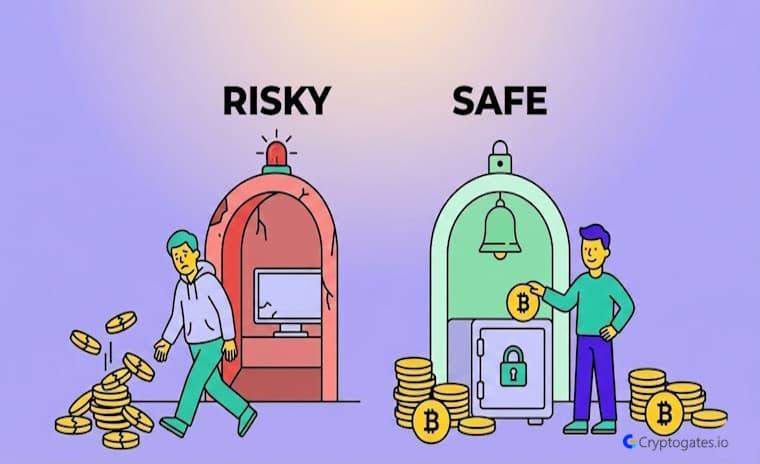
  • How to Choose a Crypto Exchange 🛡️ You Can Trust Before Hidden Risks ⚠️ Cost You Everything 💸

    How to Choose a Crypto Exchange 🛡️ You Can Trust Before Hidden Risks ⚠️ Cost You Everything 💸

    You trusted an exchange once. Maybe it had flashy marketing or someone on Reddit swore by it.

    Then fees ate your profits, or worse, the platform froze withdrawals when you needed out most. Sound familiar?

    Picking the wrong exchange isn’t just annoying. It can quietly destroy a portfolio. And the frustrating part?

    Most traders never actually check what makes an exchange safe before depositing money.
    Let’s fix that.

    EXECUTIVE SUMMARY
    • The Problem: Most traders choose exchanges based on hype or marketing, ignoring hidden fees and weak security that can lead to total portfolio loss.
    • The Solution: Focus on verified Proof of Reserves, cold storage policies, and regulatory compliance to ensure your chosen platform is a solid foundation.
    • The Incentive: Proper research lets you humanize your trading experience by using tools like the CryptoGates Exchange Picker to match your specific strategy.
    • The Risk: Trading on unregulated or low-liquidity platforms leads to slippage and “frozen funds,” where technical errors or hacks can wipe out assets instantly.

    Why the Exchange You Choose Matters More Than the Coin You Buy

    Here’s something most beginners don’t hear: your strategy can be perfect, your timing decent, and you can still lose money because of where you’re trading.

    📊 Over 1 million users lost funds when FTX collapsed, with total customer losses estimated at over $8 billion according to court filings reported by Reuters.

    Exchange failures aren’t rare. FTX collapsed in 2022 and wiped out billions in user funds overnight.

    Smaller platforms have vanished with even less warning.

    Some exchanges charge fees so layered and confusing that you’re paying 3-4% on every round trip without realizing it.

    Others have weak security practices that leave accounts exposed to hackers, and centralized platforms have paid for it: 88% of all Q1 2025 crypto losses came from centralized exchange breaches.

    The exchange isn’t just a place to trade. It’s the foundation everything else rests on. Get that wrong, and nothing else matters.

    So what actually separates a trustworthy exchange from a risky one?

    SELECTION MATRIX V2.0

    Not sure which
    exchange fits you?

    Bypass the marketing hype. Our matrix cross-references your profile against 50+ institutional metrics—including Proof-of-Reserves and Slippage Models.

    PoR Verified Low Slippage API Ready
    B
    K
    C
    O
    Find My Gateway Analysis Time: < 60s

    Security Has to Come First No Exceptions

    Before anything else, look at how the exchange protects its users’ funds.

    The gold standard right now is proof of reserves, a verified, on-chain audit showing the exchange actually holds the assets it claims to hold.

    This is not a nice-to-have. It’s how you know the platform isn’t running on borrowed time.

    Real Backtest Example

    Strategy: Grid Trading
    Coin: SOL/USDT
    Market Condition: 60-day sideways drift in the $80–$97 post-crash range
    Objective: Extract profit from a market with no clear directional trend

    In one internal test, a grid bot deployed against SOL during a prolonged range-bound period fired 146 trades and generated $462.95 in net profit, outperforming buy-and-hold by 10.88 percentage points over the same window. What made this possible wasn’t the strategy alone — it depended on the bot being able to execute a high volume of small trades without meaningful slippage.

    That requirement is exactly why API reliability and deep order-book liquidity aren’t optional extras for grid strategies; a thinly-traded pair or a laggy API would have eaten into (or erased) that edge trade by trade. This is a useful reference point for why the exchange layer, not just the strategy design, determines whether a grid bot’s theoretical edge survives contact with real execution conditions.

    View Complete Playbook: https://cryptogates.io/playbooks/sol-usdt-grid-bot-backtest-mar-apr-2026/

    Andreas M. Antonopoulos
    “An exchange that won’t show proof of reserves is asking you to trust a black box with your money.”

    Andreas M. Antonopoulos, Bitcoin Educator and Author

    Beyond that, check for cold storage policies.

    Reputable exchanges keep the majority of user funds in offline wallets that can’t be touched in a cyberattack.

    They also offer two-factor authentication, withdrawal whitelisting, and in some cases, insurance funds that cover losses in the event of a breach.

    If you can’t find clear answers on any of those things from an exchange’s website, that’s your answer right there.

    Before You Deposit — Security Checklist

    • The exchange publishes verified proof of reserves
    • The majority of funds are held in cold storage
    • Two-factor authentication available
    • A withdrawal whitelisting option exists
    • Insurance or protection fund is mentioned clearly

    Fees Are Hidden Until They Aren’t

    Every exchange has fees. The problem isn’t the fees themselves; it’s that they’re often buried deep in documentation nobody reads before signing up.

    By the time you feel them, you’ve already made a dozen trades.

    There are a few layers to watch. Maker and taker fees apply when you place or fill orders on the order book.

    What happens to my funds if an exchange gets hacked?

    It depends on the platform. Exchanges with insurance funds may cover losses partially. Without one, recovery is unlikely. This is why cold storage and security audits matter before you deposit.

    These typically range from 0.05% to 0.5%, depending on the platform and your trading volume.

    Then there are withdrawal fees, which vary by cryptocurrency and can change based on network conditions. Some exchanges also charge deposit fees depending on your payment method.

    Swipe to view full data →
    Fee Type Typical Range When It Hits
    Maker Fee 0.05% to 0.20% When you place a limit order
    Taker Fee 0.10% to 0.50% When you fill an existing order
    Withdrawal Fee Varies by coin Every time you move funds out
    Deposit via Card 2% to 4% Instant card deposits
    Bank Transfer Usually free Slower, 1 to 3 days to clear

    A debit card deposit, for example, often carries a fee of 2-4%.

    A bank transfer usually doesn’t, but it takes days to clear.

    Know what you’re paying before you commit to a platform, not after.

    Not Every Exchange Supports What You Actually Need

    If you want to run a grid bot, you need an exchange with API access and the right trading pairs.

    If you’re doing spot DCA into smaller altcoins, you need a platform with deep liquidity in those markets. If you’re holding mostly Bitcoin and Ethereum, almost any major exchange works, but the moment your strategy gets more specific, your exchange options narrow.

    This is why matching your exchange to your strategy matters, and it’s exactly what the Exchange Picker is built to help you do.

    CryptoGates.io built an exchange picker exactly for this reason. It filters exchanges based on proof of reserves, supported pairs, fee structures, and whether they’re appropriate for the strategy you’re actually running.

    You’re not just picking the most popular name; you’re picking the right fit.

    HISTORICAL DATA AUDIT

    Battle-Test Your Strategy
    Before the Market Does.

    Eliminate guesswork with institutional-grade backtesting for DCA, Grid, and Rebalance bots. Real historical data. Real-world results.

    EST. OPTIMIZATION +42% ROI Efficiency
    Start Backtest Now

    Sourced from 5+ Years of Exchange Data

    Regulation and Jurisdiction Aren’t Boring, They’re Protection

    A licensed, regulated exchange has to follow rules. It has to maintain capital reserves. It has to undergo audits. It is legally accountable if something goes wrong.

    An unregulated exchange has none of that. You’re trusting the founders entirely, with no legal recourse if the platform shuts down tomorrow.

    Check whether the exchange is registered in a real financial jurisdiction, such as under the SEC in the US, the EU, the UK, or similar.

    According to Chainalysis, over $3.8 billion was stolen from crypto platforms in a single year, with unregulated exchanges accounting for a disproportionate share of incidents.

    Look for whether it complies with KYC and AML requirements.

    These aren’t just bureaucratic hoops. There are signs that the platform takes its responsibilities seriously.

    Coinbase, for instance, is publicly listed and regulated in the US. Binance, Bybit, OKX, and KuCoin have varying degrees of regulation across different markets.

    Gate.io and HTX have been around long enough to build track records.

    The point isn’t that “regulated” automatically means “perfect”; it means there’s a layer of accountability that completely unregulated platforms lack entirely.

    Liquidity Matters More Than Beginners Realize

    Liquidity is how quickly and easily you can buy or sell at the price you expect.

    On low-liquidity exchanges, the price you see and the price you actually get can be very different, especially on larger trades or less popular trading pairs. This is called slippage, and it quietly kills returns.

    Stick to exchanges with high daily trading volumes for the pairs you plan to trade.

    The major platforms Binance, OKX, Bybit, and similar have enough volume that slippage is rarely an issue on common pairs.

    Smaller platforms can work fine for very specific assets, but go in with eyes open.

    Real Backtest Example

    Strategy: DCA
    Coin: PEPE (low-cap altcoin)
    Market Condition: 112-day, 64% bleed
    Objective: Test capital-averaging resilience on a thin, high-volatility market

    A DCA bot run against PEPE through one of its worst extended drawdowns completed 100 sessions, closed 99 in profit, and returned $2,542.73 versus a $704.79 loss for a static holder over the same period. What’s easy to overlook in a result like that is market depth: a strategy that relies on frequent, precisely-timed small buys on a lower-cap asset only works if the exchange can actually fill those orders at the expected price.

    On a shallow order book, the same DCA logic would face wider spreads and worse average entries, quietly shrinking the edge shown here. It’s a concrete illustration of why liquidity in the specific pair you’re trading — not just the exchange’s overall volume — is the detail that determines whether a strategy’s backtested numbers hold up in practice.

    View Complete Playbook: https://cryptogates.io/playbooks/pepe-fell-64-in-112-days-our-dca-bot-still-made-2542/

    The User Experience Question

    This one sounds trivial. It isn’t. If an exchange’s interface is confusing or unintuitive, you’ll make mistakes.

    Wrong order types, wrong quantities, wrong pairs. These errors cost money.

    Some platforms are designed for professional traders with advanced charts, multiple order types, and customizable dashboards. Others are clean and simple, better for someone still learning the basics. Neither is wrong.

    The question is which one matches where you are right now.

    If you’re new to trading, starting with a platform that doesn’t require a manual to navigate makes sense. You can always move to more advanced platforms once your strategy demands it.

    How CryptoGates Approaches This

    CryptoGates.io doesn’t just recommend exchanges by name.

    The Exchange Picker filters by proof of reserves, supported strategies, fee structures, and jurisdiction. The idea is to match you to an exchange that fits how you actually trade, not just the one with the most marketing spend.

    The same principle runs through everything on the platform. Backtesting tells you if a strategy actually works before real money is on the line.

    The Monte Carlo simulator runs thousands of what-if scenarios, so you understand downside risk, not just upside potential. Strategy tools only make sense when you’re on a platform that supports running them properly.

    Verify first. Risk later.

    SYSTEM ACCESS: CG4.2

    Stop Guessing.
    Stress Test Your Edge.

    The market doesn’t care about your backtest. Our engine simulates 1,000+ “what-if” scenarios to ensure your strategy is built for survival.

    Run Crypto Strategy Engine →
    ROBUSTNESS SCORE
    75+ STRUCTURAL EDGE
    RISK OF RUIN < 1%
    TARGET HIT 92%

    Before You Deposit a Single Dollar

    Run through this yourself before committing to any exchange. Does it publish proof of reserves?

    What do its security practices look like?

    Are the fees clear and reasonable?

    Is it regulated somewhere in reality?

    Does it support the trading pairs and strategy types you plan to use?

    These aren’t complex questions. But most traders never ask them, and that’s exactly why they end up on platforms they shouldn’t trust with real money.

    The exchange is your foundation. Build on one that can hold the weight.

    Start at CryptoGates.io and use the Exchange Picker to find the right fit for your strategy before you move any funds.

    Quick Exchange Vetting Guide

    Swipe to view full data →
    What to Check Why It Matters Where to Find It
    Proof of Reserves Confirms funds actually exist Exchange website or auditor report
    Regulatory Status Legal accountability if things go wrong Exchange’s legal or compliance page
    Fee Structure Prevents silent profit drain Fee schedule page
    Supported Pairs Matches your strategy need Markets section of the exchange
    Security History Shows track record under pressure Crypto news search

    FAQs

    Which crypto exchange is safest for beginners?

    No single exchange is universally safest. Platforms with verified proof of reserves and regulatory compliance, like Coinbase, Binance, or OKX are solid starting points. Always check security features before depositing.

     Proof of reserves is an on-chain audit confirming an exchange actually holds the assets it claims. Without it, there’s no way to know the platform isn’t operating with a shortfall, which is exactly what happened before several major collapses.

    For active trading, short-term storage is fine. For larger holdings, it’s not recommended since exchanges control your private keys. If the platform gets hacked or shuts down, your funds are at risk.
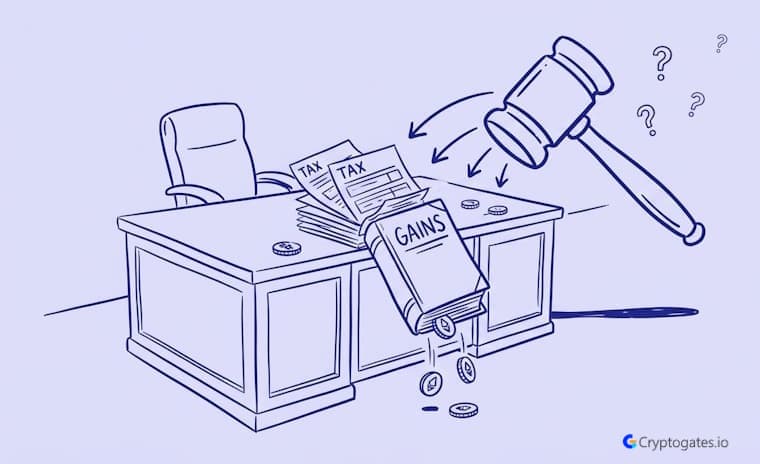

  • Crypto Taxes 📑: What Happens If You Don’t Report to the IRS 🚨 ⏳

    Crypto Taxes 📑: What Happens If You Don’t Report to the IRS 🚨 ⏳

    You made money on crypto. Maybe a little. Maybe a lot.

    Now it’s tax season, and you’re staring at a screen wondering if the IRS actually knows about that Ethereum you sold in March.

    They might.

    Most traders focus entirely on buying low and selling high. Taxes are an afterthought until they aren’t. And by then, the penalties are already stacking up.

    “According to a Divly report, only 1.62% of crypto investors globally reported their crypto to tax authorities in a recent tax year.” Divly Crypto Tax Report

    Here’s the thing most people get wrong from day one.

    They think crypto exists in some digital gray area where traditional tax rules don’t apply. It’s online.

    It’s decentralized. Surely the government can’t track it?

    Wrong.

    The IRS has been crystal clear since its 2014 guidance classifying virtual currency as property for federal tax purposes. That means every time you sell it, trade it, earn it, or mine it, something taxable has happened.

    It doesn’t matter if you cashed out into dollars or just swapped Bitcoin for Solana. A taxable event is a taxable event.

    That surprises a lot of people. Trading one crypto for another triggers taxes. Most traders don’t realize that until it’s too late.

    EXECUTIVE SUMMARY
    • The Problem: Most traders don’t realize that swapping, staking, or earning crypto all count as taxable events, not just cashing out to dollars.
    • The Solution: The IRS treats crypto as property. Every gain, reward, or airdrop you receive has a tax implication, whether you knew about it or not.
    • The Incentive: Holding crypto over one year cuts your tax rate significantly. Tax-loss harvesting lets you use losses to offset gains and reduce what you owe.
    • The Risk: Failing to report crypto activity can trigger penalties up to 25% of what you owe, plus interest. Exchanges already report to the IRS.

    So What actually Counts as a Taxable Event?

    Selling crypto for cash is the obvious one. But the list goes further than most people expect.

    Swapping one cryptocurrency for another, say, trading ETH for BNB, counts as selling the first coin at its current market value. You calculate the gain or loss from there. The same goes for using crypto to buy something.

    “Virtual currency is treated as property for U.S. federal tax purposes. General tax principles applicable to property transactions apply.”

    IRS Notice 2014-21, Official IRS Guidance

    Pay for a service with Bitcoin, and you’ve just triggered a taxable event based on Bitcoin’s value at that moment versus what you originally paid.

    Mining rewards count as income the day you receive them, at whatever the market price is that day.

    Staking rewards work the same way. Airdrops, those free tokens projects send to your wallet, also count as ordinary income when you receive them.

    The common thread?

    Any time new crypto enters your wallet as compensation, reward, or payment, the IRS wants a piece.

    Research Highlight

    Trade frequency isn’t just a performance variable — it’s a tax variable.

    Across CryptoGates’ backtested grid strategies, higher-frequency bots generate dramatically more taxable events than slower-cycling approaches. One 90-day XRP grid backtest fired 875 trades, each one a discrete taxable disposal under IRS rules — regardless of whether the bot ever cashed out to dollars. Compare that to a DCA-style approach on the same timeframe, which might close a handful of sessions rather than hundreds of individual trades.

    This doesn’t make high-frequency strategies wrong. It means the recordkeeping burden and short-term tax exposure scale directly with how often a strategy trades, not with how much profit it ultimately shows on a dashboard. A bot’s headline ROI and its tax footprint are two separate numbers worth tracking side by side.

    View Complete Playbook: XRP Went Nowhere for 3 Months 📉 Our Grid Bot Made +27.74% Anyway

    Short-term vs. Long-term: Why it Matters More than You Think

    Not all crypto gains are taxed equally. This is one area where timing your trades actually makes a measurable difference.

    If you sell cryptocurrency you’ve held for one year or less, that’s a short-term capital gain. It gets taxed at your ordinary income rate, the same bracket as your salary.

    Depending on your income, that could be anywhere from 10% to 37%.

    Swipe to view full data →
    Holding Period Tax Type Rate Range
    Under 1 year Short-term (ordinary income) 10% to 37%
    Over 1 year Long-term capital gains 0%, 15%, or 20%
    Staking / Mining rewards Ordinary income Based on income bracket

    “Traders who hold assets for over one year can reduce their effective tax rate by up to 20 percentage points compared to short-term sellers.” IRS Tax Rate Schedules

    Hold that same asset for over a year before selling, and it becomes a long-term capital gain.

    The rates drop significantly, 0%, 15%, or 20%, depending on your total income.

    For many traders, the difference between selling at 11 months versus 13 months is thousands of dollars.

    Most people never think about this when they’re in the middle of a bull run. They’re watching price action, not calendars. But the calendar matters.

    Are staking rewards taxable?

    Yes. Staking rewards count as ordinary income on the day you receive them, based on market value at that moment.

    Keeping Records is the Part Everyone Hates

    Here’s where discipline separates organized traders from people drowning in spreadsheets come April.

    For every transaction, you need the date, the amount of crypto involved, the value in USD at the time, and the transaction type. Across multiple exchanges and wallets, over hundreds of trades, that adds up fast.

    Are You Tax-Ready?

    • I have my full transaction history from every exchange I’ve used
    • I know the USD value of each crypto at the time of every trade
    • I’ve identified which gains are short-term and which are long-term
    • I’ve checked whether any staking, mining, or airdrop income applies to me
    • I’m using crypto tax software or a professional to file accurately

    The good news is you don’t have to do this manually.

    Crypto tax software like CoinTracker, Koinly, or TaxBit can connect directly to your exchanges and wallets, pull your full transaction history, and automatically calculate your gains and losses.

    If you’ve been trading for any length of time, this is worth paying for.

    The forms you’ll need are Form 8949 to report individual transactions, Schedule D to summarize the totals, and Schedule 1 if you received crypto as income.

    All of this flows into your standard Form 1040.

    Tax-loss Harvesting, the one Strategy most Traders Ignore

    If some of your holdings are sitting at a loss, those losses aren’t just bad news. They’re actually useful.

    Tax-loss harvesting means intentionally selling positions that are down to offset gains elsewhere in your portfolio.

    If you made $6,000 on Bitcoin but lost $2,500 on a smaller altcoin, selling that losing position brings your taxable gain down to $3,500. You pay tax on less.

    CoinTracker Tax Guide

    “Investors who actively use tax-loss harvesting can reduce their taxable gains by thousands of dollars annually, depending on portfolio size and trade frequency.”

    You can also carry forward losses into future tax years if they exceed your gains in the current year.

    Done right, this strategy can significantly reduce what you owe legally, without hiding anything.

    The key is being strategic about it rather than emotional.

    Selling at a loss just to cut pain rarely works out.

    But selling at a loss with a specific tax goal in mind is a different calculation entirely.

    Real Backtest Example

    Strategy: Rebalance Bot
    Coin Pair: SOL / ETH
    Market Condition: Simultaneous decline (SOL −32%, ETH −48%)
    Objective: Test whether active rebalancing between two falling assets outperforms passive holding
    Key Result: The bot posted a $287 loss versus a steeper loss for a passive holder over the same window — meaning every rebalancing swap realized a loss along the way.
    Expert Interpretation: This is the mechanical version of tax-loss harvesting. Each swap that locks in a loss on paper is also a taxable event that can offset gains elsewhere in a portfolio. A losing backtest and a useful tax outcome aren’t mutually exclusive — sometimes the losses a bot realizes are the same losses a trader would want to harvest deliberately at year-end.

    View Complete Playbook: SOL −32%. ETH −48%. Our Rebalance Bot Lost $287 — and Still Beat Doing Nothing

    What Happens if you don’t Report

    The penalties aren’t theoretical. Failure to report crypto gains can mean a 5% monthly penalty on what you owe, up to 25% total, plus interest. In serious cases, it can escalate beyond that.

    Some traders assume that because crypto is pseudonymous, the IRS can’t see it.

    But exchanges operating in the US are required to report user activity. Many already send 1099 forms. The IRS has also been using blockchain analytics firms to trace unreported activity.

    The safer assumption is that they can see it. File accordingly.

    Can I carry forward crypto losses to next year?

    Yes. If your losses exceed your gains, you can carry the remaining amount forward and apply it to future tax years.

    How CryptoGates.io fits into this

    At CryptoGates, the approach has always been to verify first, risk later.

    That same logic applies to your tax situation. Before you make a trade, it helps to understand the full picture, including the cost to you in taxes, not just fees.

    HISTORICAL DATA AUDIT

    Battle-Test Your Strategy
    Before the Market Does.

    Eliminate guesswork with institutional-grade backtesting for DCA, Grid, and Rebalance bots. Real historical data. Real-world results.

    EST. OPTIMIZATION +42% ROI Efficiency
    Start Backtest Now

    Sourced from 5+ Years of Exchange Data

    The Strategy Engine inside CryptoGates considers real costs, not just entry and exit prices.

    When you’re backtesting a strategy using five-plus years of historical data in the Backtest lab, you’re seeing how it performs under real conditions, including the compounding effect of transaction frequency on taxable events.”

    Strategies that trade constantly may look great on paper but generate a heavy short-term tax burden. Strategies that trade less often and hold longer often tell a different story, something our crypto trading strategy comparison breaks down in detail.

    Understanding tax implications is part of building a strategy that actually works in the real world, not just on a chart.

    The bottom line

    Crypto taxes aren’t going away. If anything, enforcement is getting stricter as the industry grows.

    The traders who handle this well aren’t necessarily smarter. They just started keeping records earlier, held positions long enough to qualify for better rates, and made decisions based on total cost, not just price movement.

    CONFIDENTIAL // RESEARCH
    STRATEGY INTELLIGENCE

    Proven Setups &
    Expert Breakdowns.

    We don’t just show you the data; we engineer and validate high-performance strategies, providing the “Alpha” behind the numbers.

    You don’t need to be a tax expert.

    You need a system.
    Start by pulling your full transaction history from every exchange you’ve used.

    Get a clear picture of your gains and losses this year. If the numbers feel overwhelming, use dedicated tax software; it’s far cheaper than getting it wrong.

    And if you haven’t tested your actual trading strategies under realistic conditions yet, that’s where CryptoGates.io starts.

    No guesswork. No hype. Just the full picture before you risk a dollar.

    FAQs

    Do I have to pay taxes on crypto if I don’t cash out to dollars?

    Yes. Trading one cryptocurrency for another is treated as a taxable disposal by the IRS. The gain or loss is calculated based on the market value at the time of the swap, even if no dollars were involved. This surprises most active traders.

    No, losses don’t create a tax bill. In fact, capital losses offset your capital gains, which reduces what you owe. If losses exceed gains, you can deduct up to $3,000 against ordinary income and carry the rest into future tax years.

    US-based exchanges are legally required to report user activity to the IRS, and many issue 1099 forms directly. On top of that, the IRS works with blockchain analytics companies that can trace transactions across public wallets. Assuming crypto is invisible to regulators is a costly mistake.

  • What Is Blockchain? 🔍 A Simple Explanation 📚 Every Crypto Investor 💰 Should Know

    What Is Blockchain? 🔍 A Simple Explanation 📚 Every Crypto Investor 💰 Should Know

    You’ve heard the word a hundred times.

    Maybe from a friend, maybe on Twitter, maybe from someone at a dinner table who sounded very confident about something you didn’t quite follow.

    Blockchain. But what actually is it?

    Here’s the truth.

    Most people explaining it make it harder than it needs to be.

    EXECUTIVE SUMMARY
    • The Problem: Banks and central authorities control your financial records. You trust them blindly, with no way to verify anything yourself.
    • Blockchain stores data across thousands of computers simultaneously. No single owner, no single point of failure, no way to quietly change the history.
    • The Incentive: Beyond crypto, blockchain is reshaping supply chains, medical records, voting systems, and legal contracts through self-executing smart contracts.
    • The Risk: Speed limitations, high energy use, permanent mistakes, and unclear regulations mean blockchain is still a work in progress, powerful but not perfect yet.

    The World Before Blockchain Had a Problem

    Think about the last time you sent money to someone. Maybe through a bank app. Simple, right?

    But here’s what actually happened behind the scenes. You asked your bank to update its records. They subtracted from your account.

    Don Tapscott
    “The blockchain is an incorruptible digital ledger of economic transactions that can be programmed to record not just financial transactions but virtually everything of value.”

    Don Tapscott, co-author of Blockchain Revolution

    They added to someone else’s. You trusted them to do it correctly. You had no way to verify it yourself.

    That’s the old system.

    A central authority that holds all the records.

    One place where mistakes can be made. One place that can be hacked.

    One place that could, if it ever wanted to, change what’s written.

    Blockchain was built to fix exactly that.

    So, what is Blockchain, Actually?

    Imagine a notebook. Not a regular one. A notebook where every single page, once written, turns to stone. Nobody can erase it. Nobody can change even one word.

    And instead of one person keeping this notebook locked in a drawer, imagine millions of people around the world each holding an identical copy of it.

    Which is better, Proof-of-Work or Proof-of-Stake?

    Neither is universally better. Proof-of-Work is older and battle-tested. Proof-of-Stake uses far less energy. Most newer blockchains use Proof-of-Stake.

    That’s blockchain.

    A shared, permanent record copied across thousands of computers, where every new entry has to be agreed upon before it’s written down.

    Each “page” in this notebook is called a block.

    Every block stores a batch of information, usually transactions. When a block gets full, it gets a unique digital fingerprint called a hash, and that hash connects it to the block before it.

    This is how the “chain” part works. Block after block, linked in order, going all the way back to the very first one.

    Change anything in an old block?

    The fingerprint breaks.

    The chain breaks. Every copy in the world shows the tampering. The network rejects it.

    That’s why people say blockchain is almost impossible to hack. You’re not attacking one server.

    You’re trying to change thousands of identical copies simultaneously, each one watching the others.

    Real Backtest Example

    Strategy: DCA Bot
    Coin: BTC/USDT
    Market Condition: Sharp macro-driven decline (tariff-news shock; BTC fell from $87K to $74K)
    Objective: Test whether a rules-based DCA approach holds up during a fast, sentiment-driven crash rather than a slow bleed
    Key Result: 16 of 17 sessions closed via take-profit, netting $349.61 in profit while spot holders were sitting on unrealized losses.

    Expert Interpretation: The bot didn’t predict the tariff news or time the bottom — it simply executed a pre-tested rule set under volatility most traders would have reacted to emotionally.

    That’s the practical difference between a “trust machine” like blockchain and a tested strategy running on top of it: the ledger guarantees the trade is real, but only backtested logic determines whether the trade is smart.

    View Complete Playbook: The Tariff Trap Playbook — How a DCA Bot Turned BTC’s Worst April in Years Into +$349 Profit

    How Does a New Block Get Added?

    This is where most explanations lose people. But it’s simpler than it sounds.

    When someone sends crypto to another address, the transaction is broadcast to the network.

    Thousands of computers, called nodes, pick it up. They check it against the existing chain.

    Does this person actually have what they’re claiming to send? Does this match the history we all have?

    If the majority agrees it’s valid, it gets added. If something’s off, it gets rejected.

    This agreement process is called a consensus mechanism. There are two main types. Proof-of-Work, where computers race to solve complex math problems to earn the right to add the next block.

    And Proof-of-Stake, where people who hold coins put them up as collateral to validate transactions. Both methods exist to make sure nobody cheats without the whole network noticing.

    No single person decides. No CEO approves. The math does.

    Knowledge Check

    If a malicious actor changes a transaction in Block #50, what happens to Block #51?

    Public vs Private: Not All Blockchains Are the Same

    Bitcoin and Ethereum are public blockchains, the same networks our breakdown of how Bitcoin actually works walks through in plain language.

    Anyone on earth can join, see every transaction, and verify the history themselves. No permission needed. No gatekeepers.

    Private blockchains work differently. A company or organization controls who gets access.

    They’re useful for businesses that want the security of blockchain but need to keep certain data away from competitors. Banks experimenting with blockchain technology often go this route.

    Neither is better universally. They serve different purposes. Public blockchains trade privacy for transparency. Private ones trade openness for control.

    Swipe to view full data →
    Feature Public Blockchain Private Blockchain
    Access Open to anyone Restricted/permissioned
    Transparency Fully visible Controlled visibility
    Control Decentralized Centralized
    Best for Crypto, DeFi, NFTs Enterprise, banking
    Examples Bitcoin, Ethereum Hyperledger, Corda

    What Can Blockchain Actually Do?

    Most people only connect it to crypto. That’s fair; that’s where it started.

    But the technology itself doesn’t care what information you put in those blocks.

    Right now, companies are using blockchain to track products from factories to store shelves, so when a label says “organic,” you can actually verify it. Hospitals are testing it for medical records, so your health history follows you securely without being owned by any one institution. it.

    Vitalik Buterin
    “Smart contracts are self-executing contracts where the terms are written directly into code. They run exactly as programmed without any possibility of fraud or third-party interference.”

    Vitalik Buterin, Founder of Ethereum

    Some governments are exploring it for voting, where every ballot becomes a permanent, verifiable record that nobody can delete or duplicate.

    Smart contracts are another piece of this.

    They’re programs that live on the blockchain and execute automatically when conditions are met, a model ethereum.org’s overview of smart contracts describes in more depth.

    No lawyers. No middlemen.

    The code runs, and the deal completes.

    If the conditions aren’t met, nothing happens.

    It’s a trust machine. That’s the simplest way to put it.

    Blockchain creates trust between people who’ve never met and might never meet, without requiring anyone in the middle to guarantee it.

    Reality Check

    Common belief: Surviving a bad crash requires predicting when the market will turn around.
    What CryptoGates research found: In a DOT/USDT backtest through a 56% decline over seven months, 79 of 80 DCA sessions still closed in profit — not because the bot called the bottom, but because its entry logic was tested against that kind of drawdown beforehand. The bot returned +$380.99 while a buy-and-hold position on the same capital sat at a −$617 loss.

    Why it matters: Prediction and preparation are often confused with each other. Blockchain removes the need to trust a middleman with your transaction history — it doesn’t remove the need to trust your own strategy.

    That trust has to be earned through testing, not guessing, which is the gap between “vibes and hope” and a plan built to survive a downtrend before real money is on the line.

    View Complete Playbook: DOT Crashed 56% in 7 Months — The Falling Knife Test

    The Real Limitations: Why Blockchain Isn’t Everywhere Yet

    It would be dishonest not to mention these.

    Speed is still a problem. Some blockchains can only process a handful of transactions per second. Compare that to Visa, which handles tens of thousands. When networks get congested, things slow down, and fees go up.

    Energy use is a real concern, too, particularly for Proof-of-Work systems like Bitcoin. The computing power required is enormous.

    This is why the industry has been shifting toward more efficient alternatives, the same shift that let Ethereum cut its energy consumption by 99.95% after moving to Proof-of-Stake.”

    “This is exactly why we built CryptoGates the way we did. The technology is powerful. But unclear rules, permanent mistakes, and no safety net mean you should never risk real money without testing your strategy first. Verify before you risk. Always.”

    ZAHEER, CEO CryptoGates

    And then there’s permanence, which is both a strength and a weakness.

    Made a mistake in a smart contract?

    It’s on the chain forever.

    Typo in a wallet address?

    That transaction is gone. There’s no customer support line. No undo button.

    Regulation is still catching up globally.

    Governments are still figuring out how to treat these assets, which creates genuine uncertainty for businesses and traders alike.

    What happens if I make a mistake on the blockchain?

    It stays there permanently. There’s no undo, no customer support, and no way to reverse a confirmed transaction. This is why double-checking wallet addresses before sending anything matters.

    How CryptoGates Fits Into This

    Understanding blockchain is step one. Actually using it without losing money is a completely different challenge, and that’s where most people struggle.

    At CryptoGates.io, the tools are built specifically to bridge that gap. Before you put a single dollar into any crypto strategy, the Backtesting Lab lets you test it against five-plus years of real historical data.

    The Strategy Engine matches your risk level and market outlook to an actual approach, not a guess.

    The Monte Carlo Simulator runs thousands of what-if scenarios, so you see the range of possible outcomes before they happen to your real money.

    Blockchain gives you a safer financial system. CryptoGates gives you a safer way to trade within it.

    SYSTEM ACCESS: CG4.2

    Stop Guessing.
    Stress Test Your Edge.

    The market doesn’t care about your backtest. Our engine simulates 1,000+ “what-if” scenarios to ensure your strategy is built for survival.

    Run Crypto Strategy Engine →
    ROBUSTNESS SCORE
    75+ STRUCTURAL EDGE
    RISK OF RUIN < 1%
    TARGET HIT 92%

    Final Thoughts: Blockchain is the Foundation, Not the Finish Line

    Here’s the thing most people get wrong. They learn about blockchain, get excited, and immediately start buying coins. No plan. No strategy. Just vibes and hope.

    Blockchain is the foundation. It’s what makes crypto possible: the trust layer, the permanent record, and the system that doesn’t need a middleman. Understanding it matters. But it’s just the starting point.

    The traders who actually build wealth in this space aren’t the ones who understood blockchain first. They’re the ones who paired that understanding with a real, tested strategy. They didn’t wing it. They didn’t follow Twitter calls. They verified before they risked it.

    That’s exactly what CryptoGates.io is built for. The tools are there for backtesting, strategy matching, and scenario simulation, so you never have to trade blind again.

    Learn the tech. Build the plan. Then move.

    Before You Start Trading Crypto, Check These 5 Things

    • I understand what blockchain is and how transactions get confirmed
    • I know the difference between a public and private blockchain
    • I have tested my strategy using backtesting data, not gut feeling
    • I understand that blockchain transactions cannot be reversed
    • I am not investing money I cannot afford to lose completely

    FAQs

    What is the main purpose of blockchain?

    To create a permanent, shared record of information that nobody can change or delete. It removes the need for a central authority like a bank to be the keeper of truth. The network itself holds that role, and it does it without asking for your trust.

     No, though that’s where most people first hear about it. Supply chain tracking, medical records, voting systems, legal contracts, and real estate ownership are all areas where blockchain is actively being tested or used right now.

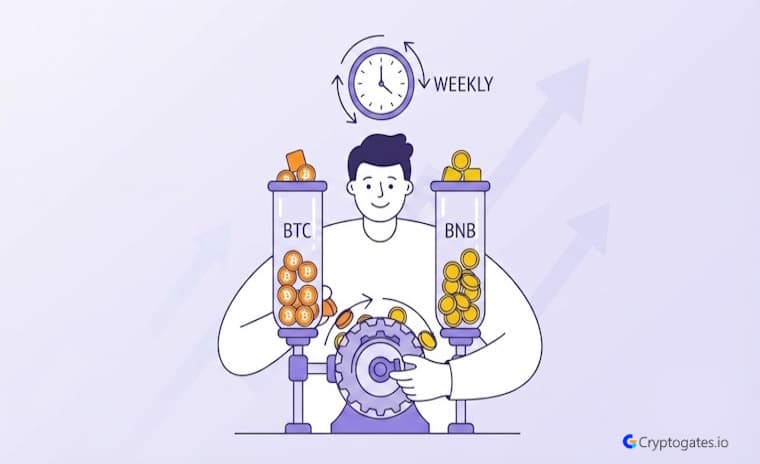
  • What If You Rebalanced BNB/BTC 🔄 Every Week 📈 During a Strong Uptrend?

    What If You Rebalanced BNB/BTC 🔄 Every Week 📈 During a Strong Uptrend?

    Picture this. BNB is ripping.

    Green candles for weeks. Your portfolio feels unstoppable, and honestly, holding just feels right.

    But what if you’d rebalanced BNB/BTC every week instead of just letting it ride?

    In backtests of weekly rebalanced crypto pairs during trending markets, portfolios have shown drawdown reductions of 15-30% compared to static buy-and-hold allocations, though often at the cost of some upside.

    CryptoGates Strategy Lab internal backtesting data

    Here’s the interesting part.

    Most traders assume rebalancing during a strong trend is a mistake, that you’re just trimming your winners for no reason. But the data tells a more complicated story.

    We’re going to walk through the mechanics, the tradeoffs, and what actually happens to your BTC and BNB when you force a reset every seven days.

    No hype. Just the process.

    EXECUTIVE SUMMARY
    • The Problem: Traders don’t know whether rebalancing BNB/BTC weekly helps or hurts returns once BNB starts trending hard.
    • The Solution: Run a structured, rules-based rebalance and compare it against simple buy-and-hold to see the real tradeoff.
    • The Incentive: Understanding this mechanic helps you build a calmer, more systematic crypto portfolio instead of guessing.
    • The Risk: Weekly rebalancing can quietly trim your best performer’s gains and rack up fees if you’re not careful.

    BNB and BTC — Why This Pair Makes Sense

    BTC and BNB aren’t the same animal, and that’s exactly the point.

    BTC moves like the market’s heartbeat. Slower, heavier, and it tends to set the tone for everything else.

    BNB moves differently. It’s tied to an entire exchange ecosystem, so its swings often come from utility demand, not just macro sentiment.

    SYSTEM ACCESS: CG4.2

    Stop Guessing.
    Stress Test Your Edge.

    The market doesn’t care about your backtest. Our engine simulates 1,000+ “what-if” scenarios to ensure your strategy is built for survival.

    Run Crypto Strategy Engine →
    ROBUSTNESS SCORE
    75+ STRUCTURAL EDGE
    RISK OF RUIN < 1%
    TARGET HIT 92%

    Look, pairing a stability anchor with a higher-beta asset is a classic diversification move, even inside crypto.

    The two don’t always move together, and that gap is exactly what a rebalancing strategy tries to exploit.

    1. What BTC Brings to the Table

    BTC is the benchmark. Most altcoins, including BNB, get measured against it.

    It’s less prone to wild single-day swings compared to smaller caps, and it usually holds during broad market stress better than most.

    2. What BNB Brings to the Table

    BNB has its own drivers: exchange volume, the BNB auto-burn mechanism, and ecosystem activity.

    That’s why it can decouple from BTC during certain phases.

    When BNB trends, it often trends hard, which is exactly the kind of volatility a rebalance strategy is built to harvest, similar to what played out in our XRP/BNB rebalance bot backtest.

    What Weekly Rebalancing Actually Means

    Rebalancing sounds technical, but the idea is simple.

    You pick a target split, say 50% BNB and 50% BTC, and every week you nudge your portfolio back to that split.

    Here’s the key idea. If BNB rallies hard, its share of your portfolio grows past 50%. Rebalancing forces you to sell some of that BNB and buy BTC to reset the balance.

    It’s mechanical.

    No emotions involved.

    Real Backtest Example

    Strategy: Rebalance
    Pair: XRP / BNB
    Market Condition: One asset trending hard, one moving quieter
    Objective: Test if a rules-based rebalance captures more value than simply holding both

    Over a four-month window, XRP climbed 44.6% while BNB posted a steadier 7.4% gain. A 50/50 rebalance bot, running on just 3 swaps, systematically trimmed XRP into strength and added to BNB on the dips. The result: the bot beat passive HODL by 1.66 percentage points, using minimal trade frequency and no manual intervention.

    Expert Interpretation: This mirrors exactly what a BNB/BTC weekly rebalance is designed to do: sell the outperformer in controlled slices rather than all at once, without needing to predict when the trend ends.

    View Complete Playbook

    1. The Constant-Mix Approach

    This is the core method.

    You’re not trying to predict tops or bottoms. You just hold a fixed target weight and let the math force trades.

    Sell the winner a little, buy the laggard a little, every single reset.

    Is weekly rebalancing better than monthly for crypto?

    It depends on volatility. Weekly captures more price swings but costs more in fees. Monthly is cheaper but reacts slower to drift.

    2. Why Weekly, Not Monthly or Quarterly

    Weekly resets react faster to price drift than monthly or quarterly ones.

    But there’s a problem.

    More frequent rebalancing also means more trades, and more trades mean more fees. Weekly sits in a middle zone, fast enough to capture volatility, but not so fast it drowns in transaction costs.

    The Scenario and the Mechanics

    Let’s set up the actual test.

    This is a hypothetical, backtest-style walkthrough, not live trading advice. Think of it as a lab experiment for your portfolio logic.

    Swipe to view full data →
    Assumption Detail
    Starting Capital $10,000
    Initial Split 50% BNB / 50% BTC
    Rebalance Frequency Every 7 Days
    Yield or Staking None Included
    Style Simple Spot Holdings Only

    1. Assumptions Behind This Test

    We’re keeping this clean on purpose.

    No leverage, no staking rewards layered in, nothing that muddies the picture. Just a straightforward split, reset weekly, over a stretch where BNB is clearly outperforming.

    2. Step-by-Step Rebalancing Process

    Here’s how it actually works, week to week:

    You check your portfolio value at the end of the week.

    You calculate the current weight of BNB and BTC.

    If BNB has grown past its 50% target, you sell a portion of it. Then you use that to buy more BTC, bringing both back to their target split.

    3. A Quick Numeric Example

    Let’s say you start with $5,000 in BNB and $5,000 in BTC.

    Week one, BNB jumps 12% while BTC moves up just 2%. Now BNB sits around $5,600 and BTC around $5,100, so BNB’s share has grown past 52%.

    CG STRATEGY ANALYZER

    Confused about
    market outlook?

    Trading without a plan is just gambling. Our strategy architect analyzes your risk tolerance and capital to match you with a proven algorithmic framework.

    PASSIVE DCA Bot
    AGGRESSIVE Grid Pro
    BALANCED Rebalance

    To rebalance, you’d sell roughly $250 of BNB and add it to BTC, pulling both back toward that 50/50 line. Do that every week, and you’re systematically selling strength and buying weakness inside the pair.

    But there’s a catch.

    Every one of those trades has a cost. Exchange fees and slippage chip away at the edge, especially during choppy or thin-liquidity weeks.

    What Happens During a Strong BNB Uptrend

    Now imagine this playing out over a few months of BNB genuinely outperforming BTC. What does weekly rebalancing actually do to your results?

    1. Rebalanced Portfolio vs Buy-and-Hold

    In a clean, strong uptrend with few pullbacks, rebalancing usually underperforms just holding BNB outright.

    You’re literally selling your winner every week, which caps the upside you’d otherwise capture.

    Rebalanced pair strategies in choppy uptrends have historically shown 10-20% lower max drawdown compared to static holds, based on aggregated crypto rebalancing backtests.

    DefiLlama historical portfolio data

    But here’s the issue.

    Markets rarely move in a straight line.

    The moment BNB has a rough week or two, that rebalanced portfolio starts looking a lot smarter, because you were already banking gains along the way instead of watching them evaporate on a pullback.

    2. What the Backtest-Style Results Suggest

    The real answer isn’t “rebalancing wins” or “holding wins.”

    It’s that the outcome depends entirely on how bumpy the ride is. Straight-line rockets favor holding. Choppy grinds favor rebalancing.

    Does rebalancing BNB/BTC increase returns in a strong uptrend?

    Not usually in a clean, straight-line uptrend. It tends to trim gains. It performs better when the trend includes regular pullbacks.

    Risks, Costs and When This Strategy Fits

    Rebalancing sounds clean on paper. Reality adds friction.

    Reality Check

    Common belief: Rebalancing during a strong uptrend just means selling your winner too early and giving up gains.

    What CryptoGates research found: In a separate backtest where one asset surged 27% over 51 days against a slower-moving BTC, a ratio-based rebalance bot ran 22 swaps, locked in $184.24 in profit, and still beat HODL by 1.64%. The trimming didn’t erase the edge; it converted volatility into realized profit while the position kept participating in the rally.

    Why it matters: The fear that rebalancing “kills” a trending winner isn’t fully supported by the data. The real cost shows up in fees and reset frequency, not in the mechanic itself. This is the same tradeoff a weekly BNB/BTC rebalance faces during a BNB uptrend.

    View Complete Playbook

    1. Fees, Taxes and Execution Risk

    Every trade is a taxable event in most places under IRS digital asset guidance, and every trade costs something in fees.

    Do this weekly for months, and it adds up fast, especially on smaller portfolios where the fee percentage actually matters.

    CEO Note:

    “We don’t build strategies around hope. We build them around what the data actually shows, fees included. Verify first. Risk later. Scale slowly.” – Zaheer

    Unfortunately, there’s also execution risk if you’re using automation.

    API failures, exchange downtime, slippage during volatile weeks. None of these are dealbreakers, but they’re real and worth planning for.

    2. When It Makes Sense (And When It Doesn’t)

    This approach tends to shine in choppy, volatile uptrends where BNB doesn’t just go straight up.

    It’s less useful in a near-parabolic run with almost no pullbacks, since you’d just be trimming a rocket.

    High-fee environments also eat into the edge fast, so it matters where you’re executing these trades.

    CONFIDENTIAL // RESEARCH
    STRATEGY INTELLIGENCE

    Proven Setups &
    Expert Breakdowns.

    We don’t just show you the data; we engineer and validate high-performance strategies, providing the “Alpha” behind the numbers.

    How to Implement This Yourself

    You don’t need to overthink getting started here.

    1. Manual Approach

    Set a weekly reminder.

    Check your exchange portfolio view, calculate your current BNB and BTC weights, and manually place the trades to bring it back to target.

    It’s simple, just a bit tedious over time.

    2. Automated Approach

    Weekly Rebalance Planning Checklist

    • Define your target allocation (e.g. 50% BNB / 50% BTC)
    • Pick your rebalance frequency
    • Estimate trading fees and minimum trade sizes
    • Decide how you’ll track taxes
    • Test the setup on historical data before going live

    Honestly, this is where automation earns its keep.

    A rules-based rebalance bot removes the emotional part entirely- no second-guessing whether to sell your winner this week, and our crypto rebalancing bot guide walks through the settings and backtesting steps in more depth.

    Key Takeaways


    Weekly rebalancing BNB/BTC forces a sell-high, buy-low discipline inside the pair.

    In a strong BNB uptrend, it usually trims some upside, but it can smooth out the ride when the trend isn’t a straight line. Fees, taxes, and execution matter just as much as the core idea.

    The smarter move isn’t guessing which approach wins. It’s testing both on your own numbers first.

    HISTORICAL DATA AUDIT

    Battle-Test Your Strategy
    Before the Market Does.

    Eliminate guesswork with institutional-grade backtesting for DCA, Grid, and Rebalance bots. Real historical data. Real-world results.

    EST. OPTIMIZATION +42% ROI Efficiency
    Start Backtest Now

    Sourced from 5+ Years of Exchange Data

    Run your own parameters and see what the data shows using the CryptoGates Rebalance Strategy Backtest Bot.

    FAQs

    Is weekly rebalancing better than monthly for crypto?

    It depends on your priorities. Weekly reacts faster to price swings but costs more in fees over time.

    Usually not in a clean uptrend. It tends to help more when the trend includes regular pullbacks.


    Yes. Rules-based bots can execute the weekly resets automatically, removing the emotional guesswork.


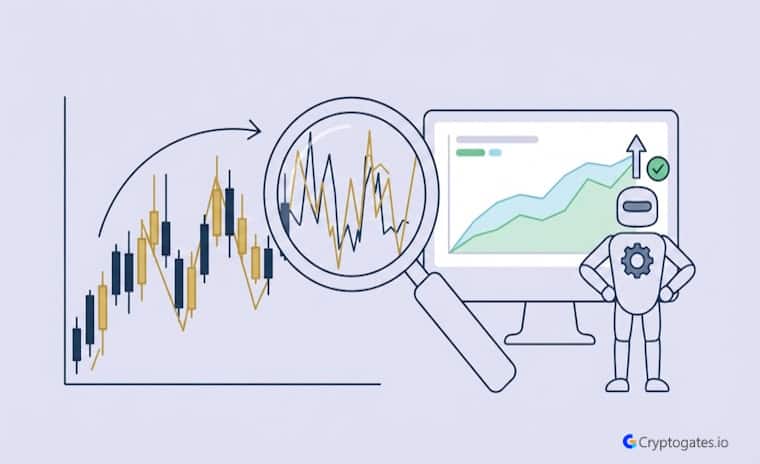
  • We Backtested Ethereum ♦️ in a Choppy 📈 Market — Here’s What Surprised Us 📊

    We Backtested Ethereum ♦️ in a Choppy 📈 Market — Here’s What Surprised Us 📊

    Ethereum doesn’t trend clean very often.

    One candle green, next one red, then a fake breakout that reverses in an hour.

    If you’ve ever tried to manually trade an Ethereum choppy market phase, you know the feeling. Entries get stopped out. Exits happen too early.

    Confidence takes a hit fast.

    Ethereum has historically shown 30 to 40% more short-term price reversals during range-bound phases compared to trending phases, based on volatility data tracked by Glassnode.

    Here’s the thing.

    Chop isn’t a random punishment. It behaves in a fairly predictable way once you stop reacting to every candle and start looking at the bigger structure.

    That’s not a small difference. It’s the exact reason manual trading feels so brutal in these stretches.

    EXECUTIVE SUMMARY
    • The Problem: Choppy Ethereum price action punishes manual trades with fake breakouts, early exits, and constant second-guessing.
    • The Solution: Understand what chop actually rewards, discipline and structure, not speed or gut feeling.
    • The Incentive: Traders who adjust their approach for chop tend to avoid the worst of the whipsaw damage.
    • The Risk: Chop can still catch even a solid strategy off guard. No system removes all losses, it just narrows them.

    What a Choppy Ethereum Market Actually Looks Like

    Chop is when the price moves sideways but violently.

    Not a calm range like Bitcoin sometimes shows.

    ETH chop tends to include sharp wicks in both directions, quick fakeouts above resistance, and sudden drops below support that reverse just as fast. It looks like a trend is starting, but it isn’t.

    Nic Carter
    “The market can stay irrational longer than you can stay solvent,”

    Nic Carter

    Look, this is exactly why chop feels so personal.

    It’s not just sideways and boring. It actively baits you into entries that get reversed almost immediately.

    Why Choppy Markets Wreck Manual Trading

    Manual traders react to price movement in real time.

    A wick above resistance looks like a breakout, so they buy.

    It reverses, they panic sell. A drop below support looks like a breakdown, so they short or exit, then the price recovers just as fast.

    HISTORICAL DATA AUDIT

    Battle-Test Your Strategy
    Before the Market Does.

    Eliminate guesswork with institutional-grade backtesting for DCA, Grid, and Rebalance bots. Real historical data. Real-world results.

    EST. OPTIMIZATION +42% ROI Efficiency
    Start Backtest Now

    Sourced from 5+ Years of Exchange Data

    Honestly, this cycle is exhausting even for experienced traders.

    It’s not a skill issue most of the time. It’s a structural mismatch between reacting fast and a market that’s designed to fake out fast reactions.

    What Happens When You Test a Strategy Through Chop

    A rules-based approach behaves differently here, mainly because it isn’t reacting to every wick.

    It’s following predefined logic regardless of how convincing a fakeout looks in the moment.

    CEO Note:

    Zaheer talks about this often, the point of testing a strategy isn’t to find something that wins every trade. It’s to find something that doesn’t fall apart when the market gets messy.

    1. Where a Tested Strategy Tends to Hold Up

    Systems built around clear entry and exit rules generally avoid the emotional flip-flopping that wrecks manual trades.

    They don’t chase the fake breakout because the rule wasn’t triggered yet, and they don’t panic-exit on a wick because the exit condition wasn’t actually met.

    Research Insight:

    What Rules-Based Systems Actually Do During Volatile ETH Conditions

    It’s easy to assume that any systematic strategy simply “survives” a choppy market by default.

    Our internal Playbook testing on ETH tells a more specific story. During a 44-day stretch where ETH dropped 27% and broke well below its established range floor, a rules-based grid strategy still generated $62.74 in live grid profit, even as the spot price lost nearly 27% of its value. The strategy didn’t avoid losses entirely; it closed the period down 8.36%, compared to a 26.94% loss for a simple holder over the same window.

    The takeaway isn’t that the system was immune to the drawdown.

    It’s that structured, rule-triggered entries and exits captured value from the back-and-forth price action itself, something a manual trader reacting candle-by-candle almost never manages to do consistently. This is the practical difference between reacting to chop and having a system built to trade through it.

    Source: ETH Crashed 27% in 45 Days — Grid Bot Cut the Loss to Just 8.36%

    2. Where It Can Still Struggle

    But there’s a problem worth being honest about.

    Even a solid rules-based approach can get whipsawed if the parameters are too tight for the volatility.

    Wait, that’s actually the real lesson here.

    It’s not that strategies are immune to chop; it’s that untested ones are far more exposed to it.

    Can a trading strategy avoid losses completely during a choppy market?

    No strategy avoids losses entirely in chop. The goal isn’t zero losses, it’s avoiding the repeated emotional flip-flopping that turns small losses into big ones.

    The Real Surprise Worth Talking About

    Here’s what actually stands out once you look at Chop closely.

    The strategy itself usually isn’t the weak point.

    Overtrading is.

    Every extra entry taken on a fakeout adds cost, adds risk, and adds another chance to get caught on the wrong side.

    Studies on overtrading behavior, including research referenced by Kitces on investor decision-making, show that increased trade frequency during volatile periods often correlates with reduced net returns.

    The simple truth is that fewer, more selective trades tend to outperform frequent reactive ones during choppy stretches.

    That’s not exciting to hear, but it’s consistent with how chop behaves.

    What This Means for Manual Traders

    If you’re trading ETH manually during chop, the instinct to “do something” every time price moves is probably working against you.

    Sitting still when no clear setup exists isn’t passive, ngl, it’s actually the disciplined move.

    Real Backtest Example

    Strategy: Grid
    Coin: XRP/USDT
    Market Condition: Near-perfect flatline / choppy, range-bound (90 days)
    Objective: Test whether a rules-based system can extract value when price goes effectively nowhere

    Key Result: XRP opened at $2.08 and closed at $2.09, a flat 90-day stretch that would have handed a buy-and-hold investor a return of just 0.24%. A grid strategy running through that same window fired 875 trades, generating $1,817.91 in gross grid profit and $1,387.14 net, a 27.74% return on capital.

    Expert Interpretation: This is close to a worst-case scenario for a directional trader and close to a best-case scenario for a system built around structure instead of prediction. The price barely moved, but it moved enough, repeatedly, in both directions, for a rules-based approach to capture that noise instead of getting shaken out by it. It’s a useful reference point for what “tested through similar past conditions” actually looks like in practice, rather than as an assumption.

    View Complete Playbook

    How to Prepare for Choppy Conditions Before They Happen

    You can’t predict exactly when chop starts, but you can prepare for it.

    That means knowing in advance how your strategy or plan behaves when the price stops trending and starts faking people out in both directions.

    CONFIDENTIAL // RESEARCH
    STRATEGY INTELLIGENCE

    Proven Setups &
    Expert Breakdowns.

    We don’t just show you the data; we engineer and validate high-performance strategies, providing the “Alpha” behind the numbers.

    What to Check Before Trusting a Strategy in Chop

    Interactive Checklist

    • Review how the strategy performed during past sideways periods
    • Check if entry rules require confirmation, not just a single wick
    • Confirm exit rules aren’t overly sensitive to short-term noise
    • Look at how often the strategy would’ve been triggered during chop
    • Verify performance using historical data instead of assumptions

    The Strategy Engine lets you stress test an approach across different market conditions before you’re relying on it live, which matters a lot more in chop than in a clean trend.

    How long do choppy markets in crypto usually last?

    There’s no fixed duration. Choppy phases can resolve in days or stretch for months depending on broader market conditions and volume.

    The Bottom Line on Trading Through Chop

    Chop tests systems more than trends ever will. A trending market can make almost any approach look good.

    A choppy one exposes exactly where the weak points are, in a strategy and in trading habits.

    Verify first, risk later applies harder here than almost anywhere else.

    Before trusting any approach in a choppy Ethereum market, it’s worth checking how that approach actually behaves in similar past conditions using real data instead of assumptions.

    FAQs

    What does a choppy Ethereum market mean for traders?

    It means price is moving sideways with sharp, frequent reversals instead of following a clean trend. Both breakouts and breakdowns tend to fake out fast.

    Manual trading usually suffers more since emotional reactions to fakeouts happen in real time. Rules-based strategies aren’t immune, but they don’t chase every wick.

    Price starts making higher highs and lower lows close together instead of stringing moves in one direction. Momentum indicators also tend to flatten out.