Author: Mark Chen

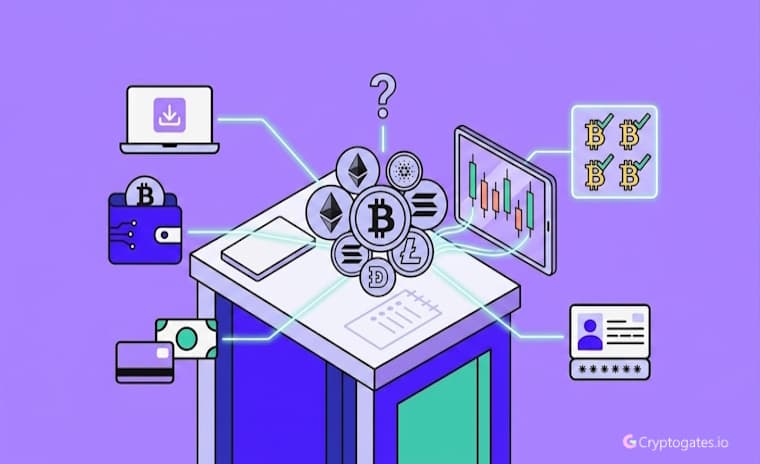
  • Hot Wallet vs Cold Wallet ⚖️: Which Crypto Storage 🔐 Is Right for You? 💰

    Hot Wallet vs Cold Wallet ⚖️: Which Crypto Storage 🔐 Is Right for You? 💰

    Most people spend more time picking a crypto exchange than they do thinking about where their crypto actually lives.

    That’s a problem.

    Because the exchange is just where you trade. The wallet is where you keep what you’ve earned.

    Over $3 billion worth of crypto was stolen through exchange and wallet hacks in a single recent year, according to Chainalysis. Most victims weren’t reckless. They just didn’t understand where their assets were sitting.

    The hot wallet vs. cold wallet decision sounds technical.

    It isn’t.

    It’s really just a question of how connected your crypto is to the internet — and how much risk that connection creates.

    Once you understand that, the right choice becomes obvious.

    EXECUTIVE SUMMARY
    • The Problem: Most beginners store crypto on exchanges or hot wallets without understanding the real security risks.
    • The Solution: Understanding the difference between hot and cold wallets helps you choose the right storage for your situation.
    • The Incentive: The right storage decision can protect your crypto from hacks, theft, and costly mistakes.
    • The Risk: Choosing the wrong wallet type, or using one incorrectly, can result in permanent, unrecoverable loss.

    What Is a Hot Wallet?

    A hot wallet is any crypto wallet that stays connected to the internet.

    That connection is what makes it fast and easy to use. You can send, receive, or trade in seconds—no extra steps. No delays.

    But that same connection is also the risk.

    “Convenience is the enemy of security in crypto. Hot wallets are designed for speed, not protection. Never store more in a hot wallet than you’d be comfortable losing.” Security Researcher

    Here’s the interesting part. Most people are already using a hot wallet without realizing it.

    If you’ve ever kept crypto on an exchange like Binance or Coinbase, you were using a custodial hot wallet held on your behalf.

    If you’ve used a browser extension like MetaMask, that’s a hot wallet too.

    They’re everywhere because they’re convenient.

    How Hot Wallets Work

    Hot wallets store your private keys on a device or server that’s connected to the internet.

    When you want to make a transaction, the wallet signs it using those keys and broadcasts it to the blockchain.

    The whole process takes seconds.

    The problem is the keys.

    Any system connected to the internet can, in theory, be reached by someone else. Malware, phishing attacks, and exchange breaches all target the same thing, which is why crypto security habits matter just as much as your wallet choice — your private keys. If an attacker gets them, they get your crypto.

    Honestly, the technology behind hot wallets isn’t the weakness. The exposure is there.

    CG STRATEGY ANALYZER

    Confused about
    market outlook?

    Trading without a plan is just gambling. Our strategy architect analyzes your risk tolerance and capital to match you with a proven algorithmic framework.

    PASSIVE DCA Bot
    AGGRESSIVE Grid Pro
    BALANCED Rebalance

    Who Should Use a Hot Wallet?

    Hot wallets make sense for active traders.

    If you’re moving in and out of positions regularly, using DCA strategies, or running a grid bot, you need quick access.

    A cold wallet would slow everything down.

    They also work for small amounts. Think of it like carrying cash in your wallet versus keeping savings in a bank.

    Most people carry a little cash for daily use but don’t walk around with their life savings. The same logic applies here.

    Here’s the thing. The question isn’t whether to use a hot wallet. Most traders will.

    The question is how much you keep in one and whether you understand the risk attached to that choice.

    Research Highlight

    Trade frequency is often the more important variable than raw ROI when deciding how a wallet needs to behave. In a 38-day CryptoGates grid backtest on SUI, the bot executed 1,759 separate trades while the coin itself moved barely 7%. That volume of execution only works with a wallet that stays connected and can sign transactions instantly — the exact profile of a hot wallet. A cold wallet, by design, cannot support that cadence; each transaction would require manually connecting, signing, and disconnecting a hardware device, which defeats the purpose of a strategy built on constant small trades. This is the practical reason active bot strategies and hot wallets are paired together, independent of how much capital is involved.

    Full Playbook: SUI Fell 7% in 38 Days 📉 Our Grid Bot Fired 1,759 Trades and Banked +7.46%

    What Is a Cold Wallet?

    A cold wallet stores your private keys completely offline.

    No internet connection means no remote attack surface.

    It’s the closest thing to a vault in the crypto world.

    According to Ledger, over 80% of long-term crypto holders who lost funds were using internet-connected wallets at the time. Cold storage largely eliminates that risk.

    How Cold Wallets Work

    Your private keys are generated and stored on a physical device that never touches the internet.

    To make a transaction, you connect the device briefly, sign it, then disconnect.

    The keys never leave the hardware.

    SYSTEM ACCESS: CG4.2

    Stop Guessing.
    Stress Test Your Edge.

    The market doesn’t care about your backtest. Our engine simulates 1,000+ “what-if” scenarios to ensure your strategy is built for survival.

    Run Crypto Strategy Engine →
    ROBUSTNESS SCORE
    75+ STRUCTURAL EDGE
    RISK OF RUIN < 1%
    TARGET HIT 92%

    Who Should Use a Cold Wallet?

    If you’re holding crypto for the long term and not trading daily, a cold wallet is the smarter move.

    The small inconvenience of connecting a device is worth it when you’re protecting serious value.

    Is a cold wallet safer than a hot wallet?

    Yes. Cold wallets store private keys offline, making them nearly impossible to hack remotely. Hot wallets are more convenient but carry significantly higher exposure to online threats.

    Hot Wallet vs Cold Wallet — Key Differences

    The choice between hot and cold comes down to how you use crypto, not just how much you own.

    Speed and security pull in opposite directions.

    Understanding where you sit helps you pick the right tool.

    Swipe to view full data →
    Feature Hot Wallet Cold Wallet
    Internet Connection Always on Offline
    Security Leve Lower Higher
    Ease of Use Very easy Requires extra steps
    Best For Active trading Long-term holding
    Cost Free $50–$150+

    Security Comparison

    Hot wallets are exposed by design.

    Cold wallets remove the attack surface entirely by staying offline.

    For large holdings, the security gap between the two is not small.

    Cost and Accessibility

    Hot wallets are free and take minutes to set up.

    Cold wallets cost money upfront but protect far more over time.

    Think of it as buying a lock for a safe you actually use.

    The Hybrid Approach — Using Both Wallets Together

    Smart holders don’t pick one and forget the other.

    They use both with a clear purpose.

    Hot wallet for trading. Cold wallet for everything else.

    Sajid, Strategy & Research, CryptoGates
    “I’ve seen too many traders lose months of gains because everything sat in one place. Split your funds. Keep only what you’re actively trading in a hot wallet. The rest goes cold. That’s not paranoia — that’s just good process.”

    Sajid, Strategist Cryptogates

    How to Split Your Crypto Between Hot and Cold

    A simple rule works here.

    Keep only what you need for the next few trades in your hot wallet.

    Move the rest to cold storage. Most serious holders keep no more than 10–20% of their total holdings in a hot wallet at any time.

    Research Insight

    The 10–20% hot wallet allocation rule isn’t arbitrary — it mirrors how disciplined bot strategies deploy capital in the first place. In a CryptoGates DCA backtest on PEPE spanning 112 days, the bot never touched its full balance at once.

    It ran 100 separate sessions, each committing only a small slice of total capital, and still closed 99 of them in profit. The lesson carries over directly to wallet management: exposing your entire balance in one place — whether that’s a single trade or a single wallet — increases risk without increasing expected return. Sizing exposure incrementally, whether in a strategy or in a hot/cold split, is what actually protects the downside.

    Full Playbook: Dead Frog, Live Bot 🐸 We DCA’d PEPE Through Its Worst 112-Day Bleed and Still Profited

    Common Mistakes When Managing Both Wallets

    Most hybrid setups fail because of lazy habits.

    People top up the hot wallet and forget to move funds back.

    Or they store seed phrases digitally, which defeats the whole point of going cold.

    Can you use both a hot wallet and a cold wallet at the same time?

    Yes. Most experienced holders use both. Hot wallets handle active trades while cold wallets protect long-term holdings. The key is keeping clear limits on what goes where.

    How to Choose the Right Wallet for Your Situation

    Your wallet choice should match how often you trade and how much risk you can absorb.

    There’s no universal answer. But there are clear signals that point you in the right direction.

    Interactive Checklist:

    • I actively trade more than a few times per week
    • I hold crypto long-term without frequent access
    • I’ve set a clear limit on how much stays in a hot wallet
    • My seed phrase is written down and stored offline
    • I’ve tested sending a small amount before moving large funds

    Questions to Ask Before Picking a Wallet

    Ask yourself how often you actually need access.

    If the answer is daily, a hot wallet makes sense for at least part of your holdings.

    If the answer is rarely, cold storage is the obvious move. Match the tool to the habit.

    Where CryptoGates Fits In

    Before you decide where to trade, it helps to know which exchanges support the wallet setup you’re planning.

    CryptoGates’ Exchange Picker lets you filter exchanges based on security features, fees, and supported wallets, so you’re not guessing.

    SELECTION MATRIX V2.0

    Not sure which
    exchange fits you?

    Bypass the marketing hype. Our matrix cross-references your profile against 50+ institutional metrics—including Proof-of-Reserves and Slippage Models.

    PoR Verified Low Slippage API Ready
    B
    K
    C
    O
    Find My Gateway Analysis Time: < 60s

    The Bottom Line on Hot Wallet vs Cold Wallet

    Neither wallet is perfect. Hot wallets give you speed but carry real risk.

    Cold wallets give you security, but slow things down. The best setup isn’t the most expensive one or the most popular one.

    It’s the one you actually understand and use with discipline.

    Start simple. Keep a small amount in a hot wallet for active trading. Move the rest cold. Review that split regularly as your holdings grow.

    When you’re ready to pick an exchange that fits your wallet strategy, CryptoGate’s Exchange Picker helps you compare options based on security, fees, and features — without the guesswork.

    FAQs

    What is the safest cold wallet to use?

     Hardware wallets from established brands like Ledger and Trezor are widely considered the safest option. Always buy directly from the official manufacturer, never from third-party resellers.

    Yes. Hot wallets are connected to the internet, which makes them vulnerable to phishing, malware, and exchange breaches. Never store more in a hot wallet than you can afford to lose.

    Not always, but it’s the smartest setup for most holders. Use a hot wallet for active trades and a cold wallet for long-term storage. The split reduces your overall risk significantly.
  • Bitcoin Institutional Surge Meets Flash Crash: What Crypto Markets Are Signaling Right Now

    Bitcoin Institutional Surge Meets Flash Crash: What Crypto Markets Are Signaling Right Now

    Institutions are going all-in on Bitcoin while the charts are flashing red.

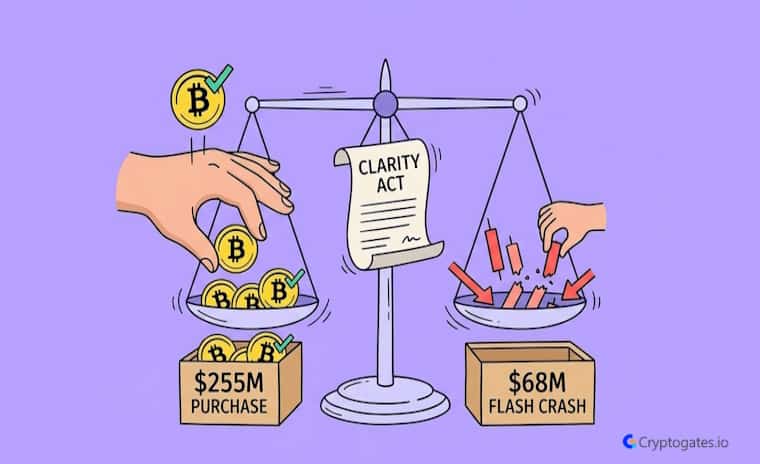
    A $255M purchase, a surprise flash crash, and a regulatory bill moving fast — all in the same week.

    Look, the market is sending mixed signals, and most traders are only reading half of them.

    EXECUTIVE SUMMARY
    • The Problem: Retail optimism is masking serious technical warnings beneath the surface.
    • The Solution: Regulatory clarity through the Clarity Act may stabilize long-term DeFi and stablecoin markets.
    • The Incentive: Institutional Bitcoin accumulation continues, signaling strong conviction at current levels.
    • The Risk: A single flash crash wiped $68M in longs, proving fragility is real and present.

    Michael Saylor’s $255M Bitcoin Bet and What It Actually Means

    Strategy’s latest Bitcoin purchase brings its holdings to a scale most retail traders can’t conceptualize.

    Honestly, when institutions buy this consistently, it stops being news and starts being a pattern worth studying.

    Strategy now holds over 553,000 BTC, representing roughly 2.6% of total supply. (Strategy IR)

    HISTORICAL DATA AUDIT

    Battle-Test Your Strategy
    Before the Market Does.

    Eliminate guesswork with institutional-grade backtesting for DCA, Grid, and Rebalance bots. Real historical data. Real-world results.

    EST. OPTIMIZATION +42% ROI Efficiency
    Start Backtest Now

    Sourced from 5+ Years of Exchange Data

    Is Institutional Buying a Signal or Just Noise?

    Institutional flows don’t guarantee short-term price movement, but they do compress available supply over time.

    The signal is real. The timing, though, is never guaranteed.

    Does institutional Bitcoin buying always push prices up?

    Not immediately. Large buys reduce circulating supply, but market sentiment, leverage, and macro conditions still drive short-term price action.

    The Clarity Act — Regulatory Progress That Actually Matters

    Stablecoin and DeFi regulation is moving through the legislative process faster than most expected.

    Here’s the thing: regulatory clarity historically reduces uncertainty premiums priced into crypto assets.

    The Clarity Act would cover an estimated $230B+ stablecoin market currently operating in a legal gray zone. (Coin Center)

    Flash Crash Liquidates $68M — The Fragility Nobody Wants to Talk About

    Sixty-eight million dollars in long positions were wiped out in minutes.

    That’s not a glitch; that’s the market showing exactly how thin the order books really are under pressure.

    “Regulatory frameworks don’t kill crypto. Uncertainty does.”

    Jake Chervinsky, Blockchain Association.

    Before Your Next Long Position

    • Check open interest vs price divergence
    • Confirm volume supports the move
    • Set a hard stop, not a mental one
    • Reduce position size in low-liquidity windows
    • Backtest the entry setup first
    SYSTEM ACCESS: CG4.2

    Stop Guessing.
    Stress Test Your Edge.

    The market doesn’t care about your backtest. Our engine simulates 1,000+ “what-if” scenarios to ensure your strategy is built for survival.

    Run Crypto Strategy Engine →
    ROBUSTNESS SCORE
    75+ STRUCTURAL EDGE
    RISK OF RUIN < 1%
    TARGET HIT 92%

    Ethereum Stagnation and the ETF Inflow Paradox

    ETH ETFs are pulling in capital while the price sits flat — wait, shouldn’t those two things move together?

    Not necessarily. Structural demand and spot price can disconnect for weeks before reconciling.

    ETH Signal Snapshot

    Swipe to view full data →
    Signal Status Implication
    ETF Inflows Positive Long-term accumulation
    Price Action Flat/Bearish Short-term pressure
    Analyst Sentiment Cautious Divergence watch

    Final Read — Don’t Let the Noise Pick Your Strategy

    Bullish institutions, bearish technicals, regulatory hope, and flash crashes all coexist.

    This isn’t confusion; it’s a normal, complex market.

    Build a strategy that survives both sides, backtest it against conditions like these using CryptoGates’ Strategy Engine, and stop reacting to headlines alone.

    FAQs

    What is driving Bitcoin institutional accumulation right now?

    Firms like Strategy view Bitcoin as a long-term treasury asset, buying consistently regardless of short-term price swings.

    It would establish legal definitions and compliance frameworks, reducing the regulatory uncertainty that currently limits institutional DeFi participation.

    Not predicted, but position sizing, stop-losses, and avoiding high-leverage entries during low-liquidity periods significantly reduce exposure.

  • How Bitcoin Actually Works ⚙️: The Beginner’s Guide 📚 Every Crypto Investor Should Read ₿

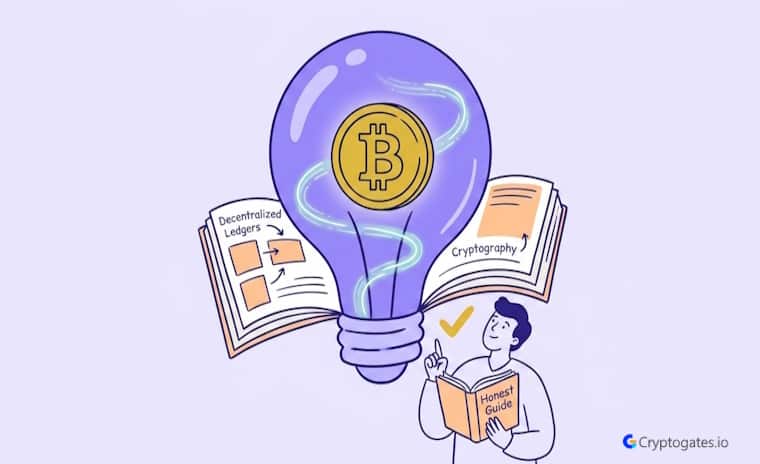
    How Bitcoin Actually Works ⚙️: The Beginner’s Guide 📚 Every Crypto Investor Should Read ₿

    Most people check their Bitcoin balance the same way they check their bank account.

    When a number goes up, they feel good. It goes down; they panic.

    But ask them how it actually works — how that number moves, who confirms it, and what’s actually happening behind the screen, and most go quiet.

    Over 70% of retail crypto buyers cannot explain how blockchain transactions work before making their first purchase. According to a survey by Crypto Literacy

    That’s not a criticism.

    It’s just where most people start.

    The problem is, trading something you don’t understand means every price move feels random.

    And random feels scary.

    EXECUTIVE SUMMARY
    • The Problem: Most beginners buy Bitcoin without understanding it — so every price drop triggers panic.
    • The Solution: A plain-language, step-by-step breakdown of Bitcoin — from wallets to blockchain to transactions.
    • The Incentive: Understanding how it works builds confidence and leads to calmer, smarter decisions.
    • The Risk: Skip this foundation and every trade becomes a guess based on price alone.

    What Bitcoin Actually Is (And What It Isn’t)

    Bitcoin has no CEO. No headquarters.

    No customer support number to call when something goes wrong. No one owns it, and no one runs it. That’s the whole point.

    When you send money through a bank, the bank is the middleman. It checks your balance, approves the transfer, and updates its records.

    Bitcoin removes that middleman entirely. Instead, thousands of computers around the world share the job.

    That’s what decentralization means. No single person or institution controls the network.

    The Ledger That Nobody Owns

    Think of the blockchain as a shared notebook.

    Every Bitcoin transaction ever made is written in that notebook.

    And instead of one person keeping it locked in a drawer, thousands of computers around the world each hold an identical copy.

    Andreas M. Antonopoulos
    “The blockchain is, in essence, a distributed trust machine. It doesn’t eliminate the need for trust, it distributes it across thousands of participants instead of one institution.”

    Andreas Antonopoulos, author of Mastering Bitcoin

    Nobody can quietly change one line in that notebook.

    Because the moment one copy changes, it stops matching all the others. The network rejects it automatically.

    How a Bitcoin Transaction Actually Happens

    Honestly, the process is simpler than most people imagine.

    Here’s what actually happens when you send Bitcoin.

    You open your wallet and enter the recipient’s address and amount. Your wallet broadcasts that request to the Bitcoin network, basically announcing it to thousands of computers at once.

    Those computers check that you actually have the Bitcoin you’re trying to send. Then miners compete to bundle your transaction into a block, add it to the chain, and lock it in permanently.

    The whole thing can take anywhere from a few minutes to roughly an hour, depending on network traffic and the fee you paid.

    Conversational number: That fee is sometimes just a few cents. Sometimes a few dollars. It depends on how busy the network is.

    SYSTEM ACCESS: CG4.2

    Stop Guessing.
    Stress Test Your Edge.

    The market doesn’t care about your backtest. Our engine simulates 1,000+ “what-if” scenarios to ensure your strategy is built for survival.

    Run Crypto Strategy Engine →
    ROBUSTNESS SCORE
    75+ STRUCTURAL EDGE
    RISK OF RUIN < 1%
    TARGET HIT 92%

    What Are Wallets, Keys, and Addresses?

    Your Bitcoin wallet doesn’t actually store Bitcoin.

    Wait — it stores the keys that prove the Bitcoin on the blockchain belongs to you.

    Think of it like a mailbox. Anyone can see the address and drop Bitcoin in.

    Only the person with the private key can open it and move what’s inside.

    Can someone reverse a Bitcoin transaction?

    No. Once confirmed on the blockchain, a Bitcoin transaction is permanent and cannot be undone by anyone.

    Lose your private key?

    There is no recovery option.

    No password reset.

    No support ticket.

    Bitcoin stays on the blockchain forever, locked and unreachable.

    Before You Send Bitcoin, Check These 5 Things

    • Double-check the recipient’s wallet address (all of it, not just the first few characters)
    • Confirm the network fee and decide if it fits your urgency
    • Verify the exact amount you’re sending
    • Check your wallet is connected to the correct network
    • Make sure your private key or seed phrase is safely stored offline

    Who controls Bitcoin transactions?

    No single person or organization controls Bitcoin transactions — they’re verified collectively by thousands of computers running the Bitcoin network.

    The Mining Process — Who Confirms Transactions?

    Here’s the interesting part.

    Nobody just volunteers to confirm Bitcoin transactions out of kindness.

    Miners are computers — well, operators running specialized computers — competing to solve a complex mathematical puzzle.

    The first one to solve it gets to add the next block of transactions to the blockchain. And as a reward, they receive newly created Bitcoin.

    This is called proof of work.

    It’s what secures the network.

    Faking or altering a transaction would require redoing all that computational work across the majority of the network simultaneously.

    That’s practically impossible — and gets harder every day.
    Actually, let me rephrase that. It’s not just hard.

    It’s designed to become harder as more miners join. The network automatically adjusts difficulty every two weeks to keep block times consistent.

    Research Snapshot

    A common assumption is that any automated strategy performs well as long as Bitcoin is moving — up or down doesn’t matter. CryptoGates’ internal backtesting suggests otherwise: results depend heavily on how an asset moves, not just the direction.

    In May 2025, BTC climbed 10.4% in a fairly smooth uptrend. A grid strategy tested across that same window captured a 7.74% return while keeping trading fees under $4 total.

    The bot didn’t outperform simple buy-and-hold that month. Still, it demonstrated something more useful: a rules-based system can extract consistent, low-cost gains even in conditions it isn’t perfectly optimized for. That’s the kind of evidence that matters more than a hunch before committing real capital.

    Read the full breakdown: BTC Pumped +10% in May — Our Grid Bot Made +7.74% With Only $3.26 in Fees

    Why Mining Gets Harder Over Time

    Bitcoin has a fixed supply. Only 21 million will ever exist.

    That’s not a marketing claim — it’s written into the code.

    Every so often, the reward miners receive for adding a block gets cut in half. This is called the halving.

    It slows the rate at which new Bitcoin enters circulation, making the existing supply more scarce over time.

    Bitcoin Mining at a Glance

    Swipe to view full data →
    What Happens Who Does It Why It Matters
    Transaction is broadcast Sender’s wallet Announces the request to the network
    Miners compete to verify Mining computers Validates the transaction is legitimate
    Block is added to chain Winning miner Permanently records the transaction
    Reward is issued Winning miner Incentivizes network participation
    Difficulty is adjusted The protocol itself Keeps block times stable as network grows

    What Gives Bitcoin Its Value?

    Look — value is always a bit philosophical.

    But Bitcoin’s value comes from three real things: limited supply, growing demand, and the fact that millions of people globally agree it’s worth something.

    It’s not backed by gold. It’s not backed by a government. It’s backed by math, code, and collective trust. And that network keeps growing.

    Why Bitcoin Prices Move So Wildly

    Bitcoin markets are still small compared to traditional financial markets.

    That means a relatively large buy or sell can move prices significantly.

    Add in sentiment-driven trading and speculative demand, and you get the volatility most beginners find terrifying.

    Real Backtest Example

    Understanding Bitcoin’s volatility in theory is one thing — watching a real strategy survive it is another. In April 2025, BTC fell from roughly $87,000 to $74,000 in a matter of weeks, driven by macro shocks rather than any flaw in the network itself.

    This kind of sudden, headline-driven drop is exactly the scenario that makes new holders panic-sell at the worst possible moment.

    CryptoGates ran a DCA bot through that exact window instead of just theorizing about it. Sixteen of seventeen sessions closed via take-profit, and the bot ended the period with a net gain, while spot holders were left staring at unrealized losses on the same capital.

    The takeaway isn’t that DCA guarantees profit — it’s that a tested, rules-based approach removes the emotional guesswork that turns a temporary dip into a panic-driven mistake.

    Read the full breakdown: The Tariff Trap Playbook — How a DCA Bot Turned BTC’s Worst April Into +$349 Profit

    Bitcoin’s annualized volatility has historically been 3 to 5 times higher than that of the S&P 500 (CoinMetrics)

    Here’s what actually matters: the volatility isn’t a bug in Bitcoin. It’s a feature of a young,

    still-maturing asset. Understanding that doesn’t make the swings comfortable — but it makes them explainable.

    How to Start Using Bitcoin Without Getting It Wrong

    Not all exchanges are the same. Fees vary. Security track records vary. What’s available in your region varies.

    Before putting any money anywhere, compare your options properly.

    CryptoGates’ Exchange Picker tool lets you filter exchanges by fees, features, and supported assets — so the choice is based on data, not whoever ran the loudest ad.

    CG STRATEGY ANALYZER

    Confused about
    market outlook?

    Trading without a plan is just gambling. Our strategy architect analyzes your risk tolerance and capital to match you with a proven algorithmic framework.

    PASSIVE DCA Bot
    AGGRESSIVE Grid Pro
    BALANCED Rebalance

    Testing a Strategy Before Risking Real Money

    The biggest mistake beginners make isn’t choosing the wrong coin.

    It’s skipping the testing phase entirely.

    Before putting real money into any Bitcoin strategy — whether that’s DCA, grid trading, or simple buy-and-hold — run it through CryptoGates’ Backtesting Lab first.

    See how it performed historically. Stress test it. Then decide.

    Bitcoin Makes More Sense Than Most People Think

    Bitcoin isn’t magic internet money, and it isn’t a guaranteed path to wealth.

    It’s a decentralized network secured by math, maintained by thousands of computers, and governed by code that nobody owns.

    Once you understand the mechanism, the price swings stop feeling random and start feeling manageable.

    If you’re ready to move from understanding to action, start by testing — not risking. CryptoGates’ Backtesting Lab and Strategy Engine are built for exactly this: turning curiosity into a plan you can actually trust.

    FAQs

    How does Bitcoin work in simple terms?

     Bitcoin is a digital currency that runs on a decentralized network of computers. When you send Bitcoin, thousands of computers verify the transaction and record it permanently on a shared ledger called the blockchain. No bank or government is involved.

    No. Bitcoin is divisible into very small units, so you can buy a fraction for almost any budget. Many exchanges allow purchases starting from just a few dollars, making it accessible regardless of your starting capital.

     In most parts of the world, owning and trading Bitcoin is legal, though regulations vary and continue to evolve. Always check the rules in your specific location before trading. This is not legal advice — consult a qualified professional for guidance specific to your situation.

  • KelpDAO Exploit Drains $14B from DeFi TVL: What Restaking Risk Really Looks Like

    KelpDAO Exploit Drains $14B from DeFi TVL: What Restaking Risk Really Looks Like

    The KelpDAO exploit hit like a gut punch.

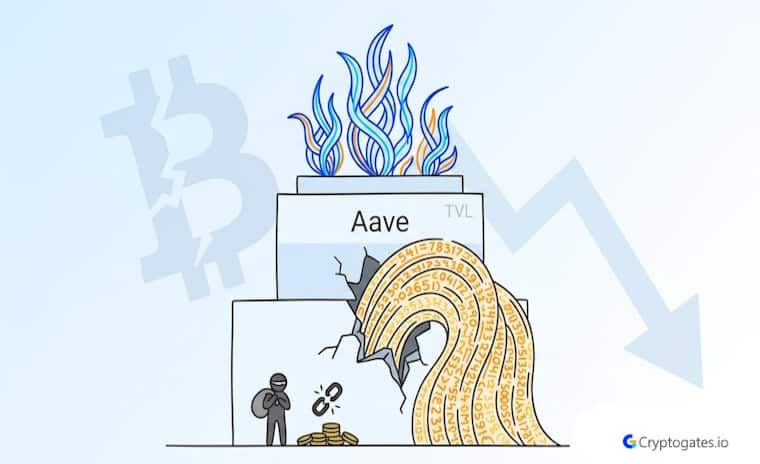
    A single attacker forged cross-chain messages, minted unbacked rsETH, and walked away with roughly $292 million.

    DeFi felt it everywhere.

    Look, this wasn’t just one protocol getting drained.

    Within days, the total value locked across DeFi collapsed from around $99.5 billion to roughly $85 billion.

    That’s a $14 billion confidence crisis, not just a hack.

    EXECUTIVE SUMMARY
    • The Problem: A forged cross-chain message allowed unbacked rsETH to be minted and used as real collateral.
    • The Solution: Governance votes and bad debt socialization are now the only realistic recovery levers.
    • The Incentive: Frozen Arbitrum funds and Aave’s exposure make resolution financially urgent.
    • The Risk: Restaking and bridge infrastructure trust may not recover quickly.

    How the KelpDAO Exploit Actually Worked

    The attacker exploited cross-chain message validation, forging inputs that tricked the system into minting rsETH with nothing backing it.

    That unbacked token then entered the lending markets as legitimate collateral, where the real damage began.

    Aave Took the Hardest Hit

    Aave absorbed between $8 and $10 billion in withdrawals during the panic, with a potential nine-digit bad debt still unresolved.

    DeFi TVL dropped from ~$99.5B to ~$85B in roughly 48 hours. (DeFiLlama)

    Honestly, no lending protocol is built to handle collateral that shouldn’t exist.

    What is rsETH and why did it collapse in value?

    rsETH is KelpDAO’s restaked ETH token. When unbacked rsETH flooded the market as fake collateral, its peg broke, and confidence followed.

    Where Recovery Stands Right Now

    Three things have to go right: bad debt gets socialized across the protocol, frozen funds on Arbitrum get unlocked through governance, and users decide to trust restaking infrastructure again.

    None of those are guaranteed.

    “Bridge security is the weakest link in multichain DeFi. Cross-chain message validation needs to be treated like smart contract auditing.”

    Tarun Chitra, Gauntlet

    Before you run any restaking or bridge-exposed strategy, backtest it on CryptoGate’s Strategy Engine first.

    Market structure just shifted.

    HISTORICAL DATA AUDIT

    Battle-Test Your Strategy
    Before the Market Does.

    Eliminate guesswork with institutional-grade backtesting for DCA, Grid, and Rebalance bots. Real historical data. Real-world results.

    EST. OPTIMIZATION +42% ROI Efficiency
    Start Backtest Now

    Sourced from 5+ Years of Exchange Data

    What This Means for Restaking Strategies

    Restaking unlocks yield, but it stacks risk in layers most users never model out.

    This exploit showed exactly what happens when bridge risk, collateral risk, and liquidity risk all trigger simultaneously.

    Before Re-Entering DeFi Post-Exploit

    • Audit bridge exposure in your current positions
    • Check collateral token backing on lending platforms
    • Confirm the governance status of frozen assets
    • Model bad debt impact on protocol solvency
    • Run updated scenarios through a strategy simulator

    Conclusion: DeFi Is Resilient, But Not Naive

    Wait, resilience doesn’t mean ignoring what just happened.

    The KelpDAO exploit exposed real structural gaps in how cross-chain collateral gets validated.

    Here’s the thing: governance and socialized loss aren’t fixes; they’re damage control.

    Strategy Engine on CryptoGates can help you stress-test any DeFi re-entry before risking real capital.

    SYSTEM ACCESS: CG4.2

    Stop Guessing.
    Stress Test Your Edge.

    The market doesn’t care about your backtest. Our engine simulates 1,000+ “what-if” scenarios to ensure your strategy is built for survival.

    Run Crypto Strategy Engine →
    ROBUSTNESS SCORE
    75+ STRUCTURAL EDGE
    RISK OF RUIN < 1%
    TARGET HIT 92%
  • XRP Goes Live on Solana as Price Breaks $1.50 Resistance

    XRP Goes Live on Solana as Price Breaks $1.50 Resistance

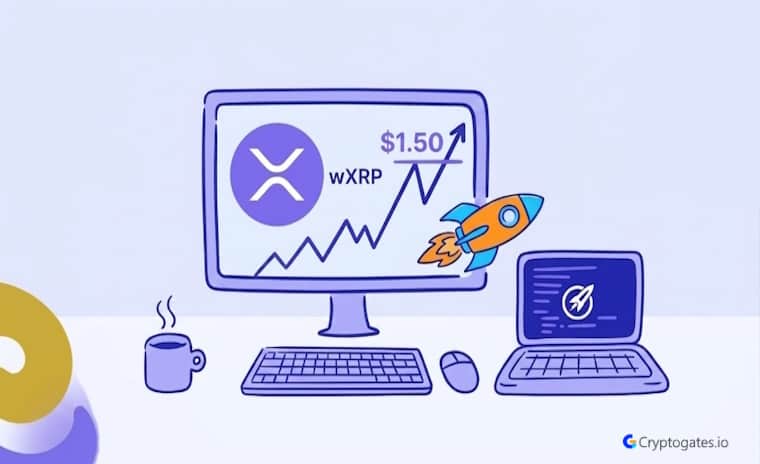
    XRP just crossed $1.50 for the first time since February, and honestly, the timing is not a coincidence.

    A wrapped XRP token is now live on Solana, backed 1:1 through Hex Trust and bridged via LayerZero, adding serious DeFi weight to the move.

    Look, two separate catalysts hit at once.

    The Strait of Hormuz reopened, oil dropped, risk assets rallied, and XRP on Solana launched the same week with over $100 million in opening liquidity.

    EXECUTIVE SUMMARY
    • The Problem: XRP had no native Solana presence, limiting its DeFi reach.
    • The Solution: wXRP launched 1:1 custody-backed on Solana via Hex Trust and LayerZero.
    • The Incentive: $1.50 breakout momentum, geopolitical relief, and fresh liquidity inflows.
    • The Risk: Two hard deadlines in April decide whether this rally holds.

    What wXRP on Solana Actually Means

    wXRP is a fully backed wrapped token, not synthetic exposure.

    It trades live on Jupiter, Phantom, Titan Exchange, and Meteora right now.

    Over $100M in initial liquidity was seeded at launch, according to Hex Trust

    Why LayerZero Matters Here

    LayerZero handles cross-chain bridging, meaning wXRP moves without centralized checkpoints.

    That is a meaningful difference from the older wrapped token infrastructure.

    Is wXRP the same as real XRP?

    wXRP is pegged 1:1 to XRP and redeemable through Hex Trust custody, but it operates on Solana, not the XRP Ledger.

    The Price Move and What Is Actually Driving It

    XRP on Solana launched into a macro rally. Iran opened the Strait of Hormuz, oil fell more than 10%, and broader crypto markets responded fast.

    “Cross-chain liquidity expansions tend to attract net new capital rather than just rotating existing holders.”

    Research note, Messari

    Wait, here is the thing, though.

    The Solana launch did not cause the price move alone.

    It amplified a rally that was already forming on geopolitical news. Two different engines, one direction.

    Checklist

    • wXRP available on Jupiter
    • Backed 1:1 via Hex Trust custody
    • Bridged through LayerZero
    • Oil drop triggered macro rally
    • $1.50 now the key support level to watch

    The Two April Events That Decide XRP’s Next Move

    The ceasefire driving this macro relief expires on April 22. If it breaks, risk-off sentiment returns fast.

    The CLARITY Act markup is expected in the final weeks of April, which could reshape how XRP is legally classified in the US market.

    Key resistance sits at the 100-day EMA near $1.55 and the 200-day EMA near $1.80, per technical analysis shared across trading desks.

    SYSTEM ACCESS: CG4.2

    Stop Guessing.
    Stress Test Your Edge.

    The market doesn’t care about your backtest. Our engine simulates 1,000+ “what-if” scenarios to ensure your strategy is built for survival.

    Run Crypto Strategy Engine →
    ROBUSTNESS SCORE
    75+ STRUCTURAL EDGE
    RISK OF RUIN < 1%
    TARGET HIT 92%

    Before acting on either signal, backtest your XRP strategy on CryptoGates first using the Strategy Engine CG4.2 to stress-test entries around these dates.

    Should You Adjust Strategy Around This?

    This is not a prediction. XRP holding above $1.50 past April 22 depends on events, not charts alone.

    If you are running a DCA approach into XRP or wXRP, the DCA Bot v2.4 on CryptoGates lets you simulate how different entry schedules perform across the scenarios ahead.

    Honestly, running a scenario before committing capital takes about five minutes and saves a lot of regret.

    What This Moment Actually Signals

    XRP expanding onto Solana is a structural shift, not just a price event.

    Two live catalysts, two hard deadlines, and a new DeFi footprint all landed inside one week.

    If you want to position around this intelligently, run your XRP or wXRP strategy through CryptoGates before the April deadlines hit.

    HISTORICAL DATA AUDIT

    Battle-Test Your Strategy
    Before the Market Does.

    Eliminate guesswork with institutional-grade backtesting for DCA, Grid, and Rebalance bots. Real historical data. Real-world results.

    EST. OPTIMIZATION +42% ROI Efficiency
    Start Backtest Now

    Sourced from 5+ Years of Exchange Data

  • XRP ETF Inflows Hit $17M: What It Means for Your Strategy

    XRP ETF Inflows Hit $17M: What It Means for Your Strategy

    Spot XRP ETFs just logged their strongest single-day inflow in roughly 11 weeks.

    Institutional money is moving, and that shift matters.

    Here’s what the numbers actually tell us before you touch your portfolio.

    EXECUTIVE SUMMARY
    • The Problem: XRP ETF inflows spiked, but total AUM remains a small slice of XRP’s market value.
    • The Solution: Understand whether this is a sustained institutional trend or a short-term liquidity event.
    • The Incentive: A four-day positive streak signals early accumulation behavior worth tracking.
    • The Risk: Regulation and real-world adoption still determine if this momentum holds.

    XRP ETF Inflows Just Hit Their Strongest Day in 11 Weeks

    U.S.-listed spot XRP ETFs pulled in approximately $17.1 million in a single day, the highest daily figure since early February.

    This came as part of a four-day positive streak, suggesting this was not a one-off event.

    Total XRP ETF assets now sit between $1.0 and $1.25 billion, a modest but growing share of XRP’s overall market cap. (CoinMarketCap)

    Why Are XRP ETF Inflows Suddenly Rising?

    Institutional appetite tends to follow regulatory clarity, and XRP’s legal environment has improved enough to attract fresh ETF capital.

    What Institutional Inflows Actually Signal

    Honestly, a $17M daily inflow sounds massive until you remember total XRP ETF assets are still under $1.3 billion across the board.

    Wait, that context matters because it means ETFs hold only a small fraction of XRP’s full market value, so price impact from ETF flows alone stays limited.

     Bitcoin dominance is currently at 58.9%, indicating that altcoin capital rotation remains compressed. (CoinMarketCap)

    How to Build Around This Signal Without Chasing It

    Look, the worst move here is reacting to one data point without a tested strategy behind it.

    XRP ETF Signal Checklist

    • Confirm inflow streak is 3+ days
    • Check BTC dominance direction
    • Verify total ETF AUM trend (not single-day)
    • Map your entry against DCA intervals
    • Backtest before adding exposure

    Before adjusting any XRP position, run your thesis through CryptoGate’s Strategy Engine to stress-test it against sideways and volatile scenarios.

    SYSTEM ACCESS: CG4.2

    Stop Guessing.
    Stress Test Your Edge.

    The market doesn’t care about your backtest. Our engine simulates 1,000+ “what-if” scenarios to ensure your strategy is built for survival.

    Run Crypto Strategy Engine →
    ROBUSTNESS SCORE
    75+ STRUCTURAL EDGE
    RISK OF RUIN < 1%
    TARGET HIT 92%

    Strategy Over Hype — Always

    Here’s the thing: institutional inflows into XRP ETFs are a signal worth watching, not one worth chasing.

    Use CryptoGates DCA Bot to test how spreading entries across this inflow window would have performed versus a lump-sum move.

    Conclusion — Read the Signal, Then Test the Strategy

    XRP ETF inflows reaching an 11-week high in four straight days tells us institutional interest is real, but wait, it’s not confirmed as durable yet.

    Momentum can evaporate fast when regulatory sentiment shifts.

    Before acting on this data, backtest your XRP strategy on CryptoGates first.

    HISTORICAL DATA AUDIT

    Battle-Test Your Strategy
    Before the Market Does.

    Eliminate guesswork with institutional-grade backtesting for DCA, Grid, and Rebalance bots. Real historical data. Real-world results.

    EST. OPTIMIZATION +42% ROI Efficiency
    Start Backtest Now

    Sourced from 5+ Years of Exchange Data

    FAQs

    What caused the XRP ETF inflow spike?

    A combination of improving regulatory sentiment and institutional rotation into XRP-linked products drove the four-day positive streak.

    Not necessarily. ETF inflows reflect confidence, but price depends on broader market conditions, liquidity, and real-world adoption.

    Treat it as a sentiment confirmation tool, then backtest your entry and exit plan before committing real capital.

  • Crypto Kidnappings Are Rising; Here’s What France Is Doing About It

    Crypto Kidnappings Are Rising; Here’s What France Is Doing About It

    Crypto wealth is becoming a physical target.

    France just announced new protective measures after a wave of wrench attacks and kidnappings targeting crypto holders.

    Honestly, this changes how every serious holder should think about personal security.

    EXECUTIVE SUMMARY
    • The Problem: Visible crypto wealth is attracting violent physical attacks on holders worldwide.
    • The Solution: France is introducing new legal and protective measures for crypto asset holders.
    • The Incentive: Governments are finally treating crypto security as a real personal safety issue.
    • The Risk: Without proactive steps, high-profile holders remain soft targets for criminals.

    What France Actually Announced

    At Paris Blockchain Week, French official Jean-Didier Berger confirmed new measures are being prepared to protect crypto holders from physical threats.

    The moves come directly in response to mounting wrench attacks and kidnappings linked to known crypto wealth.

    What “Wrench Attack” Means Here

    A wrench attack is when criminals use physical force, not hacking, to steal crypto.

    It targets people whose holdings are publicly known or easily guessed.

    Physical crypto-related crimes have surged globally, with France reporting multiple high-profile kidnapping cases in recent months. (Cointelegraph)

    LIVE DATA FEED // UNFILTERED

    The Truth in Numbers.

    Designed for the 10% who require absolute clarity. We strip away the hype to reveal the structural reality of the crypto markets.

    11.6M TOKENS DEFUNCT (2025)
    “The Illusion of the Infinite Pump.” Most assets are designed to fail. We track the ones that don’t.
    ⚠ Shocking Crypto Statistics
    Are crypto holders being targeted more than before?

    Yes, as crypto wealth grows more visible, criminals are shifting from hacking to direct physical coercion.

    Why Crypto Kidnapping Protection Is Now a Strategy Issue

    Look, this isn’t just a law enforcement problem.

    It’s a portfolio management problem.

    How you hold, display, and talk about your crypto directly affects your physical risk profile.

    Over 20 documented violent crypto-related attacks were recorded globally in a 12-month window, targeting both retail and institutional holders. (Bitcoin Magazine research)

    • Never share portfolio size publicly
    • Use cold wallets, not exchange screenshots
    • Separate personal identity from on-chain activity
    • Avoid flex culture on social media
    • Review who knows your holdings
    Andreas M. Antonopoulos
    “The best security is financial privacy. Don’t advertise your holdings.”

    Andreas Antonopoulos, Bitcoin Educator and Author

    What This Means for How You Manage Crypto Risk

    Wait, this also reshapes how you should think about strategy exposure.

    Running quieter, more diversified approaches, rather than concentrated visible bets, is now as much a security move as a financial one.

    CryptoGates Reality Check tools can help you stress-test whether your current approach is over-exposed.

    CONFIDENTIAL // RESEARCH
    STRATEGY INTELLIGENCE

    Proven Setups &
    Expert Breakdowns.

    We don’t just show you the data; we engineer and validate high-performance strategies, providing the “Alpha” behind the numbers.

    Swipe to view full data →
    Risk Factor High Exposure Lower Exposure
    Social media Public portfolio posts Private/anonymous
    Wallet setup Exchange-held funds Cold wallet, private keys
    Strategy visibility Loud, concentrated bets Diversified, quiet positions

    Final Thought — Your Security Is Part of Your Strategy

    Physical crypto security is no longer optional.

    France’s response signals a global shift.

    Before you grow your holdings further, backtest your overall risk exposure using CryptoGates Strategy Engine, because risk isn’t only on the chart.

    HISTORICAL DATA AUDIT

    Battle-Test Your Strategy
    Before the Market Does.

    Eliminate guesswork with institutional-grade backtesting for DCA, Grid, and Rebalance bots. Real historical data. Real-world results.

    EST. OPTIMIZATION +42% ROI Efficiency
    Start Backtest Now

    Sourced from 5+ Years of Exchange Data

  • Goldman Sachs Bitcoin ETF Filing: What the Premium Income Fund Means for Crypto Investors

    Goldman Sachs Bitcoin ETF Filing: What the Premium Income Fund Means for Crypto Investors

    Bitcoin’s dominance just hit 59.1% of the total crypto market.

    And Wall Street isn’t slowing down.

    Goldman Sachs has filed with the SEC to launch the Goldman Sachs Bitcoin Premium Income ETF, an options-based fund that sells options on BTC-linked assets to generate a regular yield.

    BTC market dominance stands at 59.1% of a $2.51T total crypto market cap. CoinMarketCap

    This isn’t a spot ETF.

    It’s a different structure entirely, and that difference matters a lot.

    EXECUTIVE SUMMARY
    • The Problem: Most retail investors want Bitcoin exposure without the full volatility risk of holding BTC directly.
    • The Solution: Goldman Sachs files an options-based Bitcoin ETF designed to produce regular income from BTC-linked funds.
    • The Incentive: Steady yield potential in flat or mildly trending markets without needing to own spot Bitcoin.
    • The Risk: The fund caps upside gains — in a strong Bitcoin rally, investors lose out on full price appreciation.

    What Goldman Sachs Actually Filed

    Here’s the thing: this filing is getting lumped in with spot Bitcoin ETFs in a lot of headlines.

    That’s not accurate.

    The Goldman Sachs Bitcoin Premium Income ETF is built around selling options on existing BTC-linked funds.

    It doesn’t hold Bitcoin directly.

    The income comes from option premiums collected over time, not from Bitcoin price gains.

    The total crypto market cap sits at $2.51T with 24-hour trading volume of $139.52B. CoinMarketCap

    That’s a meaningful structural difference and one that changes how you should think about this product entirely.

    How the Income Mechanism Works

    The fund sells covered calls or similar options strategies on BTC-linked assets.

    When those options expire, the premiums collected get distributed as income to fund holders.

    Think of it this way: instead of riding Bitcoin from, say, forty thousand to eighty thousand, you collect a smaller, steadier payment along the way.

    Around three to five percent in the right conditions, but that number depends heavily on market volatility.

    Why This Filing Matters Right Now

    It’s an exchange-traded fund that generates income by selling options on Bitcoin-linked assets rather than holding spot BTC, designed for yield-focused investors, not pure price speculators.

    Bitcoin ETF inflows have drawn significant institutional attention since spot products launched, with options-based structures now entering the pipeline.      SEC filing reference / Bloomberg

    Honestly, this filing tells us more about where institutional appetite is heading than it does about Bitcoin itself.

    Wall Street is moving toward yield-bearing crypto products.

    Spot ETFs opened the door.

    Now asset managers are building the next layer, income-generating structures designed for investors who want crypto exposure without the full ride up and down.

    The Risk Side No One Is Talking About

    Look, the income sounds attractive. But there’s a real cost buried in this structure.

    Options-overlay strategies on Bitcoin can work in range-bound conditions, but they systematically underperform in strong bull markets because the upside gets capped by the sold calls.

    ETF Analyst commentary via Bloomberg ETF Research

    When Bitcoin runs hard, this fund won’t keep up.

    The sold options create a ceiling on gains. That’s the trade-off you accept in exchange for the income stream.

    What to Watch Before This ETF Goes Live

    Goldman’s filing is in motion, but SEC approval isn’t guaranteed, and timing is uncertain. Watch for competing “premium income” BTC ETF filings that may reach approval first.

    Before this or any income ETF lands on your radar, use CryptoGates to stress-test the yield assumptions against real market scenarios.

    Data first. Decision second.

  • Trump’s Fed Chair Pick Just Cleared a Big Hurdle: But There’s Still a Catch

    Trump’s Fed Chair Pick Just Cleared a Big Hurdle: But There’s Still a Catch

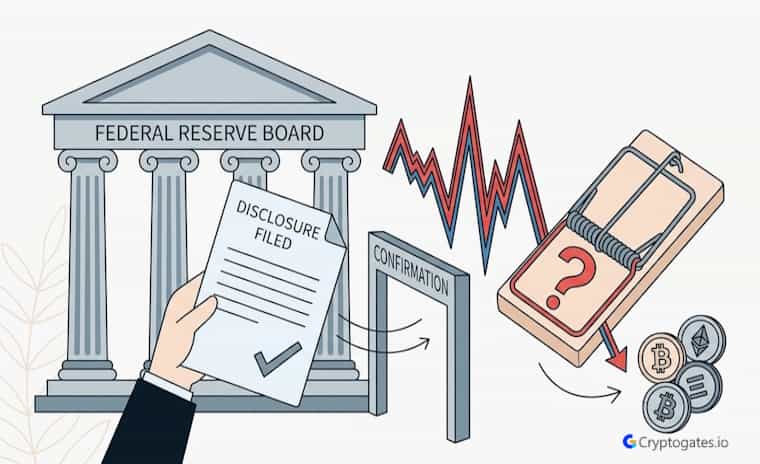
    Trump’s pick to run the Federal Reserve just cleared a key paperwork hurdle.

    Kevin Warsh has filed the financial disclosures the Senate Banking Committee needs to schedule his confirmation hearing.

    Warsh’s wife, Estée Lauder heir Jane Lauder, has an estimated net worth of $1.9 billion, making his financial disclosures unusually complex. (Forbes)

    That filing had been holding everything up.

    With Jerome Powell’s term ending on May 15, the window to appoint a new Fed chair is narrowing, and crypto markets are paying attention.

    EXECUTIVE SUMMARY
    • The Problem: The Senate couldn’t schedule Warsh’s hearing because his financial disclosures weren’t filed on time.
    • The Solution: Warsh submitted the required paperwork Monday, clearing the procedural block.
    • The Incentive: Getting a new Fed chair confirmed before Powell’s May 15 term expiry keeps monetary policy on stable footing.
    • The Risk: Senator Thom Tillis is blocking the nomination until a separate criminal probe into Powell is resolved.

    What Just Happened

    Look, this isn’t a done deal yet. But it’s a real step forward.

    Kevin Warsh filed his financial disclosures with the Senate Banking Committee on Monday.

    That paperwork is required before the committee can formally schedule a confirmation hearing.

    A hearing planned for April 16 had to be postponed because the filing wasn’t ready. Now that it’s in, the hearing could happen as early as next week.

    Here’s the thing: the delay wasn’t random. Warsh’s finances are genuinely complicated.

    Why the Paperwork Took So Long

    Warsh is married to Jane Lauder, an heir to the Estée Lauder cosmetics empire.

    His earlier financial disclosure listed roughly 1,200 assets, the vast majority tied to his wife’s holdings.

    Warsh’s prior financial disclosure listed nearly 1,200 assets, most held by his wife. (CNBC)

    That’s not a quick form to fill out.

    Actually, it’s worth noting that this same issue delayed SEC Chair Paul Atkins’ hearing, too.

    Marrying into a billion-dollar family creates paperwork. That’s just the reality.

    This is exactly the kind of macro signal we track at CryptoGates. Fed leadership transitions don’t just move bond yields — they move Bitcoin. A delayed or contested confirmation creates uncertainty, and uncertainty is what shakes retail traders into bad decisions. Verify the macro picture before you move.

    ZAHEER, CEO CryptoGates

    The CryptoGates macro news feed flags these confirmation milestones in real time, so you’re not caught off guard when the market reacts.

    HISTORICAL DATA AUDIT

    Battle-Test Your Strategy
    Before the Market Does.

    Eliminate guesswork with institutional-grade backtesting for DCA, Grid, and Rebalance bots. Real historical data. Real-world results.

    EST. OPTIMIZATION +42% ROI Efficiency
    Start Backtest Now

    Sourced from 5+ Years of Exchange Data

    Who Is Kevin Warsh and Why Does He Matter for Crypto?

    Warsh is Trump’s nominee to replace Jerome Powell as Federal Reserve Chair, and his stance on interest rates directly affects liquidity, risk appetite, and crypto prices.

    The Real Obstacle: Tillis and the Powell Probe

    But here’s the problem.

    Filing the paperwork doesn’t mean Warsh gets confirmed.

    Senator Thom Tillis, a Republican on the Senate Banking Committee, has publicly said he won’t vote to confirm Warsh until the federal criminal investigation into Jerome Powell is fully resolved.

    That probe is tied to a $2.5 billion renovation of the Fed’s headquarters and Powell’s related Senate testimony.

    The Senate Banking Committee has 13 Republicans and 11 Democrats. Tillis alone can block the committee from advancing Warsh’s nomination to a full Senate vote. (CNBC/Wikipedia)

    Honestly, this is the part most traders are ignoring.

    Everyone’s focused on the paperwork drama.

    The Tillis blockade is the actual risk.

    If Warsh Isn’t Confirmed by May 15

    Powell’s term as Fed Chair expires May 15.

    If Warsh isn’t confirmed by then, the Fed chair seat could be left in a holding pattern.

    Fed Governor decisions on rates would continue, but markets hate leadership uncertainty, and crypto tends to feel that volatility faster than most assets.

    Can Trump replace Jerome Powell before his term officially ends?

    Powell’s chair term expires May 15; Trump cannot remove him before that date but can only replace him once the term ends.

    What Crypto Traders Should Watch Next

    The paperwork is filed.

    The hearing is coming. But Tillis hasn’t moved, and the Powell probe isn’t closed.

    Watch the Senate Banking Committee’s public schedule for a confirmed hearing date; that’s the next real signal.

    If you want to track how this confirmation battle is shaping macro conditions for Bitcoin and altcoins, the CryptoGates news feed breaks it down without the noise.

    SYSTEM ACCESS: CG4.2

    Stop Guessing.
    Stress Test Your Edge.

    The market doesn’t care about your backtest. Our engine simulates 1,000+ “what-if” scenarios to ensure your strategy is built for survival.

    Run Crypto Strategy Engine →
    ROBUSTNESS SCORE
    75+ STRUCTURAL EDGE
    RISK OF RUIN < 1%
    TARGET HIT 92%

    FAQs

    What is Kevin Warsh’s position on interest rates, and how could it affect crypto prices?

    Warsh has recently supported lower rates in the near term, citing potential productivity-driven growth—lower rates historically increase liquidity and tend to be bullish for risk assets, including crypto.

    A leadership vacuum at the Fed creates policy uncertainty, which typically triggers risk-off behavior across markets — Bitcoin included — as traders wait for clearer signals.

    Tillis has said he won’t support any Fed nominee until a federal criminal investigation into current Chair Jerome Powell is fully and transparently resolved.

  • The Future of Crypto Adoption 🔮: Why Infrastructure 🏗️ Matters More Than Hype 📈

    The Future of Crypto Adoption 🔮: Why Infrastructure 🏗️ Matters More Than Hype 📈

    Most people either think crypto has already won or that it quietly died after the last crash. Neither is true.

    The real story is messier, more interesting, and honestly more useful to understand if you’re trying to build wealth here.

    Let’s talk about where crypto adoption actually stands right now.

    EXECUTIVE SUMMARY
    • The Problem: Trading without a real plan is why most people lose money in crypto, even when the market is going up.
    • The Solution: Understanding what is actually driving crypto adoption in 2026 helps you position yourself before the next wave hits.
    • The Incentive: Systematic strategies like DCA, grid bots, and rebalancing, tested on real data, give you an edge most retail traders never build.
    • The Risk: Skipping the backtesting step and jumping straight into live trades is where most accounts get damaged beyond recovery.

    The Hype Cycle Is Finally Over (And That’s Good)

    Remember 2021? Everyone from your barber to your aunt’s accountant was talking about Dogecoin.

    Then 2022 happened. Exchanges collapsed. Portfolios got wrecked. A lot of people left and never came back.

    Nic Carter
    “The projects that survived 2022 weren’t the loudest ones. They were the ones with real infrastructure.”

    Nic Carter, Crypto Analyst & Castle Island Ventures Partner

    That shakeout, as painful as it was, actually did something useful.

    It filtered out the pure gamblers.

    What’s growing now is quieter, slower, and built on something more real: actual use cases, institutional frameworks, and better tools.

    Crypto adoption isn’t driven by Twitter hype anymore.

    It’s driven by infrastructure.

    SELECTION MATRIX V2.0

    Not sure which
    exchange fits you?

    Bypass the marketing hype. Our matrix cross-references your profile against 50+ institutional metrics—including Proof-of-Reserves and Slippage Models.

    PoR Verified Low Slippage API Ready
    B
    K
    C
    O
    Find My Gateway Analysis Time: < 60s

    What’s Actually Driving Adoption Right Now

    The biggest shift is institutional. Large asset managers, pension funds, and payment processors are no longer just experimenting with crypto; they’re building around it.

    Spot Bitcoin ETFs opened a door that can’t really be closed again. Retail investors now have regulated, familiar ways to get exposure without even touching a wallet.

    Stablecoins deserve a separate mention. They’ve quietly become one of the most used financial tools in emerging markets.

    Real Backtest Example

    Strategy: DCA (Dollar-Cost Averaging)
    Coin: BTC/USDT
    Market Condition: Sharp macro-driven crash — BTC fell from $87K to $74K within weeks
    Objective: Test whether a systematic DCA bot could absorb a sudden macro-triggered selloff without emotional intervention
    Key Result: 16 of 17 sessions closed via take-profit, delivering $349.61 in net profit while spot holders were left holding losses through the entire drop
    Expert Interpretation: The data suggests the edge wasn’t prediction — the bot never “knew” the crash was coming. The edge came from a pre-tested entry structure that kept working even when the macro narrative turned negative, which is the exact gap between a backtested plan and reactive trading.

    The Tariff Trap Playbook: How a DCA Bot Turned BTC’s Worst April in Years Into +$349 Profit

    Spot Bitcoin ETFs accumulated over $50 billion in assets within their first year of approval, according to Bloomberg ETF Research.

    In countries where local currencies are unstable, people aren’t buying Bitcoin to get rich.

    They’re using stablecoins to preserve value and send money across borders without losing 10-15% to traditional wire fees.

    That’s real adoption. Not hype adoption.

    Blockchain technology itself is also being used in supply chains, healthcare records, and digital identity systems, which builds familiarity even among people who’d never buy a single coin.

    Swipe to view full data →
    Barrier Current Status What Would Fix It
    Regulation Inconsistent globally Unified international framework
    User Experience Improving, not there yet Simpler wallets and onboarding
    Price Volatility Still high Broader stablecoin adoption
    Public Trust Rebuilding slowly Consistent scandal-free years

    What’s Still Slowing Everything Down

    Adoption isn’t uniform. There are real friction points that haven’t gone away.

    Regulation is still inconsistent. The U.S. has made progress, but global policy is fragmented.

    A business accepting crypto in Singapore faces completely different rules than one operating in Europe or South America. Until there’s more consistency, mainstream merchant adoption stays patchy.

    Are stablecoins considered real crypto adoption?

    Yes. When people use stablecoins daily to save money and send payments, that’s adoption driven by genuine need, not speculation.

    User experience is improving, but still not there.

    For someone who grew up with a bank app, figuring out wallets, seed phrases, gas fees, and bridge transactions is genuinely confusing. The technology has to meet people where they are, not the other way around.

    Price volatility hasn’t disappeared either. Bitcoin dropped 60%+ in the last bear cycle.

    That kind of movement makes it hard for businesses to price goods in crypto or for ordinary people to use it for daily spending.

    Stablecoins solve part of this, but the broader market still swings hard.

    And honestly?

    Trust is still being rebuilt. FTX left a mark.

    People who lost money aren’t rushing back, and those watching from the sidelines have noticed. Every new scandal sets back public confidence.

    Every year without one helps it recover.

    Reality Check

    Common belief: Grid bots only make sense in volatile, trending markets — a flat market means a dead account.

    What CryptoGates research found:
    Strategy: Grid
    Coin: SOL/USDT
    Market Condition: 60-day flat, range-bound “dead zone” between $80–$97, post-crash
    Objective: Measure whether a grid strategy could extract value where price wasn’t going anywhere
    Key Result: 146 trades, $462.95 in net profit, and a +10.88% advantage over simple buy-and-hold over the same period

    Why it matters: A flat market isn’t a dead market for every strategy — it’s a dead market for buy-and-hold. Grid bots are structurally built to monetize sideways price action, which is exactly why testing a strategy against real historical conditions (not assumptions) matters before capital is committed.

    SOL’s “Institutional Purgatory”: Extracting Grid Profits from the $80–$97 Post-Crash Dead Zone

    The Mistake Most Traders Are Still Making

    Here’s the thing: knowing crypto is growing doesn’t automatically mean you’ll profit from it.

    In fact, most people who “believe in crypto” are still losing money. Not because they’re wrong about the technology, but because they trade without a system.

    They buy during euphoria. They sell during panic. They hold coins they don’t understand because someone in a Discord server was excited. That’s not a strategy.

    That’s gambling with extra steps.

    Most traders don’t lose because the market beats them. They lose because they beat themselves. You can’t fix emotion with more information. You fix it with a system you’ve already tested. That’s why we built CryptoGates the way we did.

    ZAHEER, CEO CryptoGates

    The traders who actually do well over a full market cycle are doing something different.

    They’re using systems, dollar-cost averaging, portfolio rebalancing, and grid bot strategies drawn from proven crypto trading strategies that remove emotion and create consistency.

    More importantly, they test those strategies before putting real money on them.

    That second part is where most people skip ahead and pay for it.

    How CryptoGates Fits Into This

    This is exactly the problem CryptoGates.io was built to solve.

    You don’t have to guess whether a DCA strategy would have worked through the last two years of market swings.

    The DCA Backtest Bot lets you run it against five-plus years of real historical data before you risk a single dollar.

    Before You Place Any Trade, Check These 5 Things:

    • Do I have a written strategy, not just a feeling?
    • Have I backtested this approach on real historical data?
    • Do I know my exit point before I enter?
    • Am I acting on data or on something I read in a group chat?
    • Have I sized this position to my actual risk tolerance?
    SYSTEM ACCESS: CG4.2

    Stop Guessing.
    Stress Test Your Edge.

    The market doesn’t care about your backtest. Our engine simulates 1,000+ “what-if” scenarios to ensure your strategy is built for survival.

    Run Crypto Strategy Engine →
    ROBUSTNESS SCORE
    75+ STRUCTURAL EDGE
    RISK OF RUIN < 1%
    TARGET HIT 92%

    The Strategy Engine matches you to the right approach based on your actual risk tolerance and capital, not on what sounds exciting.

    And the Monte Carlo Simulator runs over a thousand different market scenarios so you can see how your plan holds up when things go sideways, not just when they go up.

    The Exchange Picker also filters for exchanges with a verified proof of reserves because the FTX era taught everyone that “trusted” isn’t enough.

    \You need to verify.

    None of these tools predicts the future.

    That’s not the point. The point is that you stop guessing and start making decisions based on data.

    Do I need to understand blockchain to trade crypto successfully?

    No. You need to understand your strategy. The technical side matters less than having a clear, tested plan that matches your risk level and capital size.

    Where This Goes Next

    The next wave of crypto adoption is going to come from people who aren’t “crypto people.”

    Traders who backtest strategies before going live reduce their early-stage losses by up to 40%, according to a study published by the Journal of Financial Economics.

    It’ll be people who want inflation protection, portfolio diversification, or access to systems that traditional finance doesn’t offer them.

    They’re not going to learn candlestick patterns.

    They’re going to use automated tools that do the heavy lifting.

    HISTORICAL DATA AUDIT

    Battle-Test Your Strategy
    Before the Market Does.

    Eliminate guesswork with institutional-grade backtesting for DCA, Grid, and Rebalance bots. Real historical data. Real-world results.

    EST. OPTIMIZATION +42% ROI Efficiency
    Start Backtest Now

    Sourced from 5+ Years of Exchange Data

    Andreas Clenow, Author of Following the Trend

    “Backtesting won’t guarantee profits. But trading without it almost guarantees unnecessary losses.”

    The platforms that win won’t be the ones with the flashiest tokens.

    They’ll be the ones that are simple enough for a non-technical person to use and disciplined enough to keep them from making the classic mistakes.

    If you’re already here, you’re ahead of that wave.

    The question is whether you’re building something that’ll actually survive the next cycle or just riding momentum until it stops.

    FAQs

    How do I know if an exchange is actually safe to use?

    Look for independently verified proof of reserves, a regulated operating history, and a track record of handling security issues properly. The CryptoGates Exchange Picker filters specifically for exchanges that meet these standards, so you’re not just taking a platform’s word for it.

    Because timing and emotion destroy returns faster than bad picks do. Most traders buy when excitement peaks and sell when fear sets in. Without a tested strategy, even a rising market can leave you with losses if your entry and exit points are off.

    Start with a tested strategy. Dollar-cost averaging with backtested parameters removes emotional timing and gives you a repeatable, low-pressure entry method.