Most people check their Bitcoin balance the same way they check their bank account.
When a number goes up, they feel good. It goes down; they panic.
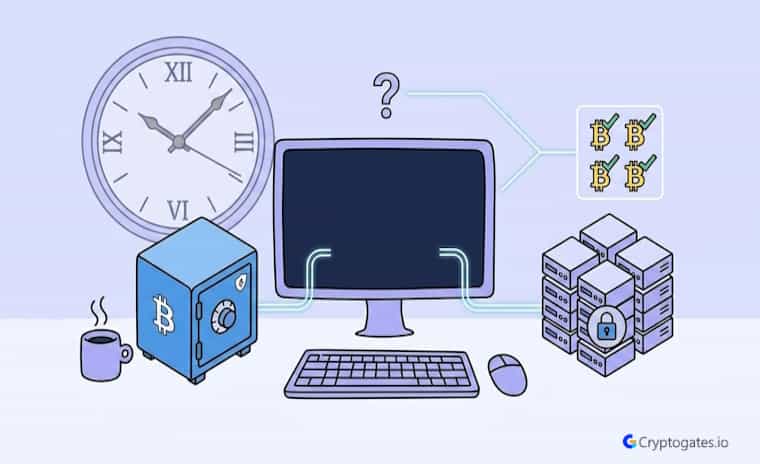
But ask them how it actually works — how that number moves, who confirms it, and what’s actually happening behind the screen, and most go quiet.
Over 70% of retail crypto buyers cannot explain how blockchain transactions work before making their first purchase. According to a survey by Crypto Literacy
That’s not a criticism.
It’s just where most people start.
The problem is, trading something you don’t understand means every price move feels random.
And random feels scary.
What Bitcoin Actually Is (And What It Isn’t)
Bitcoin has no CEO. No headquarters.
No customer support number to call when something goes wrong. No one owns it, and no one runs it. That’s the whole point.
When you send money through a bank, the bank is the middleman. It checks your balance, approves the transfer, and updates its records.
Bitcoin removes that middleman entirely. Instead, thousands of computers around the world share the job.
That’s what decentralization means. No single person or institution controls the network.
The Ledger That Nobody Owns
Think of the blockchain as a shared notebook.
Every Bitcoin transaction ever made is written in that notebook.
And instead of one person keeping it locked in a drawer, thousands of computers around the world each hold an identical copy.
Nobody can quietly change one line in that notebook.
Because the moment one copy changes, it stops matching all the others. The network rejects it automatically.
How a Bitcoin Transaction Actually Happens
Honestly, the process is simpler than most people imagine.
Here’s what actually happens when you send Bitcoin.
You open your wallet and enter the recipient’s address and amount. Your wallet broadcasts that request to the Bitcoin network, basically announcing it to thousands of computers at once.
Those computers check that you actually have the Bitcoin you’re trying to send. Then miners compete to bundle your transaction into a block, add it to the chain, and lock it in permanently.
The whole thing can take anywhere from a few minutes to roughly an hour, depending on network traffic and the fee you paid.
Conversational number: That fee is sometimes just a few cents. Sometimes a few dollars. It depends on how busy the network is.
What Are Wallets, Keys, and Addresses?
Your Bitcoin wallet doesn’t actually store Bitcoin.
Wait — it stores the keys that prove the Bitcoin on the blockchain belongs to you.
Think of it like a mailbox. Anyone can see the address and drop Bitcoin in.
Only the person with the private key can open it and move what’s inside.
Lose your private key?
There is no recovery option.
No password reset.
No support ticket.
Bitcoin stays on the blockchain forever, locked and unreachable.
Who controls Bitcoin transactions?
No single person or organization controls Bitcoin transactions — they’re verified collectively by thousands of computers running the Bitcoin network.
The Mining Process — Who Confirms Transactions?
Here’s the interesting part.
Nobody just volunteers to confirm Bitcoin transactions out of kindness.
Miners are computers — well, operators running specialized computers — competing to solve a complex mathematical puzzle.
The first one to solve it gets to add the next block of transactions to the blockchain. And as a reward, they receive newly created Bitcoin.
This is called proof of work.
It’s what secures the network.
Faking or altering a transaction would require redoing all that computational work across the majority of the network simultaneously.
That’s practically impossible — and gets harder every day.
Actually, let me rephrase that. It’s not just hard.
It’s designed to become harder as more miners join. The network automatically adjusts difficulty every two weeks to keep block times consistent.
Research Snapshot
A common assumption is that any automated strategy performs well as long as Bitcoin is moving — up or down doesn’t matter. CryptoGates’ internal backtesting suggests otherwise: results depend heavily on how an asset moves, not just the direction.
In May 2025, BTC climbed 10.4% in a fairly smooth uptrend. A grid strategy tested across that same window captured a 7.74% return while keeping trading fees under $4 total.
The bot didn’t outperform simple buy-and-hold that month. Still, it demonstrated something more useful: a rules-based system can extract consistent, low-cost gains even in conditions it isn’t perfectly optimized for. That’s the kind of evidence that matters more than a hunch before committing real capital.
Read the full breakdown: BTC Pumped +10% in May — Our Grid Bot Made +7.74% With Only $3.26 in Fees
Why Mining Gets Harder Over Time
Bitcoin has a fixed supply. Only 21 million will ever exist.
That’s not a marketing claim — it’s written into the code.
Every so often, the reward miners receive for adding a block gets cut in half. This is called the halving.
It slows the rate at which new Bitcoin enters circulation, making the existing supply more scarce over time.
Bitcoin Mining at a Glance
What Gives Bitcoin Its Value?
Look — value is always a bit philosophical.
But Bitcoin’s value comes from three real things: limited supply, growing demand, and the fact that millions of people globally agree it’s worth something.
It’s not backed by gold. It’s not backed by a government. It’s backed by math, code, and collective trust. And that network keeps growing.
Why Bitcoin Prices Move So Wildly
Bitcoin markets are still small compared to traditional financial markets.
That means a relatively large buy or sell can move prices significantly.
Add in sentiment-driven trading and speculative demand, and you get the volatility most beginners find terrifying.
Real Backtest Example
Understanding Bitcoin’s volatility in theory is one thing — watching a real strategy survive it is another. In April 2025, BTC fell from roughly $87,000 to $74,000 in a matter of weeks, driven by macro shocks rather than any flaw in the network itself.
This kind of sudden, headline-driven drop is exactly the scenario that makes new holders panic-sell at the worst possible moment.
CryptoGates ran a DCA bot through that exact window instead of just theorizing about it. Sixteen of seventeen sessions closed via take-profit, and the bot ended the period with a net gain, while spot holders were left staring at unrealized losses on the same capital.
The takeaway isn’t that DCA guarantees profit — it’s that a tested, rules-based approach removes the emotional guesswork that turns a temporary dip into a panic-driven mistake.
Read the full breakdown: The Tariff Trap Playbook — How a DCA Bot Turned BTC’s Worst April Into +$349 Profit
Bitcoin’s annualized volatility has historically been 3 to 5 times higher than that of the S&P 500 (CoinMetrics)
Here’s what actually matters: the volatility isn’t a bug in Bitcoin. It’s a feature of a young,
still-maturing asset. Understanding that doesn’t make the swings comfortable — but it makes them explainable.
How to Start Using Bitcoin Without Getting It Wrong
Not all exchanges are the same. Fees vary. Security track records vary. What’s available in your region varies.
Before putting any money anywhere, compare your options properly.
CryptoGates’ Exchange Picker tool lets you filter exchanges by fees, features, and supported assets — so the choice is based on data, not whoever ran the loudest ad.
Testing a Strategy Before Risking Real Money
The biggest mistake beginners make isn’t choosing the wrong coin.
It’s skipping the testing phase entirely.
Before putting real money into any Bitcoin strategy — whether that’s DCA, grid trading, or simple buy-and-hold — run it through CryptoGates’ Backtesting Lab first.
See how it performed historically. Stress test it. Then decide.
Bitcoin Makes More Sense Than Most People Think
Bitcoin isn’t magic internet money, and it isn’t a guaranteed path to wealth.
It’s a decentralized network secured by math, maintained by thousands of computers, and governed by code that nobody owns.
Once you understand the mechanism, the price swings stop feeling random and start feeling manageable.
If you’re ready to move from understanding to action, start by testing — not risking. CryptoGates’ Backtesting Lab and Strategy Engine are built for exactly this: turning curiosity into a plan you can actually trust.
FAQs