

 Bitcoin
 Ethereum
 Solana
 TRON
 Zcash
 Hyperliquid
 Dogecoin
 Monero
 Chainlink
 Cardano
 Stellar
 Uniswap
 Sui
 Hedera
 Bittensor
 Shiba Inu
 Ripple USD
 Aster
 Polkadot
 World Liberty Financial
 Render
 Artificial Superintelligence Alliance

Ser, honestly, this confusion trips up a lot of traders.
They build a strategy, rules look clean, logic feels solid, and they assume it’s ready.
But building a strategy and proving it can survive real markets are two completely different things.

Forrester Research
The strategy builder vs strategy engine question isn’t really about which tool is better.
It’s about understanding what each one is actually for, because using one without the other is how people lose money on something that looked perfectly reasonable on paper.
- The Problem: Traders assume a strategy is ready once it's built, without checking if it can survive real market variance.
- The Solution: Use a strategy builder to structure the rules, then a strategy engine to stress-test whether those rules actually hold up.
- The Incentive: Knowing the difference stops you from risking capital on a strategy that only looks good, not one that's actually proven.
- The Risk: A strategy can be perfectly built and still fail badly if it was never stress-tested against real market conditions.
What a Strategy Builder Actually Does
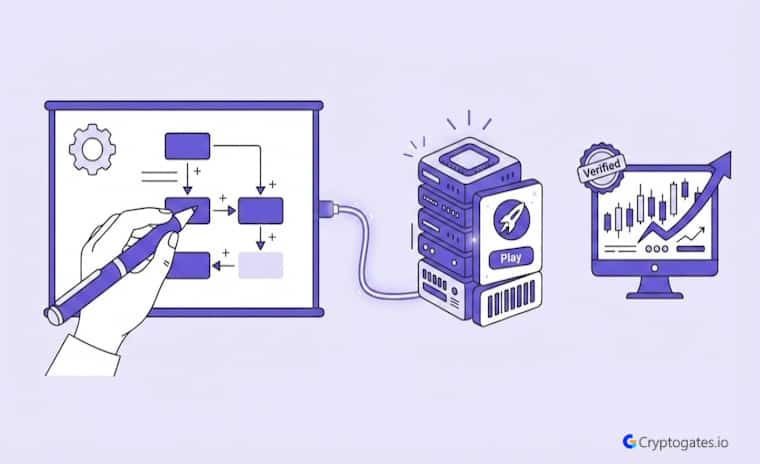
A strategy builder is where an idea becomes something executable.
You take a rough concept, like “buy this dip, sell at this level,” and turn it into defined entry rules, exit rules, and parameters a bot can actually follow.

A well-structured strategy means nothing if it hasn't been tested against real market stress. Structure is the starting point, not the finish line.
Here’s the interesting part.
This step feels like the hard part, and in some ways it is. But it’s only half the job.
1. Good for Structuring Ideas
Builders are genuinely useful here.
They force you to define things clearly.
No more vague ideas like “buy when it feels right.”
You end up with actual rules, actual numbers, something concrete instead of a gut feeling dressed up as strategy.

Not really. A builder helps you define clear rules, but it doesn't tell you if those rules can survive real market volatility. That part needs separate testing.
2. The Blind Spot — No Survival Check
But there’s a problem. A builder can help you create a strategy that looks completely logical and still has never been tested against real volatility, real drawdowns, or a genuinely bad month. Structure isn’t the same as survival.
Look, plenty of well-built strategies fall apart the first time the market gets messy, simply because nobody checked if they could take the hit.
Research Insight
Traders often assume that a good-looking equity curve from a single backtest is proof a strategy works.
Across CryptoGates‘ internal Playbook testing, this assumption breaks down the moment a strategy is run against a different sequence of price action rather than the one it was built on.
One clear example: a DCA bot tested through TAO’s volatile 2025 run — where the asset pumped 36%, then bled back into a 17% loss — still closed 139 of 140 sessions in profit.
That kind of consistency only becomes visible when a strategy is tested across many overlapping market scenarios, not one clean historical run. It’s the same underlying idea behind stress-testing a strategy before scaling capital into it: one favorable backtest tells you almost nothing about how the strategy behaves when the sequence of trades changes.
Full Playbook: https://cryptogates.io/playbooks/tao-dca-bot-made-1677-while-spot-holders-lost-17/
What a Strategy Engine Actually Does Differently
Here’s the key difference.
A Strategy Engine doesn’t help you build rules. It takes rules you already have and puts them through pressure. Real pressure, not just one clean run through historical data.
The simple truth is, this is the step most traders skip entirely, and it’s exactly the step that would’ve saved them money.
Confused about
market outlook?
Trading without a plan is just gambling. Our strategy architect analyzes your risk tolerance and capital to match you with a proven algorithmic framework.
1. Monte Carlo Simulation Instead of a Single Backtest
A single backtest shows you one version of history.
Feels convincing at first glance, but ngl, it’s really just one sequence of trades that happened to play out a certain way.
The Strategy Engine runs a Monte Carlo Simulation instead, shuffling thousands of trade permutations to see how the strategy behaves across many possible versions of the market.
If performance holds steady across those runs, that’s a real signal.
If it swings wildly from one run to the next, the strategy was leaning on luck more than logic.
Reality Check
Common belief: If a strategy generates trading profit, the strategy is working.
What CryptoGates research found: In a Playbook testing a grid bot through BNB’s 33% post-ATH crash, the bot fired 171 trades and generated $163.94 in gross grid profit — a number that looks like a win in isolation. But total ROI still landed at −21.64%, because grid profit and account-level profit are not the same measurement.
The strategy was structured correctly and executing exactly as designed, yet it still lost money overall once real market conditions were applied.
Why it matters: This is the exact gap between building a strategy and proving it. A strategy can be logically sound and still bleed capital if it was never checked against how it performs once price moves outside the range it was built for. Structure alone doesn’t reveal that risk — only testing across real (or simulated) market stress does.
Full Playbook: https://cryptogates.io/playbooks/grid-bot-vs-a-33-bnb-crash-what-the-backtest-data-actually-shows/
2. Robustness Score and Risk of Ruin as Real Metrics
This is where it gets concrete.
The Engine gives you a Robustness Score, showing whether your edge is structural or accidental.
| Feature | Strategy Builder | Strategy Engine |
|---|---|---|
| Purpose | Structures trading rules | Stress-tests those rules |
| Output | Defined entry/exit logic | Robustness Score, Risk of Ruin |
| Testing Method | None built-in | Monte Carlo Simulation |
It gives you Risk of Ruin, the actual probability your account hits a catastrophic drawdown before reaching your target.
These aren’t things a builder can ever measure, because a builder was never designed to test survival.
Stop Guessing.
Stress Test Your Edge.
The market doesn't care about your backtest. Our engine simulates 1,000+ "what-if" scenarios to ensure your strategy is built for survival.
Run Crypto Strategy Engine →Why You Need Both, In the Right Order
Honestly, this isn’t really a versus situation. Building without testing is guessing with extra confidence.
Testing without something built first has nothing to actually test. Both steps matter, but only in the right order.
1. Build First, Then Verify
Structure the strategy first.
Get the rules clear, the parameters defined, the logic locked in.
Then, before a single dollar of real capital touches it, run it through stress testing. That order isn’t optional if you actually want to know what you’re risking.

ZAHEER, CEO CryptoGates
2. Where Cryptogates Fits This Process
This is exactly where the Crypto Strategy Engine comes in.
It’s built for that second, often-skipped stage, taking a strategy that’s already structured and running it through thousands of scenario permutations before you ever scale real capital into it.
Backtesting shows one historical outcome. Stress testing, like Monte Carlo simulation, shows how that same strategy performs across thousands of different market sequences.
Build the Rules, Then Prove Them
Ser, at the end of the day, a strategy builder and a strategy engine aren’t competing tools.
They’re two different stages of the same process.
A builder gives you structure, clear rules, defined logic.
But structure alone doesn’t tell you what happens when the market gets ugly. That’s what a strategy engine is for, running your rules through thousands of scenarios to show whether they’re actually built to survive, not just built to look good.
Skip that second step, and you’re basically trading on a guess with better formatting. Run your strategy through the Engine and see what the data actually says → cryptogates.io.
FAQs
What's the difference between a strategy builder and a strategy engine?
A builder helps you structure trading rules. A strategy engine stress-tests those rules across thousands of market scenarios before you risk real capital.
Do I need both a strategy builder and a strategy engine?
Yes. Building without testing is guessing, and testing without a built strategy has nothing to actually verify. They work best together, in that order.
Can a strategy builder tell me if my strategy is safe to trade?
Not on its own. A builder defines your rules, but only stress testing, like Monte Carlo simulation, shows whether those rules survive real market conditions.