

 Bitcoin
 Ethereum
 Solana
 TRON
 Zcash
 Hyperliquid
 Dogecoin
 Monero
 Chainlink
 Cardano
 Stellar
 Uniswap
 Sui
 Hedera
 Shiba Inu
 Bittensor
 Ripple USD
 Aster
 Polkadot
 World Liberty Financial
 Render
 Artificial Superintelligence Alliance

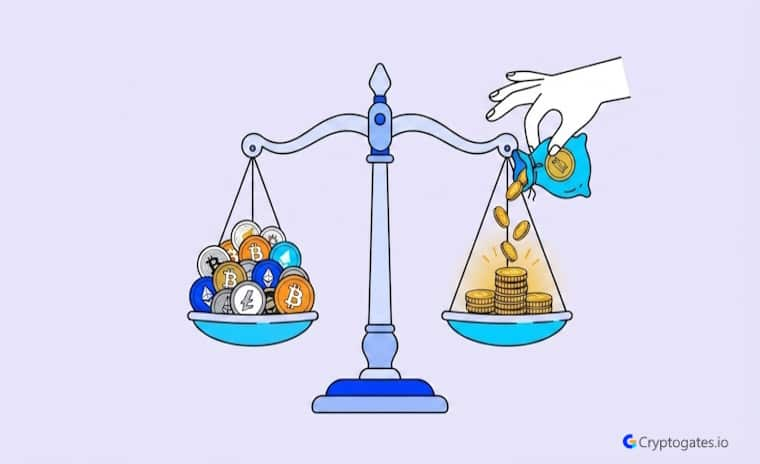
Your portfolio doesn’t feel out of balance until you actually check it.
One coin ripped 40% while another just sat there, and now your “60/40” split looks nothing like it did a month ago.
That’s the quiet problem crypto portfolio rebalancing is built to solve. Crypto moves fast enough that allocations drift without you noticing, and drift changes your risk without asking permission.
BlackRock/iShares
This guide walks through what rebalancing actually is, the manual and automatic ways to do it, threshold and periodic triggers, and how to build a plan that keeps your risk where you actually want it, not where the market accidentally left it.
- The Problem: Crypto prices move fast enough that your original allocation quietly turns into something riskier than you planned.
- The Solution: Rebalancing restores your portfolio to its target weights using manual, automatic, threshold, or periodic methods.
- The Incentive: A disciplined rebalancing plan keeps risk aligned with your actual goals instead of whatever the market did last week.
- The Risk: Rebalance too often and fees eat your returns. Rebalance too rarely and one asset quietly takes over your whole portfolio.
What Is Portfolio Rebalancing?
Rebalancing sounds technical, but it’s really just restoring your portfolio to the weights you originally chose.
Say you started at 50% BTC, 30% ETH, and 20% stablecoins. Six months later, BTC ripped, and now it’s sitting at 70% of your whole portfolio.
Rebalancing means trimming it back down to your target.
This is where terms like asset allocation, target weights, and portfolio drift matter. Allocation is your plan. Drift is what happens when price action pulls your portfolio away from that plan without you doing anything at all.
1. Target Weights and Allocation Basics
Your target weights are the percentages you decided on when you built the portfolio, based on your risk tolerance and goals.
They’re the reference point every rebalancing decision gets measured against.
2. How Price Movement Creates Drift
Drift happens automatically.
If one asset outperforms, its share of the portfolio grows even if you never buy more of it. Nobody’s making an active decision here. The market is just making it for you.
Why Crypto Portfolios Need Rebalancing
Honestly, this matters more in crypto than almost anywhere else. Traditional portfolios drift slowly over years.
Crypto portfolios can drift meaningfully in a single volatile week.

Crypto isn't hard because it's complicated. It's hard because it moves fast and punishes anyone without a plan. Rebalancing is just structure applied to chaos, verify your weights, adjust with discipline, and let the process do the work instead of your emotions.
1. Overconcentration Risk
When one winner grows too large, your portfolio starts behaving like a single-asset bet even if you never intended that.
A 20% swing in that one asset now moves your entire net worth, not just a slice of it.
2. Rebalancing as a Risk Management Tool
Trading legend Mark Douglas once said:
“When I put on a trade, all I expect is that something will happen.”
Rebalancing works on the same logic. You’re not predicting what happens next. You’re building a system that keeps working no matter what.
Real Backtest Example
Strategy: Rebalance Bot | Assets: SOL/ETH | Market Condition: Broad two-asset crash | Objective: Test whether active rebalancing helps when both assets are falling
Between October 20 and December 15, 2025, SOL dropped nearly 32% and ETH collapsed 48% — a scenario where most portfolio theory says “just hold and wait it out.” Instead of watching a $1,000 portfolio bleed passively, an active rebalance bot was run across the same window.
The bot still lost money, down $287, but that loss was smaller than a static buy-and-hold position over the same period. The takeaway isn’t that rebalancing prevents losses in a falling market; it’s that disciplined rebalancing can reduce the size of the drawdown even when every asset in the portfolio is moving the wrong way.
This is the kind of result that rarely shows up in theory-only explanations of rebalancing, but it’s exactly the scenario overconcentration risk is meant to protect against.
View Complete Playbook: https://cryptogates.io/playbooks/sol-crashed-32-eth-crashed-48-did-rebalancing-help/
Regular rebalancing protects diversification by forcing you to trim winners and top up laggards, which sounds counterintuitive until you realize that’s exactly what keeps risk under control.

Yes. Crypto's volatility means allocations can shift dramatically in weeks, not years. Without rebalancing, your risk profile can change without your permission.
Manual Rebalancing
Manual rebalancing means you’re the one checking allocations and pulling the trigger when something’s off.
No system does it for you. You look at the numbers, decide it’s time, and make the trade yourself.
Look, something is appealing about that level of control. You see exactly what’s happening and why. But it also means the whole plan depends on you actually showing up and doing it, even on days you’d rather not look at your portfolio at all.
1. Pros of Manual Rebalancing
Full control over every decision.
Flexible enough to skip a rebalance if something feels off. Easy to understand since there’s no system logic to trust, just your own judgment.
2. Cons of Manual Rebalancing
Easy to delay when life gets busy, and delay is where drift compounds. Requires constant monitoring.
And honestly,
It can turn emotional fast, especially after a big green candle, when trimming a winner feels like the wrong move.
Automatic Rebalancing
Automatic rebalancing hands the job to a system that follows fixed rules.
You set the targets once, and the system checks and adjusts without waiting for you to notice drift on your own.
FinanceFeeds
That gap doesn’t come from bad luck. It comes from hesitation, second-guessing, and skipping the trim on a winner because it still feels like it’s got more room to run.
1. Pros of Automatic Rebalancing
Saves time since there’s nothing to remember or schedule manually.
Keeps discipline consistent, trade after trade, with no emotional override. Reduces the kind of mistakes that come from hesitating at exactly the wrong moment.
2. Cons of Automatic Rebalancing
Less flexible, since the system won’t pause just because the market feels unusual. It may rebalance at times that feel inconvenient, like right after a sharp move.
And it’s only as good as the rules you set. A bad rule executed perfectly is still a bad rule.
Threshold vs Periodic Rebalancing
Threshold and periodic rebalancing solve the same problem with two different triggers. One reacts to movement. The other reacts to time.
Its volatility is an emergent property, not a design objective, as Nic Carter put it. That’s worth sitting with for a second.
Crypto wasn’t built to sit still, so any rebalancing method needs to work with that reality instead of against it.
1. How Threshold Rebalancing Works
You set a target allocation and a deviation limit, say 5% or 10%. The portfolio only gets adjusted once an asset drifts past that limit.
No limit breach, no trade. Simple as that.
Research Highlight
One pattern shows up repeatedly across CryptoGates rebalance backtests: the bot doesn’t need both assets to move in the same direction to add value — it just needs them to move differently.
In a 46-day test where SOL dropped 12.37% while ETH gained 5.64%, a passive holder would have ended up roughly flat. A rebalance bot running against the same pair captured +1.70% ROI and edged past HODL by 0.11 percentage points.
The gap is small, but it’s consistent with what threshold-based logic is designed to do: trim the outperformer and reload the laggard before the divergence closes. This is worth noting because the edge doesn’t come from predicting which asset wins – it comes purely from the mechanical discipline of acting on drift while it’s happening.
View Complete Playbook: https://cryptogates.io/playbooks/sol-crashed-12-our-rebalance-bot-still-beat-hodl-heres-how-march-april-2026/
2. How Periodic Rebalancing Works
This one runs on a calendar instead of a percentage. Check the portfolio on a fixed date, weekly, monthly, or quarterly, compare current weights against targets, and adjust regardless of how far things have drifted.
3. Best Use Cases for Each
Threshold suits portfolios that swing hard and often, since it only steps in when drift actually matters.
Periodic suits investors who want a predictable rhythm and don’t want to watch percentages day to day.
| Method | Trigger | Best For |
|---|---|---|
| Threshold | Deviation limit breached | Volatile, fast-moving portfolios |
| Periodic | Fixed schedule | Predictable, low-maintenance routines |
| Combined | Both, whichever comes first | Investors wanting balance of both |
Threshold rebalancing triggers on price movement past a set limit. Periodic rebalancing triggers on a fixed schedule regardless of how much drift occurred.
Manual vs Automatic Rebalancing — Choosing Your Approach
So which one actually fits you?
Wait, before answering that, it helps to be honest about how much time and attention you’re really willing to give this every week.
1. Control, Convenience, and Discipline
Manual rebalancing suits someone who wants full visibility into every decision and doesn’t mind checking in regularly.
Automatic rebalancing suits someone who wants consistency without needing to remember, monitor, or second-guess anything mid-cycle.
Here’s the thing. Neither approach is wrong.
The mistake is picking manually and then never actually doing it, which happens more than people admit.
If you want to see how different triggers would have played out on your own numbers, running them through the Rebalance Simulator gives you a clearer picture before committing capital either way.
Best Assets to Rebalance and Common Mistakes
Not every asset belongs in a rebalancing plan, and honestly, that’s fine.
Rebalancing works best with a core of assets you actually want to hold long term, not with whatever pumped last week.
1. Best Assets to Rebalance
BTC, ETH, and stablecoins make up the most solid rebalancing cores because they’re liquid enough to trade without slippage eating your gains.
Terms like core portfolio and allocation discipline matter here. You’re not rebalancing your whole watchlist, just the assets you actually plan to hold.
2. Common Mistakes in Rebalancing
Morningstar, via OnePortfolio
Ignoring fees and taxes is another. So is setting target weights that sound good on paper but don’t match your actual risk tolerance, which, well, defeats the whole point of having targets in the first place.
And letting emotions override the rules is the one that undoes everyone eventually, even people who swore it wouldn’t happen to them.
How to Build a Rebalancing Plan
You’d think the fix here is simple. Just pick a method and go.
But a plan without clear rules is really just a preference, and preferences bend the moment the market gets loud.
1. Steps to Build Your Plan
Interactive Checklist:
- Choose your target asset mix based on actual risk tolerance, not last cycle's returns
- Pick manual, automatic, threshold, or periodic rebalancing
- Set clear, written rules for when adjustments happen
- Review the plan on a set schedule, even if nothing's changed
- Keep costs and turnover under control from the start
2. When Rebalancing Makes the Most Sense
It matters most during long-term portfolio growth and during genuinely volatile stretches, the kind where checking your allocation weekly, or honestly even daily, actually pays off.
If you’d rather test a full plan against real historical data before touching capital, the Rebalance Backtest Bot lets you run threshold and periodic setups side by side first.
Crypto portfolio rebalancing isn’t about predicting the next move. It’s about making sure your risk still matches the plan you actually meant to build, not the plan the market rewrote for you without asking.
Manual, automatic, threshold, periodic:
The method matters less than actually sticking to one.
Keeping Your Crypto Portfolio on Track
Actually, let’s put it more simply: the best rebalancing plan is the one you’ll follow when a coin you’re holding is up 50%, and every instinct says just let it ride.
Verify first. Risk later. Scale slowly.
That’s the whole philosophy here, applied one rebalance at a time.
If you’re ready to see how your own allocation would have held up, run it through the Rebalance Simulator or backtest a full strategy on the Rebalance Backtest Bot before committing real capital.
FAQs
How often should I rebalance my crypto portfolio?
It depends on the method. Threshold rebalancing reacts to drift, while periodic rebalancing runs on a schedule like monthly or quarterly.
Does rebalancing guarantee better returns?
No. It manages risk and keeps your allocation aligned with your plan, not a guaranteed profit outcome.
Is automatic rebalancing better than manual?
It depends on your time and discipline. Automatic keeps consistency, while manual gives full control if you actually follow through on it.