

 Bitcoin
 Ethereum
 Solana
 TRON
 Zcash
 Hyperliquid
 Dogecoin
 Monero
 Chainlink
 Cardano
 Stellar
 Uniswap
 Sui
 Hedera
 Shiba Inu
 Bittensor
 Ripple USD
 Aster
 Polkadot
 World Liberty Financial
 Render
 Artificial Superintelligence Alliance

Ser, honestly, most traders don’t fail because they pick a “bad” strategy.
They fail because they pick a strategy that doesn’t match who they actually are.
You can grab the exact same DCA bot as someone else and still lose money, simply because your risk profile isn’t theirs.
That’s the real reason people bounce from strategy to strategy, chasing whatever worked for someone on CT last week.
Forrester Research
Finding the best crypto strategy for your risk profile isn’t about copying a winner.
It’s about knowing what you can actually survive, emotionally and financially, before the market tests you.
- The Problem: Traders copy strategies that worked for someone else without checking if it fits their own risk tolerance or capital.
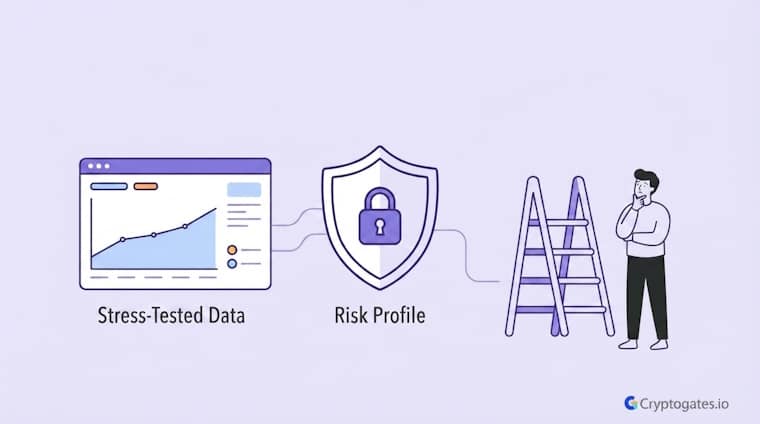
- The Solution: Match your strategy to your actual risk profile using tools that stress-test performance before you commit capital.
- The Incentive: A strategy that fits your risk profile is one you can actually stick with through drawdowns, instead of panic-exiting.
- The Risk: Even a statistically strong strategy can fail you if your personal risk tolerance doesn't match its volatility.
Why "Best Strategy" Depends on You, Not the Market
There’s no such thing as a universal best strategy.
Ser, this trips up almost every beginner.
The strategy that works beautifully for a whale with deep pockets and iron nerves can wreck a smaller trader who panics at a 15% dip.
Fit matters more than performance on paper.
Here’s the interesting part.
Two traders can run the exact same bot, on the exact same coin, and get completely different outcomes.
Not because the strategy failed. Because one of them could emotionally handle the drawdown, and one couldn’t.
Confused about
market outlook?
Trading without a plan is just gambling. Our strategy architect analyzes your risk tolerance and capital to match you with a proven algorithmic framework.
1. Risk Tolerance Isn't Just About Money
Look, risk tolerance isn’t just “how much can I afford to lose.” It’s also how you react when the number actually drops. Some traders can watch a 20% drawdown and feel nothing.
Others panic sell at 5% and call it protecting their capital. Neither is wrong exactly, but if your strategy doesn’t match your emotional bandwidth, you’ll break it at the worst possible time, usually right before it would’ve recovered.
This is where things change if you’re honest with yourself.
A strategy isn’t just numbers on a backtest. It’s a psychological contract you’re making with your own future self.
2. Why Copying Someone Else's Strategy Usually Backfires
Here’s the issue. CT loves to share “this is the setup that worked for me,” and beginners ape in without checking the context.
A whale running a Grid strategy with six figures of capital has completely different liquidation risk than a shrimp running the same grid with a few hundred dollars.
Rand Fishkin, Co-founder Moz
Same bot. Same parameters even. Totally different risk exposure.
Copying someone’s strategy without checking your own capital size, time horizon, and stress tolerance is basically gambling with extra steps.

There's no single "safest" strategy. DCA tends to feel calmer for most beginners since it removes timing pressure, but the real safety comes from matching strategy risk to your own tolerance and capital size.
The Four Strategy Types and Who They Actually Fit
Spot, DCA, Grid, and Rebalance strategies aren’t interchangeable.
Each one is built for a different kind of trader, a different kind of market, and honestly, a different kind of patience level. Knowing which bucket you fall into is half the battle.
1. Spot Buy and Hold — For Long-Term Conviction
This one fits traders who believe in an asset long-term and don’t want to babysit charts.
You buy, you hold, you ride the trend. It works best for people with high conviction and low need for constant monitoring. But there’s a problem.
If you don’t have real conviction, you’ll paper hand the first serious dip.
2. DCA — For Reducing Timing Risk
DCA fits traders who hate the pressure of “did I buy at the top.” Instead of guessing, you spread entries over time.
It’s less exciting, sure.
Honestly, that’s kind of the point. It suits people who want steady exposure without the stress of predicting tops and bottoms.
3. Grid Strategy — For Sideways Markets
Grid fits traders who are comfortable with more active, rules-based automation.
It thrives in chop, range-bound markets where price bounces between levels instead of trending hard.
If you’re someone who gets bored watching a flat chart, this strategy actually turns that boredom into structured opportunity.
Real Backtest Example
Strategy: Grid
Coin: SOL/USDT
Market Condition: Moderate uptrend (18.6% rally over 76 days)
Objective: Test whether an active grid can outperform simply holding during a real rally
Key Result: A 40-grid SOL bot fired 308 trades and closed the window at +16.72% ROI, just under the 18.64% return a buy-and-hold position delivered in the same stretch.
Expert Interpretation: This is exactly the fit problem this article is talking about. Grid didn’t fail — it did what grid strategies are built to do, capture range and volatility. But in a market that mostly just went up, a simpler, lower-effort approach edged it out.
The lesson isn’t “grid is worse.” It’s that grid rewards traders who can tolerate active exposure and imperfect timing in exchange for structure — not traders chasing the biggest possible number in a trending market.
View Complete Playbook: https://cryptogates.io/playbooks/sol-grid-bot-backtest-16-72-roi-vs-18-64-buy-hold/
| Strategy | Best Fit For | Core Behavior |
|---|---|---|
| Spot Buy & Hold | High conviction, low monitoring | Long-term holding |
| DCA | Timing-anxious traders | Scheduled entries |
| Grid | Active, range-bound traders | Buy low, sell high in range |
| Rebalance | Multi-asset portfolio holders | Automatic allocation correction |
4. Rebalance Strategy — For Portfolio Discipline
This one’s for traders managing multiple assets who want risk control without manually checking allocation every week.
Rebalancing automatically brings your portfolio back to target weights, which quietly manages risk drift most people don’t even notice happening.
How the Strategy Engine Finds Your Actual Fit
Here’s the thing. Most traders never test whether a strategy actually fits them.
They just run it and hope.
The Crypto Strategy Engine exists to remove that guesswork, stress-testing a strategy against real risk metrics before a single dollar is on the line.
Stop Guessing.
Stress Test Your Edge.
The market doesn't care about your backtest. Our engine simulates 1,000+ "what-if" scenarios to ensure your strategy is built for survival.
Run Crypto Strategy Engine →1. What the Strategy Engine Actually Measures
The Engine doesn’t just show you a profit number and call it a day.
It gives you a Robustness Score, which tells you if your edge is structural or accidental.
It shows Risk of Ruin, the probability your account hits a catastrophic drawdown before hitting target.
And it shows your 95% Probable Drawdown, basically your pain threshold in dollars.
Wait.
This part matters more than people realize.
A strategy with a great return but a high Risk of Ruin is still a bad fit if you can’t emotionally survive the swings it takes to get there.
2. Why a Monte Carlo Stress Test Beats a Single Backtest
Reality Check
Common belief: If a strategy is “working” — generating trades, hitting some profitable closes — it’s protecting you.
What CryptoGates research found: During a 33% BNB crash following its all-time high, a grid bot fired 171 trades and generated $163.94 in real grid profit. It was mechanically doing its job the entire time. Total portfolio ROI still landed at −21.64%.
Why it matters: Grid profit and account performance are not the same thing. A strategy can execute perfectly and still lose money if the market moves outside its designed range.
This is precisely why a Robustness Score or Risk of Ruin number matters more than watching trades fire — a strategy needs to be evaluated against how far the market can move against it, not just whether it’s active.
View Complete Playbook: https://cryptogates.io/playbooks/grid-bot-vs-a-33-bnb-crash-what-the-backtest-data-actually-shows/
A single backtest just shows you one version of history.
Feels convincing, but it’s really just one lucky, or unlucky, sequence.
The Engine runs a Monte Carlo Simulation, shuffling thousands of trade permutations to see how your strategy behaves across many possible versions of the market.

Hey, it's Zaheer. I built the Strategy Engine because I got tired of watching people trust a single backtest like it was gospel. Verify first. Risk later. Scale slowly. That's not a slogan, it's the actual test your strategy needs to pass.
If your Robustness Score holds steady across those runs, ser, that’s a real signal. If it swings wildly, you’re leaning on luck more than logic.
Check its Risk of Ruin and drawdown probability, not just its returns. If those numbers feel emotionally survivable to you personally, it's likely a fit.
Match First. Risk Later.
Ser,
honestly, the whole point of this blog comes down to one idea.
Strategy hype doesn’t matter if the strategy doesn’t fit you. The best crypto strategy for your risk profile isn’t the one with the flashiest returns on someone else’s screenshot.
It’s the one you can actually survive, both financially and emotionally, when the market gets uncomfortable.
That’s exactly what the Crypto Strategy Engine is built for, stress-testing your fit before you risk a single dollar. Run your own numbers and see what the data actually says about your fit → cryptogates.io.
FAQs
How do I choose the best crypto strategy for my risk profile?
Start by being honest about your capital, time horizon, and emotional tolerance for drawdowns. Then stress-test the strategy before committing real money.
Is DCA safer than Grid trading?
DCA tends to feel calmer since it removes timing pressure, but Grid can work well too. Safety depends more on your risk tolerance than the strategy itself.
What does Risk of Ruin mean in crypto trading?
It’s the probability your account hits a catastrophic drawdown before reaching your profit target. Anything above 1% is generally considered high risk.