

 Bitcoin
 Ethereum
 Solana
 TRON
 Hyperliquid
 Zcash
 Dogecoin
 Monero
 Chainlink
 Cardano
 Stellar
 Uniswap
 Sui
 Hedera
 Shiba Inu
 Bittensor
 Ripple USD
 Aster
 Polkadot
 World Liberty Financial
 Render
 Artificial Superintelligence Alliance

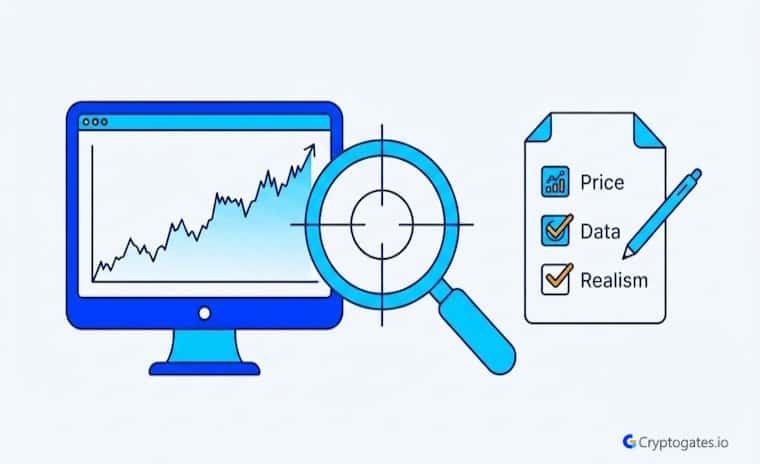
You’re about to risk real money on a crypto strategy you built off a hunch.
Ser, that’s how most people lose their shirt.
Here’s the thing, though. The traders who actually survive this market don’t guess. They test first.
That’s exactly what crypto backtesting software is built for, and picking the right one might matter more than the strategy itself.
Financial Analysts Journal, day trading profitability study
Look, that number isn’t there to scare you. It’s there to explain why backtesting exists in the first place.
This guide compares the best crypto backtesting software out there, breaks down what actually matters when you’re choosing one, and shows you where free tools hold up against paid platforms.
- The Problem: Most traders pick backtesting software based on ads or hype, not on whether the tool actually fits how they trade.
- The Solution: Compare tools on price, data quality, realism, and features before committing time or money to any of them.
- The Incentive: The right software lets you test dozens of strategies risk-free and walk into live trading with actual evidence, not a feeling.
- The Risk: A tool with bad data or unrealistic fee modeling can hand you a "winning" strategy that fails the second it hits a live market.
What Crypto Backtesting Software Does
Crypto backtesting software takes a trading strategy and runs it against historical price data to see how it would’ve performed.
Instead of risking capital to find out if your idea works, you run it against real market history first.
Weeks, months, even years of data get compressed into a few minutes of testing.
Battle-Test Your Strategy
Before the Market Does.
Eliminate guesswork with institutional-grade backtesting for DCA, Grid, and Rebalance bots. Real historical data. Real-world results.
Honestly, this is the part most beginners skip.
They build a strategy in their head, feel confident about it, and jump straight into live trading. Then the market humbles them fast.
Why Backtesting Matters Before You Risk Real Capital
A strategy that sounds smart isn’t the same as a strategy that’s proven.
Backtesting turns a gut feeling into something you can actually measure, and walking through a full DCA strategy backtesting process shows exactly how that measurement works in practice.
It shows you how a DCA setup would’ve handled a 40% drawdown, or how a grid bot would’ve behaved during six months of chop. Without that step, you’re not trading.
You’re just gambling with extra confidence.
Real Backtest Example
Strategy: DCA
Coin: DOT/USDT
Market Condition: 7-month sustained downtrend (−56%)
Objective: Test how automated DCA absorbs a prolonged, deep drawdown versus holding spot
One internal backtest tracked a DCA bot running against DOT through one of its worst stretches on record — a 56% decline spread across seven months. Spot holders sitting through the same window ended up down $617 on their position. The DCA bot, following the same price action, closed 79 of its 80 sessions in profit and finished the period up $380.99. Same market, same asset, nearly a thousand-dollar gap in outcome.
Expert Interpretation: The result isn’t a claim that DCA “beats” downtrends — it didn’t turn a loss into a bigger win overall for the market itself. What it shows is that step-based entries change the shape of the exposure. A bot re-entering incrementally through a slow bleed captures small, repeatable exits that a static spot position simply can’t. This is the kind of outcome that only shows up when you actually run the numbers against real historical data, rather than assuming a strategy “should” work in a downtrend.
View Complete Playbook — https://cryptogates.io/playbooks/how-a-dca-bot-made-381-while-polkadot-lost-56/
This ties back to the whole idea behind CryptoGates:
Verify first, risk later, scale slowly.
Backtest bots like the DCA Strategy Backtest Bot exist specifically to close that gap between “I think this works” and “I know this works.”
Why Comparing Crypto Backtesting Tools Matters
Not every trader needs the same thing from a backtesting tool.
A beginner testing their first DCA idea doesn’t need the same horsepower as a quant running custom scripts across ten pairs.
But here’s the thing.
Most people pick software based on which YouTuber promoted it, not whether it fits how they actually trade.

Mark Douglas, Trading in the Zone
Douglas wasn’t talking about software specifically, but the point lands anyway.
The best backtesting tool in the world won’t save a strategy you never actually stress test. It just gives you the data.
What you do with it is on you.
Matching Backtesting Software to Your Trader Type
A beginner wants something simple.
Clear results, no coding, no steep learning curve. An advanced trader might want raw data exports, custom parameters, or API access.
Someone focused on automation cares less about the testing interface and more about how smoothly the tool connects to live execution afterward.

It's not legally required, obviously. But skipping it means trading on assumptions instead of evidence, and the data shows that rarely ends well for retail traders.
None of these traders should be shopping for the same software, yet most comparison articles treat backtesting tools like a one-size-fits-all decision.
It isn’t.
Crypto Backtesting Software Comparison Criteria
Before comparing specific platforms, you need a framework.
Otherwise, you’re just comparing logos and marketing copy.
Here’s what actually separates a useful tool from a flashy one.
1. Price and Free Plan Availability
This one’s simple, but it matters more than people admit.
A $50 monthly subscription doesn’t sound like much until you’re testing five strategies across three months and burning through trial credits before you’ve learned anything useful.
Free access changes the entire equation.
It means you can test as many ideas as you want without watching a clock or a paywall.
Stop Guessing.
Stress Test Your Edge.
The market doesn't care about your backtest. Our engine simulates 1,000+ "what-if" scenarios to ensure your strategy is built for survival.
Run Crypto Strategy Engine →2. Ease of Use and Learning Curve
A powerful tool nobody can figure out isn’t powerful, it’s abandoned.
Look for clean interfaces, clear result summaries, and a setup process that doesn’t require a coding background.
If you’re spending more time reading documentation than testing strategies, something’s wrong.
3. Backtest Realism: Fees and Slippage Modeling
This is where many tools quietly fail.
A backtest that ignores trading fees, slippage, or exchange spreads will show you a strategy that looks amazing on paper and falls apart the moment real money touches it, unlike a real BTC grid bot backtest that accounted for every fee down to the cent.
Ngl, this is probably the single most overlooked factor in the whole comparison. Realistic modeling, especially accounting for slippage on every fill, isn’t optional. It’s the whole point.
4. Data Quality and Exchange Support
Garbage data in, garbage conclusions out.
You want granular historical data, ideally down to 1-minute candles, across the exchanges and pairs you actually trade.
A tool that only supports Bitcoin on one exchange isn’t going to help much if you trade altcoins across five different platforms.
5. Features, Automation, and Reporting Depth
The backtest itself is only half the value.
Good reporting shows you drawdown depth, win rate, risk-adjusted return, and how the strategy performed across different market conditions, not just one lump sum number.
That’s the difference between a tool that teaches you something and one that just spits out a percentage and calls it a day.
CryptoGates Overview — The Free Crypto Strategy Backtesting Option
CryptoGates takes a different approach than most of the tools on this list.
There’s no signup wall, no credit card, and no capital required to start testing.
You open the DCA, Grid, or Rebalance Backtest Bot and run your strategy against real historical market data right away.

Zaheer, founder of CryptoGates, built the platform around one belief: verify first, risk later, scale slowly. The backtest bots exist so traders can prove a strategy works before a single dollar touches the market.
What Makes CryptoGates' Backtest Bots Different
The bots run on real 1-minute OHLCV data pulled from major exchanges, not simplified daily candles that smooth over the messy parts.
That matters because a lot of what actually breaks a strategy, like slippage during a fast move or a bad fill during high volatility, only shows up when the data is granular.
It depends entirely on data quality and whether fees and slippage are modeled. Free doesn't mean inferior if the underlying data and cost modeling are done right.
You can test a DCA setup against a 40% drawdown, run a Grid bot through months of sideways chop, or stress a Rebalance strategy against sudden asset divergence.
All without paying for the privilege of finding out your idea doesn’t hold up.
Confused about
market outlook?
Trading without a plan is just gambling. Our strategy architect analyzes your risk tolerance and capital to match you with a proven algorithmic framework.
Other Crypto Backtesting Software Options Overview
There are solid paid platforms out there too, and pretending otherwise wouldn’t be honest.
They just come with tradeoffs CG doesn’t have.
Popular Paid Backtesting Platforms and Their Use Cases
Some platforms are built around Python or Pine Script, giving advanced users full control to code custom indicators and logic from scratch.
That’s powerful, but it’s also a wall for anyone who doesn’t already know how to program.
Research Highlight
A pattern that shows up consistently across CryptoGates‘ internal grid strategy tests is how small a role fees actually play when the modeling is done correctly — but only when it’s tracked at all. In one BTC grid backtest through a 10.4% monthly rally, the bot logged every trade cost across the full run, closing with just $3.26 in total fees against a 7.74% return.
That number matters less on its own and more for what it represents: a tool (or a trader) that can’t account for fees at that level of granularity isn’t giving you a real result; it’s giving you an estimate.
Strategies that look profitable on paper frequently lose that edge once realistic trading costs are layered back in – which is exactly why fee and slippage modeling separates a backtest you can trust from one that produces an optimistic number.
View Complete Playbook — https://cryptogates.io/playbooks/btc-grid-bot-backtest-may-2025/
Others focus heavily on prop-firm-style testing, simulating strict drawdown rules for traders chasing funded accounts.
A few are general-purpose charting platforms with a backtesting feature bolted on, useful if you’re already living inside that ecosystem for other reasons, but not built specifically for crypto’s weird hours and volatility patterns.
Each one solves a real problem.
None of them solve every problem for every trader, which is kind of the whole point of this comparison.
Side-by-Side Crypto Backtesting Software Comparison
Numbers make this easier than opinions.
Here’s how CryptoGates stacks up against typical paid platforms across the criteria that actually matter.
| Criteria | CryptoGates | Typical Paid Platforms |
|---|---|---|
| Cost to Start Testing | Free, no signup, no card | Often $30 to $100+ monthly |
| Data Granularity | 1-minute OHLCV, major exchanges | Varies, sometimes daily candles only |
| Fee and Slippage Modeling | Built into backtest bots | Varies by platform, often extra setup |
| Coding Required | None | Frequently required for full features |
| Best Suited For | Beginners through intermediate | Advanced, custom-strategy builders |

"There's no sense in being precise when you don't even know what you're talking about." - John von Neumann
That line was about math, not crypto, but honestly it fits perfectly here.
A backtest that looks precise down to the decimal point means nothing if the underlying data or fee model was never realistic in the first place.
Precision without accuracy is just noise dressed up as confidence.
1. Where CryptoGates Wins on Value
Zero cost to test unlimited strategies is a real advantage, not a marketing line.
Beginners and budget-conscious traders get the exact same data quality and fee modeling that a paid platform would charge for, without the barrier of a subscription standing between them and their first real strategy test.
2. Where Paid Tools Offer Advanced Features
Custom scripting in Python or Pine Script gives advanced users room to build indicators from scratch.
If you’re already deep into quant-style strategy design and need that flexibility, a paid tool might be worth the cost. That’s a small slice of traders, though.
Most people never touch those features even when they’re paying for them.
Best Crypto Backtesting Software by User Type
Let’s break this down by who you actually are, not who the marketing assumes you are.
Interactive Checklist
- Best for beginners: A free, no-code tool with clear results and simple setup
- Best for budget-conscious traders: A platform offering unlimited free tests with real historical data
- Best for advanced traders: A tool with custom scripting and raw data export
- Best for automation-focused users: A platform that connects tested strategies directly to execution
Automation readiness isn’t just about having a “connect to exchange” button.
It’s about whether the backtest itself accounted for the same fees and conditions the live bot will face.
If those two don’t match, you’re automating a strategy that was never actually validated.
1. Best for Beginners
If you’ve never backtested anything before, complexity is your enemy.
A free tool with a clean interface removes the two biggest reasons beginners quit before they learn anything: cost anxiety and confusion.
2. Best for Budget-Conscious Traders
This one’s simple.
Why pay for testing when the free version gives you the same real data and the same fee modeling?
Save the money for when you’re actually ready to deploy capital, not for the testing phase.
3. Best for Advanced Traders
If you’re running multi-variable strategies with custom logic, a scripting-capable paid tool might genuinely serve you better.
There’s no shame in that. Different tools for different jobs.
4. Best for Automation-Focused Users
Look for a platform where the backtest bot and the execution layer speak the same language.
CryptoGates’ DCA, Grid, and Rebalance Backtest Bots are built with that connection in mind, so the strategy you test is the strategy you’d actually run live.
Final Verdict: Choosing the Right Crypto Backtesting Software
Here’s the simple truth.
The best crypto backtesting software isn’t the one with the most features or the biggest name.
It’s the one that proves whether your strategy actually holds up before you risk a single dollar on it.
For most traders, especially beginners and anyone watching their budget, that means starting with a free, real-data option before ever reaching for a paid subscription.
Proven Setups &
Expert Breakdowns.
We don't just show you the data; we engineer and validate high-performance strategies, providing the "Alpha" behind the numbers.
CryptoGates gives you that starting point.
No signup, no credit card, no capital needed.
Just open the DCA, Grid, or Rebalance Backtest Bot and see what your strategy actually does against real market history.
If you eventually outgrow it and need custom scripting or institutional-grade tooling, that’s a fine reason to move to a paid platform.
But test that assumption first instead of assuming it.
FAQs
Is crypto backtesting software worth using before live trading?
Yes. It replaces guesswork with evidence, showing how a strategy would’ve handled real market conditions before any capital is at risk.
Can beginners use crypto backtesting software without coding skills?
Yes, several tools including CryptoGates require no coding at all. You set parameters, run the test, and read the results.
How accurate are free crypto backtesting tools compared to paid ones?
Accuracy depends on data quality and fee modeling, not price. A free tool with real historical data and realistic slippage can outperform a paid one that skips those details.