

 Bitcoin
 Ethereum
 Solana
 TRON
 Hyperliquid
 Zcash
 Dogecoin
 Monero
 Chainlink
 Cardano
 Stellar
 Uniswap
 Sui
 Hedera
 Shiba Inu
 Bittensor
 Ripple USD
 Aster
 Polkadot
 World Liberty Financial
 Render
 Artificial Superintelligence Alliance

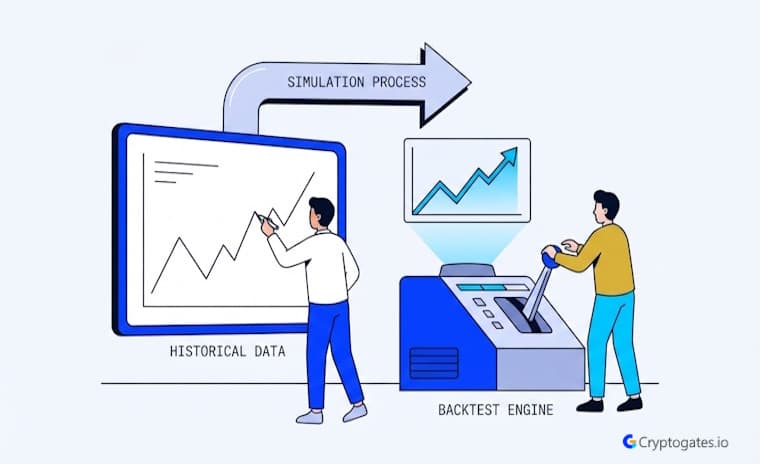
Most DCA plans aren’t really strategies.
They’re guesses wearing a strategy costume. You pick a coin, pick a schedule, and hope it works out. Sound familiar?
Here’s the thing. DCA strategy backtesting fixes that gap.
Instead of hoping your weekly buys will average out nicely over time, you run the plan against real historical price data and watch what actually would’ve happened.
Bull runs, brutal drawdowns, dead sideways chop, all of it.
- The Problem: Most people build a DCA plan on gut feeling and never check if it would've survived a real market cycle.
- The Solution: Backtest the exact rules on historical price data before committing real capital to them.
- The Incentive: You walk away with actual numbers on drawdown, average cost, and returns instead of a hopeful guess.
- The Risk: Skipping this step means you're basically trading blind and calling it a plan.
This guide walks through the full process.
Setup, metrics, step by step execution, and the mistakes that quietly wreck otherwise decent backtests.
What Is DCA Backtesting?
Backtesting, in plain terms, means running your strategy on the past to see how it would’ve performed.
For DCA specifically, that means simulating your buy schedule against real historical price data instead of an imagined chart that only ever goes up.
Vanguard research on rolling 10-year periods found that lump sum investing outperformed a 12-month DCA schedule in roughly two-thirds of cases, with an average return gap of around 2.3%. Vanguard
That stat is from traditional markets, not crypto.
But it makes the point well.
Assumptions about how a strategy “should” perform often don’t match what the data shows.
That’s exactly why historical testing and strategy validation matter more than intuition.
A proper performance analysis tells you what your specific rules would’ve actually produced, not what sounds reasonable on paper.
Battle-Test Your Strategy
Before the Market Does.
Eliminate guesswork with institutional-grade backtesting for DCA, Grid, and Rebalance bots. Real historical data. Real-world results.
Why Backtesting a DCA Strategy Matters
Look, DCA sounds simple.
Buy a set amount on a set schedule, no matter what price does.
But sticking to that plan during a 40% drawdown is a lot harder in practice than it sounds on a whiteboard.

Zaheer says testing a plan before funding it isn't optional caution, it's the whole point. "Verify first. Risk later. Scale slowly."
Backtesting takes the emotion out before it ever becomes a problem.
You see, in advance, how the plan behaves when the market dumps.
That builds the kind of long-term confidence that actually holds up when things get ugly, instead of confidence that evaporates the first red candle.

No. It shows how a strategy performed on past data only. Markets change, and past patterns don't repeat exactly, so backtesting informs decisions rather than predicting outcomes.
Backtesting also sharpens the parts of a DCA plan people usually skip past.
Timing of buys, how much capital goes in per interval, even which asset gets picked in the first place.
Getting risk management right here, using actual data instead of a hunch, is what separates a strategy from a guess.
Real Backtest Example
Strategy: DCA
Coin: DOT/USDT
Market Condition: Sustained 7-month downtrend (−56%)
Objective: Test whether a fixed-interval DCA schedule holds up through a genuine “falling knife,” not a short dip
Key Result: Of 80 total sessions run against the full drawdown, 79 closed in profit. The strategy still finished ahead of spot holding by roughly $998 over the same starting capital, even though the underlying asset lost more than half its value.
Expert Interpretation: This is the kind of test window the article warns readers not to skip. A three-month backtest during calm price action would never surface how a DCA schedule behaves when an asset is in genuine freefall for months at a time. Testing across a full, painful cycle — not just a convenient slice of it — is what separates a validated strategy from an assumption.
What You Need Before You Backtest
Before you run any DCA strategy backtesting, a few pieces need to be locked in.
Skip this setup and your results won’t mean much, no matter how clean the tool is.
You’ll need to pick your asset, your buy schedule, and your rules for the actual buys.
Sounds simple.
Most people still get it wrong by winging the details instead of writing them down first.
Interactive Checklist: What to Decide Before You Backtest
- Choose the coin or portfolio you'll test (BTC, ETH, or a diversified mix)
- Select your buy frequency: daily, weekly, or monthly
- Set the investment amount for every recurring purchase
- Define a long enough testing period to capture multiple market cycles
- Include realistic trading fees and slippage in your assumptions
Here’s the thing.
A lot of backtests fail before they even start because someone forgot to account for exchange fees or assumed perfect fills.
Real market data includes friction. Your setup should too.
Stop Guessing.
Stress Test Your Edge.
The market doesn't care about your backtest. Our engine simulates 1,000+ "what-if" scenarios to ensure your strategy is built for survival.
Run Crypto Strategy Engine →How to Backtest a DCA Strategy Step by Step
Once the setup’s locked, the actual process breaks down into five steps.
None of them are complicated on their own.
Skip one and the whole test loses credibility.
Step 1: Select the Asset
Pick something with enough trading history and liquidity behind it.
A coin that only has a few months of data, or barely trades, won’t give you a fair read on how DCA performs across real cycles.
Stronger assets, the ones that have actually survived a full bull and bear cycle, give results you can trust more.
Testing a low cap gem with three weeks of price history isn’t really testing anything.
Step 2: Set the DCA Rules
Define your buy amount, how often you buy, and how long the strategy runs.
If you’re adding any dynamic conditions, like buying more during a dip, write that rule down clearly too.
Vague rules give you vague results.
“Buy sometimes when it feels low” isn’t a rule you can test.
Step 3: Load Real Market Data
This is where a lot of DIY backtests quietly fall apart.
Real market data includes volatility, sharp drawdowns, and trend shifts that a smooth, idealized chart never shows you.
If your data doesn’t include the ugly parts, the chop, the nuked candles, the slow bleeding sideways months, your results are basically fiction.
Step 4: Run the Backtest
Now simulate the recurring buys across your chosen time period.
Watch how your average entry price shifts as prices move up and down.
This is the part where the plan actually meets history instead of staying theoretical.
Step 5: Review the Results
Check total invested, current portfolio value, average cost, and max drawdown.
Then compare that against a different schedule, like switching from weekly to monthly buys, to see what actually changes.
Look, the review step is where most of the real insight lives.
It’s not glamorous.
But it’s where you learn if the strategy earned its place or just got lucky.
Confused about
market outlook?
Trading without a plan is just gambling. Our strategy architect analyzes your risk tolerance and capital to match you with a proven algorithmic framework.
Key Metrics to Measure in DCA Backtesting
A handful of numbers separate a real DCA strategy from a hopeful guess.
Once your backtest runs, these are the ones worth actually looking at.
| Metric | What It Tells You | Why It Matters |
|---|---|---|
| Average Purchase Price | Your true cost basis across all buys | Shows whether your entry timing improved or hurt your average cost. |
| Total Invested Capital | How much money actually went into the strategy | Provides the foundation for evaluating every other performance metric. |
| Final Portfolio Value | What your invested capital grew into | Represents the overall outcome of the backtest. |
| Maximum Drawdown | The largest decline your portfolio experienced | Helps determine whether you could realistically stay invested. |
| Return on Investment (ROI) | Your total gain or loss expressed as a percentage | The primary metric used to compare overall strategy performance. |
ngl, most beginners only check the last row.
But strategy efficiency isn’t just about the final return.
It’s whether the drawdown along the way would’ve actually made you panic sell.

Mark Douglas, author of Trading in the Zone
That line hits different once you’ve backtested a few DCA setups.
The data doesn’t lie to you the way your own fear does mid-drawdown.
Tracking capital growth against these metrics, not vibes, is what actually tells you if the plan works.
What's a good return to expect from DCA backtesting?
There’s no fixed number.
A “good” result depends on the asset, timeframe, and how much drawdown you’re willing to accept along the way.
Best Market Conditions to Test
Here’s the thing most people skip.
A strategy that only looks good in one type of market isn’t really tested yet.
Bull markets are the easy case.
DCA tends to look great when everything’s sending upward anyway, since almost any buying schedule benefits from a rising trend.
Bear markets are the real test.
This is where you find out if steady accumulation during a nasty drawdown actually lowers your average cost enough to matter, or if it just slow bleeds your capital alongside the market.
Sideways, chopped markets are the sneaky one.
DCA tends to smooth out the noise here better than people expect, since you’re buying at a mix of highs and lows without ever trying to time either.
Historical S&P data shows the market has posted positive returns in roughly 73% of calendar years going back close to a century.
Vanguard research
That stat’s from traditional markets, but crypto cycles behave the same way structurally.
Testing your DCA plan across a bull run, a bear market, and a chop zone gives you the full picture.
Testing it in just one condition tells you almost nothing about how it survives the other two.
Common Mistakes in DCA Backtesting
Look, most DCA backtests aren’t wrong because of bad math.
They’re wrong because of bad assumptions baked in from the start.
The biggest one?
Using unrealistic assumptions about fills and pricing.
If your test assumes perfect execution every single time, you’re basically testing a fantasy version of the market, not the real one.
Ignoring fees and slippage is right behind it.
Even small trading fees add up fast when you’re buying weekly or daily over a long stretch.
Skip that math and your “profitable” strategy might actually be printing losses once real costs get factored in.
No. It shows how a strategy would've performed on past data only. It's a tool for testing logic, not a prediction engine.
Here’s another one. Testing too short a time range.
A DCA plan tested over three months during a calm chop tells you basically nothing about how it handles a real drawdown. ngl, this is probably the most common mistake beginners make, because short tests feel faster and more convenient.
Choosing weak assets without real trading history is its own trap too.
And maybe the most dangerous mistake of all: treating backtest results like a guarantee.
A strategy that returned well in the past isn’t promised to repeat that. Markets shift.
Conditions change. Past performance is context, not a crystal ball.
Neutralize Volatility.
Own the Growth.
Access systematic playbooks designed to eliminate emotional bias. From Spot HODL frameworks to advanced Grid simulators.
Why Use DCA Backtesting Bot
Manual backtesting works.
Ngl though, it’s slow, and it’s easy to mess up the math by hand, especially once fees, slippage, and multiple time periods get involved.
This is where a dedicated tool actually earns its keep.
The DCA Backtest Bot on CryptoGates lets you plug in your rules, real market data, and get results back without building a spreadsheet from scratch every time.

Ryan Sean Adams, Bankless co-founder
Honestly, that’s the whole philosophy behind DCA in one line.
Keep it simple, keep it systematic.
A tool that lets you test that simplicity against real data, fast, is what turns a decent idea into something you can trust with actual capital.
Setup takes minutes, and comparing different schedules side by side is a lot easier than juggling five spreadsheet tabs.
This connects straight back to the CG belief: verify first, risk later. A DCA Backtesting Bot doesn’t replace your judgment.
It just gives that judgment something real to stand on.
How to Improve Your DCA Strategy After Backtesting
So the backtest’s done. Now what?
Honestly, this is where a lot of people just stop, save the screenshot, and forget the whole thing was a starting point, not a finish line.
Here’s the thing. A backtest tells you what happened under one set of rules.
Change the rules a little, and the results shift too. That’s not a flaw, that’s the whole point of testing in the first place.
Proven Setups &
Expert Breakdowns.
We don't just show you the data; we engineer and validate high-performance strategies, providing the "Alpha" behind the numbers.
Start by adjusting the obvious levers. Buy amount, buy frequency, total duration.
Small changes here can move your average cost more than people expect.
Then compare weekly versus monthly buying on the same asset over the same window.
Sometimes weekly smooths things out better.
Sometimes monthly wins because fewer transactions means less fee drag.
You won’t know until you actually run both.
Wait, there’s one more layer worth doing.
Test the same rules across a completely different asset, or a different market period.
A setup that looked solid during one stretch of chop might get clapped during a real trend.
Refining based on what the data shows, not on a gut feeling that the last version “felt right,” is the whole game here.
Reality Check
Common belief: DCA is a defensive strategy, so it should outperform buy-and-hold in most conditions.
What CryptoGates research found: In one internal backtest, a DCA bot ran through a month where BTC rallied 14.5%. It closed 8 of 9 sessions in profit — a technically clean result — but simple buy-and-hold still beat it by roughly $120 over the same window, because DCA’s staggered entries can’t fully capture a sharp, sustained rally.
Why it matters: A backtest that only covers downtrends or sideways chop will never reveal this trade-off. Running the same rule set through a strong bull period, exactly as this section recommends, is what shows whether a strategy is genuinely balanced or just well-suited to the one market condition it happened to be tested in.
View Complete Playbook: BTC Ran +14.5% and Our DCA Bot Only Made $40
Should I change my DCA strategy after one backtest?
Not really.
One test shows one scenario.
Running it across a few different time periods and assets gives a fuller, more honest picture.
DCA Backtesting vs Live Investing
Look, backtesting and live investing aren’t the same animal, even though people talk about them like they are.
Backtesting is for testing an idea in a clean environment. No stress, no fear, no 3am portfolio checking. Just the strategy against real historical price data, cold and simple.
Live investing adds everything a backtest can’t simulate. Slippage that’s worse than expected. Market pressure.
And honestly, the emotional pull to abandon the plan the moment things get red.
A strategy can pass every backtest with flying colors and still fail live, purely because the trader panic sold at the wrong candle.
The Truth in Numbers.
Designed for the 10% who require absolute clarity. We strip away the hype to reveal the structural reality of the crypto markets.
Neither one replaces the other.
Backtesting proves the logic holds up on paper.
Live investing tests whether you can actually stick to that logic when real money and real feelings are involved.
Skip the first step, and you’re basically trading blind.
Skip the discipline part, and the best backtest in the world won’t save you.
Test the Plan Before You Trust It With Real Money
So here’s where it all comes together.
DCA strategy backtesting isn’t some extra step for perfectionists.
It’s the difference between trading on a hunch and trading on proof.
Real market data shows you the drawdowns, the chop, the slow bleeding months your gut never accounted for.
Honestly, most bagholders aren’t bad traders.
They just never tested the plan before funding it.
That’s the whole gap CryptoGates exists to close.
Run your own parameters and see what the data shows. The DCA Backtest Bot on CryptoGates makes this whole process quick, and you don’t need to guess your way through it.
FAQs
How long should a DCA backtest period be?
Longer is usually better. A full cycle, covering a bull run, a drawdown, and some chop, gives a far more honest picture than a few months of calm price action.
Does DCA backtesting work the same for every crypto asset?
Not really. Assets with more history and stronger liquidity tend to give cleaner, more reliable results than newer or thinly traded coins.
Is a backtested DCA strategy guaranteed to perform the same live?
No. Backtesting shows how a plan handled the past. Live trading adds fees, slippage, and emotion, so results can and often do differ.