
 Bitcoin
  Ethereum
  Solana
  TRON
TRON  Zcash
Zcash  Hyperliquid
  Dogecoin
  Monero
  Chainlink
  Cardano
  Stellar
  Uniswap
  Hedera
  Sui
Sui  Shiba Inu
  Bittensor
  Ripple USD
  Polkadot
  Aster
Aster  World Liberty Financial
  Render
  Artificial Superintelligence Alliance
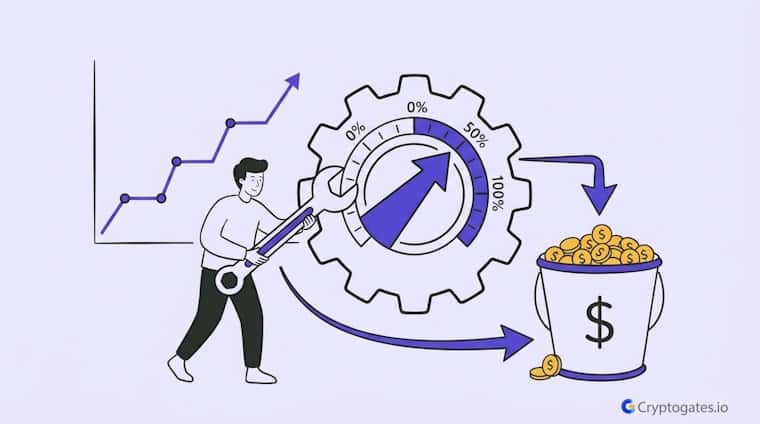
You set your DCA bot, pick a coin you actually believe in, and walk away feeling like you’re in control.
Then the price rips hard in a matter of days, and your bot exits way too early, or worse, it just sits there waiting on a level that never comes.
Sound familiar?
Here’s the thing: your entry price usually isn’t the problem.
Your DCA take-profit percentage is doing most of the work in the background, and almost nobody stops to question the number they picked.

Source: Tradeciety Analysis
Most traders just copy a round number from a video and call it a strategy, which is exactly the kind of shortcut behind the biggest DCA mistakes crypto investors keep making.
That’s a guess wearing a strategy’s clothes.
- The Problem: Traders pick a take profit level once and never test it, quietly capping what their DCA bot could actually earn.
- The Solution: Backtest your exit percentage against real historical data instead of guessing a round number that feels safe.
- The Incentive: Capture more of a genuine move before your bot forces you out of it early.
- The Risk: Not financial advice, and past price action never guarantees what happens next.
Why Take Profit Percentage Is the One Lever That Decides Your DCA Outcome
A DCA bot handles the buying side pretty well.
It scales into a coin as the price drops, lowers your average cost, and takes the panic out of catching a falling knife.
But nobody talks about the exit side nearly enough, and that’s where most of the real damage happens.
| Behavior | Wide TP (5%+) | Tight TP (1-2%) |
|---|---|---|
| Exit frequency | Low | Very high |
| Fee drag over time | Small | Adds up fast |
| Exposure to reversal | Higher | Lower |
| Upside captured per exit | Larger | Smaller |
Your take profit percentage decides two things at once.
It decides how often you cash out, and it decides how much of a real move you actually get to keep.
Set it wrong in either direction, and the bot will do exactly what you told it to, just not what you wanted.
1. What Happens When Take Profit Is Set Too Wide
Look, a wide target sounds great on paper.
Bigger wins, fewer trades, less noise.
But here’s the catch: you’re holding through more chop while you wait, and crypto loves to give back gains just as fast as it hands them out.
If the coin rolls over before hitting your target, you ride the whole reversal down with nothing locked in.
Real Backtest Example
What the Data Actually Shows
Strategy: DCA bot, tight-frequency exit setting
Coin: BTC
Market Condition: Steady uptrend (+14.5% over the test window)
Objective: Capture upside while managing entry riskThis is the exact scenario described above, playing out with real capital. Across the test window, BTC climbed nearly 15%, and the DCA bot closed 8 of 9 sessions in profit – a clean, low-drama result on paper. But a simple buy-and-hold position outperformed it by $119.81 over the same period.
The bot wasn’t broken. It did precisely what it was configured to do: take small, frequent profits. The cost showed up as opportunity, not loss — every early exit was capital pulled out of a move that kept climbing without it.
This is the trade-off a tight take profit setting always makes, whether or not the trader notices it happening.
2. What Happens When Take Profit Is Set Too Tight
A tight target feels safer, and it does close trades fast.
The problem is fees.
Every exit costs something, and stacking dozens of small wins on a coin that’s genuinely trending, like the stretch where our DCA bot made just $40 during BTC’s 14.5% rally, can leave you with less profit than a trader who just let one position run.
Stop Guessing.
Stress Test Your Edge.
The market doesn't care about your backtest. Our engine simulates 1,000+ "what-if" scenarios to ensure your strategy is built for survival.
Run Crypto Strategy Engine →
There's no universal number. It depends on the coin's volatility and whether the market is trending or ranging, which is exactly why backtesting your setting matters more than copying someone else's.
You basically pay to get out early, over and over.
How a Fast-Moving Market Changes Your DCA Take Profit Percentage
A tight take-profit setting might look great in a backtest report and still fall apart the moment the market shifts personality.
That’s the part most guides skip.
The same number behaves completely differently depending on whether coins are trending hard or just chopping sideways.
Research Insight
Many traders read a high win rate – 50 out of 51 sessions closed green, say – and assume the strategy is performing well. Session count and profit are not the same measurement, and conflating them is one of the more common mistakes in evaluating a bot’s output.
In one 87-day test run during a sustained LINK rally, a DCA bot closed 50 of 51 sessions in profit and still only edged out simple buy-and-hold by $55.20 — despite deploying 3.3 times more capital to get there. The bot was “working” the entire time. It just wasn’t working efficiently against a trending market.
This is the same dynamic described above: a high exit frequency can look like diligence while quietly producing a worse capital-to-return ratio than doing nothing at all.
1. Compounding Uptrends vs Sideways Ranges
In a range-bound market, a tight TP makes sense.
Price keeps bouncing between the same levels, so grabbing small wins over and over actually adds up.
But drop that same tight setting into a coin that’s compounding fast, and you’re basically stepping off an escalator every few floors while it keeps climbing without you.
Source: Bank for International Settlements
Here’s the interesting part.
In a genuine trend, a wider TP often outperforms, not because it’s smarter, but because it just gets out of the way and lets the move happen.
2. Why More Sessions Doesn't Always Mean More Profit
A tight TP produces a lot of closed sessions.
It looks active.
It looks like the bot is working hard for you. But session count isn’t profit, and a report full of green checkmarks can still land on a negative total.
DCA is built to survive both, but your take profit setting needs to adapt. Bull runs usually reward wider targets, while ranging or bearish conditions tend to favor tighter, more frequent exits.
Research by Barber and Odean found that the more retail traders traded, the worse their returns got, even before fees were counted.
A bot doesn’t get bored or restless the way a person does, but it will still overtrade if you hand it a setting that forces constant exits.
Finding a Take Profit Range That Fits Your Strategy
There’s no magic number here, and ser, anyone who hands you one without context is guessing just like you were before.
Interactive Checklist
- Check your exchange's trading fee before picking a tight TP, since fees compound with every exit
- Compare at least two or three TP percentages against the same historical window
- Watch how many sessions stay incomplete when the market trends instead of ranging
- Look at max drawdown alongside profit, not profit alone
- Confirm your setting still makes sense if the trend suddenly reverses
What actually works is testing a range against the specific coin and conditions you’re trading, not copying a setting that worked for someone else’s altcoin six months ago.
Confused about
market outlook?
Trading without a plan is just gambling. Our strategy architect analyzes your risk tolerance and capital to match you with a proven algorithmic framework.
Testing Your Assumption Before You Automate It
This is where things change for most people.
Instead of setting a TP and hoping, you can run it through CryptoGates’ Strategy Engine and stress-test it across a wide range of simulated conditions before a single dollar goes live.
It won’t tell you the future, but it’ll tell you if your setting is built on something real or just a number that felt right.
Stop Guessing Your DCA Take Profit Percentage
Honestly, the whole point here isn’t finding some perfect number that works forever.
Markets change, and the setting that crushed it during one run might drag during the next.
What actually matters is knowing why your take-profit level works before you let a bot execute it with real money.

"We didn't build CryptoGates so people could guess with more confidence. Verify first. Risk later. Scale slowly. That's the whole philosophy, and your take profit setting is exactly where it applies."
Wait, before you go set this up.
Run it through the DCA Strategy Backtest Bot first and see how your specific pair and TP setting actually behaved across real historical data, not a hunch.
Battle-Test Your Strategy
Before the Market Does.
Eliminate guesswork with institutional-grade backtesting for DCA, Grid, and Rebalance bots. Real historical data. Real-world results.
FAQs
What take profit percentage should I use for a DCA bot?
There’s no single right answer since it depends on the coin’s volatility and the current trend. Backtest a few options before committing to one.
Does a tighter take profit always mean lower risk?
Not really. It reduces exposure per trade but increases fee drag and the chance of exiting a real trend way too early.
Can I change my take profit setting mid-strategy?
Yes, and you should revisit it whenever market conditions shift from ranging to trending or back again.