 Bitcoin
 Ethereum
 Solana
 TRON
 Hyperliquid
 Zcash
 Dogecoin
 Monero
 Chainlink
 Cardano
 Stellar
 Uniswap
 Sui
 Hedera
 Shiba Inu
 Bittensor
 Ripple USD
 Aster
 Polkadot
 World Liberty Financial
 Render
 Artificial Superintelligence Alliance

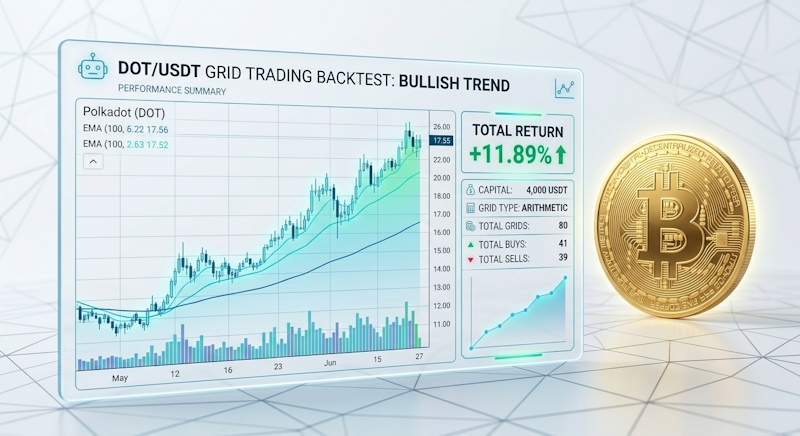
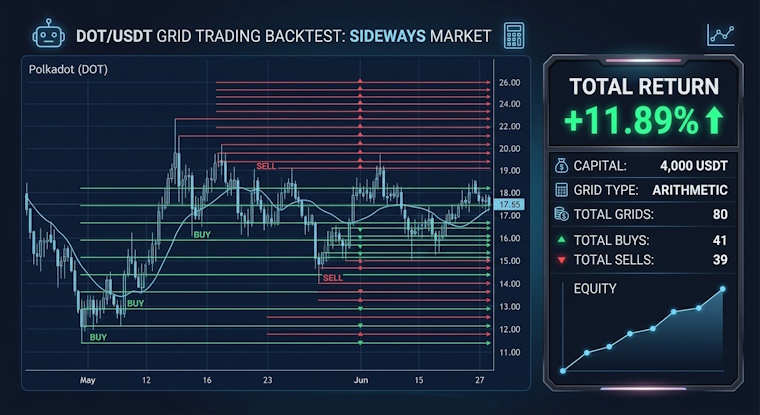
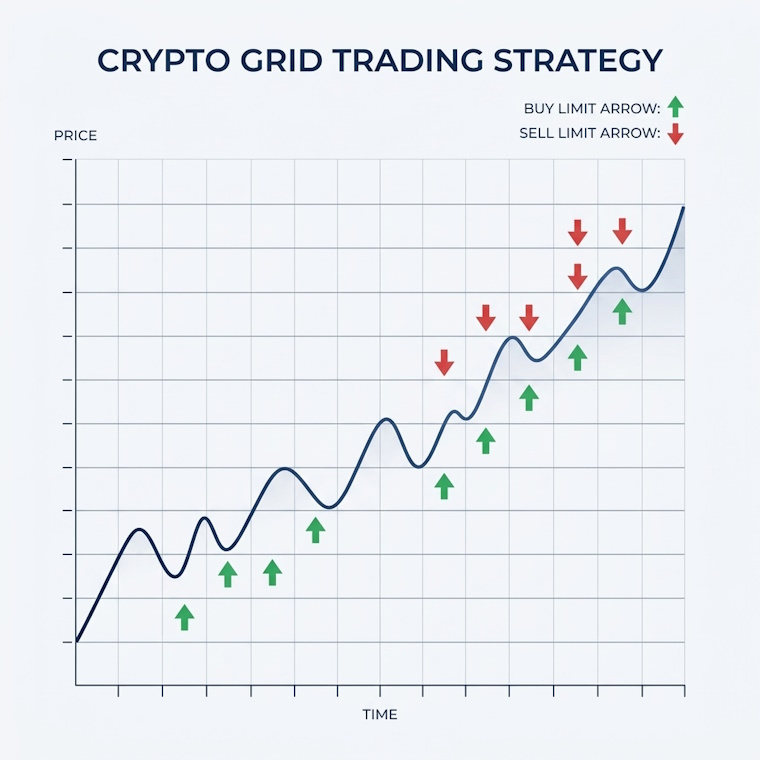
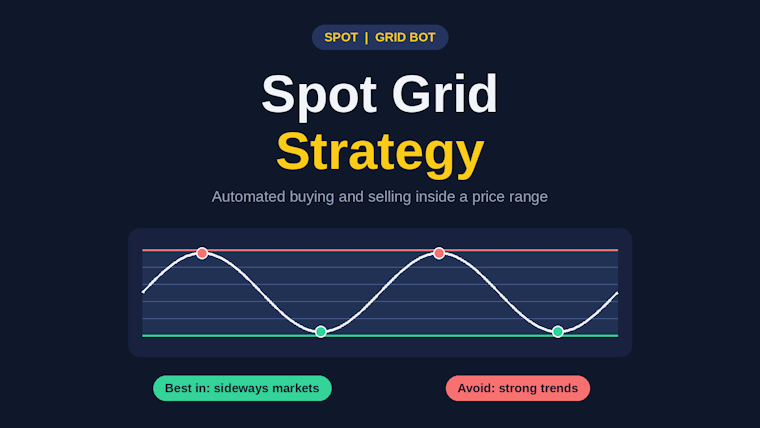
A grid bot buys small slices as price falls and sells them as price rises, inside a range. This post shares a grid setup that was tested on CG Backtest in a sideways market, so you can re-run it yourself.
THE SETUP
Pair: DOT/USDT, Spot (Binance data)
Capital: 4,000 USDT
Fee: 0.1%
Grid type: Arithmetic (equal price gap between lines)
Number of grids: 80
Range: [LOWER] to [UPPER]
Test period: [DATES]
WHY THIS MARKET
Price moved sideways in a choppy range, which is the market a grid bot is built for. Each time price moves up and down between grid lines, the bot collects a small profit.
THE RESULT
About +11.89% ROI on 4,000 USDT, with [TRADES] trades and [P&L] USDT profit. This is one test in one market period. It is not a promise for the future.
WHEN IT WORKS BEST
Sideways, choppy markets where price keeps moving inside a range.
WHEN IT STRUGGLES
– Strong downtrends: the bot keeps buying lower and holds a growing losing position.
– Strong uptrends: price leaves the top of the range and the bot sits in USDT.
– Fees: with 80 grids, fees take a share of each small profit.
TRY IT YOURSELF
Open CG Backtest and use the same settings (DOT/USDT, 4,000 USDT, 0.1% fee, arithmetic, 80 grids, same range). Then test another period to see how it behaves in a trending market.
RISK
This is not financial advice. A grid bot can lose money if price leaves the range, especially downward. Only use money you can afford to lose.