

 Bitcoin
  Ethereum
  Solana
  TRON
TRON  Zcash
Zcash  Hyperliquid
  Dogecoin
  Monero
  Chainlink
  Cardano
  Stellar
  Uniswap
  Sui
Sui  Hedera
  Bittensor
  Shiba Inu
  Ripple USD
  Polkadot
  Aster
Aster  World Liberty Financial
  Render
  Artificial Superintelligence Alliance
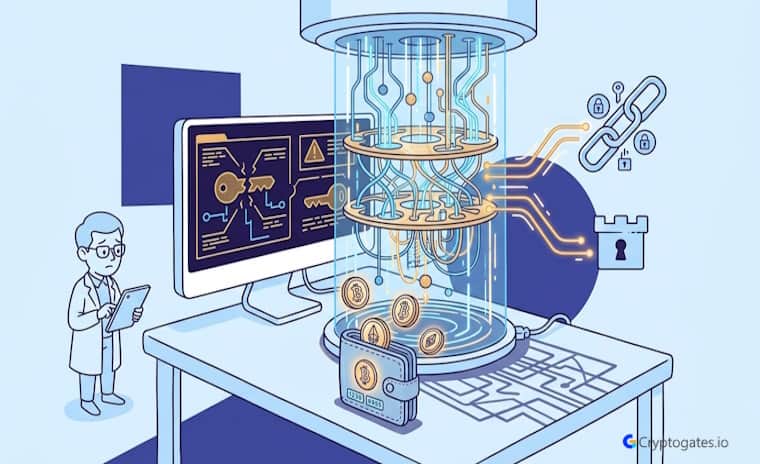
Quantum computing just moved from theory to urgent reality.
New research has slashed the qubit count needed to break blockchain encryption.
Your wallet runs on cryptography that wasn’t built for this threat.
Breaking crypto encryption now requires under 500,000 qubits, down from 20 million. Google Quantum AI.
- The Problem: Blockchain encryption was never built to survive a quantum attack.
- The Solution: Post-quantum cryptography standards now exist, and some blockchains are already adopting them.
- The Incentive: Knowing which projects are being prepared helps you make smarter long-term decisions.
- The Risk: Slow-moving projects could lose trader trust before any attack even happens.
What Quantum Computing Actually Does to Crypto
Most people think quantum computing is just a faster computer.
It’s not.
Classical computers use bits, a 0 or a 1. Quantum computers use qubits, which can be both at once.
That lets them crack the math protecting your private keys.
The same math Bitcoin and Ethereum have relied on for years.
Stop Guessing.
Stress Test Your Edge.
The market doesn't care about your backtest. Our engine simulates 1,000+ "what-if" scenarios to ensure your strategy is built for survival.
Run Crypto Strategy Engine →
Michele Mosca, University of Waterloo
Honestly, around four million Bitcoin wallets already have exposed public keys.
That number should concern every serious trader.
Which Chains Face the Most Risk
| Blockchain | Encryption | Risk Level |
|---|---|---|
| Bitcoin | ECDSA | High |
| Ethereum | ECDSA | High |
| Solana | Ed25519 | Medium-High |
| PQC Chains | Lattice-based | Low |
CryptoGates’ portfolio tracker lets you check your chain exposure without guessing.

No, but the Global Risk Institute says a cryptographically relevant machine is possible within 10 years.
What the Crypto Industry Is Doing About Quantum Computing Crypto Security
Look, progress is happening. Just not evenly.
NIST finalized three post-quantum cryptography standards.
Ethereum created a dedicated quantum research team.
Their plan is a gradual migration, not a sudden switch.
Battle-Test Your Strategy
Before the Market Does.
Eliminate guesswork with institutional-grade backtesting for DCA, Grid, and Rebalance bots. Real historical data. Real-world results.
2026 is officially the “Year of Quantum Security,” backed by NIST, the FBI, and CISA. NIST
Here’s the thing:
Bitcoin has a harder road.
Post-quantum signatures run several kilobytes versus the usual 70 bytes.
That creates real on-chain friction.

ZAHEER, CEO CryptoGates
Solana is testing optional quantum-safe vaults using hash-based, one-time signatures.
Early stage, but it’s a real movement.
Checklist
- Bitcoin on a bc1 address (SegWit or Taproot)?
- Does your chain have a post-quantum roadmap?
- Stopped reusing wallet addresses?
- Checked if your wallet supports PQC schemes?
Not urgently, but watch which projects are actively building post-quantum defenses.
Watch the Timeline, Not the Hype
This isn’t today’s emergency.
But it’s no longer a distant theory.
The projects being prepared now are worth watching.
Use CryptoGates to track your portfolio by chain and stay ahead as this develops.
FAQs
What is quantum computing, and why does it matter for crypto security?
Quantum computers can break the elliptic curve cryptography protecting most blockchain wallets. The timeline is shrinking faster than most traders realize.
Which cryptocurrencies are most vulnerable to quantum computing attacks?
Bitcoin and Ethereum carry the highest risk. Legacy Bitcoin addresses are especially exposed once a transaction reveals the public key.
How can traders protect their crypto assets from future quantum threats?
Move to BC1 Bitcoin addresses, stop reusing wallet addresses, and hold assets on chains with active post-quantum roadmaps.