
 Bitcoin
  Ethereum
  Solana
  TRON
TRON  Hyperliquid
  Dogecoin
  Zcash
Zcash  Cardano
  Stellar
  Monero
  Chainlink
  Hedera
  Sui
Sui  Shiba Inu
  Bittensor
  Uniswap
  World Liberty Financial
  Aster
Aster  Ripple USD
  Polkadot
  Render
  Artificial Superintelligence Alliance
You bought crypto. You’re holding it. And every day it just sits there doing nothing.
What if it could quietly earn you more while you sleep?

Over 35.86 million ETH is staked, representing 28.9% of Ethereum's total supply, according to data from Dune Analytics and Ethereum Foundation reporting.
That’s exactly what crypto staking does.
It’s one of the most talked-about ways to earn passive income in crypto. But most guides skip the part where things go wrong.
This one won’t.
- The Problem: Most crypto holders let their coins sit idle, missing out on rewards they could earn just by participating in the network.
- The Solution: Crypto staking lets you lock up your coins to help validate transactions, and the network pays you back in rewards automatically.
- The Incentive: In 2026, top PoS coins like Ethereum, Cardano, and Solana offer real annual yields of 2% to 10% without active trading.
- The Risk: Lock-up periods, slashing penalties, and misleading APY figures can catch you off guard if you don't verify the strategy before committing real money.
What Is Crypto Staking and Why Should You Care?
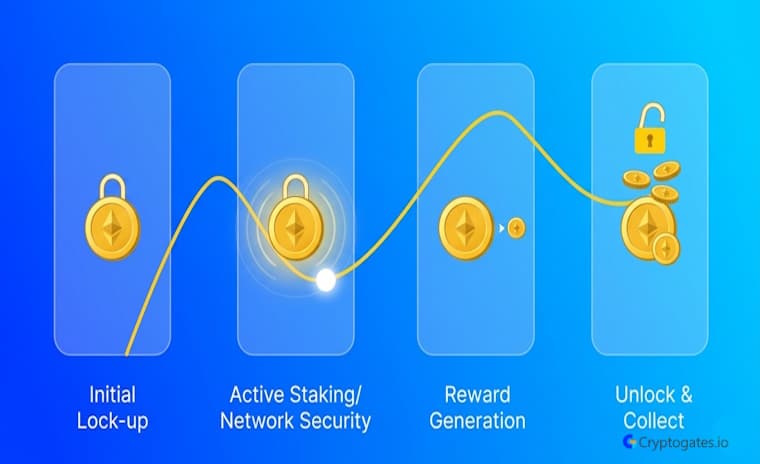
Staking is simple at its core. You lock up some of your crypto to help a blockchain network run. In return, the network pays you rewards, usually in the same coin you staked.
Think of it like earning interest on a savings account, except instead of a bank using your money, you’re helping verify real transactions on a decentralized network.
The key thing that makes staking possible is called Proof of Stake (PoS). It's how certain blockchains agree on which transactions are real and valid.
Bitcoin uses an older system called "Proof of Work," which is mining and requires powerful computers and burns massive amounts of electricity.
PoS is different.
It picks validators based on how much crypto they’ve staked.
No mining rigs. No crazy electricity bills. Just your coins doing the work.
Ethereum transitioned to PoS in 2022. Cardano, Solana, and Polkadot all run on PoS. That’s why staking has exploded.
How Does Crypto Staking Actually Work?
You deposit your coins into a staking wallet or pool.
Those coins get used to validate new transactions on the network. When a block is confirmed, validators get paid, and that reward gets passed to you based on how much you’ve staked.
You don’t need to understand the tech deeply. What matters is this: the more you stake, and the longer you stake it, the more you earn. Simple.
There are three main ways to stake:
| Staking Method | Who It's For | Typical Requirement |
|---|---|---|
| Solo Staking | Advanced users | 32 ETH minimum (Ethereum) |
| Staking Pools | Beginners to intermediate | Any amount |
| Exchange Staking | Complete beginners | Any amount, fully managed |
- Solo Staking means running your own validator node. For Ethereum, that requires 32 ETH minimum. High control, high responsibility, high reward. Not for beginners.
- Staking Pools are exactly what they sound like; many people combine their crypto so the group meets the minimum requirements. A pool operator handles the technical work. Rewards get split proportionally. Lido and Rocket Pool are well-known examples of Ethereum.
- Exchange Staking is the easiest. You deposit your coins on an exchange like Binance, Coinbase, or OKX and click a button. They do everything. Lower rewards, but zero technical hassle.
Cardano currently sits at approximately 2.44% APR with zero lock-up period, making it one of the most flexible staking options for liquidity-conscious holders. Cardano Foundation staking reports, 2026
Not sure which
exchange fits you?
Bypass the marketing hype. Our matrix cross-references your profile against 50+ institutional metrics—including Proof-of-Reserves and Slippage Models.
Real Staking Yields in 2026: What You Can Actually Expect
Here’s where people get misled. A coin advertising 18% APY sounds amazing. But if that same network is inflating its supply by 12%, your real yield is closer to 6%. Always look at real yield, not headline APY.
As of March 2026, nominal APYs across major staking coins range from 3% to 19%, but real yields after accounting for network inflation drop to somewhere between 0% and 10%.
Here’s a quick, honest breakdown:
- Ethereum (ETH): As of early 2026, around 35.86 million ETH is staked, representing 28.9% of the total supply, earning an average 3.3% APY.
- Cardano (ADA): Currently sitting around 2.44% APR, with no lock-up period, meaning you can withdraw or reallocate your ADA at any time, even while it’s delegated.
- Solana (SOL): Higher performance chain, competitive yields through delegated PoS, and flexible staking options depending on where you stake.
- Polkadot (DOT): Requires a 28-day unbonding period for staked crypto, meaning once you unstake, you wait nearly a month before your coins are free. Factor that into your plans.
- Cosmos (ATOM): One of the higher nominal yields, but check the inflation rate before celebrating.
| Coin | Nominal APY | Lock-Up Period |
|---|---|---|
| Ethereum (ETH) | ~3.3% | None (liquid staking available) |
| Cardano (ADA) | ~2.44% | None |
| Solana (SOL) | Varies by pool | Flexible |
| Polkadot (DOT) | Higher nominal | 28 days |
| Cosmos (ATOM) | Highest nominal | 21 days |

In most countries, yes. Staking rewards are typically treated as taxable income at the moment they're received. Keep detailed records from day one and consult a tax professional.
Before committing to any of these, it’s worth running actual numbers.
The CryptoGates.io Monte Carlo Simulator lets you model 1,000+ staking scenarios using real historical data, so you see expected returns across different market conditions, not just the best-case headline number.
Stop Guessing.
Stress Test Your Edge.
The market doesn't care about your backtest. Our engine simulates 1,000+ "what-if" scenarios to ensure your strategy is built for survival.
Run Crypto Strategy Engine →How to Start Staking Crypto Step by Step
Step 1: Pick your coin. Choose a PoS coin that fits your risk level and liquidity needs. Cardano is great if you hate lock-ups. Ethereum is the safest long-term bet. Cosmos pays more but carries more risk.
Step 2: Get a wallet. Use a non-custodial wallet where you control your own private keys. Ledger hardware wallets, Exodus, or coin-specific wallets like Phantom for Solana are solid options. Never stake directly from an exchange if you want full control.
Step 3: Choose how you want to stake. Pool staking is the most beginner-friendly. You don’t need large amounts, and you don’t need technical knowledge.
Step 4: Delegate or deposit. For pools, you simply assign your coins to a pool operator through the wallet interface. Your coins never actually leave your wallet with non-custodial setups.
Step 5: Track rewards and reinvest. Staking rewards compound. If you earn 50 coins on a 1,000-coin stake and re-stake those 50, your next reward is calculated on 1,050 coins. That compounding effect adds up seriously over the years.
Before You Stake Anything
- I've checked the real yield, not just the advertised APY
- I understand the lock-up period and can live without access for that time
- I've chosen a non-custodial wallet for full control of my keys
- I've researched the pool operator's reliability and slashing history
- I've tested my staking strategy with historical data before committing real money
Proven Setups &
Expert Breakdowns.
We don't just show you the data; we engineer and validate high-performance strategies, providing the "Alpha" behind the numbers.
The Risks Nobody Talks About Enough
Staking is not passive and risk-free. Here’s what can go wrong.
- Slashing: If your validator node goes offline or behaves incorrectly, the network can destroy a portion of your staked coins as a penalty. Most staking pool operators are reliable, but it’s worth researching before you delegate.
- Lock-up periods: Some coins lock your funds for weeks. Cosmos requires 21 days of unbonding, and Polkadot requires 28 days. Spotted. If the market drops hard while your coins are locked, you can’t sell. That stings.
- Market volatility: Your staking rewards might show 6% APY, but if the coin drops 40% in price, you’re still losing in real terms. Staking rewards don’t protect you from price crashes.
- Platform risk: Exchange staking means the exchange holds your coins. If that exchange gets hacked or collapses, as some did in previous crypto winters, your staked assets could be at risk. Use regulated, proof-of-reserves exchanges like Binance, Coinbase, or OKX.
- Tax complexity: In most countries, staking rewards are treated as taxable income the moment you receive them. Keep clear records from day one.

Andreas Antonopoulos, Mastering Bitcoin and The Internet of Money
This is exactly why verifying a strategy before committing real money matters so much.
CryptoGates.io Backtesting Lab lets you test staking strategies against 5+ years of historical data so you understand actual performance before you’re locked in.
Is Crypto Staking Worth It in 2026?
Mechanics of the Chain
long-term
For long-term holders, yes, absolutely. If you're planning to hold Ethereum or Cardano for years anyway, earning 3-5% annually on top of potential price appreciation is a no-brainer.
short-term
For short-term traders, probably not. Lock-up periods and volatility risk make staking a poor fit if you need quick access to your coins.
The trap most people fall into is chasing high-APY coins without understanding the real yield, the lock-up terms, or the underlying inflation rate. A 19% APY that deflates your purchasing power isn’t a win.
The smarter play is to verify first and commit later. Check real yields. Model your scenarios. Understand what you’re locking up and for how long.
Proven Setups &
Expert Breakdowns.
We don't just show you the data; we engineer and validate high-performance strategies, providing the "Alpha" behind the numbers.
One Final Thing
CryptoGates.io was built specifically for people who want to invest systematically, not guess and hope.
The Strategy Engine, Backtesting Lab, and Monte Carlo Simulator exist to make sure you understand exactly what you’re getting into before a single coin is staked.
Don’t take anyone’s word for what a staking coin will return. Test it yourself.
Head to CryptoGates.io and run your staking strategy through real data before you commit.
FAQs
What is crypto staking and how does it work?
Crypto staking means locking up your coins to help validate transactions on a Proof of Stake blockchain. The network pays you rewards in return, usually in the same coin you staked. Major networks, including Ethereum, Cardano, and Solana, all support staking with real annual yields typically between 2% and 10%.
What are the biggest risks of crypto staking?
The main risks are lock-up periods that prevent selling during market drops, slashing penalties if a validator misbehaves, market volatility that can outweigh your staking rewards, and platform risk when using centralized exchanges to stake. Understanding all four before committing is not optional.
Which crypto is best for staking right now?
There’s no single answer. Ethereum offers stability and trust at around 3.3% APY. Cardano gives you flexibility with no lock-up period. Polkadot and Cosmos offer higher nominal yields but require 28 and 21 days of unbonding, respectively. The right choice depends on your time horizon, risk tolerance, and how much liquidity you need.