

 Bitcoin
  Ethereum
  Solana
  TRON
TRON  Zcash
Zcash  Hyperliquid
  Dogecoin
  Monero
  Chainlink
  Cardano
  Stellar
  Uniswap
  Sui
Sui  Hedera
  Bittensor
  Shiba Inu
  Ripple USD
  Aster
Aster  Polkadot
  World Liberty Financial
  Render
  Artificial Superintelligence Alliance
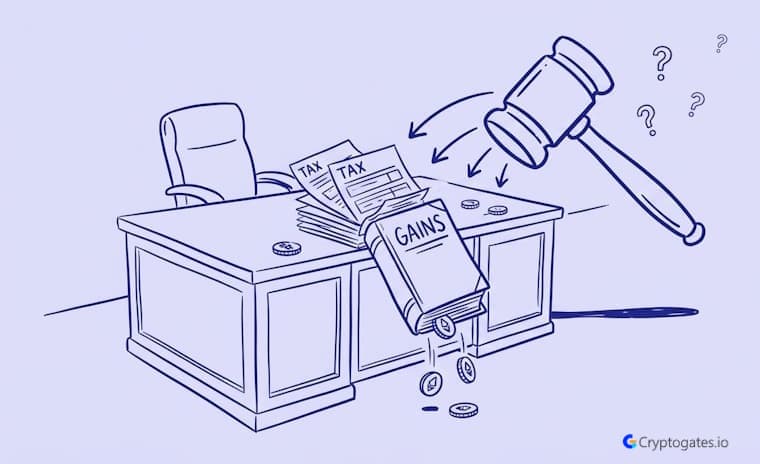
You made money on crypto. Maybe a little. Maybe a lot.
Now it’s tax season, and you’re staring at a screen wondering if the IRS actually knows about that Ethereum you sold in March.
They might.
Most traders focus entirely on buying low and selling high. Taxes are an afterthought until they aren’t. And by then, the penalties are already stacking up.
“According to a Divly report, only 1.62% of crypto investors globally reported their crypto to tax authorities in a recent tax year.” Divly Crypto Tax Report
Here’s the thing most people get wrong from day one.
They think crypto exists in some digital gray area where traditional tax rules don’t apply. It’s online.
It’s decentralized. Surely the government can’t track it?
Wrong.
The IRS has been crystal clear since its 2014 guidance classifying virtual currency as property for federal tax purposes. That means every time you sell it, trade it, earn it, or mine it, something taxable has happened.
It doesn’t matter if you cashed out into dollars or just swapped Bitcoin for Solana. A taxable event is a taxable event.
That surprises a lot of people. Trading one crypto for another triggers taxes. Most traders don’t realize that until it’s too late.
- The Problem: Most traders don't realize that swapping, staking, or earning crypto all count as taxable events, not just cashing out to dollars.
- The Solution: The IRS treats crypto as property. Every gain, reward, or airdrop you receive has a tax implication, whether you knew about it or not.
- The Incentive: Holding crypto over one year cuts your tax rate significantly. Tax-loss harvesting lets you use losses to offset gains and reduce what you owe.
- The Risk: Failing to report crypto activity can trigger penalties up to 25% of what you owe, plus interest. Exchanges already report to the IRS.
So What actually Counts as a Taxable Event?
Selling crypto for cash is the obvious one. But the list goes further than most people expect.
Swapping one cryptocurrency for another, say, trading ETH for BNB, counts as selling the first coin at its current market value. You calculate the gain or loss from there. The same goes for using crypto to buy something.
IRS Notice 2014-21, Official IRS Guidance
Pay for a service with Bitcoin, and you’ve just triggered a taxable event based on Bitcoin’s value at that moment versus what you originally paid.
Mining rewards count as income the day you receive them, at whatever the market price is that day.
Staking rewards work the same way. Airdrops, those free tokens projects send to your wallet, also count as ordinary income when you receive them.
The common thread?
Any time new crypto enters your wallet as compensation, reward, or payment, the IRS wants a piece.
Research Highlight
Trade frequency isn’t just a performance variable — it’s a tax variable.
Across CryptoGates’ backtested grid strategies, higher-frequency bots generate dramatically more taxable events than slower-cycling approaches. One 90-day XRP grid backtest fired 875 trades, each one a discrete taxable disposal under IRS rules — regardless of whether the bot ever cashed out to dollars. Compare that to a DCA-style approach on the same timeframe, which might close a handful of sessions rather than hundreds of individual trades.
This doesn’t make high-frequency strategies wrong. It means the recordkeeping burden and short-term tax exposure scale directly with how often a strategy trades, not with how much profit it ultimately shows on a dashboard. A bot’s headline ROI and its tax footprint are two separate numbers worth tracking side by side.
View Complete Playbook: XRP Went Nowhere for 3 Months 📉 Our Grid Bot Made +27.74% Anyway
Short-term vs. Long-term: Why it Matters More than You Think
Not all crypto gains are taxed equally. This is one area where timing your trades actually makes a measurable difference.
If you sell cryptocurrency you’ve held for one year or less, that’s a short-term capital gain. It gets taxed at your ordinary income rate, the same bracket as your salary.
Depending on your income, that could be anywhere from 10% to 37%.
| Holding Period | Tax Type | Rate Range |
|---|---|---|
| Under 1 year | Short-term (ordinary income) | 10% to 37% |
| Over 1 year | Long-term capital gains | 0%, 15%, or 20% |
| Staking / Mining rewards | Ordinary income | Based on income bracket |
“Traders who hold assets for over one year can reduce their effective tax rate by up to 20 percentage points compared to short-term sellers.” IRS Tax Rate Schedules
Hold that same asset for over a year before selling, and it becomes a long-term capital gain.
The rates drop significantly, 0%, 15%, or 20%, depending on your total income.
For many traders, the difference between selling at 11 months versus 13 months is thousands of dollars.
Most people never think about this when they’re in the middle of a bull run. They’re watching price action, not calendars. But the calendar matters.

Yes. Staking rewards count as ordinary income on the day you receive them, based on market value at that moment.
Keeping Records is the Part Everyone Hates
Here’s where discipline separates organized traders from people drowning in spreadsheets come April.
For every transaction, you need the date, the amount of crypto involved, the value in USD at the time, and the transaction type. Across multiple exchanges and wallets, over hundreds of trades, that adds up fast.
Are You Tax-Ready?
- I have my full transaction history from every exchange I've used
- I know the USD value of each crypto at the time of every trade
- I've identified which gains are short-term and which are long-term
- I've checked whether any staking, mining, or airdrop income applies to me
- I'm using crypto tax software or a professional to file accurately
The good news is you don’t have to do this manually.
Crypto tax software like CoinTracker, Koinly, or TaxBit can connect directly to your exchanges and wallets, pull your full transaction history, and automatically calculate your gains and losses.
If you’ve been trading for any length of time, this is worth paying for.
The forms you’ll need are Form 8949 to report individual transactions, Schedule D to summarize the totals, and Schedule 1 if you received crypto as income.
All of this flows into your standard Form 1040.
Tax-loss Harvesting, the one Strategy most Traders Ignore
If some of your holdings are sitting at a loss, those losses aren’t just bad news. They’re actually useful.
Tax-loss harvesting means intentionally selling positions that are down to offset gains elsewhere in your portfolio.
If you made $6,000 on Bitcoin but lost $2,500 on a smaller altcoin, selling that losing position brings your taxable gain down to $3,500. You pay tax on less.

"Investors who actively use tax-loss harvesting can reduce their taxable gains by thousands of dollars annually, depending on portfolio size and trade frequency."
You can also carry forward losses into future tax years if they exceed your gains in the current year.
Done right, this strategy can significantly reduce what you owe legally, without hiding anything.
The key is being strategic about it rather than emotional.
Selling at a loss just to cut pain rarely works out.
But selling at a loss with a specific tax goal in mind is a different calculation entirely.
Real Backtest Example
Strategy: Rebalance Bot
Coin Pair: SOL / ETH
Market Condition: Simultaneous decline (SOL −32%, ETH −48%)
Objective: Test whether active rebalancing between two falling assets outperforms passive holding
Key Result: The bot posted a $287 loss versus a steeper loss for a passive holder over the same window — meaning every rebalancing swap realized a loss along the way.
Expert Interpretation: This is the mechanical version of tax-loss harvesting. Each swap that locks in a loss on paper is also a taxable event that can offset gains elsewhere in a portfolio. A losing backtest and a useful tax outcome aren’t mutually exclusive — sometimes the losses a bot realizes are the same losses a trader would want to harvest deliberately at year-end.
View Complete Playbook: SOL −32%. ETH −48%. Our Rebalance Bot Lost $287 — and Still Beat Doing Nothing
What Happens if you don't Report
The penalties aren’t theoretical. Failure to report crypto gains can mean a 5% monthly penalty on what you owe, up to 25% total, plus interest. In serious cases, it can escalate beyond that.
Some traders assume that because crypto is pseudonymous, the IRS can’t see it.
But exchanges operating in the US are required to report user activity. Many already send 1099 forms. The IRS has also been using blockchain analytics firms to trace unreported activity.
The safer assumption is that they can see it. File accordingly.
Yes. If your losses exceed your gains, you can carry the remaining amount forward and apply it to future tax years.
How CryptoGates.io fits into this
At CryptoGates, the approach has always been to verify first, risk later.
That same logic applies to your tax situation. Before you make a trade, it helps to understand the full picture, including the cost to you in taxes, not just fees.
Battle-Test Your Strategy
Before the Market Does.
Eliminate guesswork with institutional-grade backtesting for DCA, Grid, and Rebalance bots. Real historical data. Real-world results.
The Strategy Engine inside CryptoGates considers real costs, not just entry and exit prices.
When you’re backtesting a strategy using five-plus years of historical data in the Backtest lab, you’re seeing how it performs under real conditions, including the compounding effect of transaction frequency on taxable events.”
Strategies that trade constantly may look great on paper but generate a heavy short-term tax burden. Strategies that trade less often and hold longer often tell a different story, something our crypto trading strategy comparison breaks down in detail.
Understanding tax implications is part of building a strategy that actually works in the real world, not just on a chart.
The bottom line
Crypto taxes aren’t going away. If anything, enforcement is getting stricter as the industry grows.
The traders who handle this well aren’t necessarily smarter. They just started keeping records earlier, held positions long enough to qualify for better rates, and made decisions based on total cost, not just price movement.
Proven Setups &
Expert Breakdowns.
We don't just show you the data; we engineer and validate high-performance strategies, providing the "Alpha" behind the numbers.
You don’t need to be a tax expert.
You need a system.
Start by pulling your full transaction history from every exchange you’ve used.
Get a clear picture of your gains and losses this year. If the numbers feel overwhelming, use dedicated tax software; it’s far cheaper than getting it wrong.
And if you haven’t tested your actual trading strategies under realistic conditions yet, that’s where CryptoGates.io starts.
No guesswork. No hype. Just the full picture before you risk a dollar.
FAQs
Do I have to pay taxes on crypto if I don't cash out to dollars?
Yes. Trading one cryptocurrency for another is treated as a taxable disposal by the IRS. The gain or loss is calculated based on the market value at the time of the swap, even if no dollars were involved. This surprises most active traders.
What if I lost money on crypto? Do I still owe taxes?
No, losses don’t create a tax bill. In fact, capital losses offset your capital gains, which reduces what you owe. If losses exceed gains, you can deduct up to $3,000 against ordinary income and carry the rest into future tax years.
How does the IRS actually find out about unreported crypto?
US-based exchanges are legally required to report user activity to the IRS, and many issue 1099 forms directly. On top of that, the IRS works with blockchain analytics companies that can trace transactions across public wallets. Assuming crypto is invisible to regulators is a costly mistake.