
 Bitcoin
  Ethereum
  Solana
  TRON
TRON  Hyperliquid
  Dogecoin
  Zcash
Zcash  Cardano
  Stellar
  Monero
  Chainlink
  Hedera
  Sui
Sui  Shiba Inu
  Bittensor
  Uniswap
  World Liberty Financial
  Aster
Aster  Ripple USD
  Polkadot
  Render
  Artificial Superintelligence Alliance
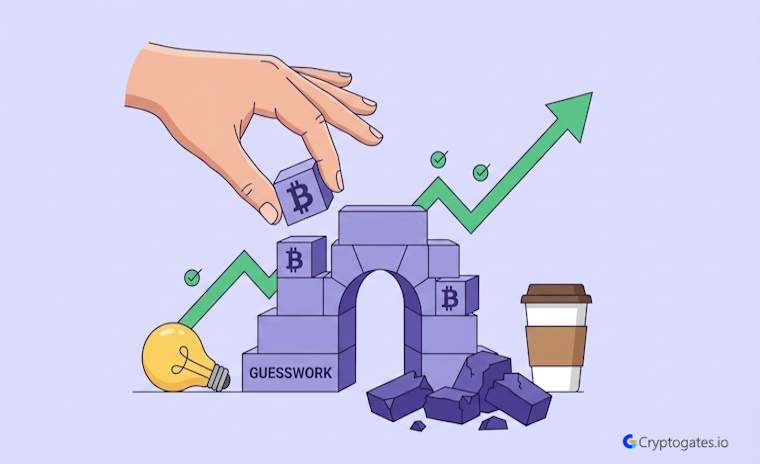
You bought your first coin. Felt smart. Then watched it bleed for three weeks straight.
No one warned you. And most guides still won’t; they’ll hand you definitions and call it help.
This one’s different. Because that story up there? I lived it too. Ten years ago. And it’s exactly why CryptoGates exists.
“Between 70% and 90% of retail traders lose money in crypto markets, according to multiple exchange-level studies and trading research reports.”
Source: Referenced in CryptoGates.io
- The Problem: Most beginners lose money in crypto because they trade on emotion and hope, with no plan and no verification process.
- The Solution: A tested, data-driven strategy removes guesswork. Verify before you risk, not after.
- The Incentive: CryptoGates gives you real backtesting, strategy matching, and automation tools, so every decision is informed, not impulsive.
- The Risk: Without proper risk management and a safe exchange, even good strategies can fail. Safety and process come first.
The Uncomfortable Truth About Why Beginners Lose
Let’s skip the soft intro.
Over 70 to 90% of retail traders lose money in crypto. Not because they’re stupid. Not because crypto is impossible. Because they walk in with hope instead of a plan, and the market is very, very good at punishing hope.
Here’s what actually happens. Someone sees Bitcoin trending. A friend forwards a Telegram tip. They open an account, deposit money, and hit buy, and the price drops the next morning, as if it were waiting for them personally.
They hold. It drops more. They panic sell. Then it recovers without them.
That cycle isn’t bad luck. That’s what happens when emotion drives every decision. And the uncomfortable part?
Exchanges profit from your volume. Algorithms are built to exploit your impatience. Market makers thrive on impulsive entries. The more reactive you are, the easier it is to take money from you.
Nobody in that Telegram group is going to tell you that.
So What Is Crypto Trading, Actually
Crypto trading is buying and selling digital assets such as Bitcoin, Ethereum, and altcoins to make a profit. That part you probably knew.
What most guides skip is the environment you’re trading in. Crypto markets run 24 hours a day, seven days a week. No closing bell. No pause.
The market moves while you sleep, while you work, while you live your life. That’s more opportunity, sure. But it’s also more exposure if you don’t have a system holding you steady.
Traders can go long by buying, expecting prices to rise, or short by betting they’ll fall.
Most beginners should stay long, stay spot, and stay simple. There’s no shame in that. Complexity kills accounts faster than bad timing does.
Attribution: Dr. Terrance Odean, Behavioral Finance Researcher
Which Type of Trading Actually Fits Your Life
This is where most beginners make their first real mistake. They pick a style based on what sounds exciting. Not what fits who they are.
- Spot Trading is your starting point. You buy a coin with real money. You own it. Price goes up, you sell. No borrowed funds, no margin calls, no complexity. Clean. Start here.
- Day Trading, opening and closing trades within hours, sounds like fast money. It is, occasionally, for people who’ve spent years learning to read markets. For everyone else, it’s a fast way to learn an expensive lesson. Genuinely not recommended if you’re new.

Most beginners trade on emotion and tips, with no tested plan. The market rewards process, not guesswork.
- Swing Trading is more forgiving. Hold a position for days or weeks, catch a bigger move, and spend less time staring at screens. Still requires skill. Still requires you to understand what the charts are telling you. But far more sustainable than day trading for most people.
- HODLing, buying and holding for months or years, has quietly beaten most active strategies over time. Especially Bitcoin. If you believe in where this asset class is heading and don’t want to trade for a living, this deserves more respect than it gets.
- Automated Trading is where rules replace reactions. DCA bots, grid bots, rebalancing bots—you define the logic, and the bot executes it. No panic selling at 2 am. No second-guessing at the worst possible moment.
For people with jobs and actual lives, this is often the smartest entry point into crypto.
| Trading Style | Time Required | Best For |
|---|---|---|
| Spot Trading | Low | Complete beginners, simply buy/sell |
| Swing Trading | Medium | Part-timers, multi-day moves |
| HODLing | Very Low | Long-term believers, low stress |
| Automated (DCA/Grid) | Minimal | Busy people, emotion-free execution |
| Day Trading | Very High | Experienced only, not recommended for beginners |
Trading Pairs and Orders: The Basics Nobody Explains Properly
Every trade on an exchange happens between two assets. That’s a trading pair.
BTC/USDT means you’re swapping Bitcoin against Tether, a dollar-pegged stablecoin. Most beginners start here because gains and losses stay in dollar terms.
Easy to track. ETH/BTC is more complex, as you’re measuring Ethereum’s value against Bitcoin. Less intuitive when you’re starting.
Order types matter more than people think. A market order executes immediately at whatever the current price is. Fast, but in a volatile market, “current price” can mean something different by the time your order fills.
A limit order lets you set the exact price you want.
Your order only goes through when the market hits that number. If it never does, nothing happens.
For beginners, limit orders are almost always smarter. More control. Less slippage. Fewer unpleasant surprises.
Proven Setups &
Expert Breakdowns.
We don't just show you the data; we engineer and validate high-performance strategies, providing the "Alpha" behind the numbers.
Reading the Market Without Becoming a Full-Time Analyst
You don’t need to master every indicator. But walking in completely blind is how you become someone else’s profit.
Technical analysis is reading price charts for patterns. Candlestick charts show four things per time period: open, close, high, and low.
Two concepts that matter immediately: support levels, where buyers historically step in and stop the price falling, and resistance levels, where sellers push back and cap the rise.
Dollar-cost averaging (DCA) is the most beginner-friendly. Fixed amount, regular intervals, no market timing needed.
Understanding just these two puts you ahead of most first-timers already.
Fundamental analysis is about the project itself.
What problem does this coin solve?
Who’s building it?
Is anyone actually using it?
On-chain data, active addresses, transaction volume, and developer activity tell you more than a chart pattern ever will about long-term value.
Charts tell you when. Fundamentals tell you what. You need both eventually.
Risk Management: Nobody Cares About This Until They Blow Up an Account
Then it becomes the only thing they wish they’d taken seriously.
Size positions properly. Don’t put everything into one trade. A rule worth keeping: don’t risk more on a single position than you could lose tomorrow without it changing your day.
Start smaller than feels right. Seriously. New traders almost always over-allocate.
“Between 70% and 90% of retail traders lose money in crypto markets, according to multiple exchange-level studies and trading research reports.”
Source: Referenced in CryptoGates.io
Use stop-loss orders.
A stop-loss exits your trade automatically if the price drops to a level you defined in advance before emotion enters the picture. It removes you from the worst decision of your trading life, which is holding a losing position and hoping it comes back. Hope isn’t a strategy.
Decide your exit before you enter. Know your target. Know the price where you accept you were wrong and walk away clean. If you don’t decide this before the trade opens, your emotions will decide it for you. Usually too late.
Choosing an Exchange: This Matters More Than Most Beginners Realise
FTX was one of the most trusted names in crypto. Celsius had millions of users. Both collapsed and took customer funds down with them. This isn’t ancient history. The lessons are recent enough to still hurt.
When choosing an exchange, look for proof of reserves, regulation, and a track record of clean withdrawals, even when markets are in freefall, not just when everything is calm and easy.
CryptoGates.io’s Exchange Picker handles this filtering for you, vetting platforms like Binance, OKX, Bybit, Coinbase, and KuCoin on actual safety criteria, not signup bonus size. Your choice of exchange is a security decision. Treat it like one.
Not sure which
exchange fits you?
Bypass the marketing hype. Our matrix cross-references your profile against 50+ institutional metrics—including Proof-of-Reserves and Slippage Models.
Test Before You Risk: The Habit That Separates Survivors From Statistics
The last traders aren’t luckier. They’re more careful.
They don’t go live with a strategy and hope for the best. They test it first against real historical data, across bull markets, bear markets, sideways grinds, and everything messy in between. They want proof before it’s their money on the line.
The Backtesting Lab at CryptoGates.io lets you do exactly this, running any strategy against five-plus years of real market data before risking a single dollar. Win rate, worst-case drawdown, and average return are all visible before you commit anything real.
The Monte Carlo simulator goes further, running over a thousand what-if scenarios to stress-test your strategy against conditions that haven’t happened yet. If a strategy can’t survive testing, it won’t survive the market. Better to find that out for free.
Are You Ready to Start Trading?
- I know which trading style fits my schedule and risk level
- I've decided my position size and won't go over it
- I have a stop-loss plan before I open any trade
- I've chosen an exchange based on safety, not signup bonuses
- I've backtested or reviewed at least one strategy before going live
Which Strategy Actually Fits You
Someone with $500, a full-time job, and low risk tolerance has no business day trading altcoins. That’s a mismatch. It ends badly almost every time.
Dollar-Cost Averaging, buying a fixed amount at regular intervals regardless of price, takes timing off the table completely. You buy when it’s high. You buy when it’s low. Your average cost evens out over time. You stop obsessing over every candle. For most beginners, this is the most sustainable place to start.
Grid Trading works well in sideways markets. A bot buys low and sells high within a defined range, over and over, without you watching. Consistent. Mechanical. Emotionless. Exactly what most beginners need more of.
Not sure which fits your situation? CryptoGates.io’s Strategy Picker walks you through risk profile, available capital, and market outlook, then matches you to the right approach from DCA, Grid, Rebalancing, or Buy and Hold. No guessing. No pressure. Just the right fit.
Confused about
market outlook?
Trading without a plan is just gambling. Our strategy architect analyzes your risk tolerance and capital to match you with a proven algorithmic framework.
One Last Thing Before You Place Your First Trade
Most people who lose money in crypto aren’t unlucky. They’re just skipping steps.
No plan. No testing. No real framework. Just a gut feeling and a hope that this time it’ll be different. It usually isn’t.
The traders who actually build something slowly, quietly, and without the drama know their strategy, test it before they use it, and don’t let one bad week become a bad year because they had an exit plan before they ever entered.
That’s what CryptoGates.io was built around.
Verify first. Risk later. Scale slowly.
The tools are there:
Strategy Engine, Backtesting Lab, Exchange Picker, Monte Carlo Simulator, and automated bots across all major exchanges.
Everything you need to stop guessing and start building something real.
Head to CryptoGates.io and run your first backtest free. The market will teach you either way; the only question is whether it costs you money.
FAQs
Less than most people think. You can start with as little as $10 on most exchanges. The real rule: only risk what you can afford to lose completely without losing sleep over it.
Yes, but only with a plan. The market is more structured now, tools are better, and regulation is catching up. Winging it in 2026 is just as dangerous as it was in 2021.
Dollar Cost Averaging, DCA. Buy a fixed amount regularly, regardless of price. No timing the market, no panic, no guesswork. Simple, tested, and sustainable for most beginners.
Look for proof of reserves, regulation, and a clean withdrawal history, not signup bonuses. FTX looked trustworthy, too. Safety first, features second.
Honestly, 6 to 12 months to get genuinely comfortable. But you don’t need to be an expert to start. You need a tested strategy, basic risk management, and the discipline to follow both.