

 Bitcoin
  Ethereum
  Solana
  TRON
TRON  Zcash
Zcash  Hyperliquid
  Dogecoin
  Monero
  Chainlink
  Cardano
  Stellar
  Uniswap
  Sui
Sui  Hedera
  Bittensor
  Shiba Inu
  Ripple USD
  Polkadot
  Aster
Aster  World Liberty Financial
  Render
  Artificial Superintelligence Alliance
You see a token climbing 40% in an hour.
Everyone in the Telegram group is posting rocket emojis.
The chart looks unstoppable. Then, sometime between your third coffee and your fourth refresh of the page, the price goes to zero.
Not a dip. Zero.
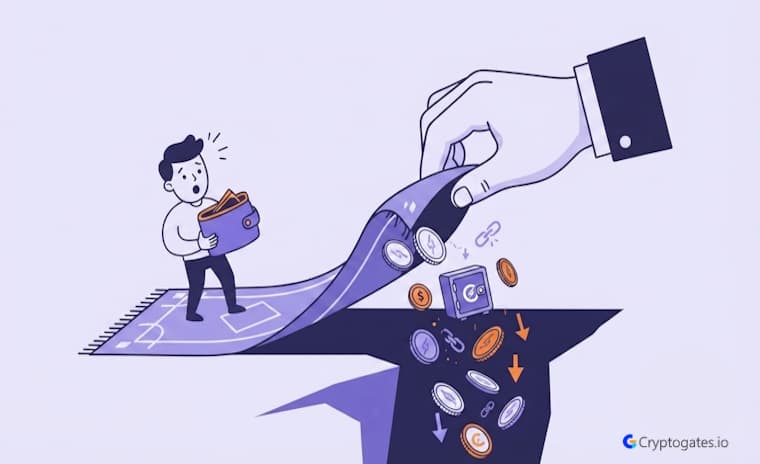
Here’s the thing. This isn’t bad luck. It’s a rug pull, and it’s one of the oldest tricks in crypto’s short history.

(source: blockchain security research)
If you’re trading anything outside the top few coins, understanding what a rug pull is isn’t optional anymore.
It’s survival.
- The Problem: New tokens launch by the thousands every day, and a real chunk of them are built to disappear with your money.
- The Solution: Learn the mechanics behind rug pulls so you can spot the setup before you're the exit liquidity.
- The Incentive: A few minutes of verification can save you from a total loss on any single trade.
- The Risk: Even careful traders get caught when hype moves faster than due diligence.
What Is a Rug Pull in Crypto?
A rug pull is exactly what it sounds like.
The floor gets pulled out from under you.
In practical terms, it’s a scam exit where the people behind a token drain the liquidity, dump their holdings, or just vanish, leaving everyone else holding a bag worth nothing.

SEO is completely counterintuitive at the bottom line!
Look, this isn’t some rare, once-in-a-blue-moon event either.
Soft rug pulls, the slower kind where a team just quietly stops showing up, have actually increased faster than hard rugs recently.
It’s not always a dramatic crash. Sometimes it’s a slow bleed dressed up as “we’re still building.”
How a Rug Pull Actually Works
Most rug pulls follow a pattern once you know what to look for.
A team creates a token, pairs it with a real asset like ETH or BNB in a liquidity pool, and lets buyers pile in.
That liquidity pool is what lets people actually sell the token back for something with value.

Not really. A regular crash comes from market-wide selling or bad news, but a rug pull is deliberate. Someone with control over the liquidity or supply chooses to drain it, on purpose, usually right when buying interest peaks.
Here’s what most beginners miss.
If the developers control that pool, they can pull the paired assets out whenever they want.
The moment they do, the token’s price collapses to basically nothing, and there’s no one left on the other side of the trade. Some setups go a step further with code that blocks regular holders from selling at all, while insiders quietly cash out in the background.
Either way, the mechanism is the same. Someone controls the exit, and you don’t.
Reality Check
Traders often assume that if a bot is actively firing profitable trades, the strategy itself must be working. CryptoGates backtest data complicates that assumption.
Strategy: Grid Bot
Coin: BNB/USDT
Market Condition: 33% post-ATH crash over 79 days
Objective: Test whether high trade frequency and positive grid profit translate into a net win
Key Result: The bot fired 171 trades and generated $163.94 in grid profit — yet total ROI still landed at −21.64%
Expert Interpretation: Grid profit and actual portfolio performance are not the same number. A strategy can look “active” and “profitable” on the surface while still losing money overall – which is exactly why checking the underlying data matters more than trusting the activity itself.
BNB Crashed 33% After Its ATH — Our Grid Bot Lost Less, But Still Lost
Common Types of Rug Pulls
Not every rug pull looks the same, and honestly, that’s part of what makes them tricky to spot.
Some hit fast.
Some drag out over weeks while you’re still convinced the project is “just consolidating.” Knowing the difference helps you read the warning signs earlier.
1. Liquidity Pulls
This is the classic version, the one you’ve probably heard about even if you’re new to crypto.
The developers hold the keys to the liquidity pool, wait until enough buyers have swapped in, then withdraw everything paired against the token. BTC, ETH, stablecoins, whatever backed it- gone in one transaction.
The token itself still sits in your wallet. It’s just worth nothing because there’s no liquidity left to sell into.
Battle-Test Your Strategy
Before the Market Does.
Eliminate guesswork with institutional-grade backtesting for DCA, Grid, and Rebalance bots. Real historical data. Real-world results.
2. Limited Sell Order Scams
This one’s sneakier, ngl. The smart contract itself gets coded so regular holders can buy but can’t sell, or can only sell a tiny percentage at a time.
Meanwhile, wallets tied to the team face no such restriction.
Price pumps as buyers pile in with no way out, and insiders quietly sell into that demand. It’s basically a trap disguised as a token.
3. Slow Rugs
Slow rugs don’t announce themselves.
There’s no dramatic liquidity drain, no single moment you can point to.
Instead, the team just starts dumping their token allocation bit by bit, over days or weeks, while community updates get vaguer and vaguer.
By the time most holders notice the price has been bleeding for a month, most of the damage is already done.
Red Flags That Signal a Rug Pull Before It Happens
Here’s the good news.
Rug pulls almost always leave fingerprints.
The problem is that most people are too busy watching the chart to check for them.
on-chain Security Research
That one stat alone should change how you approach a new token.
If liquidity isn’t locked, or barely locked, that’s not a small detail.
That’s the whole ballgame.
1. Anonymous or Unverified Teams
An anonymous team isn’t automatically a scam.
Plenty of legitimate builders started that way.
But anonymity does mean zero accountability if things go wrong, and that changes the risk math.
If you can’t find real names tied to GitHub commits, LinkedIn history, or past projects, you’re trusting strangers with your capital on faith alone.
Fair enough if you’re comfortable with that. Most people aren’t, once they think it through.
Research Insight
Many traders assume a bull run automatically means any active strategy will outperform simply holding. CryptoGates backtesting on a comparable setup shows that assumption doesn’t hold consistently.
Strategy: DCA Bot
Coin: BTC/USDT
Market Condition: BTC surged nearly 15% over the test window
Objective: Measure whether an automated bot captures more upside than passive buy-and-hold during a clear uptrend
Key Result: The DCA bot closed 8 of 9 sessions in profit, but buy-and-hold still beat it by $119.81
Expert Interpretation: Even a “working” strategy with a high win rate can underperform a simpler approach depending on market conditions. The only way to know which setup fits a given moment is to run the numbers first – not assume the outcome.
BTC Ran +14.5%, and Our DCA Bot Only Made $40 — Here’s the Honest Truth
2. Unlocked or Concentrated Liquidity
This is the check that catches the most scams, full stop.
Search the token’s liquidity pool on a lock verification platform like Team Finance or Unicrypt and see for yourself.
Don’t trust a screenshot posted in a Telegram group. Check the lock duration, the percentage locked, and who actually controls it.
Yes. Locked liquidity lowers one specific risk, but developers can still mint extra tokens through code exploits or dump their own allocation slowly. A lock helps. It doesn't guarantee safety on its own.
A team that’s locked 10% of liquidity while keeping 90% free to move isn’t really locked at all. Also worth a look: how many wallets hold the majority of the supply.
A handful of wallets holding most of the tokens means a handful of people can crash the price whenever they choose.
How to Protect Yourself From Rug Pulls
You don’t need to be a smart contract developer to avoid most rug pulls.
You need the same crypto security habit of checking before you buy instead of after you’ve already lost money.
1. Research Before You Buy
Give yourself thirty minutes, not thirty seconds.
Please check whether the contract includes an audit from a known firm, not just a fake audit badge with no report attached.
Look at the liquidity lock, the wallet distribution, and whether the team has any traceable history outside this one project.
If a project promises guaranteed returns or “can’t lose” setups, that’s your answer right there.
No legitimate project needs to promise that.
Stop Guessing.
Stress Test Your Edge.
The market doesn't care about your backtest. Our engine simulates 1,000+ "what-if" scenarios to ensure your strategy is built for survival.
Run Crypto Strategy Engine →Believe it or not, most of this information is public and free to check.
The tools exist. Most people just skip them because FOMO moves faster than research.
2. Why Verification Beats Hype
Here’s the truth CT doesn’t always want to hear.
Hype feels good in the moment.
It also has zero predictive power over whether a token survives the week. The traders who avoid getting rekt aren’t the ones with the best instincts.
They’re the ones who slow down and verify before they commit capital, every single time, even when the chart looks tempting.
Confused about
market outlook?
Trading without a plan is just gambling. Our strategy architect analyzes your risk tolerance and capital to match you with a proven algorithmic framework.
This same discipline applies beyond spotting scams, too.
It’s the same logic behind backtesting any strategy on real historical data before risking money live.
Verify First, Buy Later
Rug pulls don’t succeed because the victims were careless people.
They succeed because hype moves faster than verification, and impatience beats process almost every time.
The good news is the checks that catch most rug pulls take minutes, not hours. Liquidity lock status, team transparency, holder concentration.
Check those three things consistently, and you’ll avoid the vast majority of these scams before they ever touch your wallet.
If you’re building a habit of testing before trusting, that same mindset applies to strategy, not just token selection.
Run your own parameters and see what the data shows before you scale anything with real capital.
FAQs
Can you get your money back after a rug pull?
In most cases, no. Blockchain transactions can’t be reversed, though some victims have traced funds through on-chain analysis and reported to law enforcement with mixed results.
Are rug pulls illegal?
Often yes, in jurisdictions where they involve fraud or misrepresentation. Prosecution is difficult though, since many teams stay anonymous and operate across borders.
How common are rug pulls in crypto?
More common than most beginners realize. They remain one of the top categories of crypto scams, with billions lost across chains in recent years, concentrated heavily in low-cap and memecoin launches.