Tag: Strategy

  • Strategy Bitcoin Accumulation: $1B Buy and What It Means for BTC at $70K

    Strategy Bitcoin Accumulation: $1B Buy and What It Means for BTC at $70K

    Bitcoin just got its biggest corporate signal yet.

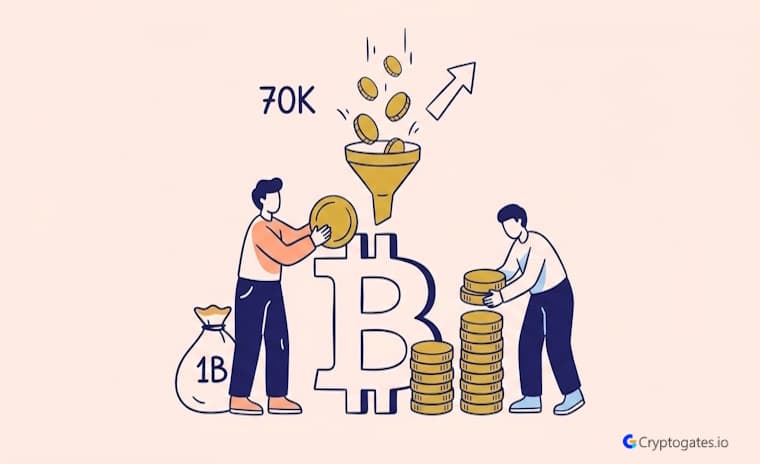
    Strategy purchased 13,927 BTC for roughly $1 billion last week, pushing total holdings to 780,897 BTC.

    This happened while most other corporate buyers had quietly stepped aside.

    EXECUTIVE SUMMARY
    • The Problem: Bitcoin is sitting near $70K under heavy macro pressure and extreme fear.
    • The Solution: Institutional buyers like Strategy are absorbing supply faster than miners can produce it.
    • The Incentive: $70K has held as a key floor for four straight days — and on-chain data points to a supply squeeze building.
    • The Risk: Strategy is carrying roughly $14.5 billion in unrealized losses, funded by a preferred stock program that needs Bitcoin to keep performing.

    What Strategy Just Did and What Saylor Is Signaling

    Look, most companies would stop buying an asset that’s dropped nearly 48% from its peak.

    Strategy did the opposite.

    The company bought 13,927 BTC between April 6 and April 12 at an average price of about $71,902 per coin.

    All of it was funded through sales of STRC, its preferred stock program. The total cost came to roughly $1 billion.

    That brings Strategy’s holdings to 780,897 BTC, acquired at an average cost basis of $75,577. At today’s price near $71,000, the company is sitting on roughly $14.5 billion in unrealized losses.

    Strategy purchased ~46,233 BTC in one month; miners produced around 16,200 BTC globally in the same period (CoinDesk)

    That’s nearly 3x what the entire mining network produced. One company.

    One month.

    Then on April 12, Saylor posted the “Think Bigger” chart — his BTC acquisition tracker — without any further context.

    Experienced traders didn’t need context.

    He has posted that chart 105 times since the accumulation began. Every single time, a new buy followed within days.

    The April 13 filing confirmed it.

    HISTORICAL DATA AUDIT

    Battle-Test Your Strategy
    Before the Market Does.

    Eliminate guesswork with institutional-grade backtesting for DCA, Grid, and Rebalance bots. Real historical data. Real-world results.

    EST. OPTIMIZATION +42% ROI Efficiency
    Start Backtest Now

    Sourced from 5+ Years of Exchange Data

    How Strategy Funds the Machine

    The buying engine runs on STRC, a preferred stock product that raised roughly $21 billion.

    As of April 12, Strategy still had over $21.6 billion remaining in STRC capacity, plus $27.1 billion available through its MSTR common stock program.

    Here’s the math.

    Saylor is using STRC dividends, which only require about a 2.05% annual Bitcoin return to be fully covered.

    That’s a very low bar.

    Does the strategy’s Bitcoin buying actually move the price?

    One company absorbing nearly 3x monthly mining output shrinks the liquid supply and can create upward pressure when retail demand returns.

    What This Means for Bitcoin at $70K

    Honestly, the macro picture right now is ugly.

    US-Iran talks collapsed. Oil spiked.

    Bitcoin fell 3.1% in a single session as the Fear & Greed Index dropped to 16.

    It has since recovered to hover just above $70,000.

    Saylor had said earlier that Bitcoin likely bottomed near $60K.

    If that holds, $70K starts to look like a staging zone rather than a danger zone.

    Fear & Greed Index at 12 — Extreme Fear — as of mid-April (CoinMarketCap)

    Here’s the thing: extreme fear zones have historically been where patient, process-driven buyers build positions.

    Not gamblers.

    Not trend-followers.

    Buyers with a plan.

    On-chain, whale addresses absorbed over 61,000 BTC in 30 days (Santiment).

    Exchange reserves are sitting at 6-year lows. Less supply on exchanges means less selling pressure when demand picks back up.

    The key number to watch is $75,000. A clean close above that level opens the next leg. Below it, Bitcoin likely stays range-bound while macro forces play out.

    Coin Bureau CEO Nic Puckrin laid out three conditions for Bitcoin to reach $90K: a stable ceasefire, oil back below $80, and easing stagflation concerns.

    (CoinMarketCap, April 2026)

    The risks are real and specific. Geopolitical escalation, persistent inflation, and oil staying elevated all work against Bitcoin’s short-term recovery. Don’t dismiss them.

    Before You Buy Bitcoin Near $70K, Check This:

    • Is the Fear & Greed Index below 20? (Extreme fear zone—historically a patient buyer’s window)
    • Is BTC holding above $70K for 4+ consecutive days?
    • Are ETF flows positive week-over-week?
    • Does your position size allow a 30–40% further drop without forcing a sale?

    Use the CryptoGates screener to stress-test your entry level against historical drawdown scenarios before sizing any position.

    SYSTEM ACCESS: CG4.2

    Stop Guessing.
    Stress Test Your Edge.

    The market doesn’t care about your backtest. Our engine simulates 1,000+ “what-if” scenarios to ensure your strategy is built for survival.

    Run Crypto Strategy Engine →
    ROBUSTNESS SCORE
    75+ STRUCTURAL EDGE
    RISK OF RUIN < 1%
    TARGET HIT 92%

    Bitcoin is holding near $70K.

    The biggest corporate accumulator in history is buying through losses that would stop most companies cold.

    Exchange supply is tightening. Extreme fear is historically a zone where the patient outperforms the reactive.

    Watch $75K—That’s the Number That Changes Everything

    Bitcoin is holding near $70K.

    The biggest corporate accumulator in history is buying through losses that would stop most companies cold.

    Exchange supply is tightening. Extreme fear is historically a zone where the patient outperforms the reactive.

    None of this means the bottom is confirmed.

    What it means is that the data deserves attention before any decision does.

    Run your entries through CryptoGates before risking real money. Verify the setup. Size appropriately. Process over FOMO.

  • Strategy’s Next Bitcoin Buy Comes With a $14.5B Warning

    Strategy’s Next Bitcoin Buy Comes With a $14.5B Warning

    Michael Saylor just posted “think bigger” on social media.

    If you’ve followed the strategy at all, you know what that usually means.

    Another Bitcoin buy is coming.

    Strategy currently holds 766,970 BTC, purchased at an average price of $75,644 per coin. CoinDesk

    The company bought nearly three times more Bitcoin in March than miners produced that same month.

    That’s not a small position.

    That’s a company consuming supply faster than the network can create it.

    EXECUTIVE SUMMARY
    • The Problem: Strategy holds 766,970 BTC at an average price of $75,644, sitting on roughly $14.5 billion in unrealized losses with no pause in sight.
    • The Solution: Its STRC preferred equity structure only needs a 2.05% annual Bitcoin return to cover dividends, keeping the model technically alive even at low growth.
    • The Incentive: Buying well above new miner supply means Strategy is betting hard on scarcity-driven price appreciation to validate the position over time.
    • The Risk: A prolonged Bitcoin stall or price drop stress tests the entire preferred equity structure, and that risk doesn’t disappear just because the threshold looks small.

    What the “Think Bigger” Signal Actually Means for Bitcoin

    Saylor has used this kind of language before major purchases.

    It’s a pattern.

    Retail traders who aren’t watching it are missing a real market signal.

    Look, the supply math here matters more than most people realize.

    When a single company absorbs close to three times the monthly miner output, that directly tightens available Bitcoin on the open market.

    Strategy bought nearly 3x more Bitcoin than miners produced in March. CoinDesk

    Honestly, that pace of accumulation is extraordinary.

    Most institutional buyers work quietly.

    Strategy does the opposite, and the market watches every move.

    Strategy’s buying pace is removing significant liquid supply from the market, which structurally supports price over the medium term.

    Wait — it’s worth being clear here.

    This doesn’t mean the price goes up automatically.

    Supply tightening creates conditions. It doesn’t guarantee outcomes.

    Why Does Strategy Keep Buying Bitcoin Even When It’s Losing Money?

    Strategy’s STRC structure only needs a 2.05% annual BTC return to cover dividends, so it’s built to bet on long-term scarcity rather than short-term prices.

    The $14.5 Billion Hole, Risk Traders Can’t Ignore

    HISTORICAL DATA AUDIT

    Battle-Test Your Strategy
    Before the Market Does.

    Eliminate guesswork with institutional-grade backtesting for DCA, Grid, and Rebalance bots. Real historical data. Real-world results.

    EST. OPTIMIZATION +42% ROI Efficiency
    Start Backtest Now

    Sourced from 5+ Years of Exchange Data

    Here’s the thing.

    Unrealized losses at this scale aren’t just a number on a screen.

    They represent real structural pressure if Bitcoin doesn’t cooperate.

    The company funds its accumulation through STRC, a preferred equity product.

    The math sounds almost too clean: just a 2.05% annual Bitcoin return covers the dividend obligation.

    That’s roughly one decent price move in a normal market cycle.
    But that’s exactly what makes it fragile.

    A market that stops moving, or worse, moves the wrong way for an extended stretch, puts that 2.05% threshold under real pressure.

    Expert Tip:

    Preferred equity structures tied to volatile assets like Bitcoin carry compounding risk when prices flatline. The low threshold is a feature in bull markets and a liability in extended sideways or bear conditions.

    What to Watch Before Trading Around Strategy’s Moves

    • Is Bitcoin currently trading above or below $75,644, Strategy’s average buy price?
    • Has Saylor posted a “think bigger” or similar signal on social media recently?
    • Is Bitcoin miner supply expanding or tightening this month?
    • Is the broader market in risk-on or risk-off mode right now?

    Before reacting to Strategy’s next move, it’s worth stress-testing your own BTC exposure first.

    CryptoGates lets you model different price scenarios, so you know exactly what your position looks like before you risk real money… not after.

    Strategy’s Position at a Glance

    Swipe to view full data →
    MetricCurrent NumberWhat It Means
    Total BTC Held9766,970Largest corporate BTC holder globally
    Average Buy Price$75,644Unrealized loss if BTC trades below this
    Unrealized Loss~$14.5 billionPaper loss, not realized unless sold
    STRC Dividend Threshold2.05% annual BTC returnMinimum growth needed to cover dividends
    March Buy vs. Mined~3x miner outputShows the accumulation pace vs. the new supply
    Does Strategy’s buying directly push Bitcoin’s price up?

    It reduces available supply significantly, which can create upward pressure, but it doesn’t guarantee price moves.

    What Traders Should Watch Next

    Strategy is signaling another buy while sitting on billions in unrealized losses, but its structure only needs minimal BTC growth to stay functional.

    Watch Bitcoin’s price relative to the $75,644 average, watch Saylor’s social signals, and watch miner output trends.

    Don’t trade the headline. Use CryptoGates to map your risk before the next move hits.

    SYSTEM ACCESS: CG4.2

    Stop Guessing.
    Stress Test Your Edge.

    The market doesn’t care about your backtest. Our engine simulates 1,000+ “what-if” scenarios to ensure your strategy is built for survival.

    Run Crypto Strategy Engine →
    ROBUSTNESS SCORE
    75+ STRUCTURAL EDGE
    RISK OF RUIN < 1%
    TARGET HIT 92%

    FAQs

    What is Strategy’s average Bitcoin buy price?

    Strategy holds 766,970 BTC at an average purchase price of $75,644 per coin. Depending on where Bitcoin trades today, the company is carrying significant unrealized losses on its books.

    STRC is Strategy’s preferred equity instrument used to fund ongoing Bitcoin purchases, requiring only about a 2.05% annual BTC return to cover its dividend obligations. If Bitcoin stagnates or drops for an extended period, this structure faces serious financial stress.

  • The Complete Crypto Roadmap for Beginners: From Zero Knowledge to Your First Investment

    The Complete Crypto Roadmap for Beginners: From Zero Knowledge to Your First Investment

    70-90% of retail traders lose money in crypto. Not because crypto is hard. Because they had no roadmap.

    This guide is that roadmap, zero experience needed. No jargon. No hype. Just a clear path from knowing nothing to making your first smart investment.

    Can you start with zero knowledge?

    Yes, completely.

    Is crypto a good investment?

    Honestly, that depends entirely on how you approach it.

    At CryptoGates, we run on one belief: Verify first. Risk later. Scale slowly. Everything in this guide follows that principle.

    Let’s start building.

    EXECUTIVE SUMMARY
    • The Problem: 70-90% of retail traders lose money in crypto because they start without a plan, get caught up in hype, and skip the basics entirely.
    • The Solution: A structured, step-by-step crypto roadmap that takes a complete beginner from zero knowledge to a verified, strategy-backed first investmen
    • The Incentive: CryptoGate’s tools, such as the Backtesting Lab and Spot DCA Bots, let beginners test and execute strategies for free, with no capital required to get started.
    • The Risk: Crypto markets are volatile and unforgiving. Without understanding scams, security, and risk management first, even a good strategy can fail fast.

    What Is Cryptocurrency?

    Digital money that no bank or government controls.

    Over 10,000 versions exist today, but most aren’t worth your attention. This section covers what actually matters before you touch anything.

    The Simple Definition Everyone Understands

    Crypto is digital money stored on a network of thousands of computers worldwide.

    No central authority. No middleman. You own it; you control it.

    Bitcoin was first. 2009. One unknown person or group changed finance forever.

    How Does Cryptocurrency Actually Work?

    Every transaction gets recorded on a blockchain, basically a shared ledger copied across millions of computers globally.

    Change one entry, and you’d need to change every copy simultaneously. That’s why it can’t be faked.

    No bank needed. The network itself is the record keeper.

    Is Cryptocurrency Legal?

    Depends on your country. The US, UK, UAE, EU, and most of Southeast Asia are all legal. China banned it. Some countries are still deciding.

    Before buying anything, search “crypto legal status in [your country].” “Two minutes now saves real trouble later.

    Is Cryptocurrency Money?

    Partly. Real money stores value, enables payments, and acts as a unit of account.

    Crypto can do all three, but inconsistently.

    Bitcoin stores value well. Paying for groceries with it? Still limited.

    Stablecoins like USDC behave more like actual money, pegged one-to-one with the dollar.

    Some crypto is an investment. Some are currency. Knowing which is which before buying matters more than people realize.

    What is cryptocurrency in simple terms?

    Digital money running on a decentralized network, with real value and zero central control.

    Types of Cryptocurrency (And Which One to Buy First)

    Over 10,000 cryptocurrencies exist.

    Most of it is noise.

    Four types actually matter for a beginner, and knowing them saves you from expensive mistakes early.

    How Many Types of Cryptocurrencies Are There?

    Technically over 10,000. Realistically, maybe 50 deserve your attention.

    The rest are either dead, dying, or designed to take your money.

    Start narrow. Go wide only after you understand the basics.

    4 Main Types Explained

    Swipe to view full data →
    TypeDetailed Description
    Bitcoin (BTC)Bitcoin (BTC) is the original. Created in 2009, it has the largest market cap, the most recognition, and the longest track record. People treat it like digital gold. It doesn’t do much beyond store value, but for a beginner, that simplicity is actually a feature. Fewer moving parts mean fewer ways to get surprised.
    Ethereum (ETH)Ethereum (ETH) is different. It’s a programmable blockchain, meaning developers can build apps, financial tools, and contracts directly on top of it. When people talk about DeFi or NFTs, they’re almost always talking about something built on Ethereum. More complex than Bitcoin, but also far more versatile.
    StablecoinsStablecoins are the ones pegged to a real currency, usually the US dollar. USDT, USDC, DAI. One coin equals one dollar, more or less. They don’t make you money sitting still, but they’re incredibly useful for moving funds, sitting out volatility, or earning yield in certain platforms without exposing yourself to price swings.
    Altcoins“Altcoins” is the catch-all term for everything else. Solana, Cardano, Avalanche, BNB, and thousands more. Some are legitimate projects solving real problems. Many are not. This is where beginners get burned fastest because the gains look enormous and the risks get buried in the excitement.

    Largest Cryptocurrencies

    Bitcoin leads. Ethereum follows. BNB, Solana, and a rotating cast compete for third place onwards.

    What kept them at the top?

    Real usage. Developer activity. Institutional backing. Not hype.

    What Is a Stablecoin?

    One coin, one dollar. Always. USDC and USDT are the two biggest.

    They let you stay inside crypto without riding the volatility. When markets drop, smart investors move to stablecoins and wait. No bank transfer delays, no friction.

    Boring? Yes. Useful? Extremely.

    Can a Crypto Exchange Be Centralized?

    Yes, and the most popular ones are. Binance, OKX, Bybit, and KuCoin are all centralized. They hold your funds, handle security, and offer support. Great for beginners.

    Decentralized exchanges (DEXs) give you full control but zero support if something goes wrong. Start centralized. Move to DEX only when you genuinely understand what you’re doing.

    Top Beginner Coins at a Glance

    Swipe to view full data →
    CoinRiskBest For
    Bitcoin (BTC)Low-MediumFirst purchase, long-term hold
    Ethereum (ETH) MediumTech exposure, DCA strategy
    USDC / USDTVery LowParking funds, reducing exposure
    BNBMediumLower fees on the Binance ecosystem
    Solana (SOL)Medium-HighGrowth plays with real usage

    How Does Cryptocurrency Price Work?

    Supply, demand, speculation, and sentiment all collide in real time.

    No earnings reports. No quarterly guidance. Just the market deciding what something is worth, every second of every day.

    Supply, Demand, and Market Cap Explained

    More buyers than sellers, the price goes up. More sellers than buyers means price drops. Simple in theory, brutal in practice because crypto moves faster than almost any other market.

    Market cap = price multiplied by circulating supply. A coin at $0.001 with 100 billion coins is not cheap. It’s a $100 million market-cap asset. Never judge a coin by price per coin alone.

    Where Do Cryptocurrencies Get Their Value?

    Three sources. Utility, meaning people need the coin to use the network.

    Scarcity: Bitcoin’s 21 million hard cap is coded and unchangeable. And speculation, which is where things get dangerous.

    Coins with only speculation behind them collapse when attention moves on. Always ask, “Why does this coin need to exist?”

    Cryptocurrency vs Traditional Currency

    The dollar is stable, universally accepted, and legally protected.

    Crypto offers borderless transfers in minutes, no account freezes if you self-custody, and a hedge against currency devaluation in unstable economies.

    The tradeoff is real, though. The dollar doesn’t drop 40% in a month. Crypto sometimes does.

    Why Is Cryptocurrency the Future of Finance?

    Central banks are building digital currencies. Major banks now offer crypto custody.

    Governments are writing regulations instead of banning it. Payment giants are integrating crypto rails quietly.

    The infrastructure is being built regardless of opinion. The real question isn’t if crypto matters in finance’s future. It’s about which parts survive long-term.

    Before You Buy Anything — Get This Right

    Most beginners skip this section and go straight to buying.

    That’s exactly how wallets get drained, and funds disappear. Five minutes here saves serious money later.

    How to Choose a Crypto Exchange

    Look for three things: regulation, reputation, and supported currencies in your country.

    Binance, OKX, Bybit, and KuCoin all tick these boxes for most regions.

    Avoid any exchange you find through a random Telegram group or Instagram ad.

    If you can’t verify it independently, don’t touch it.

    SELECTION MATRIX V2.0

    Not sure which
    exchange fits you?

    Bypass the marketing hype. Our matrix cross-references your profile against 50+ institutional metrics—including Proof-of-Reserves and Slippage Models.

    PoR Verified Low Slippage API Ready
    B
    K
    C
    O
    Find My Gateway Analysis Time: < 60s

    How to Store Cryptocurrency Safely

    Two options. An exchange wallet, meaning the platform holds your crypto.

    Or a personal wallet, meaning you hold it yourself.

    Beginners can start with exchange wallets. But here’s the thing: if the exchange collapses or gets hacked, your funds are at risk.

    In the long term, move significant holdings to a personal hardware wallet like Ledger or Trezor. Not your keys, not your coins.

    That’s not a slogan. It’s a hard lesson thousands learned the expensive way.

    Private Keys and Seed Phrases

    Your private key is the password to your wallet. Your seed phrase, usually 12 or 24 random words, is the master backup that recovers everything. Never share either. Never store them digitally. Write them on paper and store them in two separate physical locations. Anyone who has your seed phrase owns your crypto. Full stop.

    How Does a Crypto Transaction Work?

    You send crypto from your wallet address to another. The network verifies it, confirms it, and records it permanently on the blockchain. Usually takes seconds to minutes, depending on network traffic.

    Each transaction carries a small fee. On Ethereum, these are called gas fees, and they fluctuate with demand. On Bitcoin, fees vary by network congestion.

    How Are Crypto Transactions Taxed?

    In most countries, crypto is taxed as a capital asset.

    You buy, you sell at a profit, and you owe tax on the gain. Some countries tax stakeholder rewards as income.

    Others have zero crypto tax entirely.

    Check your local rules before your first trade, not after. A quick search for “crypto tax [your country]” is enough to start.

    Wallet Setup Checklist

    • Choose a regulated exchange
    • Complete KYC verification
    • Enable two-factor authentication (2FA)
    • Write down the seed phrase on paper
    • Store seed phrase offline, never in phone or email
    • Test a small transaction before moving large amounts
    • Consider a hardware wallet for holdings above $500

    How to Buy Cryptocurrency Step-by-Step

    Buying crypto takes less than 15 minutes once your account is set up.

    The setup itself is where most people slow down, and that’s actually a good thing. Rushing this part creates mistakes.

    How to Buy Bitcoin and Other Cryptocurrencies

    Create an account on a regulated exchange. Complete identity verification.

    Deposit funds. Search for the coin you want. Enter the amount. Confirm the purchase.

    That’s it. Seriously. The mechanics are simpler than most people expect.

    The hard part is deciding what to buy and how much, not the actual buying process.

    3 Ways to Buy

    • Bank transfer is the slowest but cheapest in terms of fees. Best for larger amounts. Usually takes 1-3 business days to clear.
    • A debit or credit card is instant but carries higher fees, typically 1.5-3%. Good for small first purchases when you want speed.
    • P2P (peer to peer) means buying directly from another person on the platform. More flexibility, more payment options, but it requires more caution. Stick to verified traders with strong ratings.

    KYC Process

    KYC means Know Your Customer. Every regulated exchange requires it.

    You’ll submit a government ID, sometimes a selfie, sometimes proof of address.

    Takes 5-30 minutes usually. Some exchanges verify instantly.

    Others take a day.

    Don’t skip this or try to avoid it. Exchanges without KYC are a red flag, not a feature.

    How do you buy cryptocurrencies?

    Create an account on a regulated exchange, complete KYC, deposit funds, and place a spot buy order. Start small. Verify everything before scaling.

    Types of Cryptocurrency Investments

    1. Spot

    Spot buying means you own the actual coin. Simplest, safest for beginners.

    2. DCA

    DCA (Dollar Cost Averaging) means buying fixed amounts at regular intervals regardless of price. Removes emotion, reduces timing risk. This is what most long-term crypto investors actually do.

    3. Trading

    Trading means actively buying and selling for short-term gains. High skill requirement. Most beginners who try this lose money.

    4. Staking

    “Staking” and “yield” mean earning rewards by locking your crypto in certain protocols. Passive income carries its own risks.

    Start with spot buying and DCA. Everything else comes after you understand the basics.

    What to Do Before You Make an Investment

    Wait. Genuinely, just pause for a moment before confirming any purchase.

    Ask yourself:

    Do I understand what this coin does?

    Have I checked its track record?

    Am I buying because of data or because someone online got excited about it?

    At CryptoGates, the Strategy Picker helps beginners match their risk tolerance and goals to the right approach before spending a single dollar.

    No guesswork. No hype. Just a starting point built on logic.

    CG STRATEGY ANALYZER

    Confused about
    market outlook?

    Trading without a plan is just gambling. Our strategy architect analyzes your risk tolerance and capital to match you with a proven algorithmic framework.

    PASSIVE DCA Bot
    AGGRESSIVE Grid Pro
    BALANCED Rebalance

    What Can You Do With Cryptocurrency?

    More than most beginners realize. But also less than crypto enthusiasts will tell you. Here’s the honest picture.

    What Can You Buy With Crypto?

    Quite a lot, actually. Microsoft, Overstock, Shopify, and thousands of online stores accept crypto directly.

    Luxury goods, travel bookings, and even real estate in certain markets.

    Day-to-day groceries at your local shop?

    Still limited. Adoption is growing but uneven, depending on your country.

    What Is Cryptocurrency Used For?

    Four main uses right now.

    Storing value like digital gold.

    Sending money across borders cheaply and fast.

    Accessing decentralized financial services without a bank.

    Speculation, which is what most retail buyers are actually doing, whether they admit it or not.

    Using Crypto for Payments

    Send money anywhere in the world in minutes.

    No bank approval. No $30 wire fee. No waiting three business days.

    For freelancers working internationally or families sending remittances home, this alone makes crypto genuinely useful.

    Stablecoins like USDC make this even smoother since the value doesn’t swing mid-transfer.

    What Do Crypto and Blockchain Mean for Business?

    Blockchain lets businesses record transactions, contracts, and supply chain data in a way nobody can alter.

    No middlemen. Lower costs. Full transparency.

    Companies like Walmart and Maersk already use blockchain for supply chain tracking.

    This isn’t future talk. It’s happening now.

    Benefits of Accepting Cryptocurrency

    Lower transaction fees than credit cards.

    Access to global customers without currency conversion headaches. Faster settlement.

    And for some businesses, a signal that they’re forward-thinking enough to attract a certain kind of customer.

    Disadvantages of Accepting Cryptocurrency

    Price volatility is the big one.

    Accept Bitcoin today; its value drops 20% by the time you convert. Tax reporting gets complicated fast.

    And customer support for failed crypto transactions is significantly harder than a simple card chargeback.

    Stablecoins solve the volatility problem partially. But the accounting complexity remains.

    Common Cryptocurrency Terms Every Beginner Must Know

    Crypto has its own language. Walk into a conversation without knowing these, and you’ll either get confused or, worse, get taken advantage of.

    Swipe to view full data →
    TermDetailed Description
    HODLHODL means hold your crypto through volatility instead of panic selling. Started as a typo. Became a philosophy.
    DCADCA (Dollar Cost Average) means investing a fixed amount regularly regardless of price. Removes emotion. Reduces the risk of buying at the worst possible moment.
    FOMO FOMO (Fear Of Missing Out) is what makes people buy at the top of a rally. Responsible for more losses than any market crash.
    ATHAn ATH (all-time high) is the highest price a coin has ever reached. When crypto Twitter starts screaming ATH, that’s usually when caution matters most.
    Gas FeesGas Fees are transaction costs on the Ethereum network. They spike during high-demand periods. Always check the gas before transacting on Ethereum.
    Market CapMarket Cap is price multiplied by circulating supply. The real measure of a coin’s size, not its price.
    A Wallet AddressA Wallet Address is your public receiving address. Like an email address for crypto. Safe to share. Your private key is not.

    Scam Terms: Red Flags to Run From

    • Rug Pull is when developers abandon a project and take all investor funds. Common with new altcoins and DeFi projects.
    • Pump and Dump is coordinated buying to inflate a coin’s price, then mass selling once enough victims buy in. Usually promoted heavily in Telegram groups.
    • Phishing means fake websites or messages designed to steal your login or seed phrase. Always check the URL twice before entering anything.
    • Guaranteed Returns means someone is lying to you. No legitimate investment guarantees returns. Crypto especially.

    If someone promises daily profits, asks for your seed phrase, or pressures you to act fast, walk away. Every time.

    Where Does Crypto Come From?

    New coins don’t appear from nowhere. There’s a process behind it, and understanding it helps you evaluate which coins are actually worth something.

    What Is Cryptocurrency Mining?

    Mining is how new Bitcoin gets created. Powerful computers solve complex mathematical puzzles to verify transactions.

    The winner adds a new block to the blockchain and earns freshly minted Bitcoin as a reward.

    It’s expensive. Energy-intensive. Mining Bitcoin profitably at home is nearly impossible without industrial-scale equipment. This isn’t a beginner activity.

    Mining vs Staking

    01

    Mining requires hardware and electricity. Staking requires holding coins in a network to help validate transactions and earn rewards for doing so.

    02

    Ethereum switched from mining to staking in 2022. Most newer blockchains use staking. It’s more energy efficient and accessible to regular investors. Some exchanges offer staking directly, no technical setup needed.

    Returns vary wildly. Anywhere from 3% to 20% annually, depending on the coin. Higher returns almost always mean higher risk.

    Features of the Bitcoin System

    Hard cap of 21 million coins, ever.

    Decentralized, no single point of control. Transparent, every transaction publicly visible.

    Censorship-resistant, nobody can block your transaction. And halving every four years, which cuts the mining reward in half and historically precedes major price movements.

    What Is Central Bank Digital Currency (CBDC)?

    A CBDC is digital money issued by a government. It has the same value as physical currency but exists only digitally.

    China’s digital yuan is the most advanced example. The EU, UK, and US are all in various stages of development.

    Key difference from crypto: CBDCs are fully centralized.

    The government controls them completely.

    No anonymity. No decentralization. Essentially a digital version of the existing system, not an alternative to it.

    Public Policy Implications of Crypto

    Governments are catching up fast.

    Most major economies will have some form of crypto regulation covering taxation, exchange licensing, and consumer protection.

    The tension is real.

    Crypto was built to operate outside government control. Regulation pulls it back toward the existing system.

    How that balance settles over the next decade will shape which coins and platforms survive long-term.

    For beginners, the practical implication is simple. Use regulated exchanges. Report your gains. Stay on the right side of your local rules.

    Is Cryptocurrency Safe?

    Crypto itself is secure.

    The blockchain technology behind it is nearly impossible to break. What isn’t secure is human behavior, and that’s exactly what scammers exploit.

    LIVE DATA FEED // UNFILTERED

    The Truth in Numbers.

    Designed for the 10% who require absolute clarity. We strip away the hype to reveal the structural reality of the crypto markets.

    11.6M TOKENS DEFUNCT (2025)
    “The Illusion of the Infinite Pump.” Most assets are designed to fail. We track the ones that don’t.
    Shocking Crypto Statistics

    Cryptocurrency Fraud and Scams to Avoid

    Billions are lost every year. Not because crypto is broken. Because people trust the wrong sources, skip verification, and move too fast.

    The scam isn’t usually technical. It’s psychological.

    Scammers Are Active — Here’s How They Target Beginners

    They find you where you already are.

    Telegram groups, Instagram DMs, YouTube comments, even WhatsApp forwards.

    The approach is always similar.

    They build trust first. Friendly conversation, shared interest in crypto, maybe a small “proof” of profits. Then comes the ask. Invest here. Use this platform. Send funds to this wallet.

    By the time you realize something is wrong, the money is gone, and the account is deleted.

    Top Scams

    Swipe to view full data →
    TermDetailed Description
    AI DeepfakesAI Deepfakes are the newest threat. Fake videos of Elon Musk, Vitalik Buterin, or popular influencers promoting investment platforms. Looks completely real. Isn’t. If a celebrity is promoting a crypto platform in a video you found online, verify independently before clicking anything.
    Fake AppsFake Apps appear in official app stores with near-identical names to real exchanges. They steal your login the moment you enter it. Always download Exchange apps from the official website link, not by searching the app store.
    Rug Pulls Rug Pulls happen when a new token launches with heavy promotion, attracts investors, and then developers vanish with all funds. The token collapses to zero overnight. If a new coin promises extraordinary returns and was launched last week, that’s your signal to walk away.
    Romance ScamsRomance Scams are longer plays. Someone builds a genuine-seeming relationship over weeks, then introduces a “great crypto opportunity.” These cause some of the largest individual losses because trust has already been established.

    4 Golden Rules to Stay Safe

    • One. Never share your seed phrase with anyone, ever, for any reason. No legitimate platform will ask for it.
    • Two. Verify every URL manually before logging in. Bookmark your exchange. Don’t click links from messages.
    • Three. If returns sound too good to be true, they are. Always. No exception.
    • Four. Use two-factor authentication on every crypto account. Not SMS-based if possible. Use an authenticator app.
    Is cryptocurrency safe for beginners?

    The blockchain is safe. The ecosystem around it requires caution. If you follow the four rules above, you eliminate the majority of risk beginners actually face.

    Is Cryptocurrency a Good Investment?

    Depends entirely on your approach.

    For disciplined, patient investors who understand what they’re buying, crypto has generated life-changing returns.

    For emotional hype-driven buyers, it’s been an expensive education.

    Why Invest in Cryptocurrency?

    Bitcoin returned over 150% in 2023 alone. Ethereum has grown more than 10x over five-year periods. No traditional asset class comes close to those numbers at the top end.

    Beyond returns, crypto offers genuine portfolio diversification, 24/7 liquidity, and access to a financial system that doesn’t depend on any single government or bank

    Risks of Cryptocurrency

    Volatility is the obvious one. Bitcoin has dropped 80% from its peak. Twice. Recovering requires a 400% gain just to break even.

    Regulatory risk is real. A government decision can move markets 20% in hours. Security risk exists if you mismanage your wallets or use unregulated platforms.

    And liquidity risk means smaller coins can become nearly impossible to sell during a crash.

    Crypto Investment Risk Table

    Swipe to view full data →
    RiskImpactProtection
    Price VolatilityHighDCA strategy, long time horizon
    Exchange HackHighHardware wallet, regulated platforms
    Scams & FraudVery HighVerify everything; never share keys
    Regulatory ChangesMediumStay on regulated exchanges
    Emotional TradingVery HighPredefined strategy, no impulse buys
    Project FailureHighStick to the top coins and research before buying
    Liquidity RiskMediumAvoid low-volume altcoins

    Common Risks and Drawbacks

    Emotional decision-making causes more losses than market crashes.

    Buying high because of FOMO. Selling low because of panic.

    Repeating both.

    This cycle destroys more portfolios than bad coins do.

    Tax complexity catches people off guard. Every trade is often a taxable event in many countries. Keeping records matters from day one, not after you’ve made fifty trades.

    Know the Risks Before You Invest

    Honestly, most people skip this part.

    They see green candles, feel urgency, and buy. Then red candles arrive, and the plan falls apart because there never was one.

    Before any investment, define three things. How much can you afford to lose completely?

    What’s your time horizon?

    And what will you do when the price drops 40%?

    Because at some point it will?

    CryptoGates Backtesting Lab lets you test any strategy against real historical data before risking actual money. See how your plan would have performed through crashes, recoveries, and everything in between. Free to use. No capital needed to start.

    Four Tips to Invest in Cryptocurrency Safely

    Strategy separates investors from gamblers.

    Most beginners skip straight to buying. The ones who build a plan first are the ones still in the market three years later.

    Tip 1 — Only Risk What You Can Lose

    Not as a disclaimer. As an actual rule.

    If losing this money would affect your rent, your food, or your sleep, it’s too much.

    Crypto can drop 50-80% and stay there for months. The investors who survive aren’t the ones who got lucky. They’re the ones who sized their position so a crash didn’t break them.

    Start with an amount that, if it went to zero tomorrow, you’d be uncomfortable but okay with. That’s your number.

    Tip 2 — Start With DCA Strategy

    DCA means Dollar Cost Averaging.

    Invest a fixed amount at regular intervals regardless of price. Every week or every month, the same amount, no matter what the market is doing.

    Why does it work?

    Because nobody times the market consistently. Not professionals. Not algorithms. Nobody. DCA removes the pressure of picking the perfect entry and smooths out your average cost over time.

    A beginner putting $50 into Bitcoin every week beats the person waiting for the “right moment” almost every time over a two- to three-year horizon.

    Tip 3 — Backtest Before You Risk Real Money

    Here’s what most people never do.

    They build a strategy in their head, skip straight to live trading, and learn the hard way that it doesn’t work.

    Backtesting means testing your strategy against real historical data before touching actual money.

    You see exactly how it would have performed through bull runs, crashes, sideways markets, everything.

    How CryptoGates Free Backtest Works

    CryptoGates Backtesting Lab lets you input your strategy, select your coin and timeframe, and run it against real historical price data.

    You see returns, drawdowns, and risk metrics before committing a single dollar.

    No signup required. No capital needed. Just honest data showing whether your plan actually works.

    Try Free, No Signup, No Capital at CryptoGates.io

    HISTORICAL DATA AUDIT

    Battle-Test Your Strategy
    Before the Market Does.

    Eliminate guesswork with institutional-grade backtesting for DCA, Grid, and Rebalance bots. Real historical data. Real-world results.

    EST. OPTIMIZATION +42% ROI Efficiency
    Start Backtest Now

    Sourced from 5+ Years of Exchange Data

    Tip 4 — Which Crypto Is Best to Invest In?

    For beginners, Bitcoin first. Always.

    It has the longest track record, deepest liquidity, and clearest use case.

    If you can’t explain why you’re buying something else before Bitcoin, you’re not ready for something else.

    Ethereum second, once you understand what you own. After that, only expand if you’ve done genuine research, not because someone in a group chat said so.

    How Does Crypto Make You Money?

    Three honest ways.

    Price appreciation: You buy at a lower price and sell at a higher price. Staking rewards, you earn yield by holding certain coins in the network. And with DCA compounding, consistent buying builds a larger position over time that benefits from long-term growth.

    The fourth way people mention is trading.

    Buy low, sell high, repeat. Sounds simple.

    In practice, over 80% of active traders underperform simply holding Bitcoin. Worth knowing before you try.

    What Is the Future of Cryptocurrency?

    The speculative phase of crypto is maturing.

    What comes next looks less like the Wild West and more like a regulated, institutionally integrated financial layer sitting alongside traditional finance.

    CBDC vs Decentralized Crypto

    01

    CBDC

    Governments want a digital currency they control completely. CBDCs give them that. Full transaction visibility, programmable spending rules, and instant policy implementation.

    02

    Decentralized

    Decentralized crypto offers the opposite. No control, no surveillance, no permission needed. These two visions are fundamentally incompatible, and the tension between them will define crypto regulation for the next decade.

    Bitcoin sits cleanly on the decentralized side. Its fixed supply and censorship resistance make it the natural hedge against CBDC-style control.

    Crypto Adoption

    Over 500 million people globally now hold some form of cryptocurrency.

    Major payment processors handle crypto transactions. Several countries accept Bitcoin for tax payments.

    ETFs tracking Bitcoin and Ethereum trade on traditional stock exchanges.

    This isn’t fringe anymore. Institutional money entered. Infrastructure was built. The question now isn’t whether crypto survives.

    It’s about which projects thrive in a more regulated, competitive environment.

    Investing in Crypto Long-Term

    The investors who built real wealth in crypto weren’t the ones chasing every new token.

    They picked two or three solid assets, applied a consistent strategy, and held through volatility without panicking.

    Long-term means at least three to five years minimum.

    It means not checking the price daily. It means having a plan written down before markets move, not after.

    Verify first. Risk later. Scale slowly. That approach isn’t exciting. It’s just what actually works

    Getting Started With Cryptocurrency — Your 4-Week Checklist

    Reading about crypto is one thing. Actually doing it, step by step, is where most beginners stall.

    This four-week plan removes the guesswork completely.

    Week 1: Foundation

    Task

    • Read what crypto is and how blockchain works
    • Understand the 4 main types: BTC, ETH, stablecoins, and altcoins.
    • Learn what market cap actually means
    • Check Liquidation clusters for target asset
    • Learn 10 essential crypto terms from Section 7

    No buying yet. No accounts. Just understanding what you’re getting into.

    Week 2: Setup and Security

    Task

    • Choose a regulated exchange from CryptoGate’s Exchange Picker
    • Create an account and complete KYC verification
    • Enable two-factor authentication immediately
    • Set up a personal wallet
    • Write the seed phrase on paper and store it offline

    Security before everything. A mistake here costs real money.

    Week 3: Strategy and Backtest

    Task

    • Decide on your monthly investment amount
    • Choose your starting coin, Bitcoin first for most
    • Set your DCA schedule, weekly or monthly
    • Run your strategy through CryptoGate’s Backtesting Lab
    • Use Strategy Picker to confirm your approach fits your risk level

    Test before you risk it. Every time.

    Week 4: First Investment

    Task

    • Deposit your first amount into your exchange
    • Place your first spot buy order
    • Set your DCA schedule as recurring if the exchange allows
    • Record your purchase price and date
    • Set a price alert, not to react, just to stay informed

    That last one matters more than people realize. Checking the price every hour is not a strategy. It’s anxiety.

    You Now Have What Most Crypto Beginners Never Get

    A roadmap. A real one.

    From understanding what crypto actually is to setting up safely, building a strategy, and making your first investment with logic behind it instead of hope.

    Most people enter crypto through hype and exit through losses. You don’t have to follow that pattern.

    At CryptoGates, we built every tool around one belief:

    Verify first. Risk later. Scale slowly.

    The Strategy Engine, Backtesting Lab, and Strategy Picker exist so beginners can test, plan, and invest with data behind every decision.

    No guesswork. No gambling. Just a plan that actually holds up.

    Start Free — Strategy Engine, No Capital Needed at CryptoGates.io

    FAQs
    What is cryptocurrency in simple words?

    Digital money that runs on a decentralized network. No bank controls it. No government prints it. You own it directly and can send it anywhere in the world in minutes.

    An amount you can afford to lose completely without it affecting your life. For most beginners, somewhere between $50 and $200 is enough to learn the process without painful consequences if something goes wrong. Start smaller than you think you need to.

    As soon as your strategy is tested and your security setup is complete. Not before. DCA works best when you commit to it consistently over months and years, not when you start and stop based on how the market feels that week.

  • 12 Proven Crypto Trading Strategies 2026: Build & Backtest

    12 Proven Crypto Trading Strategies 2026: Build & Backtest

    Here’s the thing.

    You found a strategy somewhere, a YouTube video, a Telegram group, or maybe a friend who swore it was printing money.

    You put real money in. Then the market moved wrong, and it started bleeding. So you stopped, blamed crypto, and moved on.

    But the strategy probably wasn’t wrong. The process was.

    Stat: Between 70% and 90% of retail traders lose money over any meaningful time period. [Source: ESMA]

    This blog covers 12 proven crypto trading strategies, what each one is, when it works, and when it doesn’t.

    More importantly, it shows you exactly how to test any of them before a single real dollar is at risk.

    EXECUTIVE SUMMARY
    • The Problem: Most traders pick crypto strategies based on hype, gut feeling, or a random YouTube video, then lose money, wondering what went wrong.
    • The Solution: 12 proven strategies exist for every market condition and risk level, from DCA and grid trading to momentum and algo-based, each with a clear use case.
    • The Incentive: Backtesting any strategy against 5+ years of real historical data through CryptoGates.io’s Backtesting Lab tells you what works before a single dollar is at risk.
    • The Risk: Choosing a strategy that doesn’t match your risk tolerance, capital size, or market conditions is the single fastest way to wipe out an account that didn’t need to be wiped out.

    Why Most Traders Pick the Wrong Crypto Trading Strategies

    Honestly, most traders don’t pick a strategy.

    They inherit one. Someone in Discord says Grid Trading is printing money.

    A YouTube channel drops “The Only Strategy You’ll Ever Need.” A friend made 40% last month swing-trading altcoins. So you copy it. It feels logical.

    They’re winning, right?

    The problem is that markets change. What crushed it last month in a sideways market can destroy capital in a trending one.

    Grid trading in a strong downtrend doesn’t just underperform; it bleeds systematically. But the person who shared it wasn’t lying.

    It worked for them. In a different market. With a different capital size. With risk rules you never knew about.

    The Real Reason Strategy Selection Goes Wrong

    The emotional pattern is almost always the same.

    Excitement when you hear about it.

    Confidence when you put money in. Confusion when it starts losing.

    Then frustration, then blame at crypto, at the market, at whoever recommended it. Seldom in the process. Because there was no process.

    “The biggest enemy of a good investor is the inability to sit still. Acting without a tested plan in financial markets is just expensive noise.”

    Daniel Kahneman, Behavioral Economist, Nobel Prize winner

    The One Step Almost Nobody Takes Before Risking Real Money

    So what separates traders who stay in the game from those who blow up and leave?

    Most of them test before they trade. Not a fake demo for two weeks. Real historical data. Across real market cycles.

    Including crashes and extended bear phases…

    They want to know how a strategy performs when things go wrong, not just when conditions are perfect.

    That idea has a name. Backtesting. And most retail traders skip it entirely.

    Stat: Fewer than 15% of retail traders have ever backtested a strategy before going live with real capital. Over 8 in 10 are trading blind. [Source: Retail trading behavior survey]

    What is the best crypto trading strategy for beginners?

    DCA (Dollar Cost Averaging) is widely considered the most beginner-friendly option. It removes timing pressure, reduces emotional decisions, and has a strong track record across multiple market cycles.

    The 12 Strategies: What They Are and When They Work

    These are the 12 most effective strategies widely used to drive results. Let’s break them down one by one to see how they work.

    1. Dollar Cost Averaging (DCA)

    Here, you invest in a fixed amount of cryptocurrency at fixed intervals, regardless of the market price. There is no need to worry about market fluctuations. This method of investing in cryptocurrencies is best suited to accumulation phases, when you are sure of the cryptocurrency you are investing in.

    This method is probably the best for beginners and is also the most misunderstood. People think that simple strategies are also weak strategies. This is not the case. Simple strategies are those that work best in all market conditions.

    2. Grid Trading

    In this type of trading, you will need to invest in a cryptocurrency. A bot will be used to invest in the cryptocurrency. This bot will be programmed to sell the cryptocurrency every time the price rises. When the price falls, it will be used to buy the cryptocurrency.

    This type of trading is best suited to ranging or sideways markets. For instance, in the Bitcoin market, the price ranges between 25,000 and 30,000. In this type of market, you can use the bot to earn profits.

    SYSTEM ACCESS: CG4.2

    Stop Guessing.
    Stress Test Your Edge.

    The market doesn’t care about your backtest. Our engine simulates 1,000+ “what-if” scenarios to ensure your strategy is built for survival.

    Run Crypto Strategy Engine →
    ROBUSTNESS SCORE
    75+ STRUCTURAL EDGE
    RISK OF RUIN < 1%
    TARGET HIT 92%

    3. Buy and Hold (HODL)

    Buy an asset and simply hold it through every dip, every panic, every “crypto is dead” article. No trading at all. Sell when you hit your target or after a predetermined time.
    This strategy is not for the faint of heart.

    It does take real strength not to touch your assets when 40% of the value drops overnight. Buy-and-hold has been shown to outperform most other strategies when applied to high-conviction, large-cap assets.

    4. Trend Following

    Identify the trend of the asset’s price action: up, down, or sideways. Then trade in the direction of that trend.

    The trend is your friend. This strategy will keep you on the right side of the market. It’s not foolproof, as markets are not always trending. This is why it’s important to be aware of current market conditions before attempting to use this strategy.

    5. Mean Reversion

    The theory here is that prices tend to drift away from the norm but will eventually come back to it. If the asset is oversold or overbought, you take the opposite position and wait for it to come back to the norm.

    This strategy will do well when markets are range-bound. If markets are trending, this strategy will hurt you.

    6. Breakout Trading

    This strategy entails waiting for prices to break through certain levels with significant trading volumes. Once prices break through these levels, you take up the position that prices are going to move significantly.

    Breakouts are common, but when they do happen, prices move quickly. This strategy will test your patience.

    Is grid trading the same as range trading?

    Not exactly: Grid trading is automated within a set price band, while range trading is manual, based on your own read of support and resistance.

    7. Momentum Trading

    This strategy entails trading assets that are already moving significantly in one direction. This strategy does not involve buying an asset when it dips, but instead buying when the asset is already moving significantly.

    Assets under this strategy are risky to trade, especially when entered too late. The timing of this strategy is more important than that of other strategies.

    8. Arbitrage

    You take advantage of price differences for the same asset on different exchanges. Buy low on one exchange, sell high on another, and profit from the price difference.

    True arbitrage is now largely automated and fast. However, for most people, triangular or statistical arbitrage on one exchange is more feasible.

    9. Swing Trading

    You hold positions for days or weeks, aiming to profit from significant price movements between support and resistance. More active than day trading but less active than buy and hold.

    Swing trading is for people who check their charts daily but don’t want to stare at their screen every hour.

    10. Portfolio Rebalancing

    You allocate your funds to your preferred asset mix, say 50% Bitcoin, 30% Ethereum, and 20% Altcoins. Then, from time to time, you rebalance your portfolio back to your target mix as your holdings move in price.

    If your Bitcoin percentage goes too high, you sell some Bitcoin and buy more Ethereum and Altcoins.

    Rebalancing is boring but effective. It forces you to sell high and buy low without any emotions involved.

    Swipe to view full data →
    StrategyBest Market ConditionRisk Level
    DCAAccumulation / Any trendLow
    Buy & HoldLong-term bull marketLow–Medium
    Portfolio RebalancingAny marketLow

    11. Range Trading

    Conceptually similar to grid trading, but more manual in nature. We look at a range, buy at the support, and sell at the resistance, and repeat this until the range ends.

    Suitable for low-volatility markets, consolidation phases, etc. One has to be very clear on what constitutes an invalidation point and what kind of price action would make us exit the strategy.

    12. Quantitative/Algo-Based Strategies

    You are using data, rules, and algorithms to make trades without any emotional involvement. No gut feelings, no news-related trades, etc.

    This is where most traders end up, not because of complexity, but because this strategy eliminates the largest variable in the markets: human emotion.

    SYSTEM ACCESS: CG4.2

    Stop Guessing.
    Stress Test Your Edge.

    The market doesn’t care about your backtest. Our engine simulates 1,000+ “what-if” scenarios to ensure your strategy is built for survival.

    Run Crypto Strategy Engine →
    ROBUSTNESS SCORE
    75+ STRUCTURAL EDGE
    RISK OF RUIN < 1%
    TARGET HIT 92%

    The Part Most Traders Skip Entirely

    If you read over those 12 strategies, I’m sure a few of them probably resonated with you.

    Perhaps DCA sounds like it’s just what you need. Perhaps grid trading sounds like something you’d like to try.

    Perhaps you’ve been trying to do something like trend following, just without knowing it’s called that.

    The problem with all of those strategies, though, is that most traders will pick one of those, invest in it, and then try to determine whether it’s a good idea or not by losing real money.

    The problem with that, of course, is that it’s the wrong approach. And it’s an expensive approach, to boot.

    The way to properly approach it is to backtest that strategy against real market data before you invest. Not just 3-6 months’ worth of data, either. I mean 5+ years’ worth of data.

    Bull runs, bear markets, sideways trading, and flash crashes—it’s all in there. And it’s all something that your strategy will need to be able to withstand before you want to invest in it.

    The Backtesting Lab, which is built into CryptoGates.io, is designed to allow you to do just that.

    “We built CryptoGates.io because we watched too many traders pick a strategy that sounded great, then learn the hard and expensive way that it didn’t work. The Backtesting Lab exists so you never have to do that.”

    ZAHEER, CEO CryptoGates

    Then, there is “Strategy Engine” (CG4.2), which will match your risk tolerance, capital size, and market outlook with the best strategy for you.

    If you’re still unsure about which of these 12 strategies is best for your situation, “Strategy Picker” will help narrow down your options without any guesswork.

    And for those using DCA, grid, or rebalancing-style strategies, some bots will automate your execution once you’re comfortable that the strategy works for you.

    None of this is meant to replace your judgment. It is meant to provide data to make better decisions with.

    How do I know which crypto strategy matches my risk tolerance?

    Match your strategy to three things: how much capital you have, how much loss you can sit with without panic, and whether the market is currently trending, ranging, or breaking down.

    Build Your Strategy. Test it. Then risk it.

    Every strategy on this list has made traders money. Every strategy has lost traders’ money.

    What never changed, however, was not the strategy, but whether or not the individual understood when to use the strategy, how to use the strategy, and what their exit strategy looked like before they ever put the strategy to use.

    Choose the strategy that works best for your lifestyle, your risk tolerance, and your view of the market. Test the strategy. Then, test the strategy some more.

    This isn’t the sexy part of trading in crypto. But this is the part that gets you to still be in the game three years from now.

    Head to CryptoGates.io to begin testing your strategy against real market data before you ever risk a single dollar.

    Protect Your Capital: The Safety First Rule

    You need to have a plan when you are trading. You also need to be careful with your money.

    First, do not put more than one percent of your total money in one trade.

    This way, even if you lose a trade, you will still have money left.

    Second, only use exchanges that are safe and show that they really have the money they say they do, and they have very good security.

    Your goal is to make money. The most important thing is to keep your money safe.

    Trading is something that takes time; it is not something you can do quickly, so you need to make sure your money is safe for a long time.

    You are trading to make money with your money, so you need to keep your money safe. That is what trading is all about: keeping your money safe and making more money with your money.

    HISTORICAL DATA AUDIT

    Battle-Test Your Strategy
    Before the Market Does.

    Eliminate guesswork with institutional-grade backtesting for DCA, Grid, and Rebalance bots. Real historical data. Real-world results.

    EST. OPTIMIZATION +42% ROI Efficiency
    Start Backtest Now

    Sourced from 5+ Years of Exchange Data

    The world of cryptocurrency is really confusing. People make a lot of big claims.

    Most people just keep guessing. They end up losing money because they are afraid or greedy. Now you have a better way to do things.

    When you use the Strategy Scientist method, you are not just taking a chance anymore. You have a plan that has been tested, a place to trade, and a system that follows rules to keep your money safe.

    All the information you need is ready. The tools are waiting for you. All you have to do is take that step.

    Do not be someone who just gambles with their money. Start trading with numbers on your side. Your future self will be very thankful for the decisions you make today.

    Are You Ready to Build Your Edge?

    Do not wait for the market to make a move. The best time to build and test your plan is now.

    FAQs

    1. What are the best crypto trading strategies for 2026?

    The best plans for 2026 are Smart DCA and Trend Following. This will allow you to purchase when prices are low and sell when the market jumps up.

    2. How can I backtest a trading strategy for free?

    You can backtest for free by examining past price movements. To make it more efficient, use the Strategy Lab at Cryptogates.io to check how well your strategy worked in the past.

    3. How do I backtest a trading bot?

    To backtest a trading bot, you simply use the rules of the bot to check how well it performed using past market prices. This will allow you to check how much money the bot will make (or lose) before investing real money.

    4. How do I start trading a crypto strategy?

    First, choose a simple strategy such as “Buy” and “Sell.” Then, use a stop-loss to ensure you don’t lose money when prices go down quickly.

    5. What is the most profitable strategy for beginners?

    Smart DCA is the best strategy for beginners. This strategy will allow you to purchase more when others are scared to invest, resulting in more profits later.

    6. Why should I use Cryptogates.io for my trading?

    You get professional tools to implement your plans at Cryptogates.io. It helps you stop “guessing” and trade as a scientist instead.

    7. Can I find proven trading frameworks on Cryptogates?

    Yes! We have 12 ready-to-use plans for 2026 at Cryptogates.io. You can select one, test it in our Lab, and trade it.

  • Can a Simple Grid Strategy Still Make Money When the Market Is Bleeding?

    Can a Simple Grid Strategy Still Make Money When the Market Is Bleeding?

    We ran a reminder-free grid trading strategy on Solana during a bear market to see if it could survive — or completely fall apart.