

 Bitcoin
  Ethereum
  Solana
  TRON
TRON  Zcash
Zcash  Hyperliquid
  Dogecoin
  Monero
  Chainlink
  Cardano
  Stellar
  Uniswap
  Sui
Sui  Hedera
  Bittensor
  Shiba Inu
  Ripple USD
  Polkadot
  Aster
Aster  World Liberty Financial
  Render
  Artificial Superintelligence Alliance
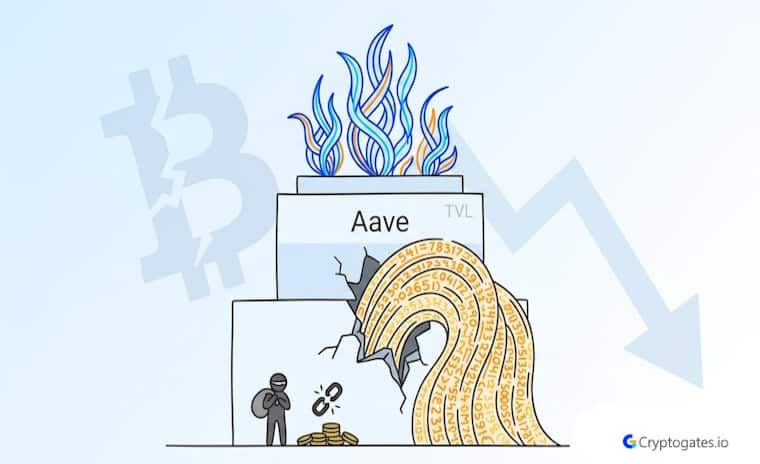
The KelpDAO exploit hit like a gut punch.
A single attacker forged cross-chain messages, minted unbacked rsETH, and walked away with roughly $292 million.
DeFi felt it everywhere.
Look, this wasn’t just one protocol getting drained.
Within days, the total value locked across DeFi collapsed from around $99.5 billion to roughly $85 billion.
That’s a $14 billion confidence crisis, not just a hack.
- The Problem: A forged cross-chain message allowed unbacked rsETH to be minted and used as real collateral.
- The Solution: Governance votes and bad debt socialization are now the only realistic recovery levers.
- The Incentive: Frozen Arbitrum funds and Aave's exposure make resolution financially urgent.
- The Risk: Restaking and bridge infrastructure trust may not recover quickly.
How the KelpDAO Exploit Actually Worked
The attacker exploited cross-chain message validation, forging inputs that tricked the system into minting rsETH with nothing backing it.
That unbacked token then entered the lending markets as legitimate collateral, where the real damage began.
Aave Took the Hardest Hit
Aave absorbed between $8 and $10 billion in withdrawals during the panic, with a potential nine-digit bad debt still unresolved.
DeFi TVL dropped from ~$99.5B to ~$85B in roughly 48 hours. (DeFiLlama)
Honestly, no lending protocol is built to handle collateral that shouldn’t exist.

rsETH is KelpDAO's restaked ETH token. When unbacked rsETH flooded the market as fake collateral, its peg broke, and confidence followed.
Where Recovery Stands Right Now
Three things have to go right: bad debt gets socialized across the protocol, frozen funds on Arbitrum get unlocked through governance, and users decide to trust restaking infrastructure again.
None of those are guaranteed.
Tarun Chitra, Gauntlet
Before you run any restaking or bridge-exposed strategy, backtest it on CryptoGate’s Strategy Engine first.
Market structure just shifted.
Battle-Test Your Strategy
Before the Market Does.
Eliminate guesswork with institutional-grade backtesting for DCA, Grid, and Rebalance bots. Real historical data. Real-world results.
What This Means for Restaking Strategies
Restaking unlocks yield, but it stacks risk in layers most users never model out.
This exploit showed exactly what happens when bridge risk, collateral risk, and liquidity risk all trigger simultaneously.
Before Re-Entering DeFi Post-Exploit
- Audit bridge exposure in your current positions
- Check collateral token backing on lending platforms
- Confirm the governance status of frozen assets
- Model bad debt impact on protocol solvency
- Run updated scenarios through a strategy simulator
Conclusion: DeFi Is Resilient, But Not Naive
Wait, resilience doesn’t mean ignoring what just happened.
The KelpDAO exploit exposed real structural gaps in how cross-chain collateral gets validated.
Here’s the thing: governance and socialized loss aren’t fixes; they’re damage control.
Strategy Engine on CryptoGates can help you stress-test any DeFi re-entry before risking real capital.
Stop Guessing.
Stress Test Your Edge.
The market doesn't care about your backtest. Our engine simulates 1,000+ "what-if" scenarios to ensure your strategy is built for survival.
Run Crypto Strategy Engine →