 Bitcoin
 Ethereum
 Solana
 TRON
 Zcash
 Hyperliquid
 Dogecoin
 Monero
 Chainlink
 Cardano
 Stellar
 Uniswap
 Sui
 Hedera
 Shiba Inu
 Bittensor
 Ripple USD
 Aster
 Polkadot
 World Liberty Financial
 Render
 Artificial Superintelligence Alliance

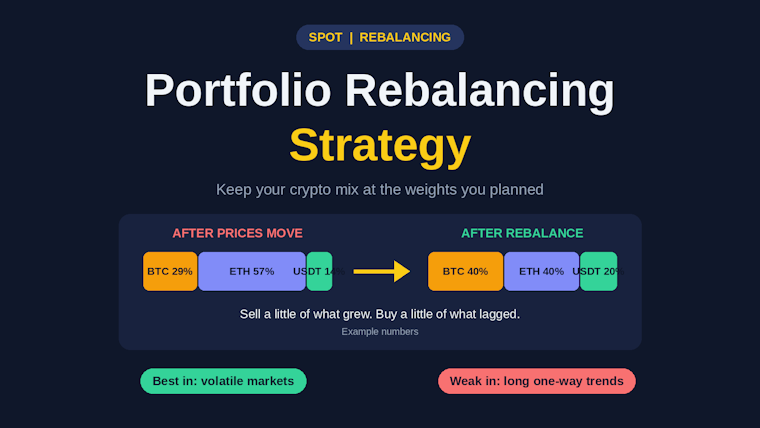
Rebalancing is a simple way to keep your portfolio in the shape you planned. This post explains how it works.
THE IDEA
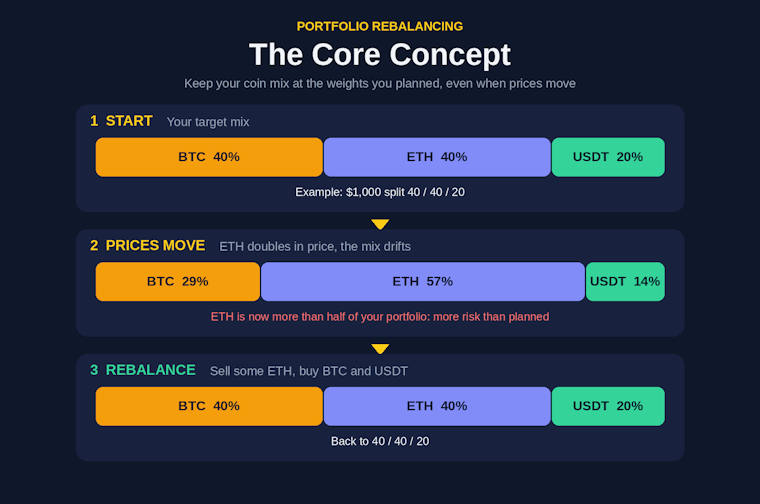
Say you start with 40% BTC, 40% ETH and 20% USDT. Then one coin pumps. Now it is 60% of your portfolio, and your risk is higher than you planned. Rebalancing means you sell a little of the coin that grew and buy more of the ones that lagged, until you are back at 40 / 40 / 20.
The rules decide when to trade, not your mood. That helps you avoid selling in fear or buying in greed.
TWO WAYS TO TRIGGER IT
1. Threshold-based: rebalance only when a coin moves a set amount away from its target (for example 5% or 10%).
2. Time-based: rebalance on a schedule, such as weekly or monthly, no matter what the price did.
STEP-BY-STEP SETUP
Step 1: Pick your coins
Choose a small basket of liquid coins. Avoid low-liquidity coins, because they are hard to trade at fair prices.
Step 2: Set target weights
Give each coin a fixed percentage. Example: 40% BTC, 40% ETH, 20% USDT. The weights must add up to 100%.
Step 3: Set the drift limit
– A tight limit (for example 3%) rebalances often. It trades small moves but pays more fees.
– A wide limit (for example 10%) trades less and saves fees, but one coin can dominate for longer.
Step 4: Rebalance
When a limit is hit, sell part of the coins above target and buy the coins below target. You can do it by hand or with a portfolio tool or bot.
WHEN IT WORKS BEST
Volatile markets where coins move up and down and later come back toward each other.
WHEN IT STRUGGLES
– Long one-way bull runs in a single coin. Selling part of the winner early means you earn less than just holding it.
– Long crashes in the coins you hold. Rebalancing keeps buying the falling coin, so your losses can grow.
– High fees. Trading often on a high-fee exchange can eat the benefit.
PRO TIPS
– Check exchange fees and spreads before you choose a tight limit.
– Review your target weights from time to time. Your plan may change as the market changes.
– A stablecoin share gives you cash to buy dips. It also lowers risk, but it can reduce gains in a bull run.
– Selling coins may create taxes in your country. Check the local rules.
RISK
No backtest results are included in this post, so please test the idea before using real money. Rebalancing does not stop losses when the whole market falls. This is not financial advice. Only use money you can afford to lose.